Side-by-Side Cognitive Profiles
The Cosmic Pet Pet IQ Lab assesses canine intelligence across five key dimensions: Problem Solving, Training Speed, Social Intelligence, Instinctive Drive, and Memory. Understanding these scores provides a nuanced view of each breed's mental makeup.
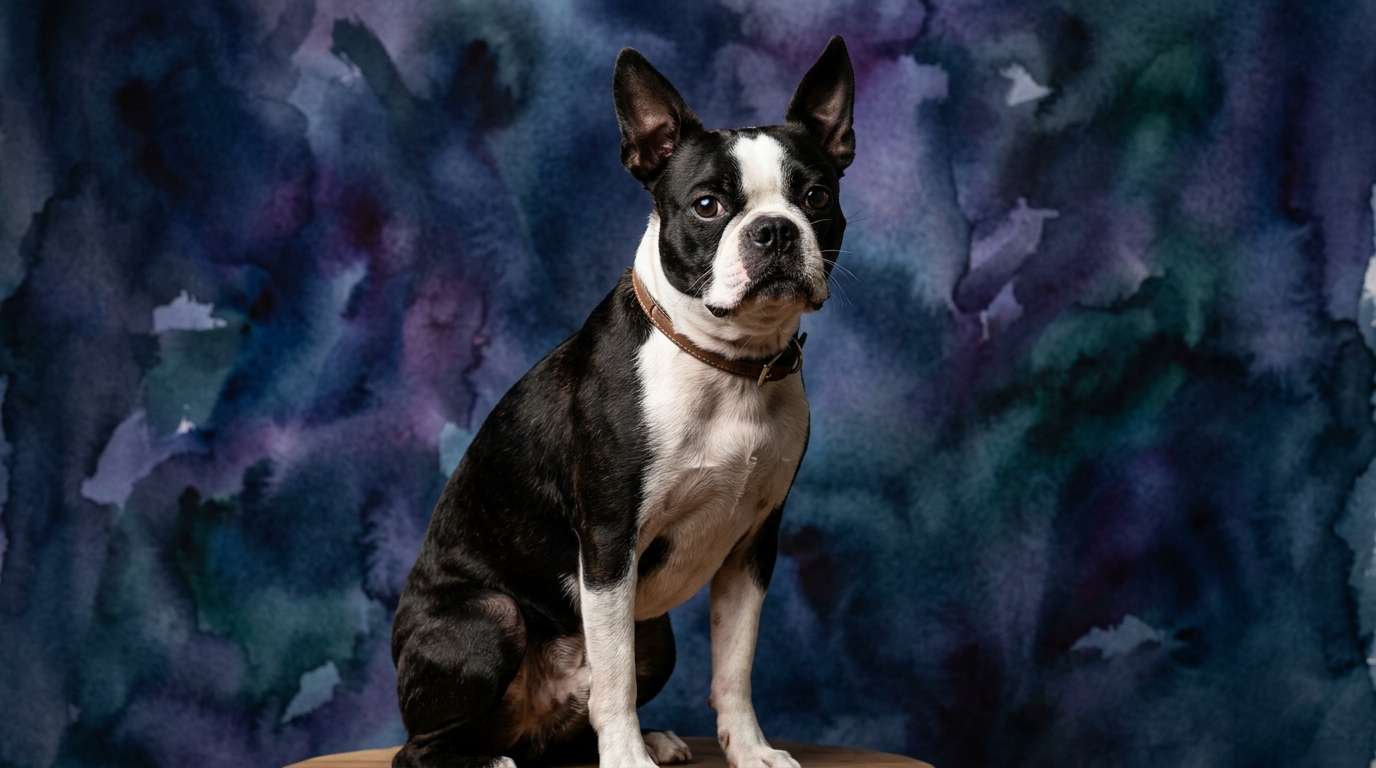
The Boston Terrier, a Non-Sporting breed ranking #54 on Coren's scale, exhibits a balanced cognitive profile. Their Problem Solving is rated 3/5, meaning they are capable of navigating routine challenges but might require more structured guidance for complex, multi-step tasks, often finding direct and practical solutions. Training Speed also sits at 3/5, indicating they absorb new commands at a moderate pace, thriving with consistent, positive reinforcement and repetition to solidify learning. Where they truly shine is Social Intelligence at 4/5, making them exceptional at reading human cues and adapting their behavior to social situations, intuitively grasping emotional states. Their Instinctive Drive is 2/5, reflecting their original role as companions with less propensity for independent hunting or guarding behaviors. Memory is 3/5, allowing them to retain learned information and routines well, though occasional refreshers for less frequently practiced commands are beneficial.
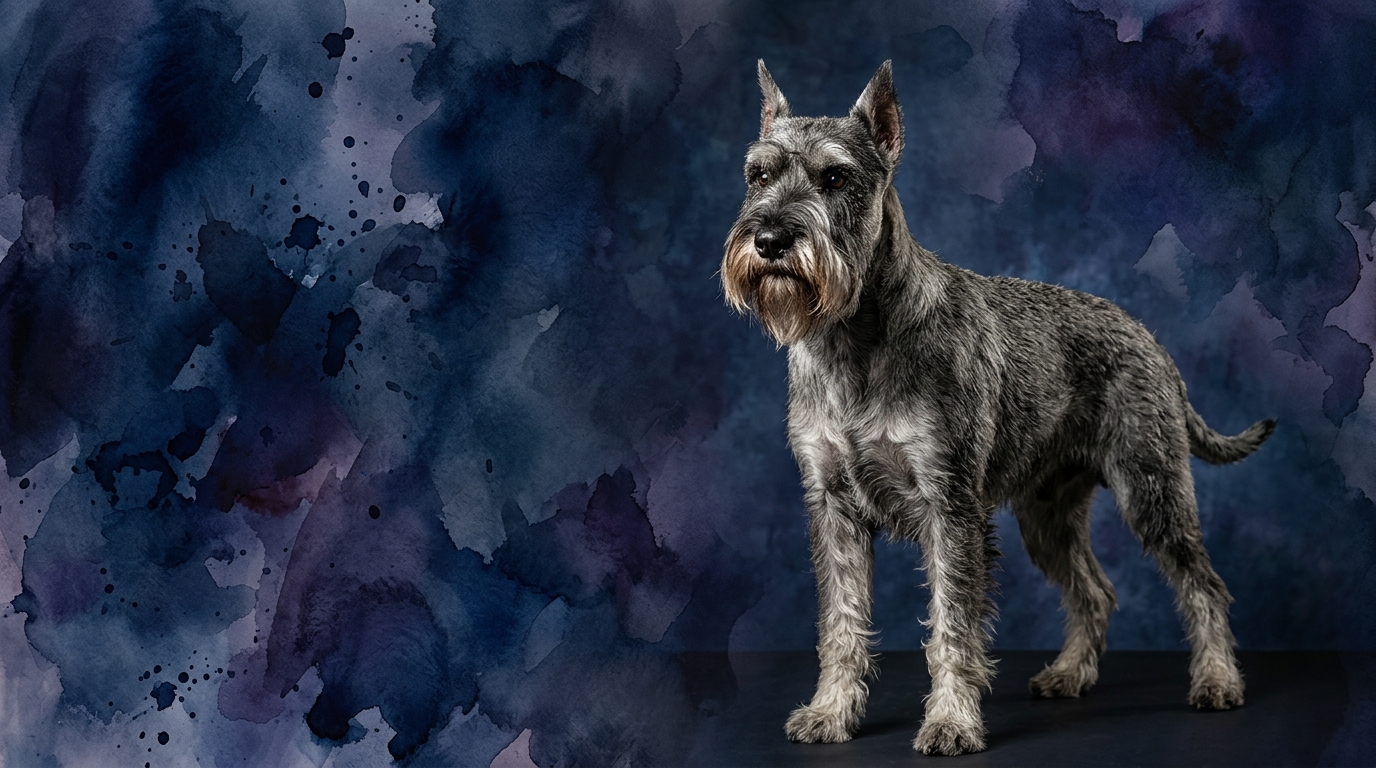
The Standard Schnauzer, a Working breed with a higher Coren rank of #22, presents a profile geared towards purposeful activity and independent thought. Their Problem Solving is a robust 4/5, demonstrating a strong capacity for independent strategizing and finding creative solutions to obstacles, a hallmark of their working heritage. Training Speed is also 4/5, as they are quick to grasp new concepts and commands, often needing fewer repetitions and exhibiting focused attention during learning. Social Intelligence is 3/5; while observant, their interactions are often more direct and task-oriented, prioritizing collaboration over subtle emotional mirroring. Instinctive Drive is 3/5, reflecting a moderate, purposeful drive stemming from their history as farm dogs, including instincts for guarding and vermin control. Memory scores 4/5, indicating strong retention of both positive and negative experiences, learning quickly and recalling commands over long periods.
Where the Boston Terrier Excels Cognitively
The Boston Terrier truly shines in the realm of social intelligence, scoring a solid 4 out of 5. This aptitude translates into an exceptional ability to interpret human body language, vocal tones, and emotional states. They are masters at adapting their behavior to fit the mood of the room, often offering comfort when sensing distress or engaging playfully when encouraged. This high social acumen makes them incredibly responsive and intuitive companions, fostering deep emotional bonds. Their cognitive strength here means they often anticipate owner needs or desires, making them remarkably easy to live with and integrate into family life, as they naturally align with human social structures. This ability to connect on an emotional level makes them outstanding therapy prospects or simply wonderful, empathetic family members.
Where the Standard Schnauzer Exhibits Cognitive Strengths
The Standard Schnauzer demonstrates clear cognitive advantages in problem-solving, training speed, and memory, each scoring 4 out of 5. Their superior problem-solving capability means they are adept at navigating complex environments and figuring out how to achieve desired outcomes, even without direct human instruction. This breed often exhibits independent thought, evaluating situations and devising strategies, a trait honed by their working heritage. Coupled with their rapid training speed, they pick up new commands and complex sequences quickly, requiring fewer repetitions than many other breeds. Their robust memory ensures these learned skills and solutions are retained over extended periods, making them reliable partners for tasks that demand recall and consistent execution. These combined strengths make them exceptional candidates for advanced obedience, agility, and task-oriented roles, where their mental agility is a distinct asset.
Trainability: Boston Terrier vs. Standard Schnauzer
Based on their cognitive profiles, the Standard Schnauzer generally presents as the breed more readily trained for formal obedience and complex tasks. Their training speed of 4/5 means they grasp new concepts with fewer repetitions, and their 4/5 problem-solving ability allows them to understand the 'why' behind commands, not just the 'what.' For instance, a Schnauzer might quickly generalize a 'stay' command across various distractions or creatively figure out how to retrieve an object from a tricky spot. Their stronger memory (4/5) ensures commands stick, requiring less frequent refreshing and building a reliable repertoire of behaviors.
In contrast, the Boston Terrier, with a 3/5 in both training speed and problem-solving, learns effectively but at a more moderate pace. They excel with consistent, positive reinforcement and shorter, engaging sessions that leverage their desire for social interaction. While they are eager to please due to their high social intelligence, they might require more structured repetition to solidify complex behaviors and may not independently seek out solutions to training puzzles as readily as a Schnauzer. Their lower instinctive drive also means they are less motivated by task completion for its own sake, relying more on social rewards and owner praise to maintain engagement.
Matching Cognitive Profiles to Owner Lifestyles
The choice between these two breeds significantly depends on an owner's lifestyle and energy levels. The Standard Schnauzer, with its working dog background and a moderate instinctive drive of 3/5, thrives with active engagement. Their cognitive strengths in problem-solving and memory mean they benefit immensely from activities that challenge both their bodies and minds, such as advanced obedience, agility, tracking, or even dog sports. Owners who enjoy hiking, running, or structured training sessions will find a Schnauzer to be an eager and capable partner. Without sufficient mental and physical outlets, their independent problem-solving can manifest as finding their own 'work,' potentially leading to undesirable behaviors out of boredom or frustration.
Conversely, the Boston Terrier, with an instinctive drive of 2/5 and a primary role as a companion, is an excellent fit for more relaxed owners. While they enjoy walks and playtime, their need for vigorous physical activity is generally lower. Their high social intelligence makes them content with simply being near their human family, participating in daily routines, and enjoying moderate indoor play. They are less likely to invent their own 'jobs' if under-exercised, preferring to snuggle or observe, making them adaptable to apartment living and less demanding schedules. Their primary fulfillment comes from social connection, making them ideal for owners who prioritize companionship and emotional bonding.
The Verdict
Choose a Boston Terrier if you prioritize a highly socially intuitive companion who thrives on close family interaction and requires moderate physical activity, fitting seamlessly into a relaxed home environment.
Opt for a Standard Schnauzer if you seek a robust, mentally agile partner for active pursuits, enjoying structured training and challenging activities that engage their independent problem-solving and strong memory.
🧠 Find Your Pet's IQ Score
Our Pet IQ Lab assessment covers 25+ tests across 5 cognitive dimensions — personalized to your breed.
Take the Full IQ Test →Frequently Asked Questions
Are Boston Terriers good at learning tricks?
Yes, Boston Terriers are quite capable of learning tricks, particularly those that involve interaction with their owners. Their social intelligence (4/5) makes them eager to please and responsive to positive reinforcement, though their training speed (3/5) means consistency is key.
Do Standard Schnauzers require a lot of mental stimulation?
Absolutely, Standard Schnauzers thrive on mental stimulation due to their strong problem-solving (4/5) and memory (4/5) capabilities. Engaging them in puzzles, training, or active sports is crucial to prevent boredom and channel their working instincts constructively.
Which breed is better for first-time dog owners?
The Boston Terrier often makes a slightly easier choice for first-time owners due to their lower instinctive drive and high social intelligence, making them generally more adaptable and less demanding. Standard Schnauzers require a more experienced hand to manage their independent nature and higher need for mental engagement.