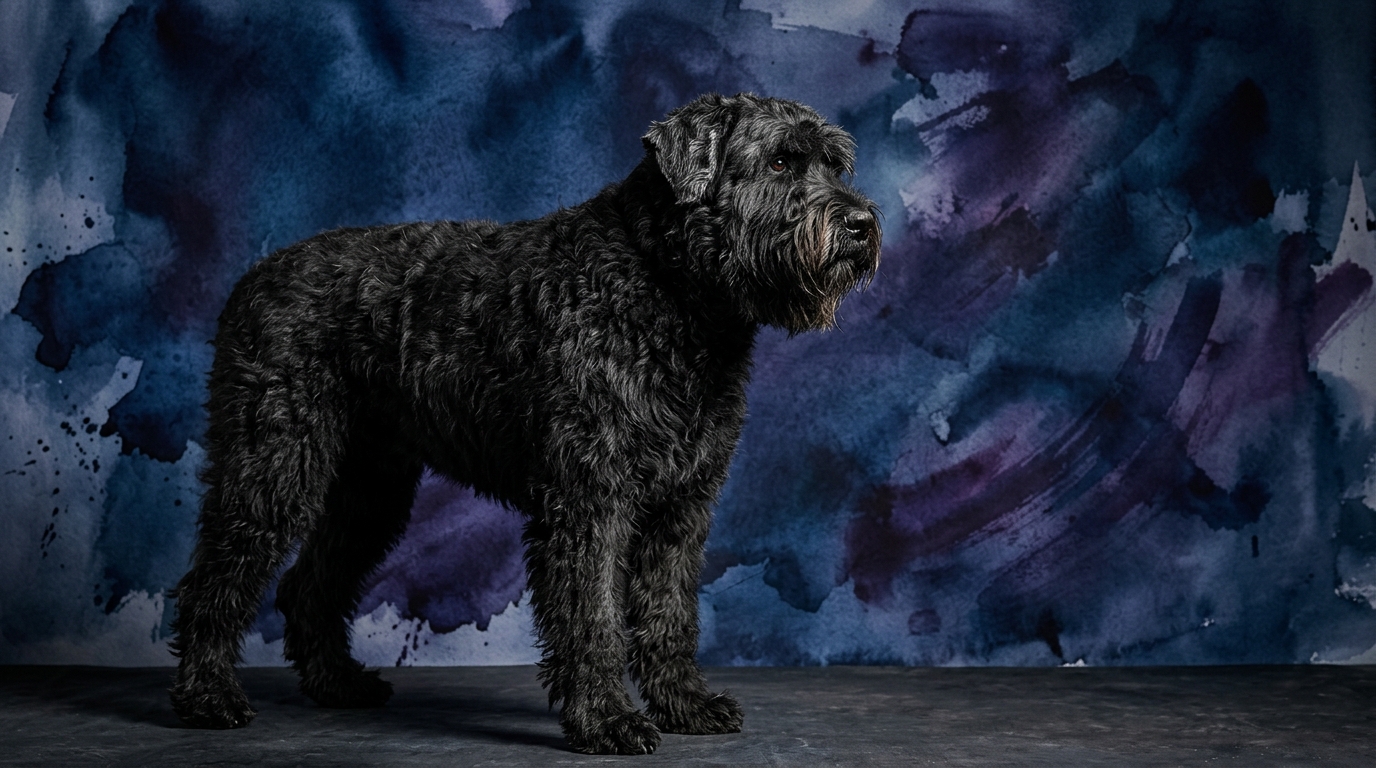
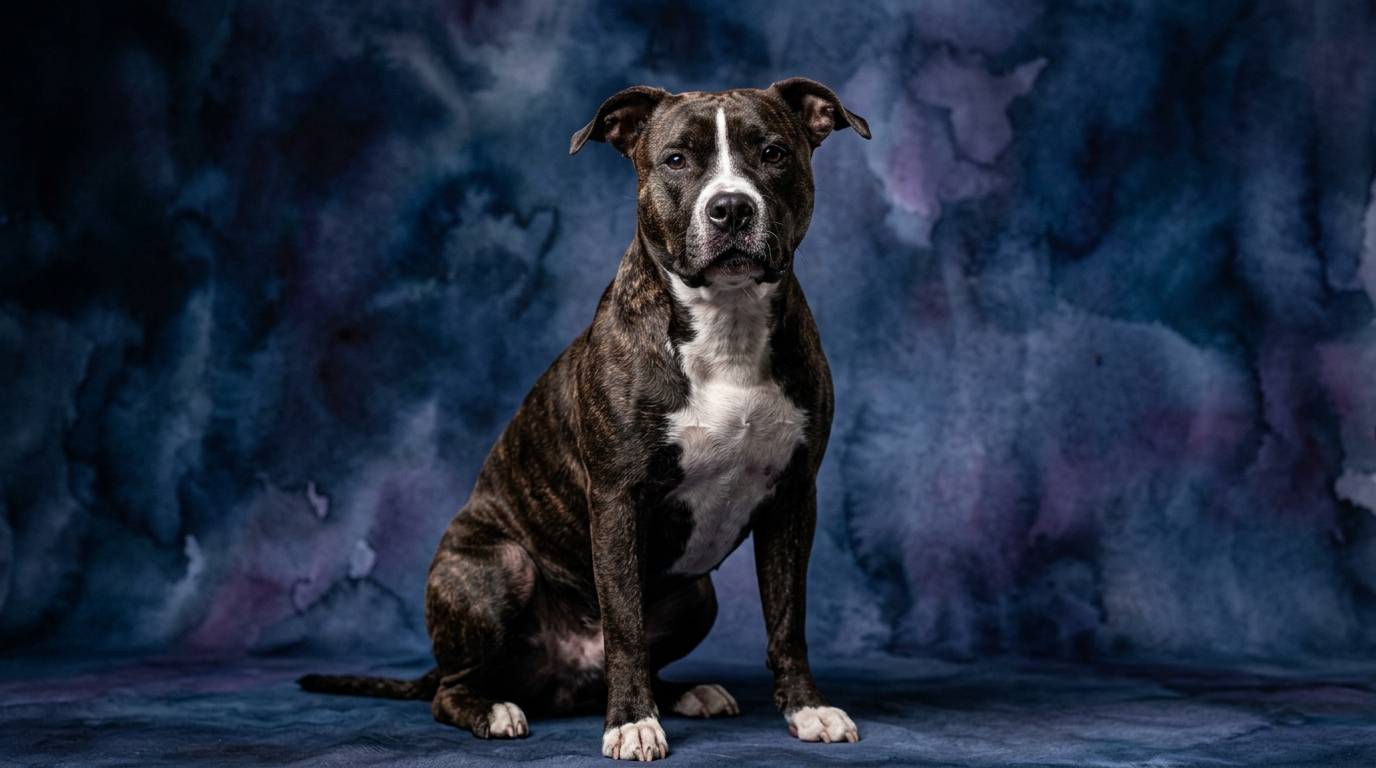
Side-by-Side IQ Profile
Originating as cattle drivers and guard dogs, the Bouvier des Flandres exhibits a balanced cognitive profile across our five dimensions. Their problem-solving ability, rated 3/5, reflects a practical intelligence honed by managing livestock, requiring strategic thinking to navigate and control herds. Training speed, also 3/5, indicates they are responsive but possess an independent streak, typical of herding breeds that need to make decisions autonomously. Social intelligence, at 3/5, points to a capacity for cooperative work with their human partners, understanding cues and expectations within a working relationship. Their instinctive drive, 3/5, is geared towards protective and herding behaviors, a controlled intensity rather than raw pursuit. Finally, memory, rated 3/5, suggests a solid ability to retain learned commands and routines, sufficient for their demanding roles.
The American Staffordshire Terrier, or AmStaff, a terrier breed Coren-ranked at #48, shares many cognitive scores with the Bouvier but distinguishes itself significantly in memory. Their problem-solving, rated 3/5, demonstrates a resourceful and tenacious approach, characteristic of terriers engaging with challenges. Training speed, 3/5, indicates an eagerness to learn and please, though their strong will can sometimes require consistent motivation. Social intelligence, 3/5, highlights their deep bond with family and capacity to read human emotions, crucial for a companion animal. Instinctive drive, 3/5, reflects their inherent tenacity and prey drive, often channeled into focused play or sports. Crucially, their memory stands at 4/5, suggesting a superior capacity for retaining complex commands, sequences, and experiences over time, making them particularly adept at recalling learned behaviors.
Where Bouvier des Flandres Wins Cognitively
The Bouvier des Flandres shines in cognitive areas demanding independent judgment within dynamic, real-world scenarios, which their 3/5 problem-solving score belies in its depth. Their herding background cultivated a unique blend of strategic foresight and adaptability; a Bouvier doesn't just follow orders, they assess the environment, predict livestock movement, and make decisions to achieve an objective, often without explicit command. This translates to a dog capable of thoughtful action, evaluating situations and reacting with measured control rather than impulsive force. Their social intelligence, while rated similarly to the AmStaff, is specifically tuned for a working partnership where subtle cues and shared understanding are paramount, allowing them to anticipate handler needs in complex tasks. This cognitive strength makes them exceptional partners for tasks requiring a dog to 'think on their feet' and manage variables independently.
Where American Staffordshire Terrier Wins Cognitively
The American Staffordshire Terrier's distinct advantage lies in its superior memory, rated at 4/5 compared to the Bouvier's 3/5. This enhanced recall significantly impacts their ability to learn and solidify a vast repertoire of commands and behaviors, making them quicker to master complex routines and more reliable in their long-term retention. Owners will likely observe that an AmStaff, once taught a command or trick, remembers it with remarkable consistency, even after extended periods. This cognitive strength extends beyond formal training; it contributes to their capacity for understanding and remembering household rules, routines, and even the preferences of their human family members. This heightened memory also bolsters their social intelligence, enabling them to remember past interactions and build on established relationships, fostering deeper bonds and more nuanced communication over time.
Which Is Easier to Train and Why
While both breeds share a 3/5 training speed score, the American Staffordshire Terrier generally presents an easier training experience for many owners, primarily due to their superior memory and strong desire for human connection. An AmStaff's 4/5 memory means they retain learned commands and sequences more effectively, requiring fewer repetitions and demonstrating greater consistency in recall. Their social intelligence, focused on forming deep family bonds, often translates into a keen eagerness to please their humans, providing a powerful intrinsic motivator during training sessions. In contrast, the Bouvier des Flandres, with its 3/5 memory and a heritage of independent decision-making in herding, can sometimes be more deliberate in its learning process. They might question the 'why' behind a command or exhibit a strong will, which, while valuable in a working context, can be perceived as stubbornness in a training setting. While both are capable, the AmStaff's cognitive profile often leads to a more fluid and rewarding training journey for the average pet owner.
Which Suits Active Owners vs Relaxed Owners
Neither the Bouvier des Flandres nor the American Staffordshire Terrier is ideally suited for genuinely 'relaxed' owners who prefer minimal engagement. Both breeds require substantial mental and physical activity to thrive.
The Bouvier des Flandres is best suited for active owners who relish engaging in structured activities and providing a 'job' for their dog. Their heritage demands not just physical exercise but complex mental stimulation. Owners who enjoy dog sports like obedience, agility, tracking, or even herding trials will find a Bouvier an eager and capable partner. They thrive with owners who are consistent, patient, and understand the nuanced communication required to work with an independent, thoughtful herding dog. Their need for purpose means a truly active lifestyle, often involving learning new skills and problem-solving challenges, is non-negotiable.
AmStaffs also require active owners, though their activity often centers more on companionship and focused play. They need consistent physical exercise to burn off energy, but their mental stimulation often comes from interactive games, puzzle toys, and positive reinforcement training that strengthens their bond with their human. Owners who are committed to daily walks, engaging play sessions, and ongoing training will find an AmStaff devoted and contented. While they can excel in dog sports, their primary need is often deep social interaction and a clear, consistent structure within the family unit. They are not suited for owners who cannot commit to regular, engaging interaction and exercise.
The Verdict
Select a Bouvier des Flandres if you seek a thoughtful, independent working partner for complex, dynamic tasks, appreciating a dog that can problem-solve and make decisions autonomously within a structured framework. They thrive with experienced owners who can provide consistent guidance and engage in mentally stimulating activities.
Opt for an American Staffordshire Terrier if you desire a highly devoted, trainable companion who excels at retaining learned behaviors and thrives on close human interaction, consistent direction, and engaging activities. Their superior memory makes them excellent candidates for advanced obedience and trick training.
🧠 Find Your Pet's IQ Score
Our Pet IQ Lab assessment covers 25+ tests across 5 cognitive dimensions — personalized to your breed.
Take the Full IQ Test →Frequently Asked Questions
Does the Bouvier's problem-solving score mean they are 'smarter' than the AmStaff in certain situations?
The Bouvier's 3/5 problem-solving, rooted in herding, suggests a specific type of practical intelligence for dynamic, often unpredictable, environmental challenges, which can indeed make them more adept at certain autonomous decision-making tasks compared to the AmStaff's similar score, which reflects a different kind of tenacity.
How does the AmStaff's superior memory manifest in daily life?
An AmStaff's 4/5 memory often means quicker house-training, more reliable recall of commands even after long breaks, and a stronger retention of routines and boundaries, leading to a more consistently well-behaved companion with less reinforcement needed over time.
Are either of these breeds suitable for first-time dog owners?
Both breeds require dedicated, consistent owners due to their strong wills and need for mental and physical engagement; while a well-prepared, committed first-time owner could succeed with an AmStaff due to their trainability and devotion, a Bouvier's independence generally makes them a better fit for those with prior dog experience.