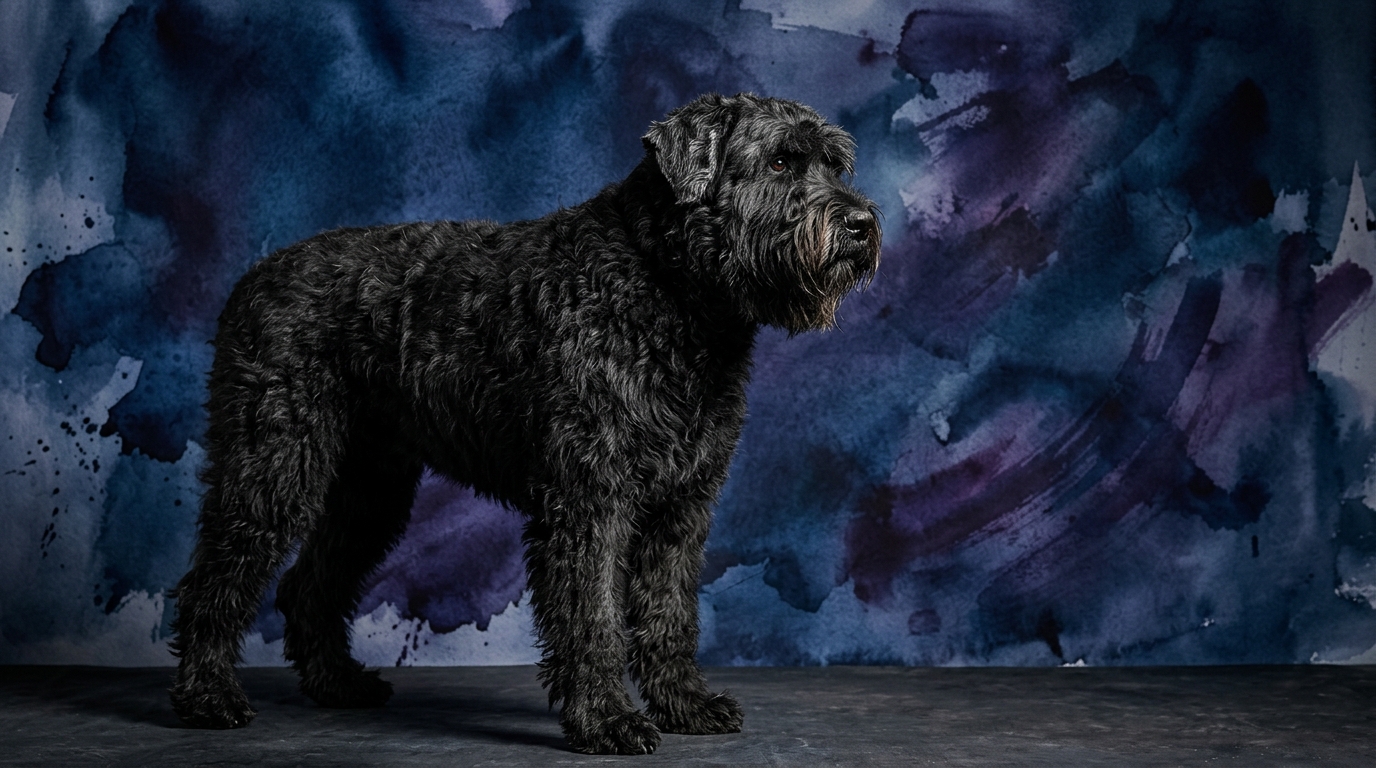
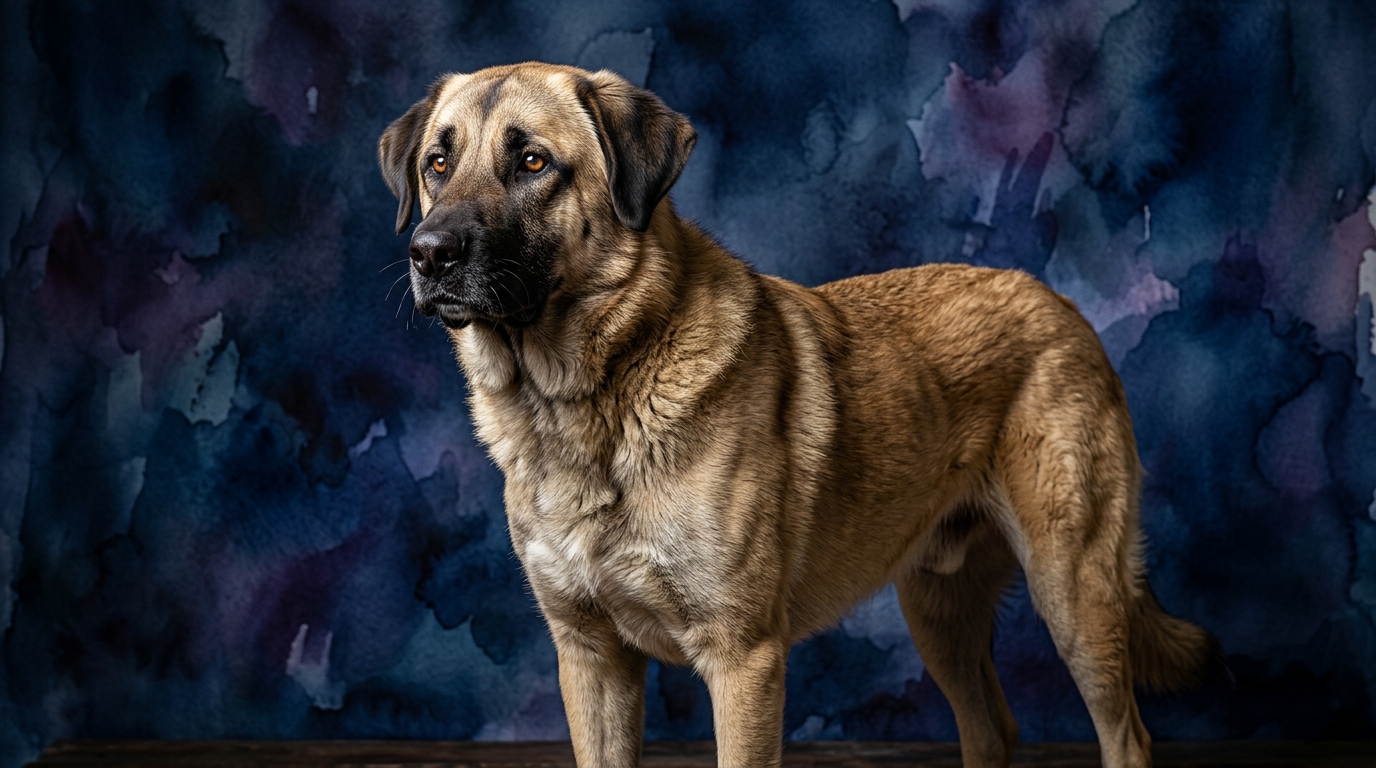
Side-by-Side IQ Profile: Herding vs. Guardian Mindsets
At The Cosmic Pet Pet IQ Lab, we assess canine cognition across five critical dimensions. For both the Bouvier des Flandres and the Anatolian Shepherd Dog, each dimension registers a solid 3 out of 5, indicating capable and adaptive minds. However, the *application* of these capacities diverges significantly, rooted in their distinct ancestral occupations.
The Bouvier des Flandres, originating as a multi-purpose farm dog, excels in herding cattle and guarding property. Their Problem Solving (3/5) manifests as an ability to strategize movement of livestock, understand complex multi-step commands, and adapt to varied tasks on a busy farm. Training Speed (3/5) for the Bouvier reflects their aptitude for learning new commands and routines efficiently, especially when engaged in a task alongside their handler. Their Social Intelligence (3/5) is finely tuned to human cues and intentions, crucial for their collaborative herding and guarding duties, allowing them to anticipate and respond appropriately. Instinctive Drive (3/5) is robustly expressed through their natural herding prowess and a strong protective impulse towards their family and territory. Finally, their Memory (3/5) is characterized by excellent recall of learned commands, established routines, and the intricate patterns of their daily work.
The Anatolian Shepherd Dog, conversely, developed as a solitary livestock guardian, protecting flocks across vast, open landscapes. Their Problem Solving (3/5) is geared towards independent decision-making, such as discerning true threats from harmless animals or people, and devising strategies to deter predators without direct human intervention. Training Speed (3/5) for the Anatolian means they learn boundaries and their guardian responsibilities with purpose, but may take longer to accept commands that seem arbitrary or disconnected from their primary duty. Their Social Intelligence (3/5) centers on forming deep, protective bonds with their 'flock'—be it sheep or human family—and accurately assessing the intentions of strangers or potential threats. Instinctive Drive (3/5) is profoundly expressed through their inherent need to patrol, protect, and remain vigilant over their designated territory and charges. Their Memory (3/5) is formidable for remembering territory layouts, identifying past threats, and recognizing every individual within their care, whether animal or human.
Where the Bouvier des Flandres Cognitively Excels
Despite identical scores, the Bouvier des Flandres often demonstrates a cognitive advantage in scenarios requiring close collaboration and versatile task execution. Their herding heritage has cultivated a mind that is typically more inclined to seek and respond to human direction. This means their Problem Solving (3/5) is frequently applied in concert with a handler, excelling at intricate tasks like navigating agility courses, learning complex sequences of commands, or adjusting tactics based on immediate human feedback. They tend to process and react to new information within a structured, handler-led environment with greater fluidity.
The Bouvier's Social Intelligence (3/5) also shines in its nuanced understanding of human communication, making them highly receptive partners in various activities. This breed's memory (3/5) for specific commands and multi-step routines, coupled with their willingness to apply this knowledge under guidance, positions them as exceptional candidates for competitive obedience, protection sports, or any role demanding a highly engaged, responsive canine teammate. Their cognitive strengths lie in their capacity for trainable, directed application of their intellect.
Where the Anatolian Shepherd Dog Cognitively Excels
The Anatolian Shepherd Dog's cognitive strengths lie in its profound independence and self-reliance, a direct result of centuries spent making critical decisions without human oversight. Their Problem Solving (3/5) is unparalleled in situations demanding autonomous judgment, particularly in threat assessment and territorial management. An Anatolian is adept at evaluating a changing environment, identifying potential dangers to their flock or family, and implementing a deterrent strategy based on their own assessment, rather than waiting for a command.
This breed's Instinctive Drive (3/5) for protection, combined with their astute Social Intelligence (3/5) for discerning friend from foe, means they excel at nuanced, independent guarding. Their memory (3/5) for territory and established patterns allows them to maintain vigilance over vast areas, recalling every usual sound, scent, and sight, making them incredibly effective at identifying anomalies. The Anatolian's cognitive prowess is best observed when they are given a 'job' and the freedom to interpret and execute it using their own discerning judgment, rather than strictly following a handler's moment-to-moment instructions.
Which Is Easier to Train and Why?
When considering 'easier to train,' the Bouvier des Flandres generally presents a more straightforward path for the average owner, despite both breeds sharing a Training Speed of 3/5. The Bouvier's herding background instilled a strong desire to work cooperatively with humans, making them typically more eager to please and receptive to formal obedience training. They often find purpose in learning commands and performing tasks that involve their handler, viewing it as a shared activity. Their problem-solving (3/5) is often applied to figuring out what their human wants from them, leading to quicker mastery of new skills in a structured training environment.
The Anatolian Shepherd Dog, while equally capable of learning (Training Speed 3/5), approaches training with a different mindset. Their deep-rooted independence means they often question the 'why' behind a command, especially if it doesn't align with their innate guardian instincts or seems to lack practical purpose from their perspective. They are not difficult because they cannot learn, but because they are less inclined to perform tasks they deem unnecessary or that conflict with their perceived duties. This means training an Anatolian requires immense patience, consistency, and a deep understanding of their guardian temperament, often feeling more like negotiation than simple instruction. While they will learn boundaries and essential safety commands, their willingness to perform complex obedience routines on cue might be less enthusiastic than a Bouvier's.
Active Owners vs. Relaxed Owners: Matching Cognitive Needs
The Bouvier des Flandres thrives with active owners who enjoy engaging their dogs in a variety of structured activities. Their 3/5 Problem Solving and Instinctive Drive mean they need consistent mental stimulation and physical exercise. Owners who are keen on dog sports like agility, obedience, or even advanced trick training will find a Bouvier to be an enthusiastic and capable partner. They need a 'job' that challenges their intellect and allows them to work alongside their human, preventing boredom and potential destructive behaviors. A Bouvier is not a 'relaxed' dog in the sense of being content with minimal interaction; they require an owner who actively participates in their cognitive and physical development.
The Anatolian Shepherd Dog, while needing ample space and a sense of purpose, can suit owners who might be considered 'relaxed' in terms of constant active engagement, but are highly dedicated to providing a secure environment. Their independence and profound territorial Instinctive Drive (3/5) mean they are often content patrolling their property and observing their surroundings. They don't typically demand continuous, high-intensity interaction from their owners once their territory is established and secure. However, 'relaxed' does not mean 'lazy' for an Anatolian; they still require significant outdoor space to fulfill their guardian instincts and regular, calm presence from their human family. Owners must be prepared for a dog that makes many of its own decisions, and whose concept of 'activity' is often self-directed vigilance rather than structured play.
The Verdict
Choose the Bouvier des Flandres if you seek a highly collaborative, versatile partner eager for structured training and shared activities, thriving on direct human interaction and guidance.
Opt for the Anatolian Shepherd Dog if you value an independent, self-reliant guardian capable of autonomous decision-making and territorial protection, provided you can offer vast space and respect their unique, stoic nature.
🧠 Find Your Pet's IQ Score
Our Pet IQ Lab assessment covers 25+ tests across 5 cognitive dimensions — personalized to your breed.
Take the Full IQ Test →Frequently Asked Questions
Do Bouvier des Flandres and Anatolian Shepherd Dogs have similar temperaments due to their identical IQ scores?
While their IQ scores are identical, their temperaments differ significantly due to their historical roles. Bouviers are generally more handler-oriented and eager to please, while Anatolians are known for their independence and self-reliance, stemming from their solitary guardian duties.
Which breed is better for a first-time dog owner?
Neither breed is typically recommended for a first-time dog owner due to their strong working drives and specific needs. However, a Bouvier might be slightly more manageable for a committed novice willing to invest heavily in training, whereas an Anatolian's independence requires a more experienced hand.
Can an Anatolian Shepherd Dog be trained for agility or obedience competitions like a Bouvier des Flandres?
While an Anatolian Shepherd Dog can learn commands, their independent nature and preference for guardian duties mean they are generally less enthusiastic about competitive obedience or agility than a Bouvier des Flandres. Bouviers typically excel in these areas due to their desire to work closely with a handler.