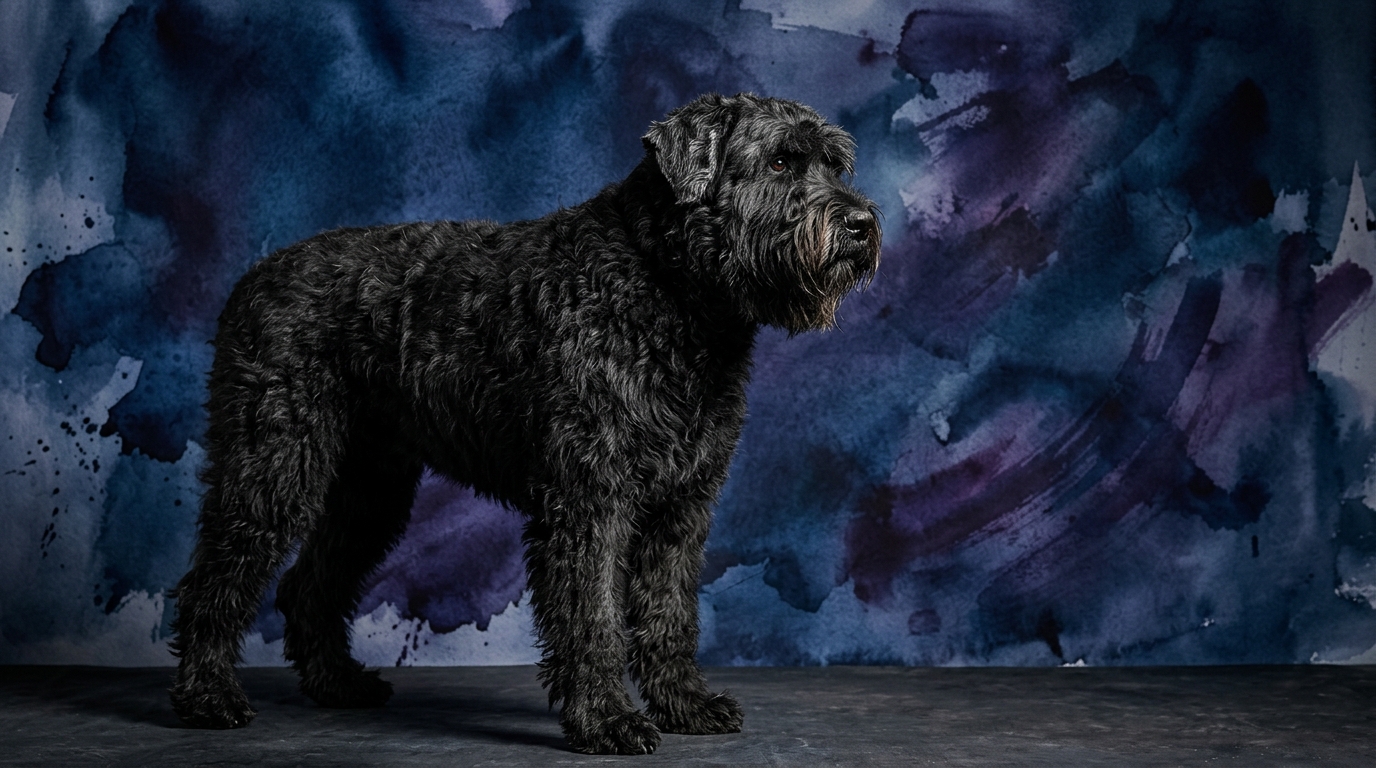
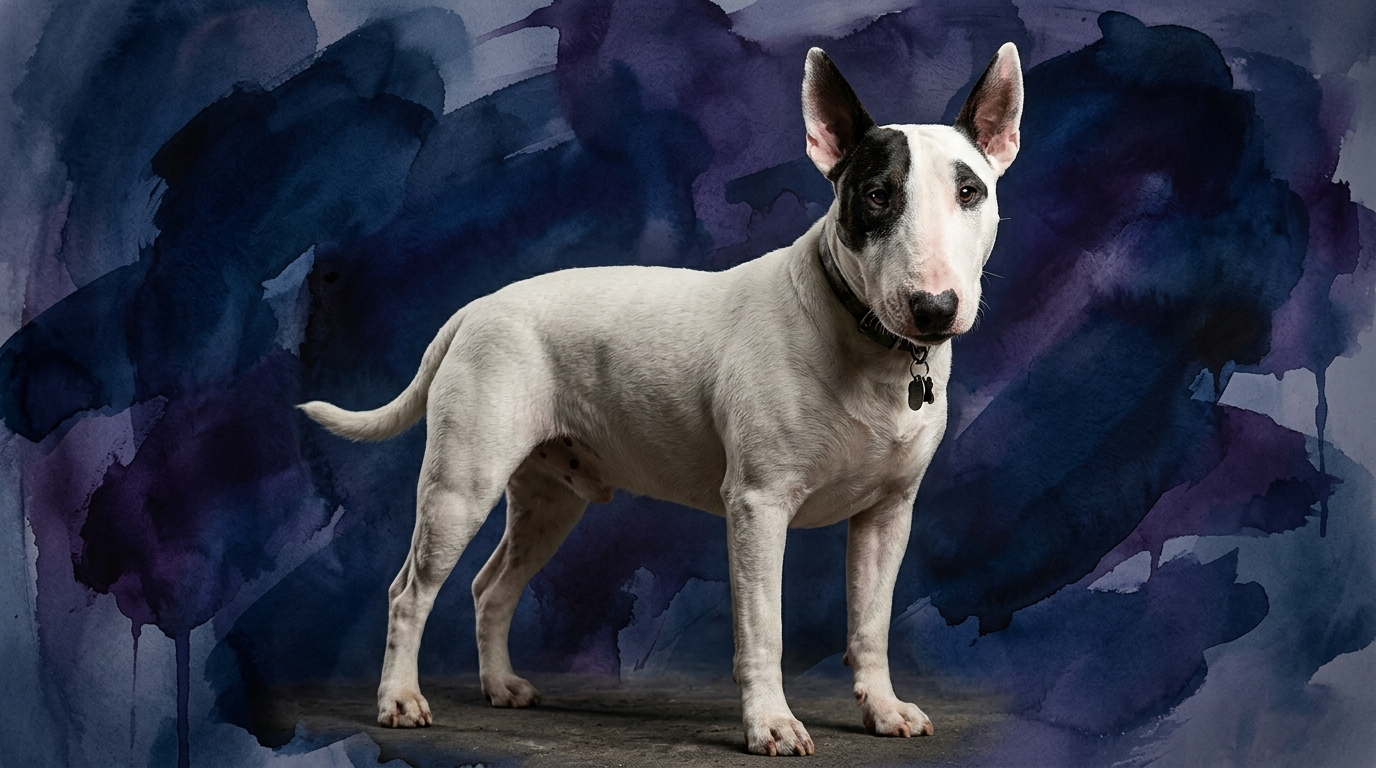
Side-by-Side IQ Profile: Bouvier des Flandres vs. Bull Terrier
Originating as cattle drovers and farm dogs, the Bouvier des Flandres embodies a rugged, thoughtful competence. Their 3/5 problem-solving indicates an ability to navigate moderately complex tasks, such as finding creative ways to move livestock or figuring out household routines, though they may not always seek novel solutions independently. A 3/5 training speed means they are capable learners, absorbing commands with consistent, patient instruction, often excelling when they understand the purpose behind a task. Their social intelligence, also 3/5, allows them to read human cues and bond deeply, often displaying a watchful, protective understanding of their family unit, though they may be reserved with strangers. An instinctive drive of 3/5 reflects their heritage of working animals, possessing a strong inherent desire to herd, guard, or engage in purposeful activity, which requires channeling. Finally, their 3/5 memory supports their capacity for learning complex sequences and routines, remembering specific locations or the habits of their charges over time.
The Bull Terrier, bred for sport and companionship, presents a lively, tenacious intelligence. Their 3/5 problem-solving manifests as a determined approach to challenges, often employing persistence and brute force rather than intricate strategy to achieve a goal, like retrieving a hidden toy or figuring out how to open a specific cabinet. A 3/5 training speed means they can learn a wide array of commands, but their independent streak often requires engaging, playful methods and strong motivation to maintain focus and enthusiasm. Their social intelligence, rated 3/5, is often expressed through their exuberant affection for their chosen family, demonstrating a clear understanding of social dynamics within their pack, though they might be less nuanced in reading subtle human emotions or social cues from strangers. An instinctive drive of 3/5 reflects their strong prey drive and desire for engagement, often leading to boisterous play, digging, or focused pursuit of perceived "game." Their 3/5 memory serves them well in recalling favorite games, people, and routines, but they might be less inclined to remember tasks they deem uninteresting.
Where the Bouvier des Flandres Wins Cognitively
The Bouvier des Flandres shines in scenarios demanding independent judgment within a structured framework. Their 3/5 problem-solving is often applied to practical, real-world scenarios requiring a degree of autonomy, such as making decisions about herd movement or discerning threats, rather than solving abstract puzzles. This capacity for self-directed action, coupled with their robust memory, means they can retain and execute complex, multi-step routines that involve observation and adaptation, making them adept at tasks requiring vigilance and a consistent, thoughtful approach. Their social intelligence, while rated 3/5, is particularly strong in discerning group dynamics and protecting their charges, leading to a nuanced understanding of their family's safety and well-being.
Where the Bull Terrier Wins Cognitively
The Bull Terrier, with its distinctive personality, demonstrates a unique cognitive advantage in tenacity and single-minded pursuit. While their problem-solving is 3/5, it's often characterized by a relentless drive to overcome obstacles and achieve a desired outcome, whether it's retrieving a cherished toy from a difficult spot or persistently nudging for attention. Their 3/5 instinctive drive is a powerful asset, fueling their determination and making them exceptionally focused when engaged in activities that tap into their prey drive or playful nature. This focused intensity, combined with their capacity for social bonding, allows them to excel in activities that require energetic interaction and a "never give up" attitude, making them compelling and entertaining companions.
Which is Easier to Train and Why?
Assessing ease of training between these two breeds, both with a 3/5 training speed, reveals nuances in their learning styles. The Bouvier des Flandres, stemming from a working lineage, often responds well to clear, consistent direction and tasks that provide a sense of purpose. They learn efficiently when the "why" of a command is evident or when the training builds upon their natural herding and guarding instincts, such as advanced obedience or protection work. However, their independent nature means they can be stubborn if they don't perceive the value in a command, requiring a trainer to be patient and persuasive. In contrast, the Bull Terrier's training speed of 3/5 is often challenged by their independent, often playful, and sometimes stubborn temperament. They thrive on positive reinforcement, short, engaging sessions, and a strong, trusting bond with their handler. While they are capable of learning a great deal, their propensity to be easily distracted or to decide a task isn't worth their effort means trainers must be creative, consistent, and highly motivating to achieve reliable obedience. Therefore, while both require commitment, the Bouvier might be "easier" for structured, task-oriented training if the handler establishes clear leadership, whereas the Bull Terrier demands more creativity and patience to capture and maintain their focus.
Which Suits Active Owners vs. Relaxed Owners?
Neither the Bouvier des Flandres nor the Bull Terrier are ideal for truly "relaxed" owners who prefer a sedentary lifestyle. The Bouvier, as a herding breed, possesses a substantial physical and mental drive that requires significant outlets. They thrive with active owners who can provide structured exercise, regular training, and perhaps even a "job," whether it's agility, obedience, or simply extensive walks and mental enrichment games. Their contentment comes from feeling useful and engaged. A relaxed owner would likely find a Bouvier becoming restless, potentially displaying destructive behaviors or excessive barking due to unfulfilled energy. The Bull Terrier, while not a relentless working dog like the Bouvier, is still a robust and energetic companion. They suit active owners who enjoy playful, vigorous engagement, daily walks, and interactive games. While they can transition to being a "couch potato" after sufficient exercise, they require consistent physical and mental stimulation to prevent boredom and channel their strong instinctive drives. Owners who are moderately active but prioritize playful interaction and companionship would find a Bull Terrier a fitting match, whereas a truly relaxed owner might struggle with their boisterous enthusiasm.
The Verdict
Opt for a Bouvier des Flandres if you are an experienced owner seeking a thoughtful, protective companion who thrives on purpose-driven activities and structured environments, valuing their independent problem-solving for practical tasks and their steadfast memory for routines.
Select a Bull Terrier if you appreciate a tenacious, playful, and distinctively charming companion who thrives on energetic interaction and consistent, engaging training, valuing their determined approach to challenges and their robust social engagement within the family.
🧠 Find Your Pet's IQ Score
Our Pet IQ Lab assessment covers 25+ tests across 5 cognitive dimensions — personalized to your breed.
Take the Full IQ Test →Frequently Asked Questions
Do both breeds require extensive early socialization?
Yes, both Bouvier des Flandres and Bull Terriers greatly benefit from extensive early socialization. This helps Bouviers develop appropriate social manners and temper their natural wariness, while it teaches Bull Terriers impulse control and appropriate interaction with other dogs and people, preventing potential reactivity due to their strong personalities.
Which breed is more prone to stubbornness during training?
Both breeds can exhibit stubbornness, but it often stems from different origins. The Bouvier's stubbornness may arise from their independent nature, questioning commands if they don't see the rationale, while the Bull Terrier's is often rooted in their strong-willed, playful disposition, preferring to do what's most interesting to them at the moment.
How do their similar "instinctive drives" manifest differently?
For the Bouvier des Flandres, their 3/5 instinctive drive primarily manifests as a desire to herd, guard, and protect, requiring outlets for these natural behaviors to feel fulfilled. For the Bull Terrier, their 3/5 instinctive drive often expresses as a strong prey drive, a love for vigorous play, digging, and persistent pursuit of objects or attention, needing appropriate redirection and play outlets.