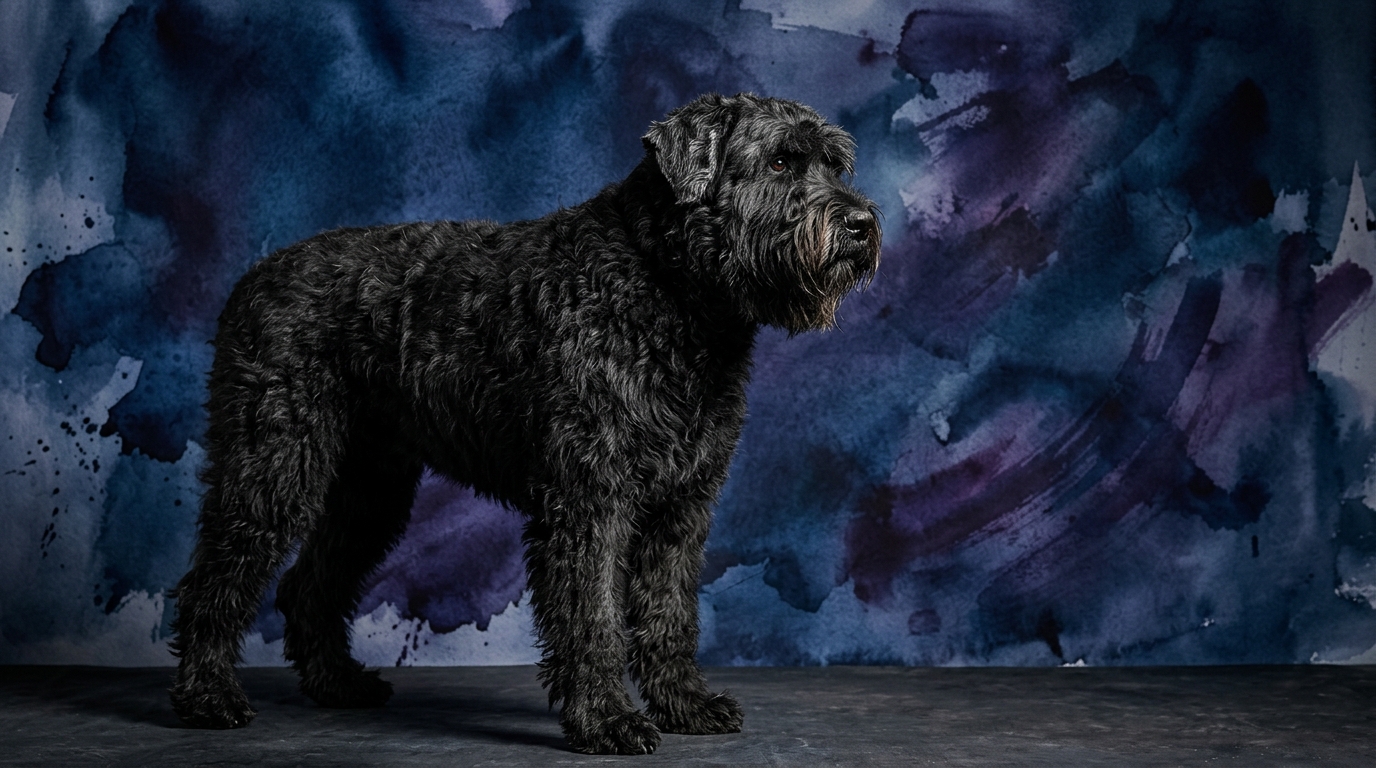

Side-by-Side IQ Profile: Herding Nuance vs. Guardian Resolve
At The Cosmic Pet Pet IQ Lab, we evaluate canine intelligence across five key dimensions: problem solving, training speed, social intelligence, instinctive drive, and memory. Interestingly, both the Bouvier des Flandres, a dedicated herding dog, and the Cane Corso, a formidable working breed, register a consistent 3 out of 5 across all these cognitive metrics. However, these identical scores belie a profound difference in how their minds operate, shaped by centuries of selective breeding for distinct purposes.
For the Bouvier des Flandres, a problem-solving score of 3/5 reflects a capacity for strategic thinking in dynamic, live situations, such as anticipating livestock movements or navigating complex terrain to keep a flock cohesive. Their training speed, also 3/5, indicates a dog that learns new commands and routines with consistent effort, particularly when the tasks appeal to their innate desire for purposeful work. Social intelligence at 3/5 is deeply tied to their understanding of a handler's subtle cues and the intricate dynamics within a group, allowing them to respond appropriately to shifts in their environment or the moods of those they manage. Their instinctive drive, rated 3/5, is a powerful inherent urge to gather, protect, and direct, translating into a strong need for engaging mental and physical activity. Finally, a memory score of 3/5 means they retain complex routines, recall specific animal behaviors, and remember learned pathways or boundaries within their working domain, crucial for effective herding.
The Cane Corso, in contrast, applies its identical 3/5 scores through the lens of a guardian. Its problem-solving ability (3/5) is geared towards assessing and responding to potential threats, making swift, decisive judgments in protection scenarios, and understanding the boundaries of its territory. A training speed of 3/5 signifies their capacity to learn obedience commands and protection routines effectively when approached with a firm, fair, and consistent methodology, thriving on clear structure and leadership. Social intelligence at 3/5 is expressed through a keen discernment of family members from strangers, an ability to read human intentions, and an understanding of the social hierarchy within their household. Their instinctive drive, also 3/5, is rooted in an inherent compulsion to protect their family and property, a potent trait that requires careful, early channeling. Lastly, a memory score of 3/5 enables them to recall specific individuals as trusted friends or perceived threats, remember established rules, and retain knowledge of their designated 'safe' zones and territorial boundaries.
Where the Bouvier des Flandres Excels Cognitively
Despite sharing identical scores, the Bouvier des Flandres demonstrates particular cognitive strengths rooted in its herding lineage. Its problem-solving aptitude, while rated 3/5, often manifests as a more adaptive and nuanced approach to fluid situations. A Bouvier might excel at improvising solutions when faced with unpredictable livestock behavior or changing environmental conditions, using gentle pressure and strategic positioning rather than brute force. This breed's social intelligence, also 3/5, allows for a remarkable ability to read subtle environmental cues and handler intentions, enabling them to anticipate needs and react with a thoughtful, rather than purely reactive, response.
The Bouvier's memory, at 3/5, is particularly adept at recalling intricate sequences and patterns, making them excellent at tasks that involve multiple steps or navigating complex, familiar territories. This allows them to effectively manage a herd or patrol a property with an understanding of established routines and spatial awareness. Their instinctive drive, while strong, is often channeled into constructive tasks that require mental engagement, making them thrive on puzzles and activities that simulate their herding heritage, such as agility or obedience training with a focus on precision and thoughtful execution.
Where the Cane Corso Shines Cognitively
The Cane Corso’s cognitive strengths, also reflected in its 3/5 scores, are distinctively geared towards its guardian role. Its problem-solving ability, though rated 3/5, is characterized by resolute decision-making under pressure, particularly when assessing potential threats or protecting its family. This breed exhibits a focused determination to resolve issues directly and efficiently, prioritizing the safety of its charges. Their social intelligence, at 3/5, is marked by an acute ability to discern trustworthiness in strangers and to understand family dynamics, making them excellent judges of character within their defined social circle.
The Cane Corso’s memory, also 3/5, is exceptional for retaining information about perceived dangers or safe individuals, contributing to their unwavering loyalty and protective nature. They are unlikely to forget a negative encounter or a trusted friend. Their instinctive drive, while strong, is singularly focused on protection and loyalty, providing a powerful motivation for learning obedience and protection work. This drive, when properly guided, makes them incredibly dedicated and resilient in their tasks, capable of maintaining vigilance and focus over extended periods.
Training Dynamics: Independence vs. Purposeful Protection
When considering ease of training, both breeds present unique challenges and rewards, despite their identical training speed score of 3/5. The Bouvier des Flandres, with its herding background, possesses an independent streak and a mind that thrives on engagement. They can be thoughtful and sometimes stubborn, preferring to understand the 'why' behind a command rather than simply executing it. Training a Bouvier requires patience, creativity, and a consistent approach that makes learning feel like a collaborative, purposeful task, appealing to their inherent desire to work alongside their handler.
The Cane Corso, on the other hand, is driven by a strong desire to please its chosen leader and fulfill its protective role. While they learn quickly, their formidable size and powerful instinctive drive (3/5) mean that training must be firm, consistent, and begin early to establish clear boundaries and leadership. A Cane Corso requires an owner who can confidently guide their protective instincts, ensuring they develop into discerning guardians rather than reactive ones. Without clear direction, their inherent problem-solving (3/5) and instinctive drive can lead to undesired behaviors, as they will take on the role of decision-maker themselves.
Lifestyle Suitability: Task-Oriented Engagement vs. Structured Leadership
Matching these breeds to an owner's lifestyle hinges on understanding their cognitive needs. The Bouvier des Flandres, with its cognitive profile leaning towards adaptive problem-solving and nuanced social understanding, thrives with active, task-oriented owners. These dogs require consistent mental stimulation that goes beyond mere physical exercise; they need a 'job' or regular engagement in activities like advanced obedience, agility, tracking, or even herding trials. Owners who enjoy teaching complex sequences and appreciate a dog that thinks through problems will find the Bouvier a rewarding companion. A relaxed owner who cannot provide this mental outlet may find their Bouvier becomes bored, potentially leading to destructive behaviors or excessive barking as they invent their own tasks.
The Cane Corso, conversely, excels with owners who can provide strong, structured leadership and a clear sense of purpose. While they are certainly active dogs, their cognitive needs are met through consistent training, boundaries, and a defined role within the family unit. They are less about constant 'busy work' and more about being a vigilant, loyal companion who understands their place and responsibilities. Owners who appreciate a dog with a serious demeanor and are committed to consistent training and socialization will find the Cane Corso a devoted protector. A relaxed owner who struggles with assertiveness or consistency may find the Cane Corso's strong will and guardian instincts overwhelming, as the dog may step into the leadership vacuum.
The Verdict
Choose the Bouvier des Flandres if you are an active owner seeking a thoughtful, task-oriented companion who thrives on complex mental challenges and enjoys collaborative problem-solving. This breed excels when given a 'job' that engages its intelligent herding mind.
Opt for the Cane Corso if you are a confident, consistent leader seeking a devoted, protective companion who thrives on clear structure and a defined role within the family. This breed's powerful guardian instincts require dedicated guidance and socialization.
🧠 Find Your Pet's IQ Score
Our Pet IQ Lab assessment covers 25+ tests across 5 cognitive dimensions — personalized to your breed.
Take the Full IQ Test →Frequently Asked Questions
Are Bouvier des Flandres and Cane Corso difficult to train?
Both breeds are capable learners (training speed 3/5) but present different challenges. Bouviers can be independently minded and require engaging, consistent training, while Cane Corsos need firm, clear leadership to channel their strong protective instincts effectively.
Which breed is better with children?
Both breeds can be good with children when properly socialized and raised, but their approaches differ. Bouviers may display gentle herding behaviors, while Cane Corsos are typically watchful and protective of their family members, requiring supervision with very young children due to their size.
Do these breeds require a lot of exercise?
Yes, both the Bouvier des Flandres and the Cane Corso are working breeds with significant energy and mental stimulation needs. Bouviers thrive on purposeful activity and mental engagement, while Cane Corsos need regular physical exercise combined with consistent training and a clear role within the family structure to be well-adjusted.