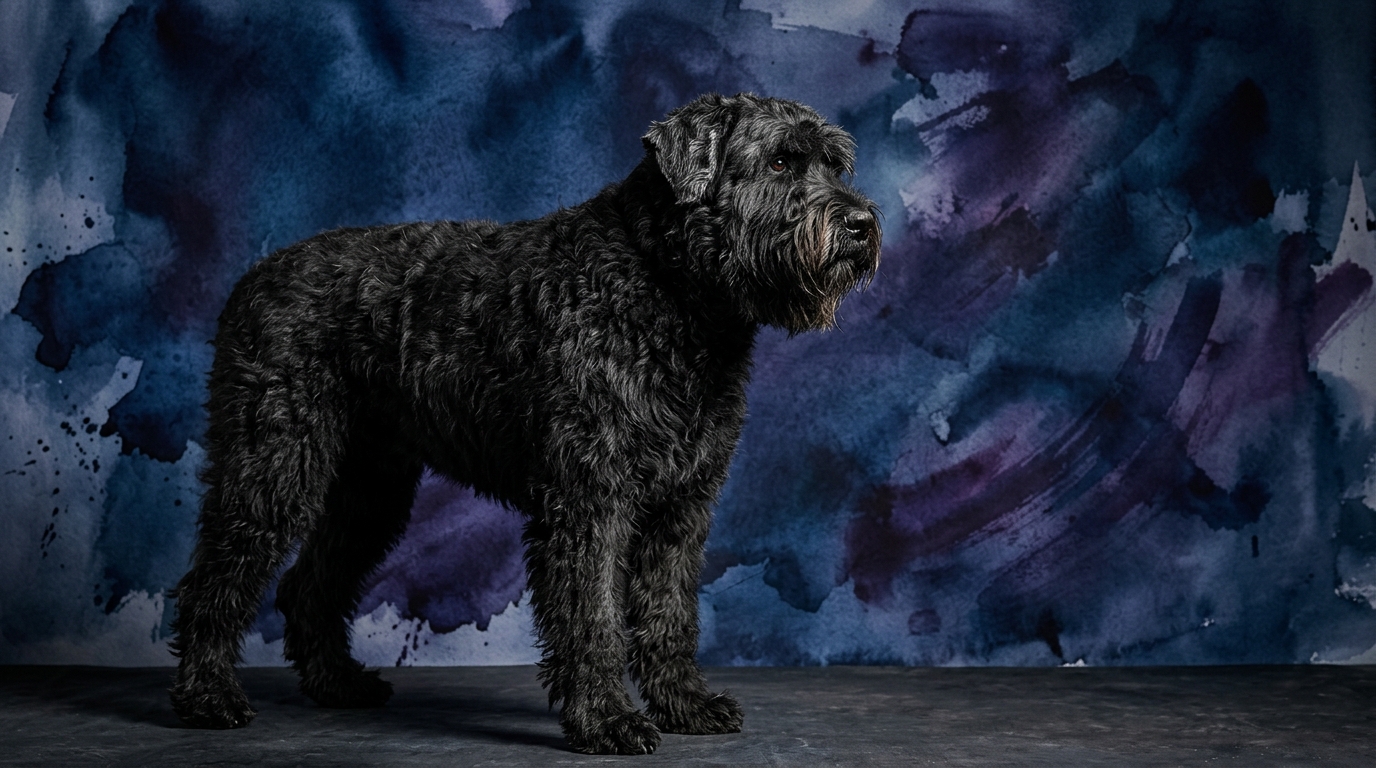
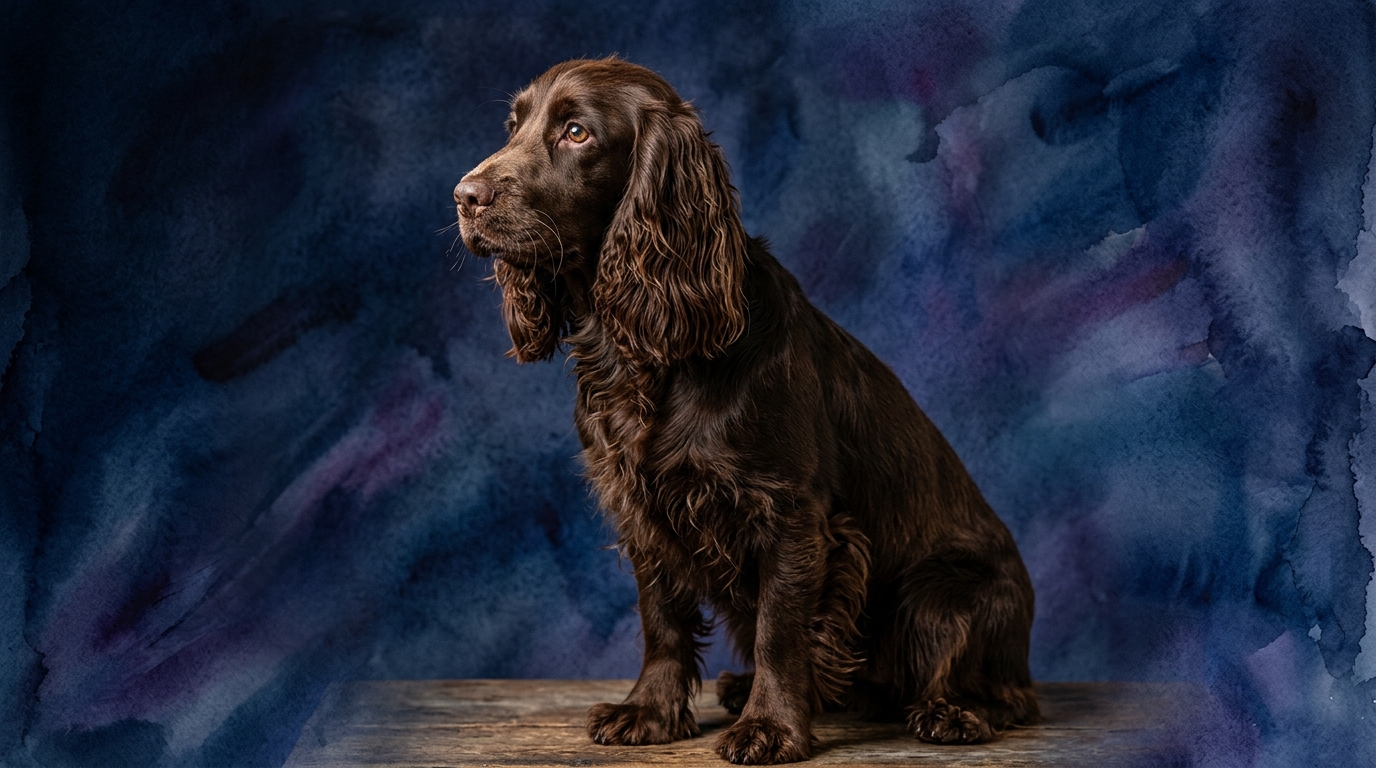
Side-by-Side Cognitive Profiles: Herding vs. Sporting Minds
The Cosmic Pet Pet IQ Lab evaluates canine cognition across five crucial dimensions, and for both the Bouvier des Flandres and the Field Spaniel, each dimension registers a solid 3 out of 5. This shared baseline suggests both breeds possess a capable, adaptable intellect, yet their historical roles as a robust herder and a keen sporting companion shape the specific flavor of their cognitive strengths. Understanding these nuances is key to appreciating their individual brilliance.
The Bouvier des Flandres, originating as a cattle herder and drover, exhibits its Problem Solving (3/5) through practical, dynamic strategies for managing livestock. This isn't about solving abstract puzzles, but rather about anticipating animal movements, blocking escape routes, and guiding a flock with intelligent foresight in changing environments. Their Training Speed (3/5) reflects an ability to learn commands and routines, but often with a thoughtful independence; they process information and may weigh it against their own judgment before complying, a trait valuable for autonomous herding work. Social Intelligence (3/5) for a Bouvier is highly focused; they read their handler's cues precisely and can discern threats to their charge, though they tend to be reserved with strangers, indicating a selective social processing rather than universal gregariousness. Instinctive Drive (3/5) is strongly rooted in their herding and protective instincts, providing a powerful motivation for work that needs careful channeling. Their Memory (3/5) is robust, allowing them to recall complex routes, livestock patterns, and command sequences over time, essential for consistent performance in their demanding role.
In contrast, the Field Spaniel, bred for flushing and retrieving game, showcases its Problem Solving (3/5) through sensory analysis and environmental navigation. This involves efficiently searching varied terrain, locating game through scent, and adapting their approach to different cover types. Their Training Speed (3/5) is characterized by an eager-to-please attitude combined with a keen observational capacity; they learn quickly when tasks are engaging and align with their natural drives, though their strong nose can sometimes lead to momentary distraction. Social Intelligence (3/5) in a Field Spaniel manifests as a cooperative partnership with their human companion; they excel at reading subtle handler signals in a hunting context and generally display an amiable disposition. Instinctive Drive (3/5) is powerfully geared towards scent work, flushing, and retrieving, making them highly motivated by tasks that tap into these natural behaviors. Their Memory (3/5) allows them to retain knowledge of hunting locations, scent patterns, and handler expectations, contributing to their effectiveness as a reliable sporting dog.
Cognitive Edge: Where the Bouvier des Flandres Shines
Despite identical 3/5 scores, the Bouvier des Flandres demonstrates a particular cognitive strength in strategic, independent decision-making, honed by centuries of herding. Their Problem Solving, while rated 3/5, leans heavily into complex spatial reasoning and anticipatory planning; moving a large, dynamic group of animals requires predicting individual and collective movements, blocking specific paths, and guiding them towards a goal, often without direct, moment-to-moment handler instruction. This means they excel at processing multiple variables simultaneously and formulating a plan of action. Their instinctive drive, equally rated 3/5, fuels a discerning watchfulness and a protective intelligence. They are adept at assessing situations for potential threats or deviations from order, making autonomous judgments based on their learned patterns and inherent protective nature. This cognitive emphasis on independent, strategic oversight allows them to manage complex, live 'puzzles' with a unique blend of discernment and self-reliance.
Cognitive Edge: Where the Field Spaniel Excels
The Field Spaniel, also scoring 3/5 across the board, possesses a distinct cognitive advantage in sensory discrimination and cooperative synchronicity. Their Problem Solving is deeply tied to their acute olfactory senses; they demonstrate superior ability in processing and following intricate scent trails, distinguishing target scents from a myriad of environmental distractions, and navigating varied landscapes to locate game. This involves a rapid, iterative process of sensory input and physical action. Their Social Intelligence, while also 3/5, is geared towards a highly responsive partnership. They excel at working in close concert with a handler, often in distracting environments, requiring fine-tuned attention to human body language, voice commands, and signals. This cooperative intelligence means they are particularly adept at reading and responding to their human partner's intent, showcasing a cognitive style that prioritizes harmonious teamwork and precise execution within a shared objective.
Training Dynamics: Independence vs. Distractibility
Both breeds register a 3/5 for Training Speed, indicating they are capable learners but present different considerations for handlers. The Bouvier des Flandres, with its herding heritage, can exhibit a strong-willed, independent streak. Their problem-solving capacity sometimes translates into a tendency to 'think things through' before complying, especially if a command seems illogical or conflicts with their perceived duty, such as protecting their family. Training requires immense consistency, clear expectations, and a confident, experienced handler who can establish leadership. They respond best to fair, firm methods and thrive when given a 'job' that engages their strategic mind, rather than rote repetition. Their protective instincts, while valuable, must be carefully managed through early socialization and training to ensure appropriate responses to new situations.
The Field Spaniel, while equally capable of learning, often displays an eagerness to please that can make them seem more biddable. However, their powerful instinctive drive for scent work means they can be easily distracted by interesting smells or the desire to explore. Training success often hinges on making sessions engaging, incorporating positive reinforcement, and understanding their need for mental stimulation that taps into their natural retrieving and scenting abilities. They are less likely to challenge authority than a Bouvier, but a handler must be prepared to manage their focus, particularly in stimulating outdoor environments. For a novice owner, the Field Spaniel might feel 'easier' due to their generally more agreeable nature, provided the owner can manage their innate curiosity and strong nose.
Lifestyle Match: Active Engagement vs. Balanced Activity
Matching a dog's cognitive and physical needs to an owner's lifestyle is paramount for a harmonious relationship. The Bouvier des Flandres thrives with active owners who can provide not just physical exercise but also consistent mental challenges. Their robust physique and strategic mind demand regular, vigorous activity like long hikes, running, or participation in dog sports such as obedience, agility, or protection work. More importantly, their problem-solving and instinctive drive mean they require a 'job' or regular training exercises that engage their intellect. Owners who prefer a more relaxed lifestyle may find the Bouvier's demands overwhelming, as insufficient mental and physical engagement can lead to boredom, frustration, and potentially destructive behaviors stemming from their unchanneled cognitive energy.
The Field Spaniel, while also an active breed, often fits a slightly broader range of owner lifestyles. They require regular exercise, enjoying walks, retrieving games, and swimming, and benefit greatly from activities like scent work or trick training that engage their keen senses and cooperative intelligence. However, once their exercise needs are met, they are generally content to relax indoors with their family, displaying a more 'off-switch' than the constantly assessing Bouvier. They are well-suited for active families who enjoy outdoor adventures but also appreciate a calm, affectionate companion at home. While they need mental stimulation, it doesn't always have to be a 'job' in the same demanding sense as for a Bouvier; engaging play and consistent, positive training often suffice to keep their minds sharp and satisfied.
The Verdict
Choose the Bouvier des Flandres if you are an experienced owner seeking a discerning, protective partner who thrives on strategic challenges and requires firm, consistent guidance and a dedicated 'job' to fulfill their complex cognitive needs.
Opt for the Field Spaniel if you desire a cooperative, sensitive companion who excels in sensory tasks and enjoys an active family life balanced by affectionate relaxation, provided you can manage their strong scent drive and keep training engaging.
🧠 Find Your Pet's IQ Score
Our Pet IQ Lab assessment covers 25+ tests across 5 cognitive dimensions — personalized to your breed.
Take the Full IQ Test →Frequently Asked Questions
Do their working backgrounds truly influence how their 3/5 problem-solving scores manifest?
Absolutely. For the Bouvier, 3/5 problem-solving involves strategic planning for dynamic livestock management, anticipating movements and making autonomous decisions. For the Field Spaniel, it's about sensory analysis and navigation, efficiently using their nose to locate game and adapt to varied terrain, showcasing their intellect through different practical applications.
How do their social intelligence scores of 3/5 manifest differently between the two breeds?
The Bouvier's 3/5 social intelligence is often discerning and focused, reading handler cues precisely for work and being reserved with strangers, indicating a selective social processing. The Field Spaniel's 3/5 social intelligence leans towards cooperative partnership, excelling at reading subtle handler signals in a hunting context and generally displaying a more amiable, integrated family disposition, valuing harmonious interaction.
Is one breed generally better suited for first-time dog owners?
While both breeds have capable intellects, the Field Spaniel might be a more manageable choice for a first-time owner due to their generally more eager-to-please nature and less challenging independence. The Bouvier's strong will and protective instincts require a more confident, experienced handler who can provide consistent leadership and structure from the outset.