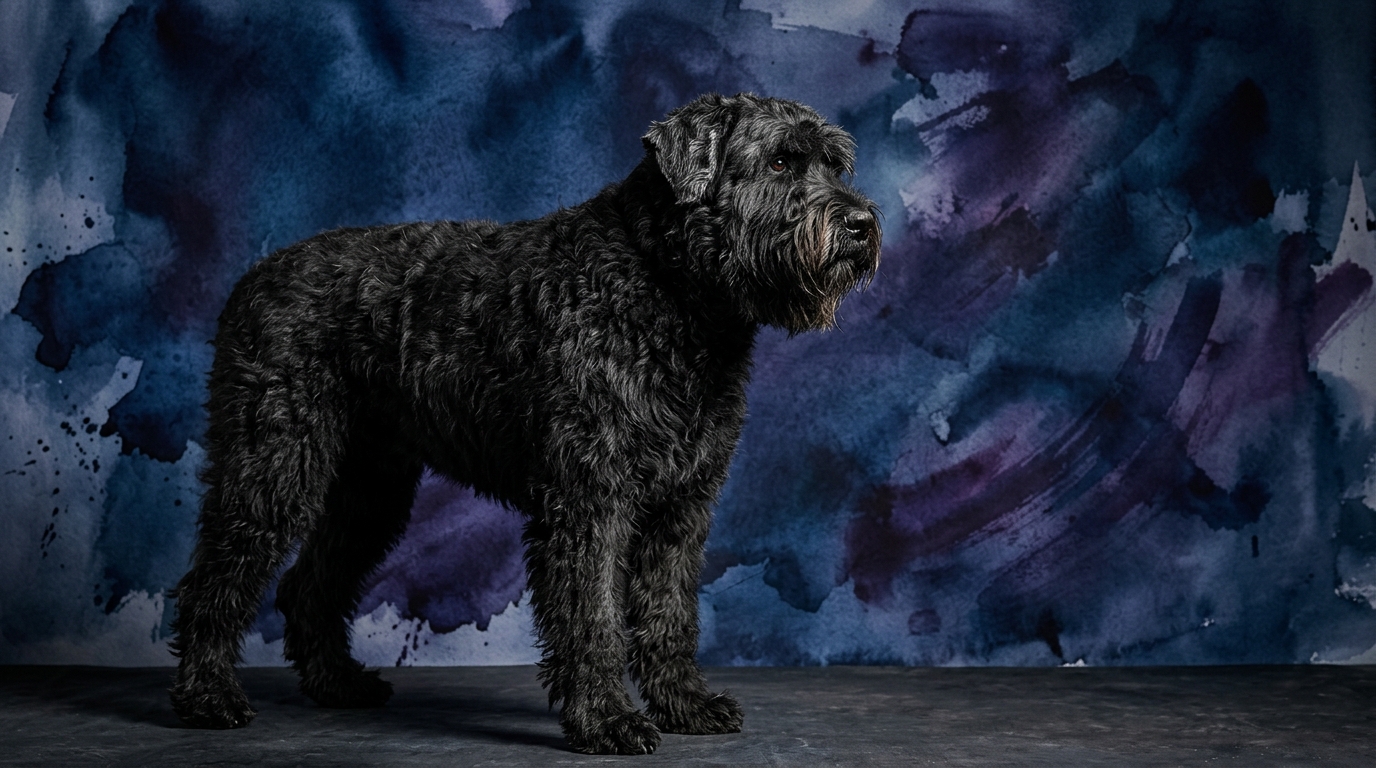

Side-by-Side IQ Profile: Bouvier des Flandres vs. Flat-Coated Retriever
The Cosmic Pet Pet IQ Lab employs a five-dimensional framework to assess canine intelligence, offering a nuanced view of each breed's cognitive strengths. For the Bouvier des Flandres, a robust herding dog, we observe a consistent '3/5' across all five dimensions: problem solving, training speed, social intelligence, instinctive drive, and memory. This score suggests a dog that is capable and deliberate, rather than overtly flashy in its cognitive displays. Their problem-solving at 3/5 indicates a methodical approach to challenges, often preferring to work through issues with persistence rather than immediate, novel solutions. A 3/5 in training speed implies they learn new commands at a moderate pace, requiring consistent reinforcement and clear, patient instruction to truly internalize new behaviors. Their social intelligence at 3/5 points to an awareness of human cues and pack dynamics, but often with a reserved demeanor that values earned trust. Instinctive drive at 3/5 reflects a balanced, yet noticeable, urge to perform their historical herding duties, without being excessively intense. Finally, a 3/5 in memory suggests they retain learned information and experiences reasonably well, forming a reliable, albeit not perfect, recall of past interactions and training.
In contrast, the Flat-Coated Retriever, a cheerful sporting dog, presents a slightly different cognitive profile, often scoring higher in key areas. They achieve a '4/5' in problem solving, indicating a more adaptable and ingenious mind, capable of quickly assessing new situations and devising effective solutions. Their training speed also scores '4/5', signifying a keen willingness and capacity to absorb and apply new commands and behaviors rapidly, often driven by a desire to please. Similar to the Bouvier, their social intelligence registers '3/5', showing good awareness of social cues and interactions, though typically expressed with more overt enthusiasm. Their instinctive drive also aligns at '3/5', reflecting a balanced urge for retrieving and interactive play, characteristic of the sporting group. The most striking cognitive advantage for the Flat-Coated Retriever is their '5/5' in memory, an exceptional ability to retain information over long periods. This superior recall means they rarely forget a lesson, a route, or a past interaction, building a robust foundation for cumulative learning and reliable performance across various tasks. Furthermore, the Flat-Coated Retriever's Coren rank of #17 underscores its widely recognized capacity for obedience and adaptive intelligence in a working context.
Where Bouvier des Flandres Wins Cognitively
While the Flat-Coated Retriever generally exhibits quicker cognitive processing in several areas, the Bouvier des Flandres's '3/5' scores across the board signify a unique and advantageous cognitive style, particularly in contexts demanding steadfastness and independent judgment. Their problem-solving, though perhaps not as rapid as a Flat-Coat's, is characterized by a profound, methodical persistence. A Bouvier facing a novel obstacle might take more time to process, but once committed to a solution, they demonstrate an unwavering determination to see it through, often relying on their own assessment rather than immediate human direction. This deliberate approach can be incredibly valuable in situations requiring sustained focus and resilience, where impetuous actions might be counterproductive. Their herding heritage emphasizes intelligent self-reliance, meaning they are accustomed to making decisions in the field with minimal direct instruction, a form of cognitive independence that fosters deep, internal understanding.
Furthermore, the Bouvier's 3/5 in social intelligence, when interpreted through the lens of their working background, often translates into a more discerning and deeply bonded relationship with their primary caregivers. Unlike breeds that might offer effusive charm to all, a Bouvier's trust and affection are often profoundly earned. This can result in a relationship built on mutual respect and a quiet understanding, where their social intelligence allows them to interpret subtle cues within their trusted circle, leading to a loyal companionship that is less about overt eagerness and more about unwavering dedication. Their moderate instinctive drive, while not as intense as some working breeds, ensures they have a strong sense of purpose without being overly restless, allowing them to channel their cognitive energy effectively into purposeful tasks or protective roles.
Where Flat-Coated Retriever Wins Cognitively
The Flat-Coated Retriever demonstrates clear cognitive advantages, particularly in areas that emphasize adaptability, learning speed, and recall. Their '4/5' in problem-solving highlights a natural ingenuity and flexibility, enabling them to quickly assess new situations and devise effective solutions. This agility of thought makes them adept at navigating complex environments, learning new games, or figuring out puzzle toys with relative ease. They are often observed experimenting with different approaches to achieve a goal, showcasing a proactive and creative intellect that thrives on mental engagement. This cognitive flexibility is a significant asset for owners seeking a dog that can readily adapt to various activities and new challenges, making them versatile companions in dynamic households.
The most striking cognitive edge for the Flat-Coat is their '5/5' memory, a truly exceptional ability to retain information over long periods. This superior recall means they rarely forget a lesson, a command, a route, or a past interaction, building a robust foundation for cumulative learning and reliable performance. Whether it's remembering complex obedience routines or the location of a hidden toy from weeks ago, their memory bank is expansive and readily accessible. This trait significantly enhances their trainability, allowing them to build upon previously learned skills with remarkable efficiency. Paired with their '4/5' training speed, which reflects a keen eagerness to learn and a strong desire to please, Flat-Coats are often quick to grasp new concepts and enthusiastically apply them, making training sessions highly productive and enjoyable for both dog and owner. Their moderate instinctive drive (3/5) ensures they have sufficient motivation for retrieving and other sporting activities without being overwhelming, allowing their superior memory and training speed to shine in focused tasks.
Which is Easier to Train and Why
When considering ease of training, the Flat-Coated Retriever generally holds an edge over the Bouvier des Flandres, primarily due to their superior scores in training speed and memory. The Flat-Coat's '4/5' training speed signifies a quick uptake of new commands and a strong intrinsic motivation to cooperate, often driven by their desire to please their human companions. This, combined with their '5/5' memory, means that once a concept is learned, it is deeply ingrained and reliably recalled, making consistency in training pay off quickly. They thrive on positive reinforcement and interactive methods, and their enthusiastic nature makes them eager participants in learning sessions, often requiring fewer repetitions to achieve mastery. Their background as retrievers emphasizes partnership and responsiveness, traits that naturally translate into an easier training experience for most owners.
The Bouvier des Flandres, with a '3/5' in training speed and memory, presents a different training dynamic. While certainly capable of learning a vast array of commands, they often require more patience, consistency, and creative motivation. Their herding background instilled a degree of independent thought and self-reliance, which can sometimes be interpreted as stubbornness if not managed with understanding. They are not always as overtly eager to please as a retriever, preferring to process information and make their own decisions. Training a Bouvier requires establishing clear boundaries, using consistent methods, and often finding what truly motivates them – whether it's praise, a favorite toy, or a tasty treat. Once they understand and accept a command, their adherence can be rock-solid, but the initial learning phase may take more time and effort compared to the Flat-Coat.
Which Suits Active Owners vs. Relaxed Owners
Neither the Bouvier des Flandres nor the Flat-Coated Retriever could be accurately described as suitable for truly 'relaxed' owners, as both breeds possess significant energy levels and require consistent mental and physical engagement. However, the *nature* of their activity needs differs. The Flat-Coated Retriever, with its '3/5' instinctive drive and buoyant personality, thrives on interactive play, retrieving games, and opportunities to run and explore. They are often described as perpetual puppies, maintaining a playful exuberance well into adulthood. Active owners who enjoy daily long walks, runs, hiking, swimming, or engaging in dog sports like agility, obedience, or flyball will find a highly enthusiastic and willing partner in a Flat-Coat. Their cognitive agility and exceptional memory also mean they benefit immensely from regular training sessions and puzzle toys that challenge their quick minds, making them ideal for owners who enjoy structured activities and continuous learning with their dog.
The Bouvier des Flandres, also with a '3/5' instinctive drive, requires a different kind of active engagement. Their robust build and herding heritage mean they need purposeful activity that engages both their body and their thoughtful mind. While they enjoy walks and outdoor adventures, they truly excel when given a job to do. This could involve advanced obedience, protection work, herding trials, or even simply rigorous daily training that challenges their problem-solving abilities. Owners who appreciate a dog that is a diligent worker and can commit to providing consistent, structured exercise and mental stimulation will find a loyal and capable companion. While they might not possess the same effervescent energy as a Flat-Coat, their stamina and need for purpose mean they are not content to be couch potatoes and require an owner who is prepared for consistent, engaged activity rather than passive companionship.
The Verdict
Choose the Bouvier des Flandres if you seek a steadfast, independent, and deeply loyal companion who thrives on purposeful work and whose trust is profoundly earned through consistent, patient guidance.
Opt for the Flat-Coated Retriever if you desire a lively, highly responsive, and exceptionally trainable partner, eager for interactive play, quick to learn, and capable of excelling in a wide range of activities due to their remarkable memory.
🧠 Find Your Pet's IQ Score
Our Pet IQ Lab assessment covers 25+ tests across 5 cognitive dimensions — personalized to your breed.
Take the Full IQ Test →Frequently Asked Questions
Are Bouvier des Flandres difficult to train?
With a training speed score of 3/5, Bouvier des Flandres are capable learners but require more patience, consistency, and clear motivation than some other breeds. Their independent nature, stemming from their herding background, means they may take more time to process commands but will be steadfast once a concept is mastered.
Do Flat-Coated Retrievers require a lot of mental stimulation?
Yes, Flat-Coated Retrievers, with their 4/5 problem-solving and 5/5 memory scores, thrive on mental challenges. They benefit greatly from regular training sessions, puzzle toys, and engaging activities that utilize their quick wit and exceptional recall, preventing boredom and channeling their intelligence constructively.
How do their social intelligence scores affect their family interactions?
Both breeds score 3/5 in social intelligence, indicating good awareness of human cues. For the Bouvier, this often manifests as a discerning loyalty, forming deep bonds with their family after trust is established. The Flat-Coat's social intelligence, while similar in score, typically comes with more overt enthusiasm and a joyful interaction style, making them generally outgoing with their trusted circle.