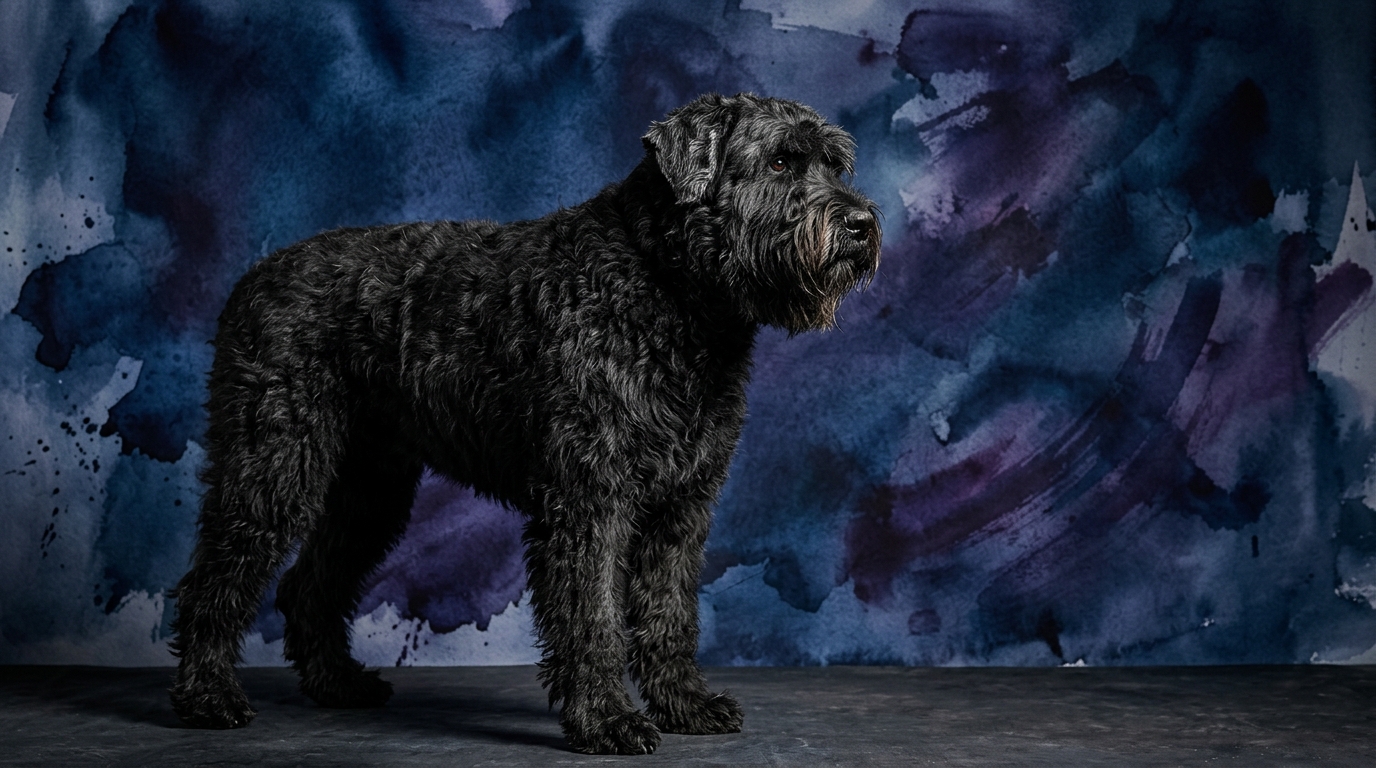

Side-by-Side IQ Profile: Unpacking Identical Scores
In The Cosmic Pet Pet IQ Lab, both the Bouvier des Flandres and the Manchester Terrier register a 3 out of 5 across all five measured dimensions of intelligence. This numerical parity, however, belies the rich, distinct ways each breed's cognition operates, deeply influenced by their historical purposes and inherent temperaments.
The **Bouvier des Flandres**, a robust Herding dog, expresses its Problem Solving acumen through strategic thinking in dynamic, real-world scenarios, particularly those involving managing movement or anticipating actions. This intelligence isn't about solving abstract puzzles but about assessing complex situations, like guiding a flock or protecting a perimeter, and making independent, informed decisions. Their Training Speed reflects a solid capacity to learn new commands and routines, often requiring thoughtful, consistent guidance; they grasp concepts effectively but their independent nature means they process information and decide to comply rather than offering immediate, eager responses. Social Intelligence in a Bouvier means they are acutely aware of their human family's dynamics, often displaying a discerning understanding that allows them to gauge moods and intentions, forming deep bonds while remaining reserved with strangers. Their Instinctive Drive is powerfully rooted in herding and guarding, channeling their cognitive energy into observing, organizing, and protecting, translating into an innate desire for purpose and a watchful presence. Finally, their Memory is robust, allowing them to recall complex routines, commands, and the people and places significant to them over long periods, making them reliable and consistent partners.
The **Manchester Terrier**, a spirited Terrier breed, demonstrates its Problem Solving skills through practical, often self-serving ingenuity, whether it's figuring out how to access a forbidden treat, outsmarting a small critter, or navigating complex environments to reach a desired object. Their intelligence is often expressed through cunning and resourceful approaches to challenges. Their Training Speed is typically quick, picking up new commands and tricks with lively eagerness when motivated, but their independent and sometimes stubborn terrier nature means consistency and engaging methods are crucial to maintain their focus and ensure compliance. Manchester Terriers exhibit a keen Social Intelligence, particularly in observing their human companions and their surroundings; they are alert and attentive, often reading subtle cues and reacting to changes in their environment, though they can be more selective in their social interactions than some breeds. Their Instinctive Drive is defined by a powerful prey drive and a desire to 'work,' manifesting as a strong inclination to chase, dig, and explore, channeling their energy into tasks that satisfy these inherent terrier traits. Their Memory is sharp, particularly for experiences linked to rewards, consequences, or exciting events, allowing them to remember places where they've found interesting scents or successful hunting spots, and recall complex sequences that lead to desired outcomes.
Where Bouvier des Flandres Wins Cognitively
The Bouvier des Flandres' cognitive strengths lean towards strategic planning and a nuanced understanding of complex, multi-variable situations, particularly those involving group dynamics or protection. Their herding background cultivates a unique ability to anticipate movement and make independent judgments within a structured framework, demonstrating a thoughtful, deliberative intelligence. They often process information with a deeper consideration for cause and effect in their environment, making them adept at tasks requiring foresight, a calm demeanor, and the ability to maintain order. This manifests as an impressive capability for tasks that demand sustained focus and the integration of multiple pieces of information to achieve a long-term objective, such as advanced obedience sequences or protective roles, where their steady discernment is invaluable.
Where Manchester Terrier Wins Cognitively
The Manchester Terrier shines in rapid assessment and inventive problem-solving, especially when faced with novel challenges or opportunities for independent action. Their terrier heritage imbues them with a quick-witted resourcefulness, allowing them to adapt swiftly to new situations and devise clever solutions to achieve their goals, whether it's navigating an obstacle course, finding a way to retrieve a hidden toy, or outmaneuvering a perceived pest. This breed's intelligence is characterized by its agility of thought, a keen observational sense, and a persistent, often audacious, approach to challenges. They excel at tasks requiring quick reflexes and an opportunistic mindset, demonstrating a vibrant, 'on-the-fly' intelligence that can be both entertaining and, at times, surprisingly cunning.
Which is Easier to Train and Why
Training ease between these breeds is less about raw learning capacity and more about motivational approach and handler consistency. The Bouvier des Flandres, while possessing a solid training speed score, often requires a patient, consistent handler who respects their independent decision-making process. They learn effectively through clear, fair communication and thrive with tasks that leverage their desire for purpose, though their occasional aloofness means they might deliberate before responding, requiring a handler who can inspire cooperation rather than demand blind obedience. Their training requires understanding their thoughtful nature and providing reasons for compliance.
The Manchester Terrier, conversely, is quick to grasp commands and enjoys engagement, often demonstrating a lively enthusiasm for learning new things. However, their strong prey drive and independent streak can lead to selective hearing if something more interesting captures their attention, demanding a handler who can consistently hold their focus. Training a Manchester often demands creativity, high-value rewards, and a firm but playful approach to channel their energetic focus and prevent boredom-induced mischief. Their quickness to learn is balanced by a need for constant mental engagement to prevent them from applying their problem-solving skills to less desirable activities.
Which Suits Active Owners vs. Relaxed Owners
For active owners seeking a canine partner for structured activities or a watchful companion, the Bouvier des Flandres is an excellent fit. They thrive with owners who provide consistent mental challenges, whether through advanced obedience, protection sports, or simply by giving them a 'job' around the house, like supervising family activities or participating in long, purposeful walks. Their need for intellectual engagement and a sense of purpose means a more relaxed owner might find them developing their own, potentially undesirable, projects out of boredom or a lack of direction, as their intelligence demands an outlet. They are not content to be mere couch potatoes.
The Manchester Terrier, while also energetic, suits owners who appreciate a spirited, agile companion for various dog sports like agility, earthdog trials, or long, exploratory walks where their keen senses can be engaged. Their cognitive drive is often satisfied by varied stimulation, opportunities to exercise their natural instincts for chasing and sniffing, and interactive play that taps into their quick wit. This makes them less suitable for owners preferring a purely sedentary lifestyle, as boredom can lead to inventive, often mischievous, behaviors like excessive digging or finding ways to escape. They need consistent physical and mental outlets to channel their lively intelligence productively.
The Verdict
Opt for a Bouvier des Flandres if you value a thoughtful, protective companion capable of independent decision-making in complex situations and are prepared to engage their deliberative intelligence with consistent, purposeful training.
Select a Manchester Terrier if you seek a quick-witted, resourceful, and spirited partner who excels at inventive problem-solving and thrives with an owner who can channel their energetic terrier instincts into engaging activities.
🧠 Find Your Pet's IQ Score
Our Pet IQ Lab assessment covers 25+ tests across 5 cognitive dimensions — personalized to your breed.
Take the Full IQ Test →Frequently Asked Questions
Do Bouvier des Flandres and Manchester Terriers learn at the same pace?
While both breeds score 3/5 in training speed, their learning styles differ. Bouviers are deliberate and consistent once they grasp a concept, often requiring thoughtful processing, while Manchester Terriers are often quicker to pick up new commands but may require more engaging methods to maintain focus due to their independent nature.
Which breed is better at understanding human emotions?
Both score 3/5 in social intelligence, but they express it differently based on their roles. Bouviers often demonstrate a deeper, protective understanding of family dynamics, while Manchester Terriers are acutely observant of their surroundings and human cues, often reacting with alertness and sometimes a discerning reserve towards strangers.
How do their instinctive drives impact their cognitive behavior?
The Bouvier's herding and guarding instincts drive their strategic problem-solving and watchful memory for routines and family safety. The Manchester Terrier's strong prey drive and curiosity fuel their resourceful problem-solving and sharp memory for exciting or rewarding experiences, often manifesting as a persistent investigative and exploratory nature.