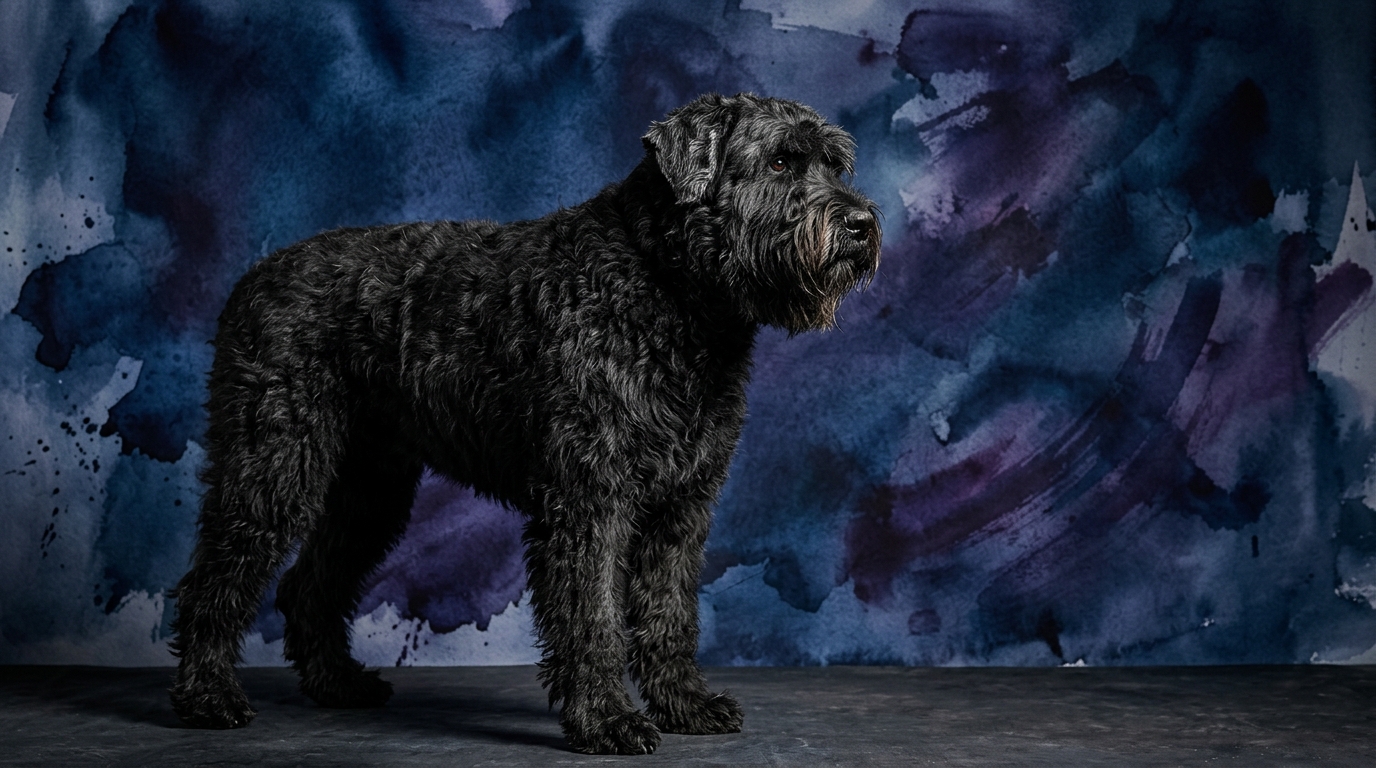
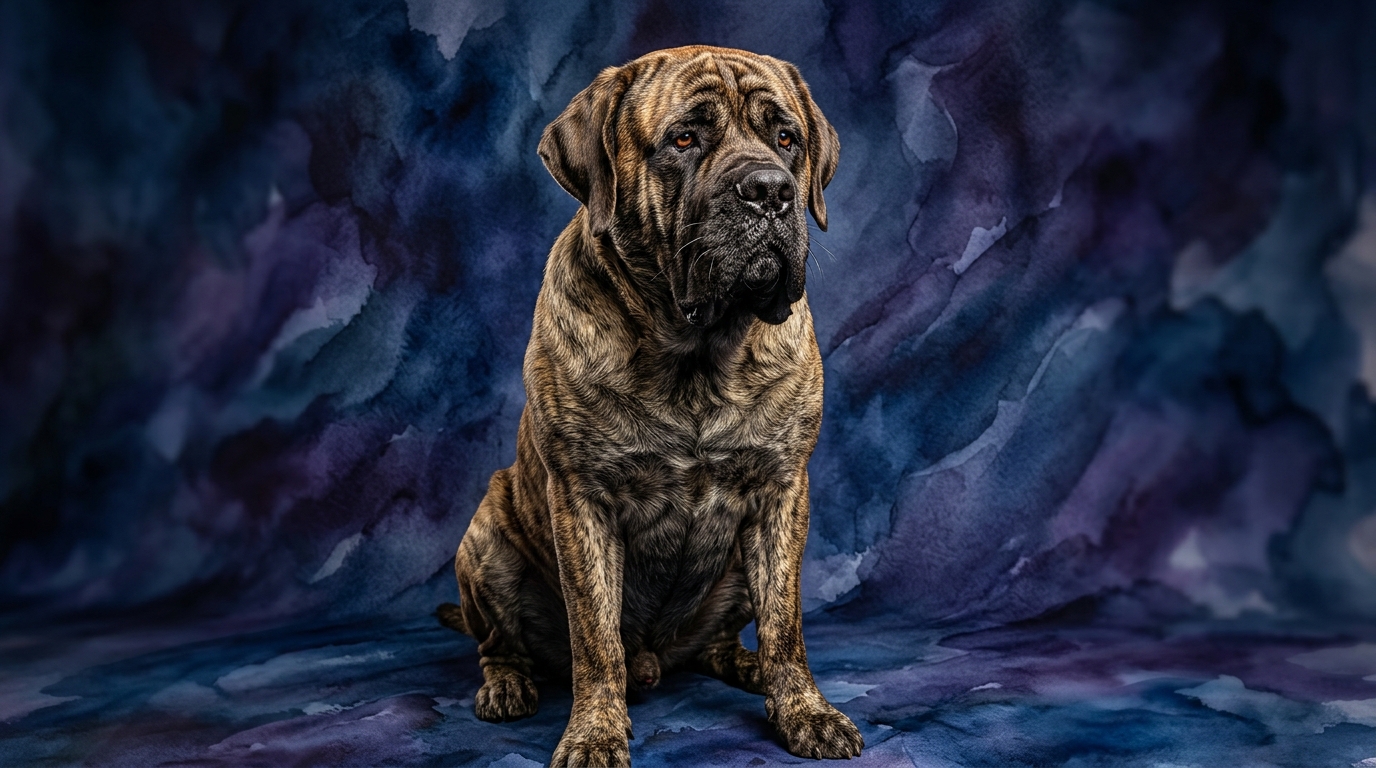
Side-by-Side IQ Profile: Herding Wit vs. Guardian Discernment
Both the Bouvier des Flandres and the Mastiff register a consistent 3/5 across The Cosmic Pet Pet IQ Lab's five cognitive dimensions, yet their historical roles sculpt how these scores translate into everyday behavior and intellectual application. For the Bouvier des Flandres, a robust herding dog, a 3/5 in Problem Solving speaks to its capacity for independent decision-making in dynamic, unpredictable environments, such as separating livestock or navigating complex terrain without direct human instruction. Its 3/5 Training Speed reflects a dog capable of absorbing intricate commands and sequences, though often coupled with a strong-willed nature that requires consistent, engaging motivation. Social Intelligence at 3/5 for the Bouvier indicates an awareness of family dynamics and human emotions, alongside a discerning, often reserved approach to strangers. Its Instinctive Drive, also 3/5, is powerfully geared towards working, protecting, and managing, needing an outlet for its innate herding and guarding tendencies. Finally, a 3/5 Memory means the Bouvier effectively retains learned behaviors, past experiences, and routines, allowing for reliable task execution over time.
The Mastiff, a venerable working dog primarily tasked with guarding, interprets these identical 3/5 scores through a different lens. Its Problem Solving at 3/5 is less about actively manipulating an environment and more about discerning threats, assessing situations calmly, and making judicious decisions about protection. This breed's 3/5 Training Speed highlights its ability to learn and retain commands steadily, though often with a more deliberate, less flashy response than some breeds; patience and positive reinforcement are key. Social Intelligence at 3/5 for the Mastiff signifies a profound emotional connection to its family, a deep understanding of their moods, and a highly discerning, almost intuitive grasp of who belongs and who doesn't. Its Instinctive Drive, also 3/5, is overwhelmingly focused on guardianship and companionship, a powerful, unwavering desire to be near and protect its loved ones rather than engaging in active work. A 3/5 Memory for the Mastiff ensures it remembers family members, routines, and past interactions, contributing to its steadfast loyalty and reliable judgment.
Where the Bouvier des Flandres Wins Cognitively
The Bouvier des Flandres, with its heritage rooted in managing livestock across varied terrains, excels in cognitive areas demanding active engagement and quick adaptation. Its specific advantage lies in dynamic problem-solving, where it needs to assess rapidly changing situations and make independent decisions. A Bouvier's intelligence is geared towards anticipating movement, evaluating spatial relationships, and responding with agility—mentally and physically—to maintain control, whether that's with a flock of sheep or navigating a complex obstacle course. This breed demonstrates a superior capacity for initiative when a direct command isn't immediately available, a critical trait for a herding dog that might be working at a distance from its handler. This manifests as a dog that can 'think on its feet,' making it particularly adept at tasks requiring fluid strategy rather than rote memorization.
Furthermore, the Bouvier's specific blend of Problem Solving and Instinctive Drive (both 3/5) allows it to thrive in environments where its cognitive faculties are actively challenged to find solutions. This isn't just about following orders; it's about understanding the *goal* of the task and figuring out the best way to achieve it, often involving creative or independent approaches. Its memory (3/5) supports this by allowing it to recall successful strategies and apply them to new, similar challenges, making it a highly adaptable and resourceful problem-solver in practical, real-world scenarios.
Where the Mastiff Wins Cognitively
The Mastiff's cognitive strengths are profoundly shaped by its role as a guardian, manifesting in a discerning and steadfast intelligence. Where the Bouvier excels in active manipulation, the Mastiff shines in observational acumen and subtle social intelligence. Its 3/5 Problem Solving isn't about herding, but about evaluating potential threats with an almost stoic calm, understanding the nuances of human interaction, and making judgments that prioritize the safety of its family. This breed demonstrates a superior capacity for reading subtle cues—body language, tone of voice, changes in routine—and reacting appropriately, often with a measured, imposing presence rather than overt aggression.
The Mastiff's particular cognitive edge lies in its combination of Social Intelligence and Memory (both 3/5), which allows it to form exceptionally deep bonds and understand the intricate social fabric of its human family. It remembers who belongs, who is a regular visitor, and who is truly an outsider, and its protective instincts are activated with a remarkable level of discernment. This breed excels at providing a consistent, calming presence, demonstrating a profound understanding of its territory and routines. Its intelligence is less about rapid physical response and more about unwavering vigilance, quiet assessment, and an impressive capacity for patient observation, making it a master of subtle, yet powerful, deterrence.
Training: Guiding the Will vs. Cultivating Patience
When it comes to ease of training, the Bouvier des Flandres and the Mastiff present distinct challenges and rewards, despite their identical 3/5 Training Speed scores. The Bouvier, while capable of learning quickly, often possesses an independent streak born from its herding heritage, where it needed to make decisions without constant handler input. This can manifest as stubbornness if training isn't engaging, consistent, and delivered with firm, positive leadership. Owners must channel the Bouvier's strong instinctive drive (3/5) and problem-solving abilities (3/5) into structured tasks, using its desire to 'work' as a primary motivator. A Bouvier will often question the 'why' behind a command, and successful training involves demonstrating the purpose and making it a collaborative effort, rather than a mere obedience exercise. They respond well to agility, advanced obedience, and any activity that allows them to use their minds and bodies in concert.
The Mastiff, conversely, requires a training approach built on immense patience, consistency, and understanding of its deliberate nature. While its 3/5 Training Speed indicates it can learn, it's not a breed known for lightning-fast reactions or an eager-to-please exuberance during training sessions. Their sheer size and desire for comfort mean they may be slower to respond, not out of defiance, but often due to their relaxed temperament and a preference for not expending unnecessary energy. Training a Mastiff is about cultivating trust and respect, using gentle encouragement and positive reinforcement. They thrive on routine and a calm environment. Early socialization and consistent basic obedience are paramount due to their immense power and protective instincts, ensuring they learn appropriate responses to various stimuli without becoming reactive. Owners should avoid harsh methods, as a Mastiff is more likely to shut down than to comply under pressure.
Matching Breeds to Lifestyles: Active Engagement vs. Serene Companionship
The distinct cognitive profiles and temperaments of the Bouvier des Flandres and the Mastiff naturally align with different owner lifestyles. The Bouvier is ideally suited for active owners who relish engaging with their dog in structured activities. This breed thrives with a 'job' and requires significant mental and physical stimulation to prevent boredom and destructive behaviors. Owners who enjoy dog sports like agility, obedience, protection work, or even just long, challenging hikes will find a willing and capable partner in the Bouvier. Its 3/5 instinctive drive means it needs an outlet for its energy and intelligence, making it less suitable for a sedentary household. An owner who understands and can channel its independent problem-solving and herding instincts will unlock the Bouvier's full potential as a devoted and highly capable companion.
In contrast, the Mastiff is a better fit for relaxed owners who appreciate a steadfast, calm, and devoted companion. While large, their energy requirements are moderate, preferring regular, leisurely walks over intense, prolonged exercise. This breed excels in a home environment where its primary 'role' is companionship and guardianship, often content to observe and be near its family. Its 3/5 social intelligence makes it deeply attuned to its owners, and it thrives on a predictable routine and a peaceful atmosphere. Owners must be prepared to manage a dog of immense size and strength, but for those seeking a gentle giant with a profound protective instinct and a loving, serene presence, the Mastiff is an unmatched choice. It is less suited for owners looking for a high-energy dog to accompany them on extreme adventures, preferring instead the comforts of home and the security of its family's presence.
The Verdict
Choose the Bouvier des Flandres if you are an active owner seeking an engaged, adaptable working partner for dog sports or challenging tasks, capable of independent thought and dynamic problem-solving. This breed thrives with consistent mental and physical stimulation, offering a robust partnership for those ready to channel its strong working drive.
Opt for the Mastiff if you are a patient, relaxed owner desiring a calm, devoted guardian and steadfast companion who excels at subtle social discernment and unwavering loyalty. This breed offers a serene presence and profound protective instincts, thriving in a home environment that values routine, comfort, and companionship.
🧠 Find Your Pet's IQ Score
Our Pet IQ Lab assessment covers 25+ tests across 5 cognitive dimensions — personalized to your breed.
Take the Full IQ Test →Frequently Asked Questions
Do Bouvier des Flandres and Mastiffs have the same intelligence?
While both breeds share identical 3/5 scores across five cognitive dimensions in The Cosmic Pet Pet IQ Lab, their intelligence manifests differently due to their distinct historical roles. The Bouvier's smarts lean towards dynamic problem-solving and independent action, while the Mastiff's intelligence focuses on discerning social cues and protective judgment.
Which breed is better for first-time dog owners?
Neither breed is typically recommended for novice owners without significant commitment to training and socialization. Bouviers require experienced handling to channel their independent herding drive, while Mastiffs, despite their calm demeanor, demand owners who can manage their immense size and strong protective instincts responsibly.
How much exercise do these breeds need?
Bouvier des Flandres require substantial daily exercise and mental stimulation, thriving on activities like long walks, training, or dog sports to satisfy their working drive. Mastiffs, while large, have lower energy needs; they benefit from regular, moderate walks and prefer comfort and companionship over intense physical exertion.