A Side-by-Side Look at Their Cognitive Profiles
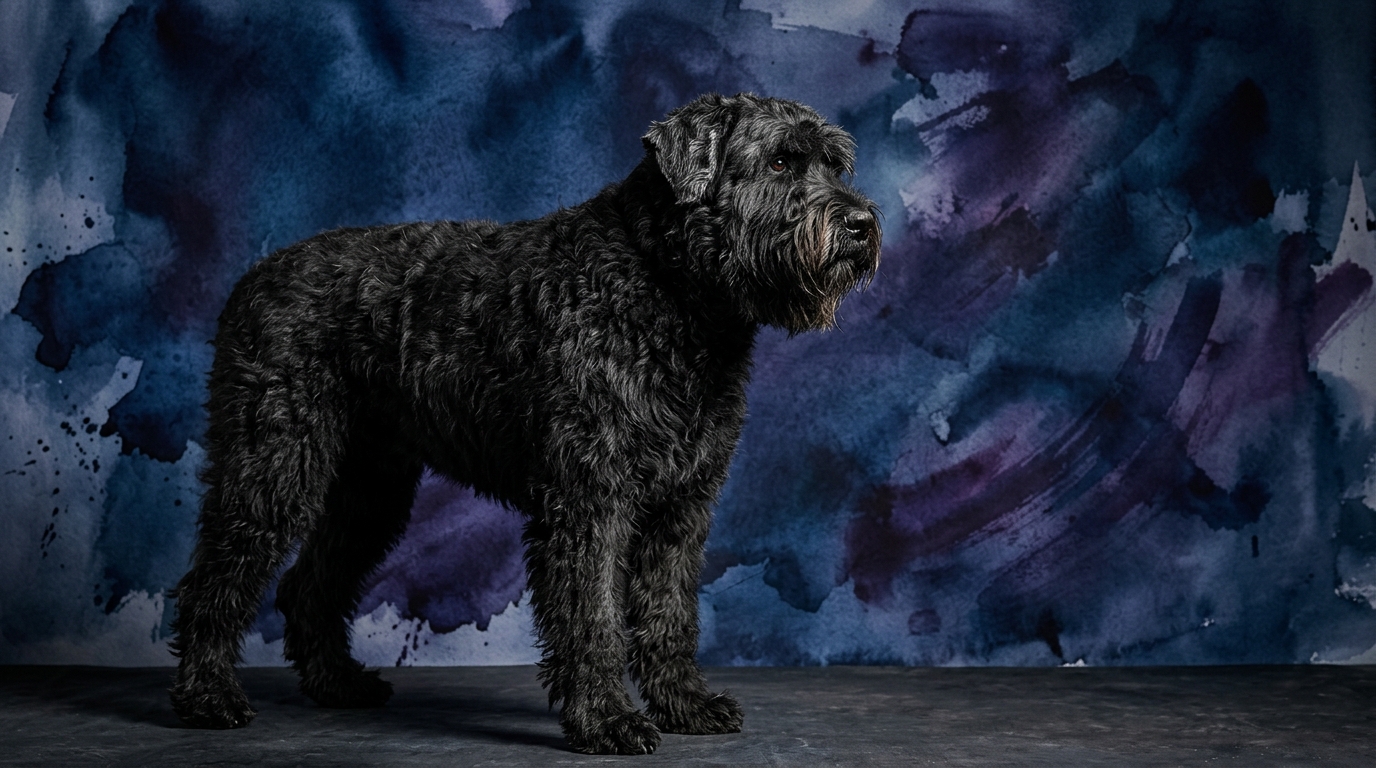
The Cosmic Pet Pet IQ Lab provides a detailed breakdown of canine cognitive abilities across five key dimensions. For the Bouvier des Flandres, we observe a consistent profile: Problem Solving at 3/5, Training Speed at 3/5, Social Intelligence at 3/5, Instinctive Drive at 3/5, and Memory at 3/5. This suggests a balanced and steady approach to various mental tasks, indicating a reliable, methodical learner and companion.
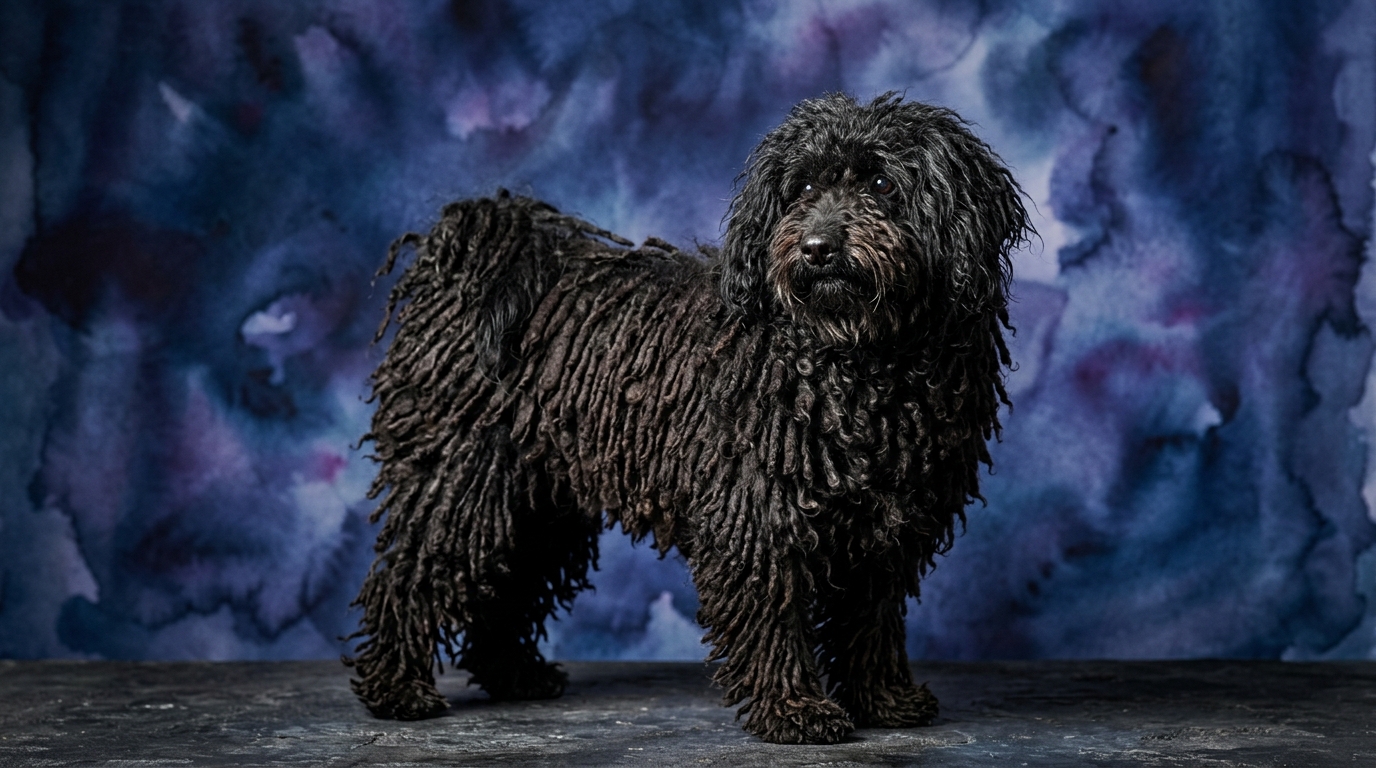
In contrast, the Puli presents a slightly different cognitive architecture. Its Problem Solving is rated at 4/5, Training Speed at 4/5, Social Intelligence at 3/5, Instinctive Drive at 3/5, and Memory at 4/5. Notably, the Puli is also Coren-ranked at #25, a metric not available for the Bouvier des Flandres. These higher scores in specific areas point to a dog that processes information and learns new tasks with greater speed and strategic depth, while sharing a similar baseline in social understanding and innate drive with the Bouvier.
Where the Bouvier des Flandres Excels Cognitively
While the Puli shows higher scores in certain areas, the Bouvier des Flandres's uniform 3/5 across all cognitive dimensions signifies a unique strength: remarkable consistency and reliability. This balanced profile suggests a dog that applies a steady, deliberate cognitive effort to every task, from deciphering a new command to interpreting a social cue. Its problem-solving approach is methodical rather than impulsive, ensuring thoroughness even if not lightning-fast. This consistency translates into a predictable and dependable partner, especially in roles requiring sustained focus and unwavering dedication.
The Bouvier's steady social intelligence means it reliably understands human intentions and environmental cues, fostering a deep, stable bond. Its consistent training speed indicates it will learn and retain commands effectively, albeit requiring more repetition and patience than some faster-paced breeds. This methodical learning builds a robust foundation, making the Bouvier a steadfast performer once a task is mastered. Its cognitive strength lies in its unwavering mental fortitude and its ability to maintain a consistent level of engagement and understanding across a diverse range of situations, making it a reliable choice for owners who value predictability and a deliberate pace.
Where the Puli Excels Cognitively
The Puli's cognitive profile showcases a distinct advantage in areas requiring rapid processing and strategic thinking. With a Problem Solving score of 4/5, the Puli demonstrates an impressive capacity to independently assess novel situations and devise effective solutions. This trait is invaluable for a herding dog, enabling it to react dynamically to changing flock movements and complex environmental challenges.
Its Training Speed of 4/5 means the Puli grasps new commands and routines with remarkable swiftness, often requiring fewer repetitions to achieve proficiency. This quick learning ability is powerfully supported by its 4/5 Memory score, allowing it to retain a vast repertoire of learned behaviors and experiences over extended periods. This combination of rapid acquisition and strong recall makes the Puli exceptionally adaptable and capable of mastering intricate sequences and sophisticated tasks. The Puli's cognitive strengths make it a nimble-minded companion, thriving on mental engagement and demonstrating a keen ability to learn, adapt, and perform with precision, making it a rewarding partner for owners who enjoy complex training and interactive challenges.
Training Dynamics: Which is Easier and Why?
When considering ease of training, the Puli's cognitive scores suggest a more straightforward and often faster learning process. Its 4/5 Training Speed indicates that a Puli will typically pick up new commands and concepts more rapidly than a Bouvier. This means fewer repetitions are needed, and the dog is likely to generalize learned behaviors to different contexts more readily. The Puli's 4/5 Memory also ensures that once a command is learned, it is retained effectively, reducing the need for constant refreshers. This breed often enjoys the mental challenge of learning, making training sessions engaging and productive.
The Bouvier des Flandres, with its 3/5 Training Speed and Memory, requires a more patient, consistent, and structured approach. While certainly capable of learning complex tasks, a Bouvier will typically need more repetitions and a longer period to solidify new commands. Their learning style is more deliberate, but once a behavior is ingrained, their consistent nature ensures reliable execution. For example, teaching a multi-step obedience routine might see a Puli stringing commands together after fewer attempts, internalizing the sequence quickly. A Bouvier, while equally capable of mastering the same routine, will benefit from a more incremental teaching method, with each step practiced thoroughly before moving on, relying on its steadfast memory for dependable recall.
Matching Canine Cognition to Owner Lifestyle
The Puli's cognitive profile makes it an excellent match for active owners who relish providing significant mental stimulation and engaging in complex activities. Its high problem-solving ability and rapid training speed mean a Puli thrives on challenges such as advanced obedience, agility, flyball, or puzzle toys that demand strategic thought. These dogs require an owner who can consistently provide novelty and intellectual engagement, preventing boredom that might otherwise lead to self-directed (and potentially unwanted) problem-solving behaviors. An owner who enjoys a dynamic, interactive relationship built around learning new skills will find the Puli a highly responsive and gratifying companion, appreciating a dog that thinks on its feet and enjoys a mental workout as much as a physical one.
The Bouvier des Flandres, while also an active working breed, suits owners who appreciate a more consistent and deliberate partnership. Its balanced cognitive scores indicate a dog that benefits from routine, clear expectations, and purposeful work where reliability is paramount. While they need ample physical exercise, their cognitive needs are met more by consistent application of learned skills in a structured environment rather than constant novelty. Bouvier owners are often drawn to their steadfast nature for activities like hiking, carting, protection work, or consistent farm duties, where their dependable memory and methodical problem-solving contribute to a strong, unwavering partnership. They are well-suited for active owners who value a dog's consistent dedication and predictable responses over lightning-fast adaptability, finding satisfaction in a deep, reliable bond forged through shared, purposeful activities.
The Verdict
Choose the Bouvier des Flandres if you seek a steadfast, reliable companion with a consistent cognitive approach to tasks, valuing predictability and a strong, dependable partnership in your daily life.
Choose the Puli if you desire a quick-witted, agile learner who thrives on complex mental challenges and enjoys mastering new skills with impressive speed and retention in a dynamic environment.
🧠 Find Your Pet's IQ Score
Our Pet IQ Lab assessment covers 25+ tests across 5 cognitive dimensions — personalized to your breed.
Take the Full IQ Test →Frequently Asked Questions
Are Bouvier des Flandres or Puli better for first-time dog owners?
Neither breed is typically recommended for completely novice owners due to their strong herding instincts and potential for independent thought. The Puli's quick wit can be challenging if not properly channeled, while the Bouvier's determined nature requires confident leadership. Both benefit from owners experienced in positive reinforcement training and breed-specific needs, understanding their working dog heritage.
Do both Bouvier des Flandres and Puli require significant exercise?
Yes, both Bouvier des Flandres and Puli are working breeds and require significant daily exercise to remain physically and mentally content. This includes vigorous walks, opportunities for off-leash running in secure areas, and engaging in activities that stimulate their natural drives. Inadequate exercise can lead to boredom and behavioral issues in both breeds, manifesting as destructive behaviors or excessive vocalization.
How do their herding instincts differ in practical terms for a family pet?
The Puli's herding instinct often manifests as a desire to 'manage' its family, gently nudging or blocking paths, reflecting its historical role as an agile flock manager. The Bouvier's instinct is typically more about guarding and containing, positioning itself to oversee its 'flock' (family) and property, reflecting its role as a drover and protector. Both require early socialization and consistent training to channel these drives appropriately in a pet setting, ensuring they become well-adjusted family members rather than overzealous herders.