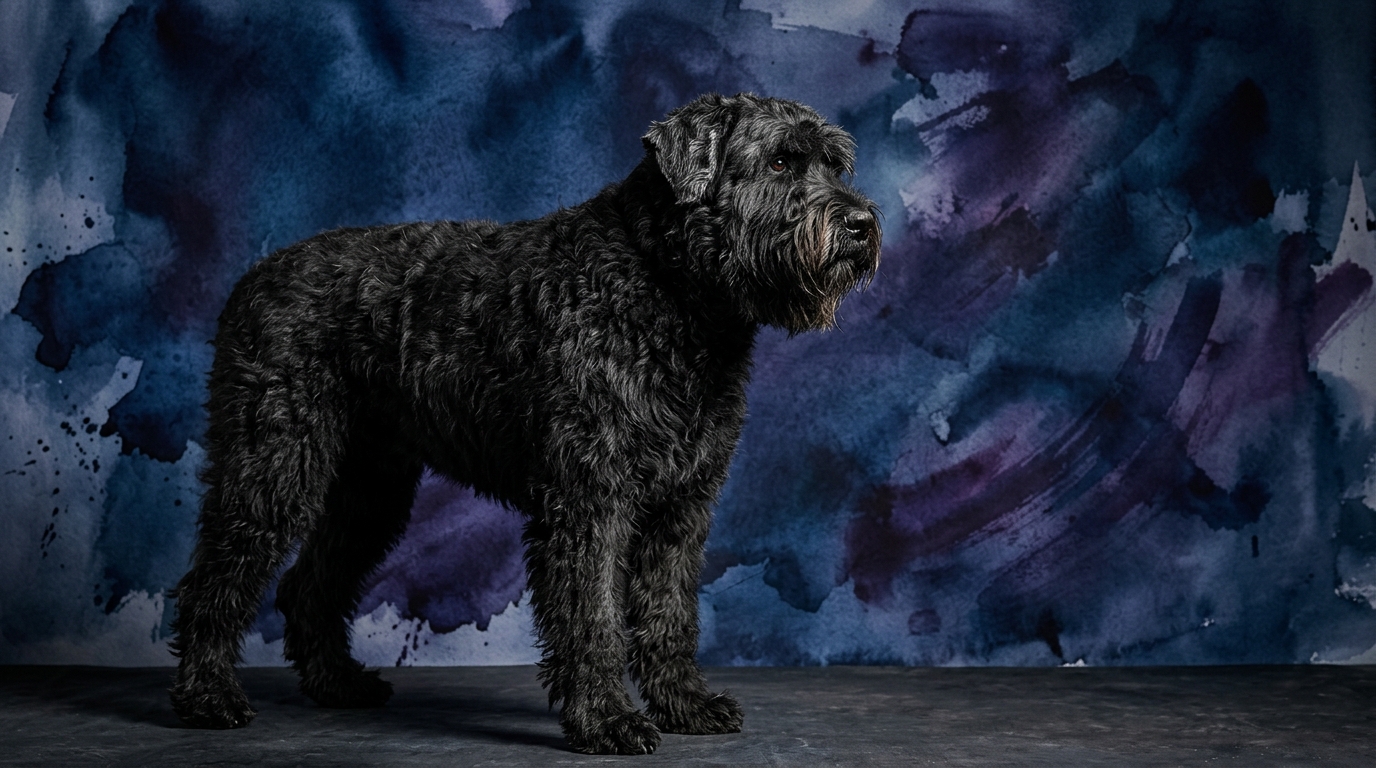
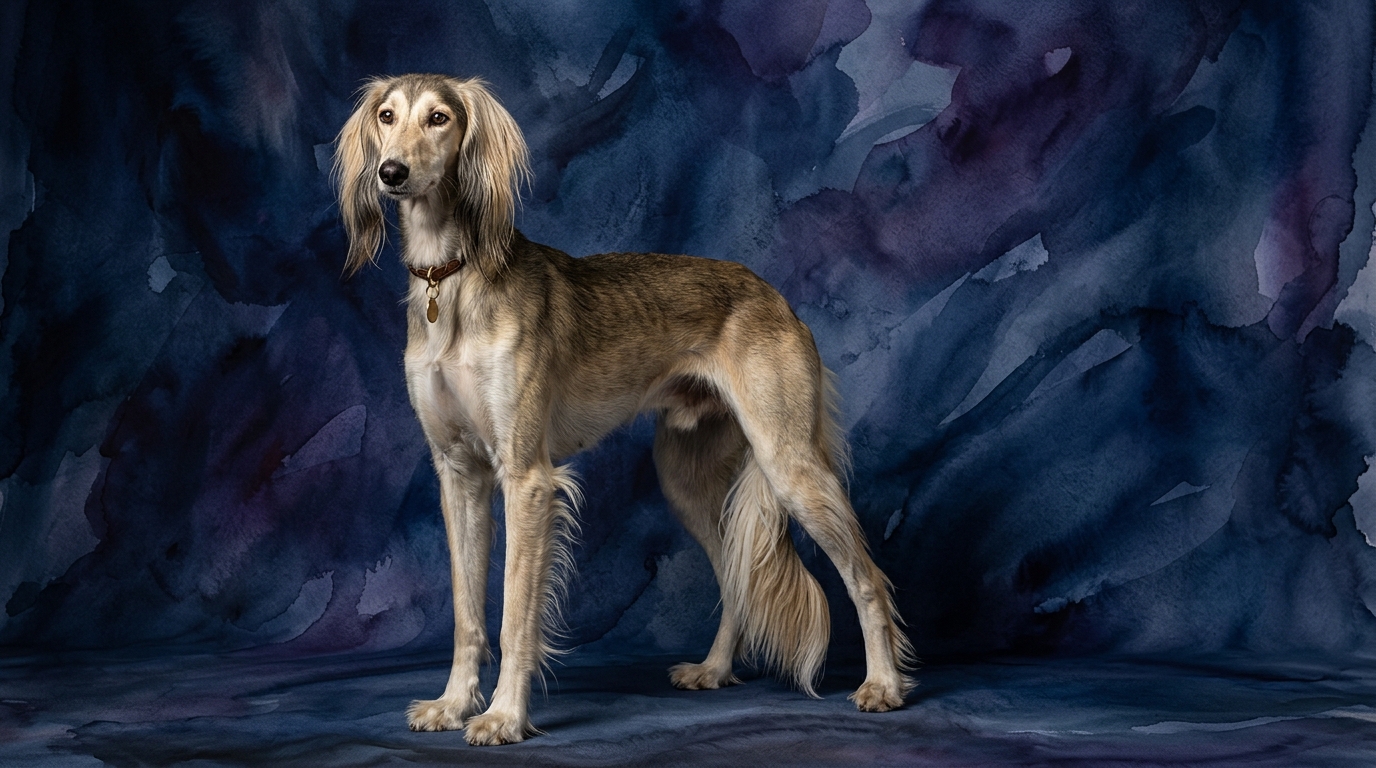
Side-by-Side IQ Profile: Unpacking Identical Scores
The Cosmic Pet Pet IQ Lab rates both the Bouvier des Flandres and the Saluki with a 3/5 across Problem Solving, Training Speed, Social Intelligence, Instinctive Drive, and Memory. This parity in ratings might suggest similar cognitive experiences, yet a closer look through the lens of their breed-specific histories reveals how these scores manifest uniquely in each.
For Problem Solving (3/5), the Bouvier des Flandres typically exhibits a methodical, persistent approach to practical, physical obstacles. Their solutions often involve determined, step-by-step cognitive processes, rooted in their history as cattle drovers and farm guardians, where systematic thinking was crucial. In contrast, a Saluki's 3/5 in problem-solving is usually more intuitive and reactive, particularly when their strong prey drive is engaged. They might rapidly assess the most efficient route to a visual target or navigate complex terrain with agile, independent decisions, prioritizing speed and instinct over methodical planning.
Regarding Training Speed (3/5), the Bouvier des Flandres is a capable learner, but their independent working dog heritage means they thrive with clear, consistent instruction and a compelling 'why' for each task. They absorb complex sequences effectively once the purpose is understood, though their resolute nature can sometimes be perceived as stubbornness if motivation isn't explicit. The Saluki, also rated 3/5, grasps concepts readily, yet their sighthound independence often means compliance isn't guaranteed. They learn quickly when tasks are engaging or align with their chase instincts, but may appear less responsive to repetitive drills that lack intrinsic reward, frequently prioritizing their own interests.
Social Intelligence (3/5) in a Bouvier des Flandres indicates a discerning awareness, typically forming deep bonds with their immediate family and exhibiting protective behaviors. They read their handler's cues precisely and are often reserved and watchful with strangers, assessing intentions before engagement, a valuable trait for their guarding role. A Saluki's 3/5 in social intelligence often manifests as a quiet perceptiveness. They are sensitive to household dynamics and human emotions, often choosing who to interact with and when, rather than seeking constant attention, demonstrating an independent yet attuned understanding of their environment.
The Instinctive Drive (3/5) for a Bouvier des Flandres is strongly tied to their herding and guarding heritage, manifesting as a compelling urge to manage their surroundings, keep their 'flock' (family) together, and protect their territory. This makes them vigilant and purposeful in their actions. For the Saluki, their 3/5 in instinctive drive is predominantly a powerful, visually-triggered prey drive. This instinct fuels their desire to chase anything that moves quickly, making them incredibly swift and focused when pursuing a target, a deep-seated trait from their desert hunting origins.
Finally, Memory (3/5) in a Bouvier des Flandres enables them to retain complex routines, command sequences, and territorial boundaries effectively, which is vital for their working roles. They remember learned tasks and social interactions with consistency, contributing to their reliability. A Saluki's 3/5 in memory is frequently linked to spatial awareness and the recall of visual cues or successful hunting strategies. They remember routes, the locations of interesting stimuli, and past experiences with keen precision, particularly when it relates to their independent pursuits.
Where Bouvier des Flandres Excels Cognitively
The Bouvier des Flandres shines in cognitive areas demanding sustained focus and methodical execution. Their problem-solving, while rated 3/5, is geared towards practical, physical challenges, allowing them to systematically overcome obstacles or perform multi-step tasks. This breed demonstrates a remarkable ability to retain complex sequences for extended periods, a testament to their memory score, crucial for mastering intricate herding patterns or advanced obedience routines. Their social intelligence, though also 3/5, is particularly adept at discerning threats and understanding nuanced family dynamics, making them astute protectors who read their primary handlers with precision. This capacity for consistent, purpose-driven cognitive engagement sets them apart.
Where Saluki Excels Cognitively
The Saluki's cognitive strengths lie in rapid, intuitive processing and independent decision-making, particularly in dynamic, open environments. Their 3/5 problem-solving manifests as an ability to make split-second judgments, like choosing the optimal path during a high-speed chase, where quick adaptation is paramount. Their memory, also 3/5, is acutely tuned to spatial recall and visual cues, allowing them to remember vast hunting grounds or the precise location of a fleeting target. Furthermore, their social intelligence, while subtle, is highly perceptive, enabling them to navigate complex social situations with a refined independence, often choosing engagement on their own terms rather than seeking constant interaction. This blend of swift reactivity and discerning autonomy is a hallmark of their cognitive profile.
Training Dynamics: Bouvier des Flandres vs. Saluki
When considering ease of training, the Bouvier des Flandres, despite its 3/5 training speed, often presents a more straightforward path for handlers who appreciate structure and purpose. Their working dog background means they are generally motivated to perform tasks and respond well to clear, consistent direction. They learn best when a command has a logical purpose, and their inherent desire to 'do a job' aligns with traditional training methods. While they can be resolute, their persistence also means they will commit to a task once they understand it, making them reliable partners in obedience or competitive sports.
Conversely, the Saluki, also with a 3/5 training speed, can be perceived as more challenging in conventional obedience due to their profound independence and sighthound nature. They are not primarily driven by a desire to please and may quickly lose interest in repetitive drills that don't offer immediate, high-value rewards or align with their instincts. Training a Saluki requires creativity, patience, and finding intrinsic motivators, such as engaging their chase drive or offering novel, stimulating activities. They grasp concepts quickly when interested, but their willingness to comply is often a matter of choice, requiring a handler to build a relationship based on mutual respect and understanding rather than strict command and control.
Suitability for Active vs. Relaxed Owners
For truly active owners, both breeds offer unique opportunities, though their energy expressions differ significantly. An active owner seeking a partner for structured activities, such as advanced obedience, protection sports, or herding trials, will find the Bouvier des Flandres an excellent match. They thrive on mental engagement and physical work that provides a sense of purpose, requiring consistent challenges to prevent boredom. Their stamina and robust build make them suitable for long, purposeful outings, but they also appreciate dedicated indoor family time.
An active owner with a penchant for speed and independent exercise might lean towards the Saluki. These dogs require regular, intense bursts of running in securely fenced areas or specialized venues like lure coursing. While they possess incredible athletic ability, their exercise needs are often met with shorter, high-intensity sessions rather than prolonged endurance activities like a Bouvier. Despite their athletic demands, Salukis are often surprisingly calm and dignified indoors, enjoying comfortable lounging once their exercise requirements are satisfied. Neither breed is well-suited for a truly 'relaxed' owner who prefers minimal engagement; both require significant time and understanding to flourish, albeit in different ways.
The Verdict
Choose a Bouvier des Flandres if you seek a robust, discerning companion for structured work, valuing methodical problem-solving and a strong bond forged through shared tasks and consistent guidance. They thrive with owners who provide clear leadership and purposeful engagement.
Opt for a Saluki if you appreciate an independent, elegant companion with bursts of athletic energy, providing secure spaces for their running and enjoying a relationship built on mutual respect and subtle communication. They suit owners who understand and cater to their sighthound instincts.
🧠 Find Your Pet's IQ Score
Our Pet IQ Lab assessment covers 25+ tests across 5 cognitive dimensions — personalized to your breed.
Take the Full IQ Test →Frequently Asked Questions
Do identical IQ scores mean Bouviers and Salukis behave identically?
No, identical scores are a baseline measurement of cognitive potential, not a prediction of identical behavior. Their distinct breed histories and inherent temperaments mean these scores manifest in very different behavioral patterns and cognitive styles, influencing how they learn and interact with the world.
Which breed is better suited for a first-time dog owner?
Neither breed is typically recommended for first-time owners without significant prior research and commitment. Both the Bouvier des Flandres and the Saluki require dedicated training, early socialization, and a deep understanding of their unique drives to thrive and become well-adjusted companions.
How can I best provide mental stimulation for a Bouvier des Flandres or a Saluki?
For a Bouvier, structured training, complex puzzle toys, and 'job-like' activities such as herding games or advanced obedience are ideal for their methodical minds. For a Saluki, activities that engage their sight and chase drive, like lure coursing, interactive toys mimicking prey, and consistent positive reinforcement, are highly effective for their intuitive intelligence.