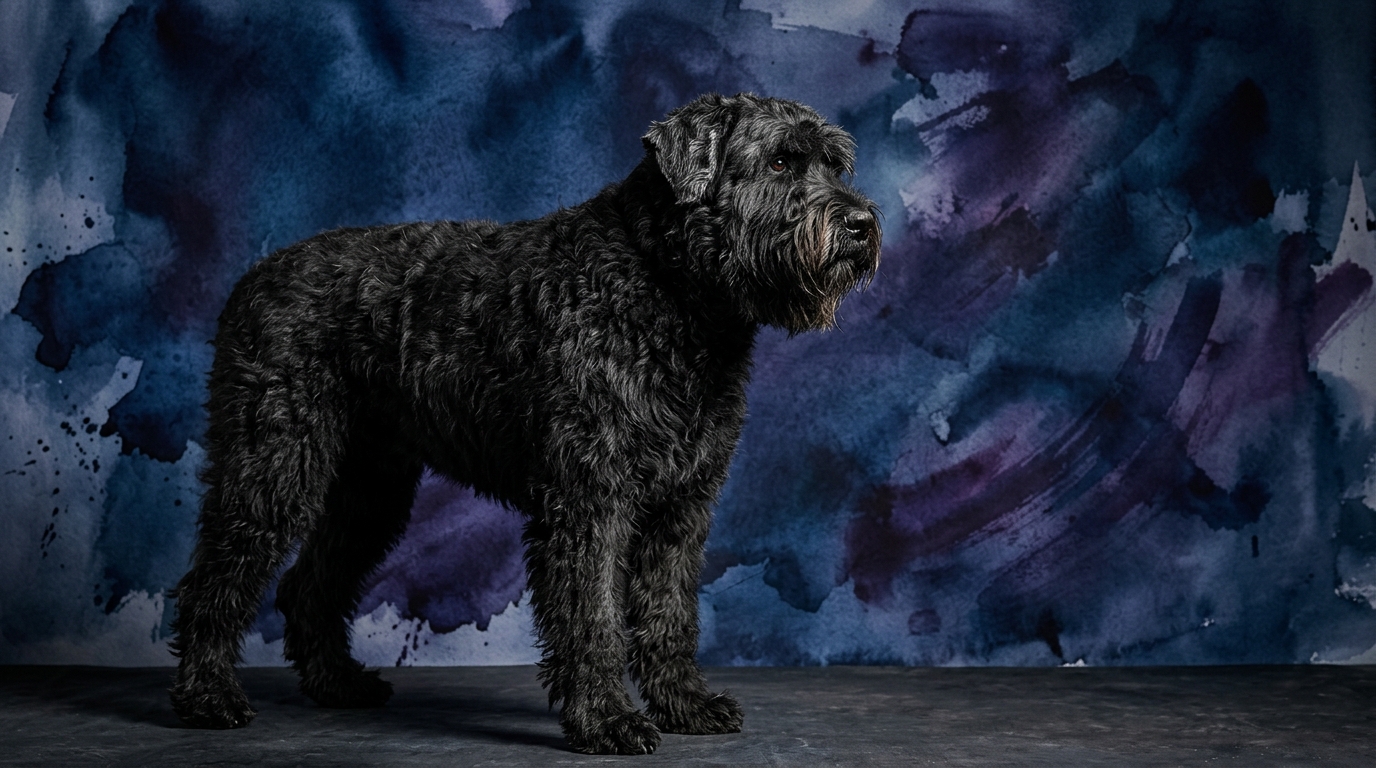
Side-by-Side IQ Profile: Bouvier des Flandres
**Problem Solving (3/5):** Bouviers display an ability to independently assess and navigate complex situations, particularly involving livestock movement or territory enforcement. Their intellect applies to practical, real-world scenarios, often involving spatial reasoning and strategic movement to manage dynamic variables, such as outmaneuvering a stubborn animal.
**Training Speed (3/5):** They grasp new commands and routines at a moderate pace. While capable of learning complex tasks, their independent nature and strong will demand consistent, clear, and fair training methods; they certainly understand what is asked but might occasionally choose to 'negotiate' obedience if not properly motivated.
**Social Intelligence (3/5):** Their social intelligence manifests as a deep understanding of their family unit and a cautious discernment towards strangers. They are adept at reading human emotions within their trusted circle and can interpret subtle cues from other animals, crucial for anticipating actions in their herding or guarding roles.
**Instinctive Drive (3/5):** Rooted in their herding and guarding heritage, this strong drive translates into a natural inclination to gather, protect, and patrol, often displaying a watchful and territorial demeanor. Their powerful instincts motivate purposeful work and can be effectively channeled into constructive outlets with proper guidance.
**Memory (3/5):** Bouviers possess a solid memory for routines, commands, and the layout of their territory. They can recall complex sequences of tasks and remember individuals, both friend and foe, over long periods, which is vital for retaining intricate instructions and adapting to changing environments as working dogs.
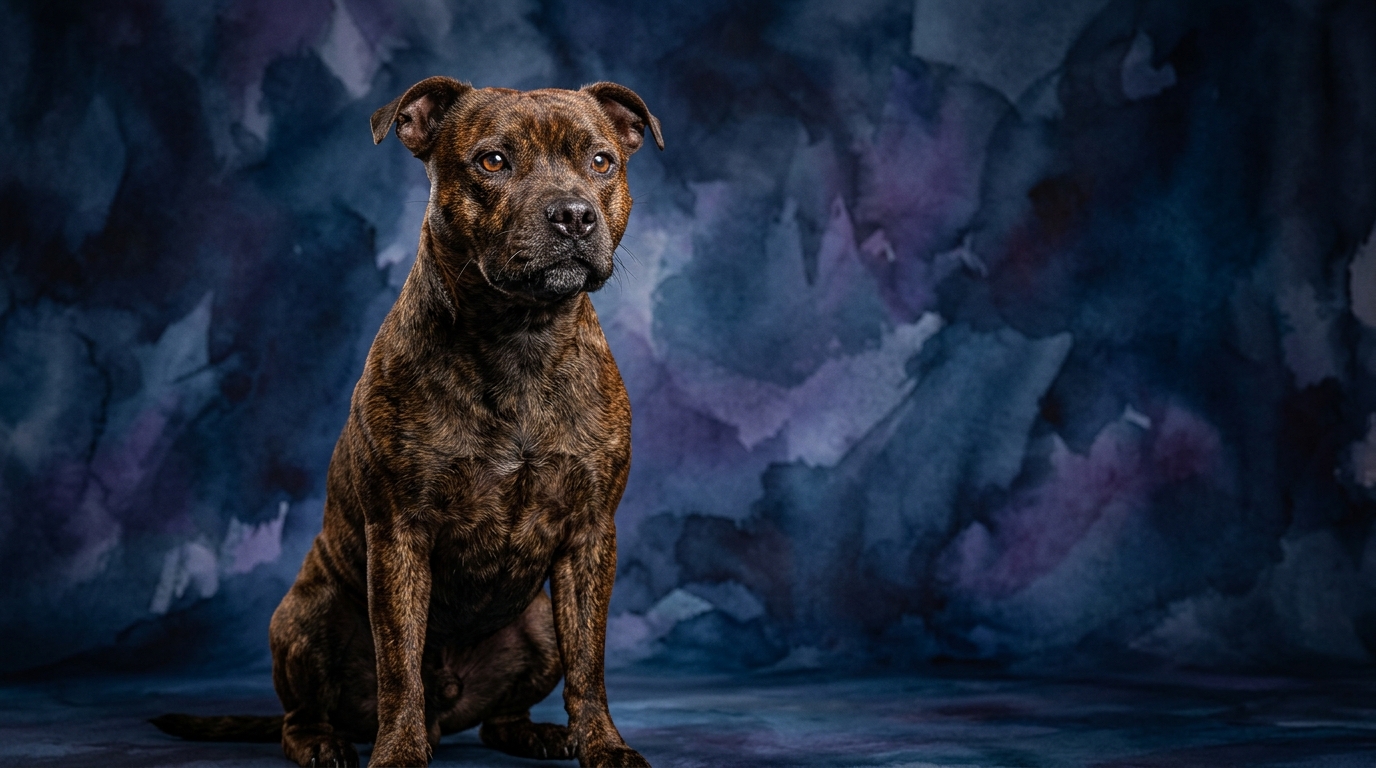
Side-by-Side IQ Profile: Staffordshire Bull Terrier
**Problem Solving (3/5):** For the Staffordshire Bull Terrier, problem-solving often means ingenuity in achieving their immediate desires, whether it's finding a hidden toy, figuring out how to get attention, or cleverly bypassing an obstacle. Their solutions are direct and tenacious, driven by a strong will and a desire for engagement, often involving strategic play or manipulation.
**Training Speed (3/5):** Staffies typically learn new commands and tricks at a moderate pace, often excelling when the training is fun, engaging, and highly rewarding. Their eagerness to please their beloved people, combined with terrier tenacity, makes them capable learners, but they require consistent motivation and a trainer who understands how to harness their enthusiasm.
**Social Intelligence (3/5):** Staffies demonstrate remarkable social intelligence, especially in their interactions with humans. They are highly attuned to human emotions, often acting as empathetic companions. With other dogs, their social skills can be nuanced; their terrier heritage sometimes leads to assertive interactions, requiring early socialization and careful management.
**Instinctive Drive (3/5):** Characterized by terrier tenacity, a robust prey drive, and a strong desire for interaction and play. This drive fuels their enthusiasm for digging, chasing, and vigorous activities, contributing to an unwavering determination once they set their minds on something, whether it's a game or a desired object.
**Memory (3/5):** Staffies exhibit a good memory for significant people, places, and routines. They quickly learn household rules, recall favorite walking routes, and remember past interactions with both humans and other animals. Their memory serves their strong attachment to their family, allowing them to anticipate familiar events and enjoy consistent companionship.
Where Bouvier des Flandres Wins Cognitively
While both breeds score identically, the Bouvier des Flandres excels in the application of its cognitive abilities within complex, dynamic, and often large-scale environments. Their 3/5 problem-solving manifests as a strategic ability to manage multiple moving variables, such as a scattered flock of sheep, requiring a sophisticated understanding of spatial relationships and predictive behavior. The Bouvier's social intelligence, while also 3/5, is particularly refined for interpreting subtle cues from their handler in a working capacity, allowing for seamless communication in tasks demanding precision and independence. Their memory, also 3/5, is geared towards retaining intricate patterns of movement, territory boundaries, and the nuanced behavior of livestock, granting them an edge in roles requiring consistent oversight and independent decision-making over expansive areas.
Where Staffordshire Bull Terrier Wins Cognitively
The Staffordshire Bull Terrier, despite identical scores, demonstrates a distinct cognitive advantage in tasks requiring intense focus, tenacity, and a deep, empathetic connection within a more contained social sphere. Their 3/5 problem-solving often shines in direct, goal-oriented pursuits like intricate puzzle toys or cleverly manipulating their environment for attention, showcasing a persistent and ingenious approach to immediate gratification. The Staffy's social intelligence, also 3/5, is particularly adept at forging profound emotional bonds with humans, discerning subtle emotional shifts in their family members and responding with remarkable empathy and affection. Their memory, while also 3/5, is highly effective for recalling social interactions, favorite play routines, and the specific dynamics of their intimate human-canine relationships, making them exceptional companions in a family setting.
Which is Easier to Train and Why
Both breeds hold a training speed score of 3/5, indicating they are capable learners, but the 'ease' of training them varies significantly based on their inherent motivations and temperaments. The Bouvier des Flandres, with its independent herding and guarding instincts (Instinctive Drive 3/5), often requires a more experienced handler who can establish clear leadership and provide consistent, purposeful work. While they learn commands, their strong will means they might choose to 'negotiate' or require convincing that the task is worthwhile. Training a Bouvier involves channeling their natural drive into constructive outlets, demanding patience and firmness.
The Staffordshire Bull Terrier, conversely, often appears 'easier' to train for the average owner due to their profound eagerness to please their human companions (Social Intelligence 3/5) and their high motivation for play and positive reinforcement. While they possess terrier tenacity and can be stubborn, their desire for interaction and affection makes them highly responsive to reward-based training. Success with a Staffy hinges on making training a fun, engaging game, leveraging their strong bond and enthusiastic nature rather than relying on strict dominance, which they may resist with their inherent determination.
Which Suits Active Owners vs Relaxed Owners
For active owners seeking a canine partner for demanding outdoor activities or structured work, the Bouvier des Flandres is often the more suitable choice. Their robust build, coupled with their 3/5 instinctive drive for purpose-driven tasks and their problem-solving acumen in dynamic environments, means they thrive on regular physical exercise combined with mental challenges. They require consistent engagement in activities like herding, advanced obedience, or protection sports to satisfy their cognitive and physical needs, preventing boredom and potential destructive behaviors. Owners who enjoy long hikes, agility, or have a 'job' for their dog will find the Bouvier a fulfilling companion.
In contrast, while the Staffordshire Bull Terrier is undeniably energetic and enjoys vigorous play, their cognitive profile aligns better with owners who prioritize interactive companionship and playful engagement over prolonged, strenuous independent work. Their 3/5 social intelligence and strong desire for human connection mean they are content with regular walks, yard play, and indoor games, as long as they receive ample attention and affection. A Staffy will happily join an active family for moderate excursions but is equally happy cuddling on the couch, provided their daily needs for physical and mental stimulation through play and interaction are met. They are an excellent fit for owners who want an engaged, affectionate companion who also enjoys bursts of activity.
The Verdict
Choose the Bouvier des Flandres if you are an experienced, active owner seeking an independent, strategic working partner for complex tasks or a watchful family guardian, prepared to channel their robust instincts and strong will with consistent, purposeful training.
Opt for the Staffordshire Bull Terrier if you desire an intensely loyal, affectionate, and playful companion who thrives on deep human connection and interactive games, and you are prepared to manage their tenacious spirit with positive, engaging training methods.
🧠 Find Your Pet's IQ Score
Our Pet IQ Lab assessment covers 25+ tests across 5 cognitive dimensions — personalized to your breed.
Take the Full IQ Test →Frequently Asked Questions
Do Bouvier des Flandres or Staffordshire Bull Terriers make good family pets?
Both can be wonderful family pets, but in different ways. Bouviers are loyal and protective of their families, often forming strong bonds with children when properly socialized and trained, but they require a confident leader. Staffies are renowned for their affectionate nature, often called 'nanny dogs' due to their patience and devotion to children, though their boisterous play needs supervision with very young kids.
Which breed is easier to socialize with other animals?
The Staffy, with its generally higher drive for social interaction (3/5 Social Intelligence), tends to be more outgoing with other dogs and animals when well-socialized from a young age, though their terrier tenacity can sometimes lead to assertive play. Bouviers, while capable of coexisting, are often more discerning and can be aloof or protective, requiring careful and consistent exposure to ensure polite interactions with other pets.
What kind of mental stimulation do these breeds need?
The Bouvier thrives on mental challenges that tap into their problem-solving and memory (both 3/5) like advanced obedience, agility, or scent work, especially tasks that mimic their herding or guarding roles. The Staffy benefits from interactive puzzle toys, engaging play sessions, and trick training that leverages their social intelligence and desire for human engagement, keeping their tenacious minds occupied.