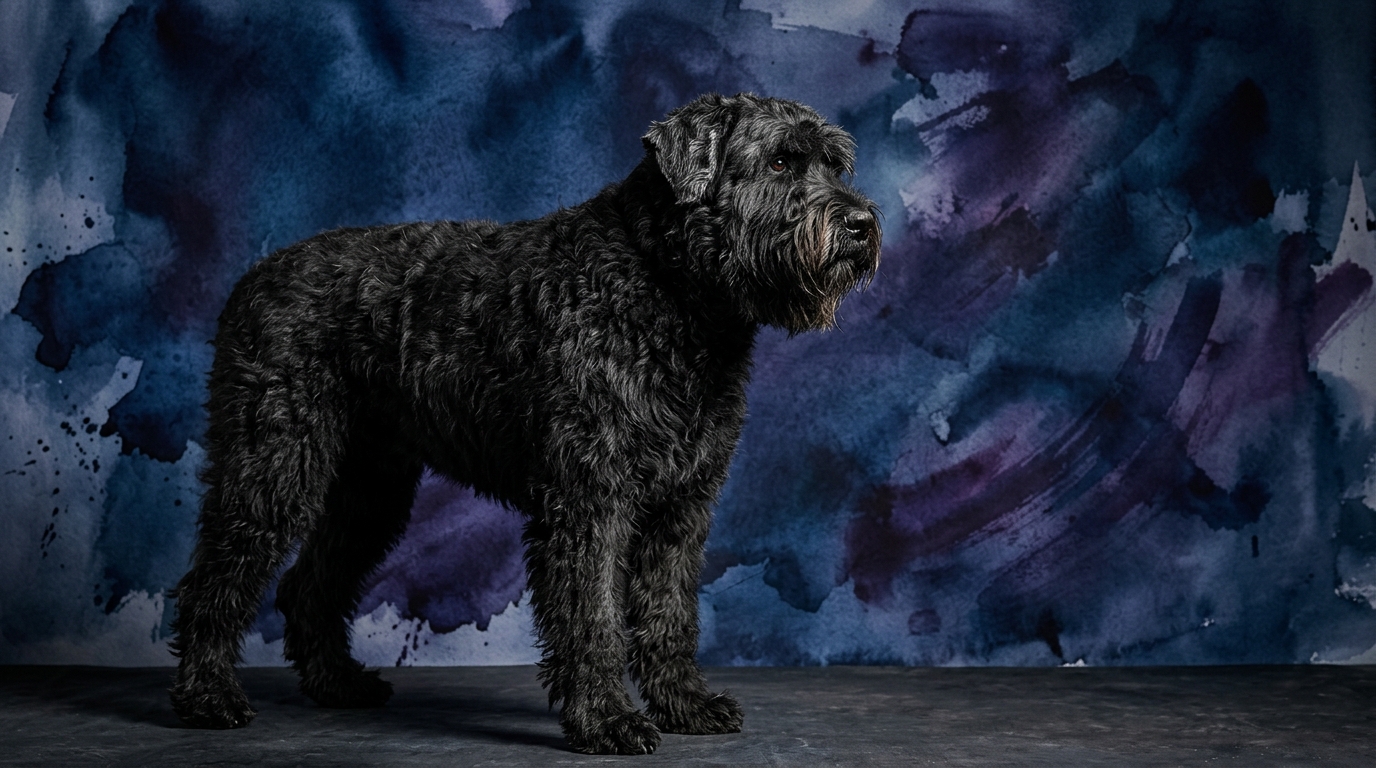
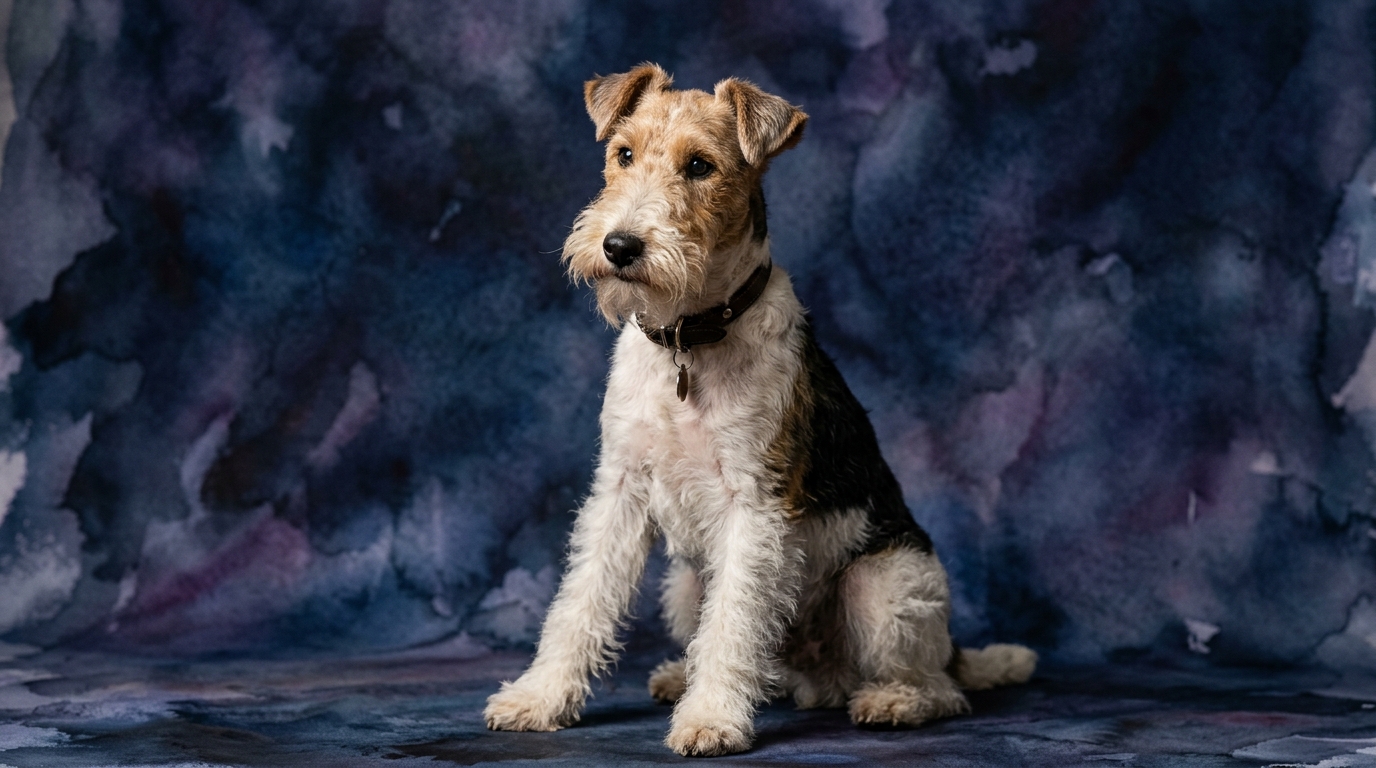
Side-by-Side IQ Profile: Herding Wit vs. Terrier Grit
At The Cosmic Pet Pet IQ Lab, both the Bouvier des Flandres and the Wire Fox Terrier score an identical 3/5 across all five cognitive dimensions. However, these scores manifest uniquely within each breed, shaped by their historical purposes and inherent temperaments. Understanding these nuances is crucial to appreciating their distinct forms of cognitive function.
For the Bouvier des Flandres, a Herding breed, a Problem Solving score of 3/5 indicates a capacity for strategic thinking, particularly in managing and moving livestock. This breed is apt at assessing situations involving multiple variables, such as guiding a flock through a gate or maneuvering around obstacles, often requiring a thoughtful, measured approach rather than impulsive action. Their Training Speed, also 3/5, reflects a steady and reliable learning curve for complex commands and sequences; they absorb information well and excel with consistent, positive reinforcement, demonstrating a willingness to cooperate with their handler. Social Intelligence at 3/5 means they are perceptive to their family's emotional states and intentions, developing deep bonds and often exhibiting a reserved but protective demeanor towards strangers, understanding their role within the family unit. Their Instinctive Drive, rated 3/5, is primarily expressed through a strong herding impulse—a desire to gather, control, and protect, translating into vigilance and an innate sense of responsibility. Finally, their Memory, at 3/5, ensures they retain learned behaviors, routines, and spatial awareness effectively, contributing to their reliability in established tasks and environments.
The Wire Fox Terrier, a Terrier breed, also registers 3/5 in Problem Solving, but this manifests as a tenacious and independent approach to challenges. They are adept at figuring out how to access small spaces, locate hidden objects, or overcome physical barriers, often driven by a singular focus on a perceived goal, such as a scent. Their Training Speed, also 3/5, means they learn new commands relatively quickly, yet their independent spirit often requires more creative motivation and consistent engagement to ensure compliance, as they might weigh the command against their own immediate desires. Social Intelligence, at 3/5, shows in their alert and often bold interactions; they are quick to assess social dynamics, engage in play, and stand their ground, though their independent streak means they might not always seek to please in the same cooperative manner as a herding dog. Their Instinctive Drive, also 3/5, is powerfully rooted in their prey drive—a relentless urge to dig, chase, and investigate small animals, showcasing an intense focus and determination. Their Memory, at 3/5, is particularly sharp for locations of interest, past successful hunting strategies, and the routines of their environment, recalling information vital to their independent pursuits.
Where Bouvier des Flandres Wins Cognitively
The Bouvier des Flandres exhibits a cognitive edge in scenarios demanding cooperative effort and measured decision-making. Their herding heritage endows them with a superior capacity for understanding and executing multi-step commands within a structured context. When faced with a complex task requiring patience and foresight, such as guiding an object through an obstacle course or performing a sequence of behaviors, the Bouvier's strategic problem-solving shines. They are more inclined to work alongside their handler as a team, processing information to achieve a shared objective, and often demonstrating a calm persistence in their endeavors. This breed's social intelligence, while rated the same numerically, translates into a more nuanced understanding of human intent and a greater desire to maintain harmony within their established family unit, making them particularly adept at discerning subtle cues for collaborative activities.
Where Wire Fox Terrier Wins Cognitively
The Wire Fox Terrier's cognitive strengths lie in areas demanding independent ingenuity and relentless pursuit. Their problem-solving capabilities excel when confronted with challenges requiring self-reliance and quick, decisive action, such as finding a way to retrieve a toy from under furniture or navigating a novel environment without direct human instruction. Their instinctive drive, focused on prey, fuels a tenacity that allows them to persist at a task long after other breeds might give up, showcasing a remarkable single-mindedness. This breed's memory, while numerically equivalent, might be particularly acute for tracking scents, remembering the location of interesting digging spots, or recalling past strategies that led to a successful 'hunt' (even if it's just a squeaky toy). They possess a unique brand of cleverness, often finding unconventional solutions driven by their innate curiosity and independent spirit.
Which Is Easier to Train and Why
When considering ease of training, the Bouvier des Flandres generally presents a more straightforward path for the average owner. Their cooperative nature, stemming from generations of working closely with humans to herd livestock, means they are often more receptive to direction and eager to please. Their 3/5 training speed is characterized by a steady absorption of commands and a desire to perform tasks for their handler, especially with clear communication and positive reinforcement. They thrive on structure and consistency, and their social intelligence makes them attuned to their owner's expectations, leading to more predictable responses to training cues. Their herding drive, while strong, is often more easily channeled into constructive activities like obedience, agility, or even advanced trick training.
The Wire Fox Terrier, despite also having a 3/5 training speed, can be more challenging for an inexperienced trainer due to their inherent independence and strong prey drive. While they learn commands quickly, their terrier grit means they might not always choose to obey if something more stimulating, like a squirrel or an interesting scent, captures their attention. Training a Wire Fox Terrier often requires a higher degree of creativity, patience, and persistence to maintain their engagement and convince them that following commands is more rewarding than pursuing their own agenda. Their problem-solving often manifests as finding ways around rules rather than simply adhering to them, demanding a trainer who can anticipate and redirect their independent thinking effectively. Therefore, while both breeds are capable learners, the Bouvier's cooperative disposition often makes the training process feel more collaborative and less like a constant negotiation.
Which Suits Active Owners vs. Relaxed Owners
For active owners seeking a canine partner for demanding activities, both breeds offer engagement, but with different focuses. The Bouvier des Flandres is an excellent match for owners who enjoy structured activities such as competitive obedience, advanced agility, or herding trials. Their stamina, cooperative nature, and desire for a 'job' make them thrive when given consistent mental and physical challenges that align with their herding instincts. They need regular, vigorous exercise and mental stimulation to prevent boredom, which can manifest as undesirable behaviors. An active owner for a Bouvier is one who enjoys collaborative effort and provides purpose.
The Wire Fox Terrier also requires an active owner, but one who appreciates their boundless energy, zest for exploration, and independent spirit. They excel in activities that tap into their prey drive and agility, such as earthdog trials, flyball, or long, exploratory walks where they can sniff and investigate. They are not typically content to simply 'jog along' but prefer to be actively engaged in their surroundings. A Wire Fox Terrier thrives with owners who can keep up with their quick pace and offer varied, exciting outlets for their energy, understanding that their independence means they might dart off after a scent at a moment's notice. For truly relaxed owners who prefer minimal daily activity, neither breed would be an ideal fit, as both possess significant energy and cognitive needs that demand consistent interaction and stimulation.
The Verdict: When to Choose Each
Choosing between a Bouvier des Flandres and a Wire Fox Terrier hinges on the specific dynamics of your lifestyle and what you seek in a canine companion.
The Bouvier des Flandres is an excellent choice for owners who value a loyal, protective, and cooperative partner eager to engage in structured activities and deeply integrated into family life, offering a steady, thoughtful presence. The Wire Fox Terrier suits owners who appreciate a spirited, independent, and tenacious companion with an insatiable curiosity and a zest for adventure, thriving on varied challenges and a lively household.
The Verdict
Choose the Bouvier des Flandres if you desire a steadfast, protective companion who excels in cooperative tasks and thrives on a structured routine with a clear purpose.
Opt for the Wire Fox Terrier if you seek an energetic, independent, and spirited companion who enjoys playful challenges and thrives on exploration and quick-witted engagement.
🧠 Find Your Pet's IQ Score
Our Pet IQ Lab assessment covers 25+ tests across 5 cognitive dimensions — personalized to your breed.
Take the Full IQ Test →Frequently Asked Questions
Are Bouvier des Flandres good family dogs?
Yes, Bouvier des Flandres can be excellent family dogs, forming deep bonds with their immediate family members. They are often protective and reserved with strangers, requiring early socialization to ensure they are comfortable in various environments, but their loyalty to their family is unwavering.
Do Wire Fox Terriers get along with other pets?
Wire Fox Terriers can coexist with other pets, especially if raised with them from a young age. However, their strong prey drive means they may not be suitable for homes with small rodents or birds, and introductions to other dogs should always be supervised due to their bold and sometimes challenging nature.
What kind of exercise do these breeds need?
Both breeds require substantial daily exercise and mental stimulation. The Bouvier benefits from structured activities like long walks, obedience training, or herding games, while the Wire Fox Terrier thrives on varied, engaging activities such as vigorous play, earthdog trials, or exploratory walks where they can investigate their surroundings.