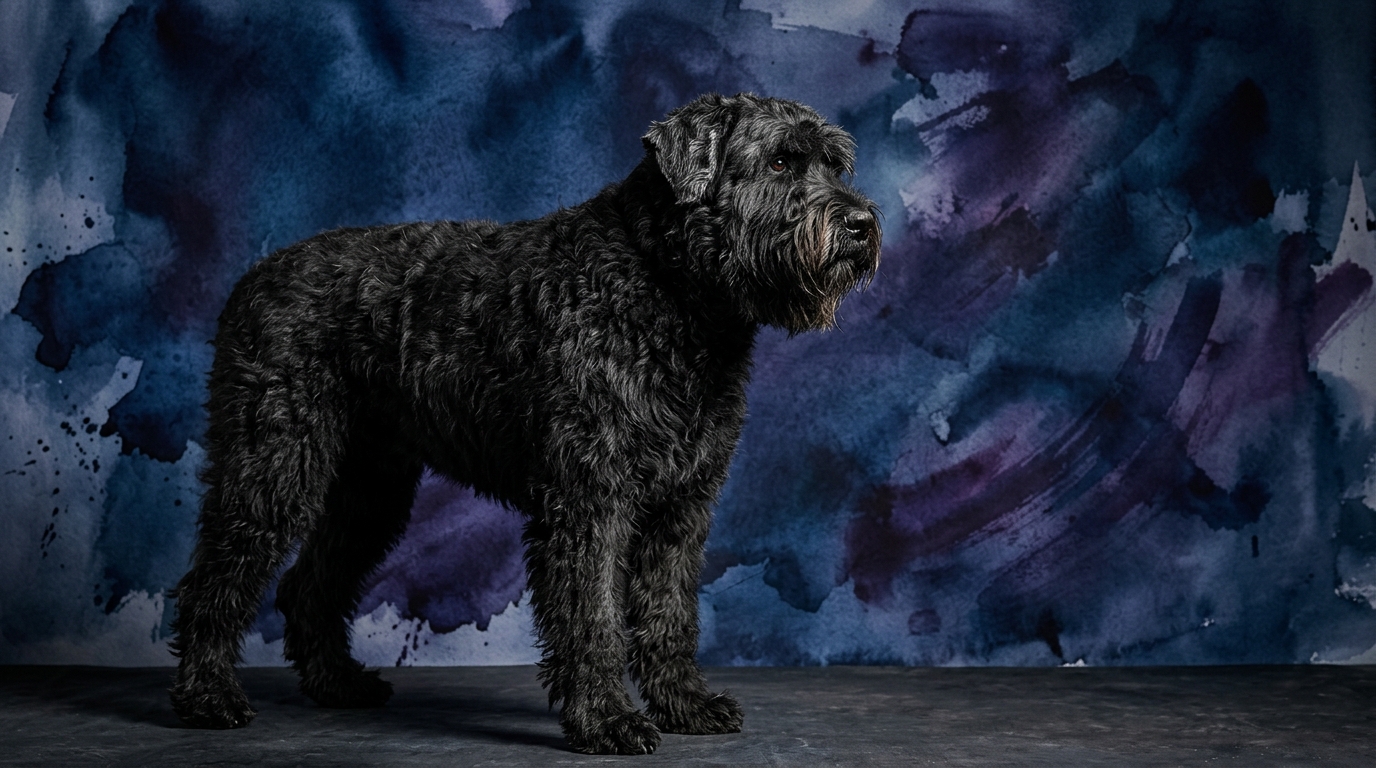
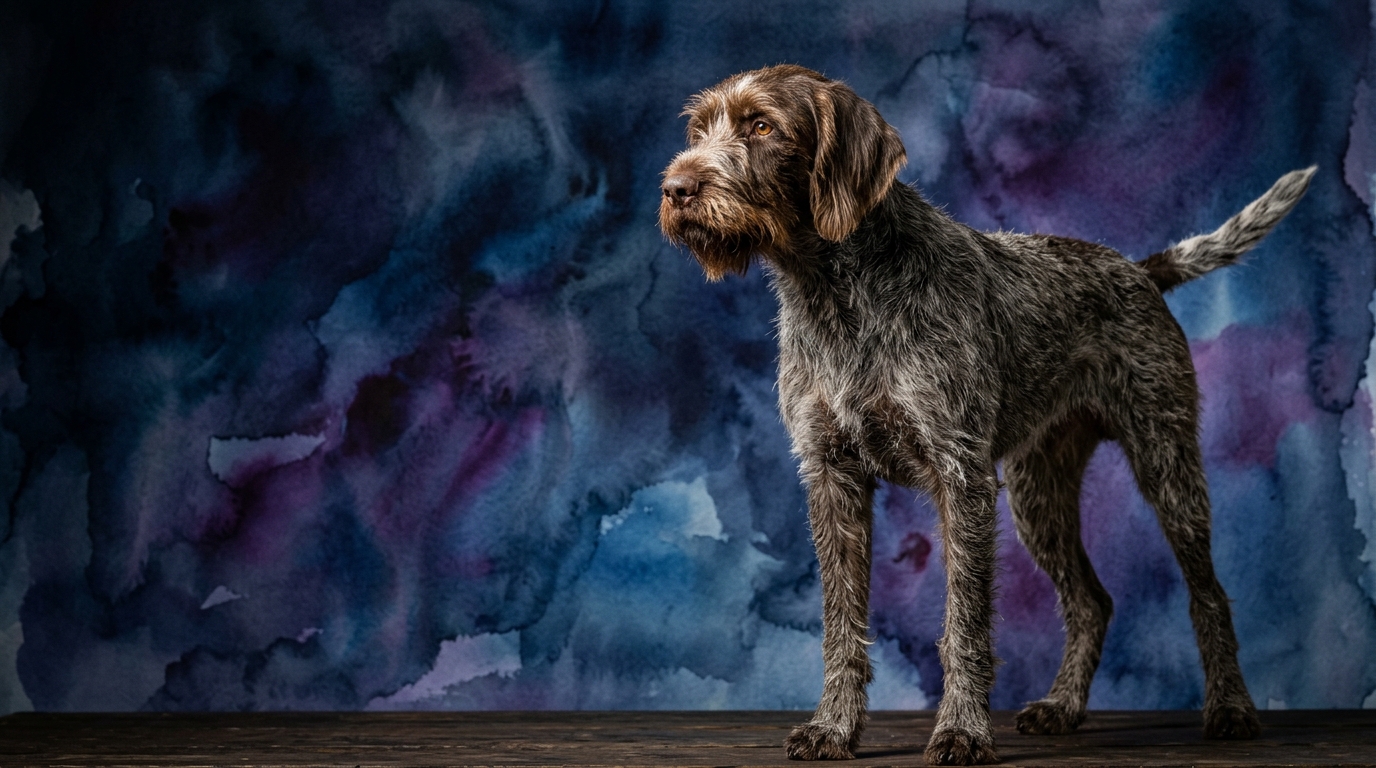
Side-by-Side IQ Profile: Bouvier des Flandres vs. Wirehaired Pointing Griffon
Despite sharing identical scores across The Cosmic Pet Pet IQ Lab's five dimensions, the Bouvier des Flandres and Wirehaired Pointing Griffon apply their cognitive abilities in ways deeply influenced by their distinct breed histories. Understanding these nuances requires looking beyond the numbers to their ancestral roles.
For the **Bouvier des Flandres (Herding, IQ: Problem Solving 3/5, Training Speed 3/5, Social Intelligence 3/5, Instinctive Drive 3/5, Memory 3/5)**:
**Problem Solving (3/5):** The Bouvier's problem-solving aptitude manifests in its historical role of managing livestock. This breed demonstrates a capacity for strategic thinking, such as anticipating herd movement or discerning which animal needs gentle persuasion. Their solutions are practical, adapting to dynamic, live situations rather than abstract puzzles.
**Training Speed (3/5):** While capable of learning commands effectively, the Bouvier's training speed is influenced by its independent nature. They absorb lessons at a steady pace, but their inherent self-reliance requires consistent, clear instruction and a handler who earns their respect. Once understood and deemed logical, commands are typically executed reliably.
**Social Intelligence (3/5):** Their social intelligence shines in protective instincts and family loyalty. A Bouvier can read the nuances of their human family's moods, often acting as a watchful guardian. They are discerning with strangers, assessing new individuals carefully, a trait stemming from their protective herding background.
**Instinctive Drive (3/5):** The primary instinctive drive for the Bouvier is rooted in herding and guarding. This translates into a strong desire to oversee their territory and "manage" their family unit, sometimes gently nudging people into place. This drive is about maintaining order and protection within their perceived domain.
**Memory (3/5):** Bouviers possess a reliable memory, retaining training, routines, and experiences over time. They remember boundaries, learned behaviors, and individuals part of their inner circle. This memory aids their consistency in tasks and their ability to recall past interactions.
For the **Wirehaired Pointing Griffon (Sporting, IQ: Problem Solving 3/5, Training Speed 3/5, Social Intelligence 3/5, Instinctive Drive 3/5, Memory 3/5)**:
**Problem Solving (3/5):** For the Wirehaired Pointing Griffon, problem-solving is deeply intertwined with their hunting heritage. This involves navigating complex terrain to locate game, interpreting scent trails, and figuring out how to retrieve birds from challenging environments. Their solutions are often driven by sensory information and a persistent drive.
**Training Speed (3/5):** Griffons are generally eager to please their handlers, facilitating a steady training speed. They tend to pick up commands quickly, especially with positive reinforcement. However, their intense prey drive can sometimes create distractions, requiring training methods that channel their natural hunting instincts.
**Social Intelligence (3/5):** The Griffon's social intelligence is evident in their cooperative nature as a hunting partner. They are attuned to their handler's cues and intentions in the field, working in tandem. In a family setting, they are typically amiable and observant, enjoying close companionship.
**Instinctive Drive (3/5):** The core instinctive drive of the Griffon is the pursuit, pointing, and retrieving of game. This drive is powerful and ever-present, manifesting as an intense interest in scents, birds, and anything mimicking prey behavior. It's a focused, purposeful drive.
**Memory (3/5):** Griffons exhibit good memory, particularly for locations where game has been found, scent patterns, and hunting commands. They remember training sequences and routines, making them consistent partners in the field. Their recall for specific scents can be remarkably enduring.
Where Bouvier des Flandres Wins Cognitively
The Bouvier des Flandres exhibits a cognitive edge in scenarios demanding independent strategic oversight and a discerning protective instinct. Their problem-solving (3/5) is particularly adept at assessing dynamic situations involving boundaries, resources, or the well-being of their perceived "flock." This breed often demonstrates a nuanced understanding of social hierarchies and territory, using its social intelligence (3/5) to determine appropriate responses to unfamiliar individuals or perceived threats. For instance, a Bouvier might independently decide to interpose itself between a child and a perceived danger, not out of aggression, but from a strategic assessment and a strong instinctive drive (3/5) to protect. Their memory (3/5) supports this by recalling past interactions and understanding established rules, allowing them to consistently enforce boundaries with subtle methods. This self-directed, watchful intelligence makes them formidable guardians and managers of their environment.
Where Wirehaired Pointing Griffon Wins Cognitively
The Wirehaired Pointing Griffon shines cognitively in tasks requiring sustained focus, sensory interpretation, and collaborative effort, particularly within a dynamic outdoor environment. Their problem-solving (3/5) excels in the intricate challenge of tracking and locating game, where they must process complex scent information, navigate varied terrain, and adapt their approach. This is less about strategic oversight and more about persistent, detailed investigation. Their instinctive drive (3/5) for hunting fuels remarkable endurance in related mental and physical tasks. The Griffon's social intelligence (3/5) is particularly strong in its cooperative aspect, allowing them to work seamlessly with a human handler, anticipating cues during a hunt. Their memory (3/5) is highly efficient for recalling scent trails, specific locations, and learned hunting techniques, making them exceptionally consistent partners in the field. This breed's cognitive strengths are geared towards purposeful, collaborative action.
Which is Easier to Train and Why
Determining which breed is "easier" to train between the Bouvier des Flandres and the Wirehaired Pointing Griffon largely depends on the trainer's approach. The Bouvier, with its independent herding heritage, often requires a handler who can establish clear, consistent leadership. Their problem-solving and instinctive drive lead them to assess commands, sometimes deciding if a command makes sense from their perspective. This means training requires patience, firmness, and building a respectful partnership. Without this, they can appear stubborn. Conversely, the Wirehaired Pointing Griffon often presents with a more eager-to-please demeanor, especially when training involves activities tapping into their strong hunting drive. They tend to absorb commands readily with positive reinforcement. However, their intense prey drive can be a significant distraction; a passing scent can momentarily override learned commands. While a Griffon's eagerness might feel "easier" initially, both breeds demand knowledgeable, consistent training to reach full potential.
Which Suits Active Owners vs. Relaxed Owners
Neither the Bouvier des Flandres nor the Wirehaired Pointing Griffon are suitable for truly relaxed owners; both breeds have substantial requirements for physical and mental engagement. The Bouvier needs consistent mental stimulation and purposeful activity to satisfy its instinctive drive (3/5) for "work." This can manifest as regular training, scent work, or participation in dog sports. Their problem-solving (3/5) and social intelligence (3/5) thrive on having a role and structure. A Bouvier relegated to a sedentary life may become bored, leading to undesirable behaviors. The Wirehaired Pointing Griffon is unequivocally a breed for active, outdoors-oriented owners. Their powerful instinctive drive (3/5) and stamina mean they require extensive daily exercise engaging both body and mind. Long walks, runs, hikes, and opportunities for off-leash exploration are crucial. Owners not prepared to dedicate significant time to outdoor activities will find a Griffon's energy overwhelming. For a quiet, calm companion, both breeds are a mismatch, but the Griffon's sustained energy demands are arguably more pronounced.
The Verdict
Choose the Bouvier des Flandres if you appreciate a watchful, independently thoughtful companion that thrives on having a "job" within the family, values structured routines, and offers discerning protection.
Opt for the Wirehaired Pointing Griffon if your life revolves around outdoor adventure, if you desire an enthusiastic, cooperative partner for active pursuits like hiking or field work, and if you are prepared to channel their intense hunting instincts into purposeful activity.
🧠 Find Your Pet's IQ Score
Our Pet IQ Lab assessment covers 25+ tests across 5 cognitive dimensions — personalized to your breed.
Take the Full IQ Test →Frequently Asked Questions
Do Bouvier des Flandres dogs require a lot of exercise?
Yes, Bouviers require consistent mental and physical stimulation to prevent boredom. While not always needing high-intensity sprints, they thrive on purposeful activities like long walks, training sessions, or dog sports that engage their problem-solving and herding instincts.
Are Wirehaired Pointing Griffons good family dogs?
Wirehaired Pointing Griffons can be excellent family dogs, known for their affectionate and amiable nature with their human companions. However, their strong instinctive drive and high energy levels mean they need a family prepared to provide ample outdoor activity and mental engagement, integrating them into an active lifestyle.
Which breed is more prone to stubbornness?
The Bouvier des Flandres can sometimes appear more stubborn due to their independent nature and tendency to assess commands before complying. While Griffons can be distracted by their prey drive, a Bouvier's perceived stubbornness often stems from their self-reliant herding mentality, requiring a consistent and respectful training approach.