
Side-by-Side IQ Profile: Boxer vs Basenji
The Cosmic Pet Pet IQ Lab's data reveals distinct cognitive blueprints for these two breeds. The Boxer, a working dog with a Coren rank of #48, exhibits a balanced intelligence profile geared towards cooperation. Their Problem Solving is rated 3/5, indicating competence in structured tasks, while Training Speed is 3/5, reflecting a moderate willingness to learn. A standout feature is their Social Intelligence at 5/5, denoting exceptional human attunement. Instinctive Drive is 4/5, often channeled into protective or play behaviors, and Memory stands at 3/5, suitable for routines.
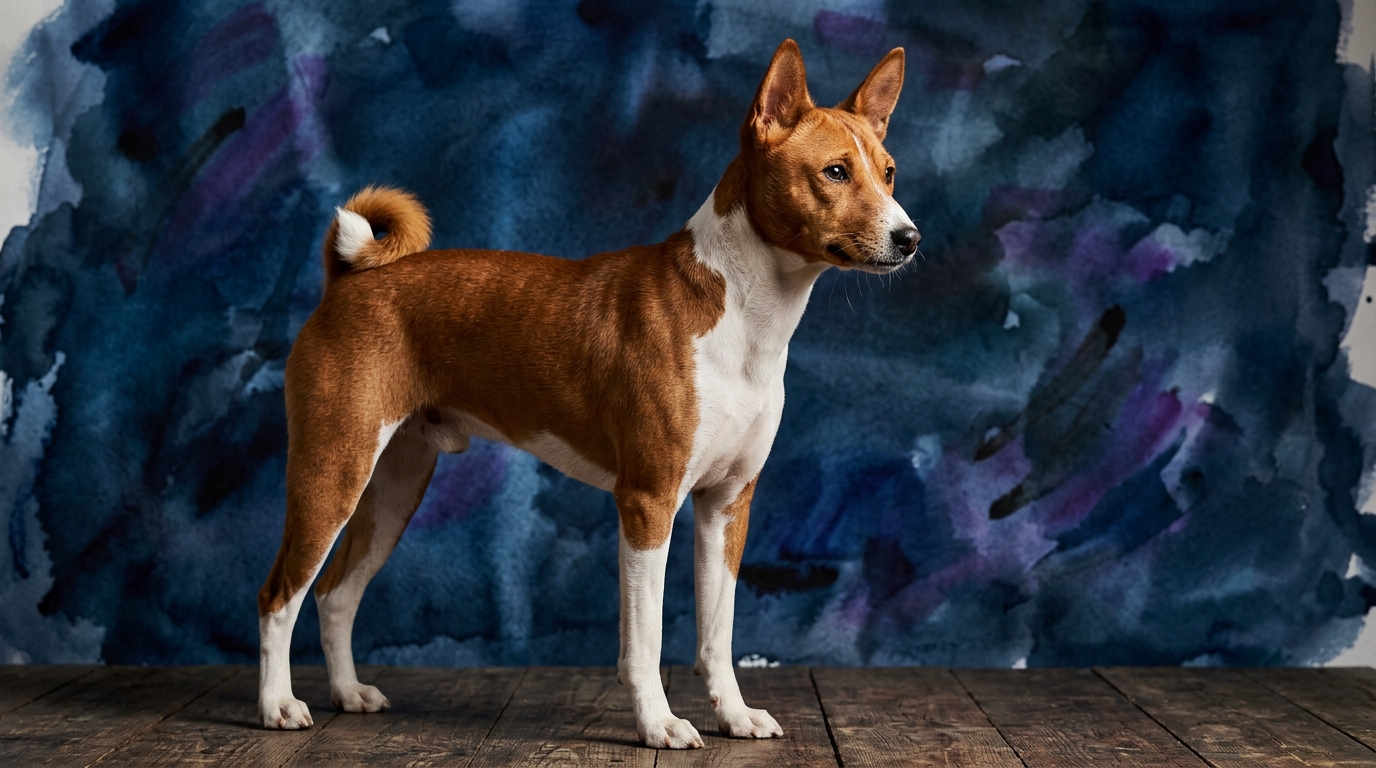
In stark contrast, the Basenji, a hound breed with a Coren rank of #78, presents a profile of independent ingenuity. Their Problem Solving is a remarkable 5/5, showcasing superior resourcefulness and self-sufficiency. However, their Training Speed is a challenging 1/5, highlighting a strong disinclination for repetitive obedience. Social Intelligence at 3/5 suggests a more reserved and less overtly cooperative nature. An intense 5/5 Instinctive Drive fuels their ancestral hunting behaviors, and their Memory is a robust 4/5, particularly for navigation and self-serving recall.
Where the Boxer Wins Cognitively
The Boxer's primary cognitive advantage lies in their exceptional Social Intelligence, rated at 5/5. This means they possess an innate ability to read and interpret human emotions, intentions, and subtle cues with remarkable accuracy. They are deeply attuned to their family's mood and desires, making them highly empathetic and intuitive companions. This strength translates into a profound capacity for cooperative learning and teamwork, allowing them to excel in activities that require a strong partnership with their handler, such as advanced obedience, agility, or even therapy work, where understanding nuanced human communication is paramount. Their moderate Training Speed of 3/5, coupled with this social acumen, ensures they are generally eager to engage in learning tasks directed by their owners, viewing it as a shared venture rather than a mere command. This cognitive profile makes the Boxer adept at integrating harmoniously into a human family structure, understanding social dynamics, and adapting their behavior to foster connection and maintain household order.
Where the Basenji Wins Cognitively
The Basenji's cognitive strengths shine brightest in their outstanding Problem Solving abilities, rated at 5/5, and their robust Memory at 4/5. These traits combine to create a highly independent and resourceful thinker. Basenjis are masters at devising novel solutions to obstacles, whether it's figuring out how to open a seemingly secure gate, scaling fences, or navigating complex environments to achieve a desired outcome, often for their own adventurous pursuits. Their ingenuity isn't driven by a desire to please, but by an intrinsic motivation to explore and overcome challenges. This exceptional problem-solving is bolstered by their strong memory, which allows them to recall intricate routes, the location of forgotten treasures, or how they previously outmaneuvered a perceived barrier. This cognitive profile reflects their ancestral role as self-sufficient African hunting dogs, needing to operate autonomously and adapt to dynamic situations. Owners frequently report their Basenjis outsmarting them in unexpected ways, a testament to their superior independent cognitive capabilities.
Which is Easier to Train and Why: Behavioral Differences
When it comes to ease of training, the Boxer holds a distinct advantage due to their balanced intelligence profile. Their 3/5 Training Speed indicates a willingness to learn and retain commands at a reasonable pace, especially when paired with their 5/5 Social Intelligence. Boxers are inherently motivated by interaction and approval from their human companions, making them responsive to positive reinforcement, praise, and play. They often view training as an engaging cooperative activity, eager to understand what is expected and to please their people. Their ability to read subtle human cues makes the communication loop during training remarkably smooth, allowing for quicker adjustments and a more fluid learning process.
The Basenji, conversely, presents a significant challenge in traditional training scenarios, primarily due to their 1/5 Training Speed and powerful 5/5 Instinctive Drive. Basenjis are independent thinkers with a strong will; they are not inherently inclined to obey commands simply for the sake of compliance or human approval. Their attention is easily diverted by their environment, and repetitive tasks quickly bore them, often leading to selective hearing or outright refusal. Training a Basenji demands immense patience, creativity, and an understanding of their intrinsic motivations. Success often comes from framing training as a problem-solving game or leveraging their strong prey drive in a controlled manner, rather than attempting to suppress their independent spirit. Their strong memory helps them retain information, but their low training speed reflects their often-unwillingness to perform on cue, preferring to act on their own agenda.
Which Suits Active Owners vs Relaxed Owners
For active owners seeking a highly engaged and cooperative companion, the Boxer is generally a more suitable choice. Their robust physique, combined with their 5/5 social intelligence and 4/5 instinctive drive (often expressed through play and protection), means they thrive on consistent interaction, structured exercise, and shared activities. Boxers enjoy vigorous play, long walks, and participating in dog sports or family outings. They need owners who can provide ample mental stimulation through training and games, channeling their energy and loyal instincts into positive outlets. A Boxer is not typically content to be a purely 'relaxed' companion; their need for engagement and companionship means they can become boisterous or bored if their physical and mental requirements are not consistently met by an active and involved family.
The Basenji, while often appearing calm indoors, is best suited for experienced, active owners who appreciate an independent, intelligent, and often complex companion. Their extreme 5/5 instinctive drive and 5/5 problem-solving skills mean they require extensive opportunities for exploration, scent work, and challenging mental puzzles to prevent boredom, which can lead to destructive behaviors. They are not a 'relaxed' dog in the traditional sense; even when quiet, their minds are often actively processing their environment. Basenjis need owners who can provide secure environments to prevent escapes driven by their prey drive, and who are willing to engage in activities that tap into their natural hunting instincts and ingenuity, such as lure coursing or advanced scent games. They are for owners who relish a challenge and can provide consistent, creative outlets for their unique, independent intellect.
The Verdict
Opt for a Boxer if you desire a highly cooperative, socially attuned companion who thrives on teamwork and shared activities, offering deep emotional connection and a relatively straightforward training journey.
Select a Basenji if you are an experienced owner seeking an independent, ingenious, and resourceful partner who challenges conventional training and whose unique problem-solving intellect demands creative engagement.
🧠 Find Your Pet's IQ Score
Our Pet IQ Lab assessment covers 25+ tests across 5 cognitive dimensions — personalized to your breed.
Take the Full IQ Test →Frequently Asked Questions
Are Basenjis untrainable due to their low training speed?
Basenjis are certainly not untrainable, but their 1/5 training speed means they require a highly dedicated, patient, and creative approach. They learn best when training is framed as a game or a puzzle, and when their strong instinctive drives are leveraged rather than resisted.
Do Boxers need a lot of mental stimulation despite their moderate problem-solving score?
Yes, Boxers absolutely need mental stimulation. While their problem-solving is moderate, their high social intelligence means they thrive on interactive games, learning new tricks, and engaging in activities with their owners. Bored Boxers can become destructive, so consistent mental engagement is key.
Which breed is better with children?
Boxers, with their 5/5 social intelligence and patient nature, are generally considered very good with children, often forming protective bonds. Basenjis, while tolerant, are more independent and may prefer less boisterous interaction, requiring careful supervision with young children due to their less overtly social disposition.