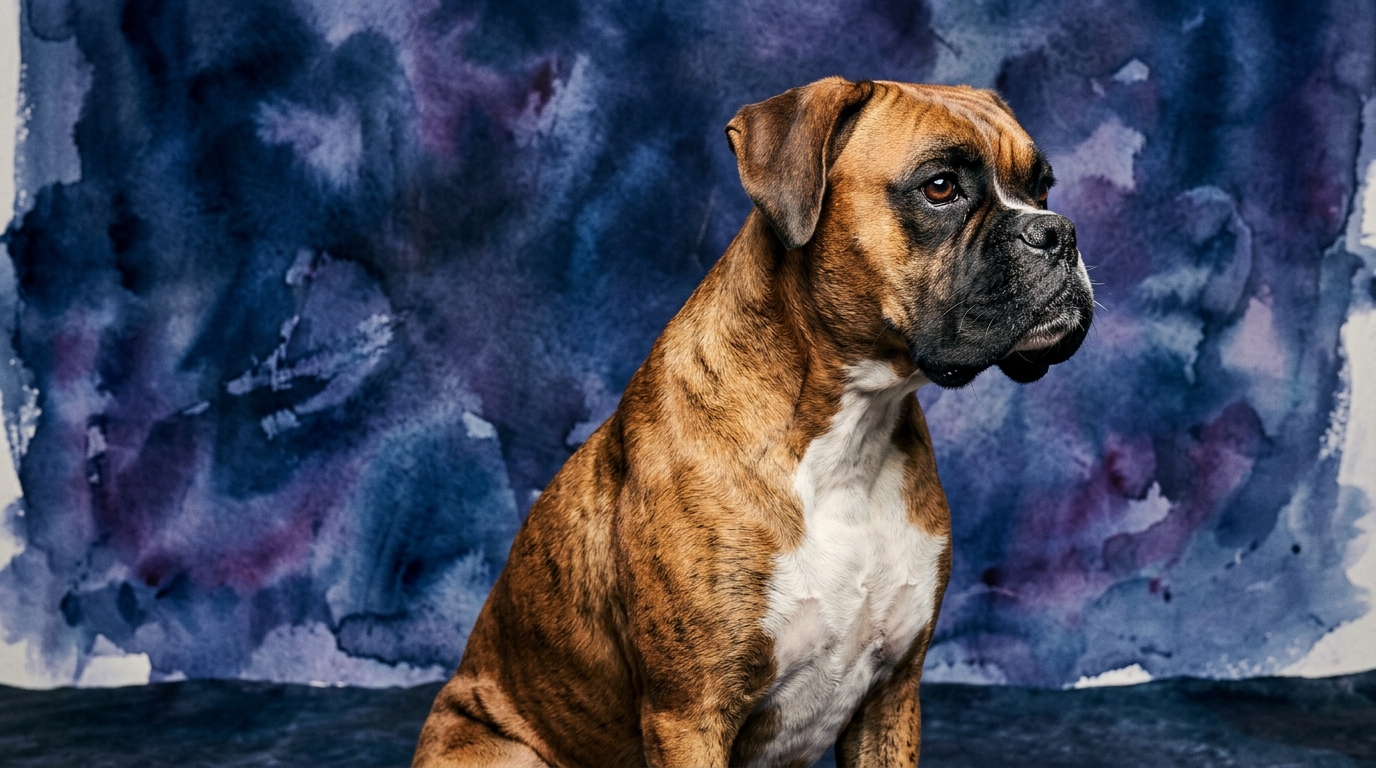
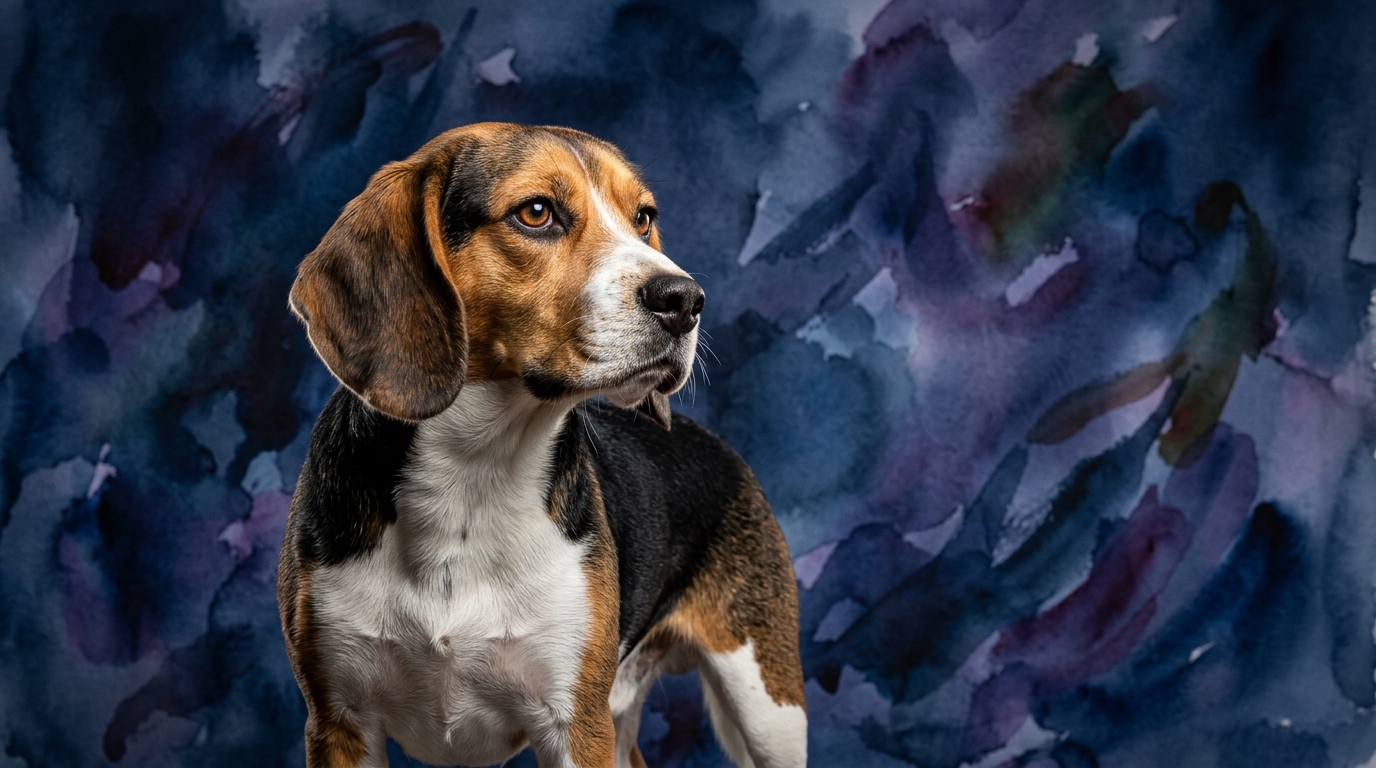
Side-by-Side Cognitive Profiles: Boxer vs. Beagle
At The Cosmic Pet Pet IQ Lab, we assess canine cognition across five distinct dimensions, offering a nuanced view of each breed's mental strengths. The Boxer, a member of the Working Group with a Coren rank of #48, and the Beagle, a Hound Group member ranked #72, exhibit remarkably different cognitive blueprints.
The Boxer's profile includes: Problem Solving 3/5, indicating an ability to navigate familiar challenges but potentially needing guidance for novel situations; Training Speed 3/5, suggesting a moderate learning pace that responds well to consistent methods; Social Intelligence 5/5, highlighting their exceptional attunement to human emotions and family dynamics; Instinctive Drive 4/5, reflecting a strong natural protective instinct and desire for active play; and Memory 3/5, meaning they retain routines and learned behaviors effectively with regular reinforcement.
In contrast, the Beagle's cognitive strengths lean differently: Problem Solving 4/5, demonstrating remarkable ingenuity, especially when scent-motivated; Training Speed 2/5, indicating a slower, more independent learning pace often challenged by their powerful nose; Social Intelligence 3/5, showing general amiability but with a primary focus often directed externally; Instinctive Drive 5/5, dominated by an unparalleled scent-tracking ability; and Memory 4/5, particularly strong for scent trails and rewarding locations.
Where the Boxer Cognitively Excels
The Boxer truly shines in the realm of social intelligence, scoring a perfect 5/5. This breed exhibits an exceptional capacity to understand and respond to human emotions, intentions, and social cues. Their strong desire to be part of the family unit translates into a dog that is highly attuned to its owners, often anticipating needs or offering comfort without explicit command. This deep empathetic connection makes them remarkably perceptive companions, capable of forming profound bonds and navigating complex household dynamics with ease. Their Coren rank of #48, significantly higher than the Beagle's, reflects a more general aptitude for working alongside humans in varied roles, where social understanding is paramount.
Where the Beagle Cognitively Excels
When it comes to raw problem-solving, particularly those involving sensory input, the Beagle demonstrates a distinct advantage, earning a 4/5. While their Coren rank of #72 might suggest otherwise, this reflects their independent nature rather than a lack of cognitive power. Their unparalleled instinctive drive (5/5) is almost entirely dedicated to their olfactory prowess. A Beagle can unravel complex scent puzzles, tracing intricate trails with unwavering focus and impressive mental mapping. This isn't just about following a nose; it involves intricate decision-making, memory recall of scent profiles, and persistence to overcome environmental distractions to achieve their goal, whether it's finding a hidden treat or following a distant trace. Their memory, rated 4/5, is particularly strong for scent-related information and locations.
Training Aptitude: Boxer's Cooperation vs. Beagle's Independence
Comparing training ease, the Boxer generally presents a more straightforward experience for the average owner. With a training speed of 3/5 and a strong social intelligence (5/5), Boxers are eager to please and highly responsive to their human companions. They thrive on positive reinforcement and clear, consistent instruction, quickly grasping commands and routines. Their motivation often stems from the desire for interaction and approval, making them cooperative pupils in a structured environment. This doesn't mean they are robotic; their playful energy requires engaging training methods, but their focus remains largely on their handler.
The Beagle, by contrast, with a training speed of 2/5, can be considerably more challenging. Their formidable instinctive drive (5/5) and unparalleled olfactory focus mean that their world is primarily interpreted through scent. A Beagle following a captivating trail will often override learned commands, not out of defiance, but because their primal instinct is overwhelmingly compelling. Their problem-solving ability (4/5) often manifests as independent thinking, which can translate into creative ways to ignore or circumvent training efforts if a more interesting scent is present. Training a Beagle requires immense patience, creativity to make learning more rewarding than scent-chasing, and an understanding that their nose will always be their primary guide, often leading them to independent decisions rather than handler compliance.
Lifestyle Match: Active Engagement vs. Scent-Driven Exploration
For owners seeking an active, engaging companion who thrives on close human interaction, the Boxer is an excellent fit. They require substantial daily exercise to channel their considerable energy and prevent boredom, making them ideal for individuals who enjoy running, hiking, or vigorous play. Beyond physical activity, their high social intelligence means they need significant mental stimulation through interactive games, training, and constant inclusion in family life. A Boxer will flourish with an owner who can provide consistent attention, structured training, and a deep emotional bond, becoming a devoted, albeit sometimes boisterous, member of the household.
The Beagle, while also requiring activity, suits a different kind of active owner – one who appreciates and can accommodate their profound instinctive drives. Their exceptional scent drive (5/5) means they excel in activities like scent work, tracking, or long walks where they can explore a multitude of smells. This often means off-leash exploration in safe, contained areas or on a long lead is crucial for their mental well-being. A Beagle thrives with an owner who understands their independent nature and is willing to let them 'be a dog' by following their nose, even if it means less direct interaction during walks. They are less about constant human-focused engagement and more about satisfying their innate exploratory instincts. For more relaxed owners, both breeds might present challenges if their exercise and mental stimulation needs are not met, but a Beagle's independent nature might be less demanding of constant human-centric interaction than a Boxer's.
The Verdict
Choose a Boxer if you seek a highly socially intelligent, empathetic companion who thrives on close family integration and responsive training, and you can provide ample physical activity and mental engagement focused on human interaction.
Opt for a Beagle if you are fascinated by a dog's incredible olfactory abilities and independent problem-solving, and you are prepared to manage a powerful scent drive with patience, creative training, and opportunities for extensive scent-based exploration.
🧠 Find Your Pet's IQ Score
Our Pet IQ Lab assessment covers 25+ tests across 5 cognitive dimensions — personalized to your breed.
Take the Full IQ Test →Frequently Asked Questions
Are Boxers good family dogs?
Absolutely. Boxers excel in social intelligence (5/5), making them highly attuned to family dynamics and human emotions. They form strong bonds, are generally patient with children, and thrive on being an integral part of the household, though their playful energy requires supervision.
Can Beagles live in apartments?
While adaptable, Beagles can live in apartments if their significant exercise and mental stimulation needs are consistently met. Their powerful instinctive drive (5/5) for scent exploration means they require daily, extensive walks or scent games to prevent boredom and destructive behaviors.
Is a Boxer or Beagle better for a first-time dog owner?
A Boxer might be slightly easier for a first-time owner due to their higher social intelligence and more responsive training speed (3/5). Beagles, with their strong independent scent drive and slower training speed (2/5), often require more patience and creative strategies, which can be challenging for novices.