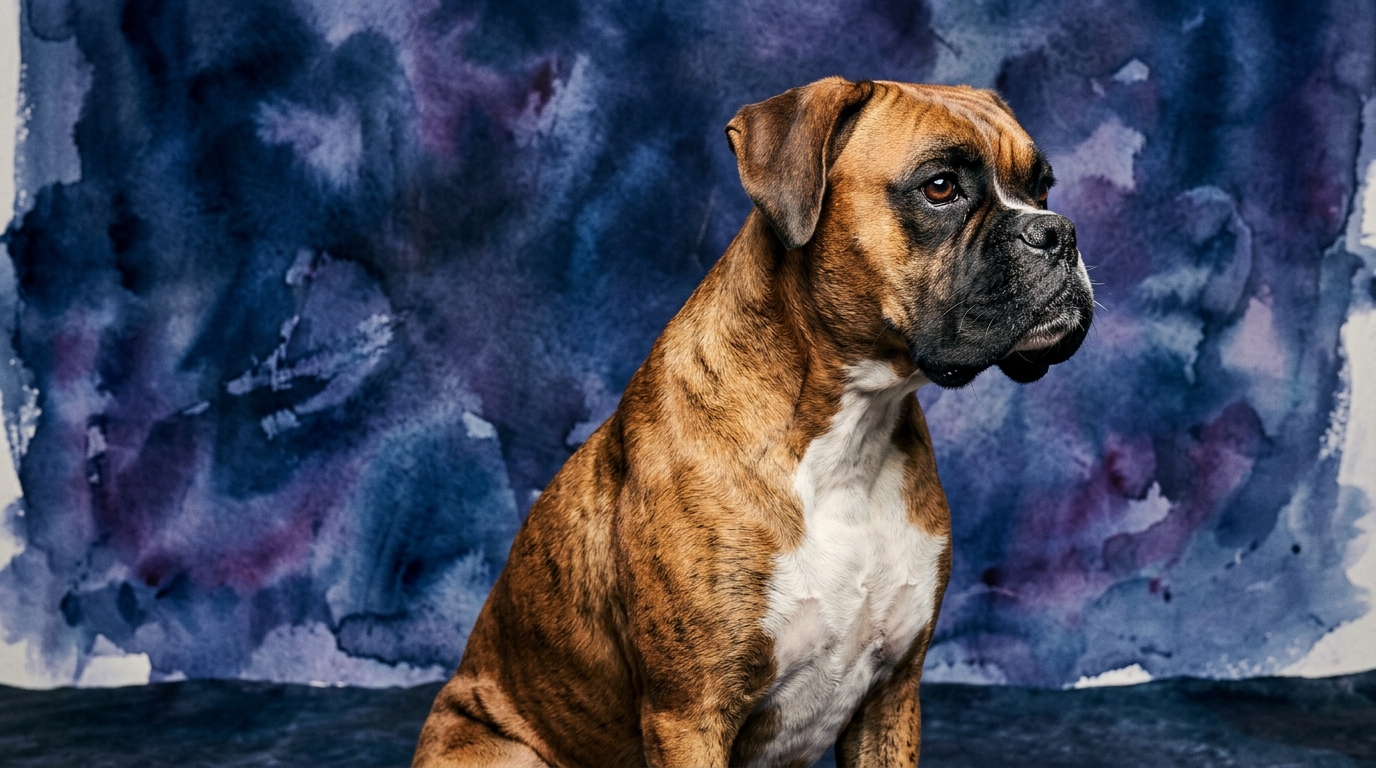
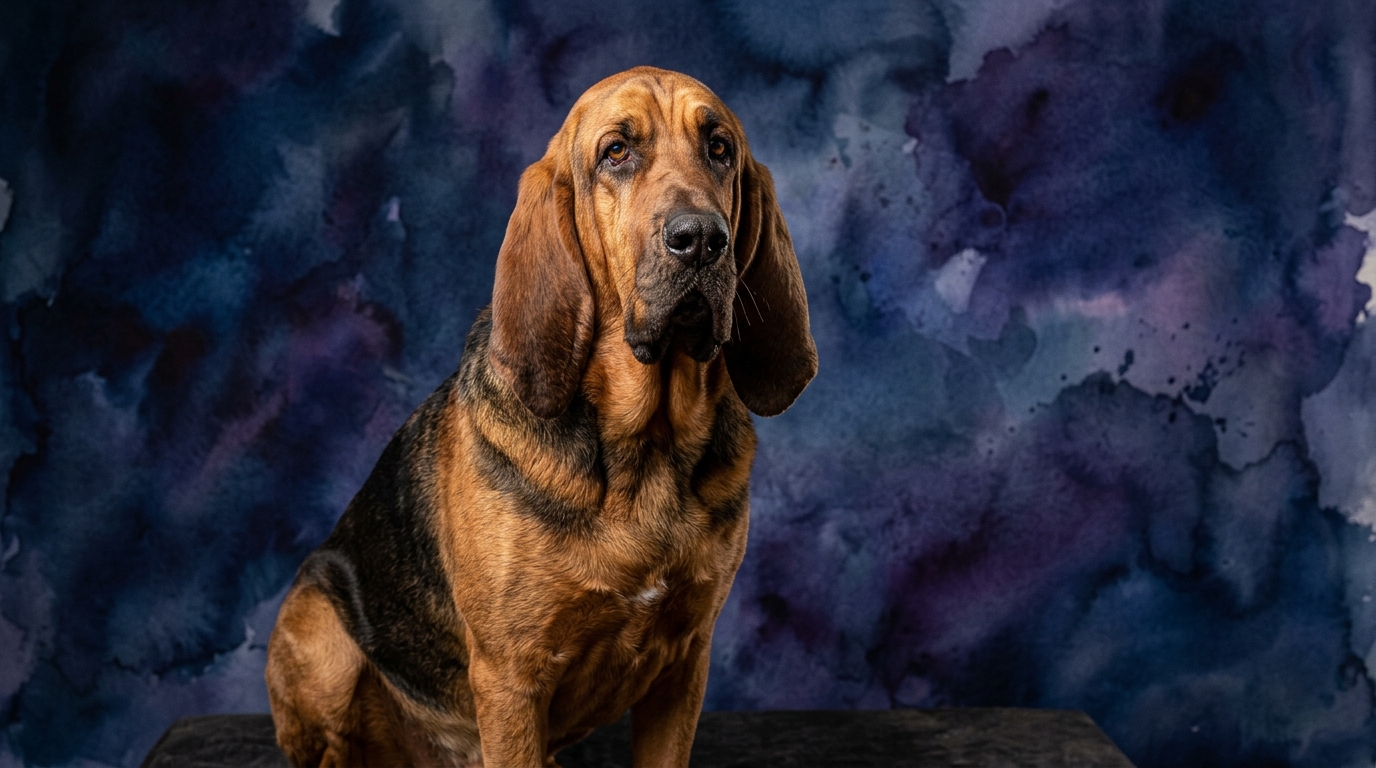
Side-by-Side Cognitive Profiles: Boxer vs. Bloodhound
The Cosmic Pet Pet IQ Lab employs a multi-dimensional framework to assess canine intelligence, moving beyond a singular measure to capture the nuanced mental strengths of each breed. For the Boxer, ranked #48 by Coren, and the Bloodhound, at #74, their scores paint a picture of specialized cognitive strengths rather than a simple hierarchy.
The Boxer's profile reveals a dog with moderate Problem Solving (3/5), suggesting an ability to learn routines and tackle straightforward challenges, but perhaps less inclination for complex, novel puzzles without human direction. Their Training Speed (3/5) indicates a responsive learner, capable of acquiring new commands with consistent, positive reinforcement, though their playful nature can sometimes present a delightful distraction. Where the Boxer truly shines is in Social Intelligence (5/5), demonstrating a profound ability to read human emotions, seek interaction, and integrate seamlessly into family dynamics. Their Instinctive Drive (4/5) leans towards protective behaviors and a robust play drive, while their Memory (3/5) allows them to retain learned behaviors and recognize familiar faces and places effectively.
In stark contrast, the Bloodhound presents a cognitive profile optimized for a singular, demanding task: scent work. Their Problem Solving is exceptional (5/5), but specifically geared towards unraveling intricate scent trails, requiring immense focus and independent decision-making to navigate complex environments. This intense focus often translates to a low Training Speed (1/5) in traditional obedience, as their primary motivation is the pursuit of scent, making them less inclined to respond to human commands when a compelling trail is present. Their Social Intelligence (2/5) reflects their independent nature; while gentle and affectionate, their focus is often externalized towards their nose rather than internalizing human social cues for guidance. The Bloodhound's Instinctive Drive is unparalleled (5/5), dominated by an obsessive, powerful scenting ability. Finally, their Memory (5/5) is phenomenal, particularly for retaining scent patterns, spatial maps of traversed areas, and the long-term recall of specific odor profiles.
Where the Boxer Excels Cognitively
The Boxer's cognitive strengths are deeply rooted in their social nature and adaptability within a human family. Their top score in Social Intelligence means they are exceptionally attuned to their human companions. This isn't just about affection; it's a sophisticated ability to interpret body language, vocal tone, and even subtle shifts in mood, allowing them to adjust their behavior accordingly. A Boxer is often the first to offer comfort or initiate play based on what they perceive from their owner.
This social acumen significantly impacts their everyday life. For instance, a Boxer will often anticipate a walk by retrieving their leash, not just from learned routine (memory), but by picking up on pre-departure cues from their owner. Their moderate training speed, combined with this desire to interact and please, makes them generally more receptive to obedience cues in a distracting environment, provided the distractions aren't overwhelming. They tend to integrate new household rules and routines with a willingness that makes them a more straightforward companion in varied domestic settings, readily adapting to new family members or changes in schedule with less internal conflict than a breed less focused on social harmony.
Where the Bloodhound's Mind Triumphs
The Bloodhound's cognitive prowess is a testament to specialized evolution, with their mind built for the intricate world of scent. Their Problem Solving (5/5) isn't about opening cabinets or solving puzzle toys in the conventional sense; it's about navigating a three-dimensional tapestry of odors, filtering out irrelevant smells, and reconstructing a path from the faintest of molecular traces. This requires an extraordinary capacity for independent thought and sustained concentration on a single, abstract goal.
Their perfect score in Memory (5/5) is intrinsically linked to this scent work. A Bloodhound can retain an extensive catalog of scent profiles, associating them with specific individuals or events, and recall them over long periods and vast distances. This memory isn't just for commands; it's a complex spatial and olfactory mapping system that allows them to retrace steps or follow trails hours or even days old. Their overwhelming Instinctive Drive (5/5) to follow a scent is not merely an impulse but a profound cognitive commitment. Once on a trail, their brain enters a highly focused state, where all other stimuli, including human commands, often become secondary, demonstrating a deep, unwavering mental persistence that few other breeds possess.
Training Dynamics: Which is Easier and Why?
When considering ease of training in a conventional sense, the Boxer generally presents a more manageable experience for the average owner. Their Training Speed of 3/5, combined with their high Social Intelligence, means they are typically eager to please and responsive to human guidance. Boxers thrive on positive reinforcement, praise, and interactive training sessions, viewing them as valuable social interactions. They are motivated by companionship and approval, which makes teaching basic obedience commands, house rules, and even some tricks a relatively smooth process. While they can have a playful streak, their inherent desire to engage with their owner means they are often willing participants in learning.
The Bloodhound, with a Training Speed of 1/5, poses a distinct challenge for traditional obedience. Their mind is overwhelmingly dominated by their instinctive drive to track, making them profoundly difficult to redirect once they've engaged their nose. A Bloodhound on a scent trail is, for all intents and purposes, deaf to human commands. Their low social intelligence in this context means they are less inclined to prioritize human direction over their olfactory mission. Training a Bloodhound requires immense patience, a deep understanding of their drive, and often specialized methods that leverage their scenting abilities rather than trying to suppress them. While they are not unintelligent, their cognitive priorities simply do not align with the rapid acquisition of conventional obedience cues in the same way a Boxer's do, making them a less 'easy' dog to train for most typical pet ownership scenarios.
Owner Suitability: Active Companions vs. Dedicated Trackers
Choosing between a Boxer and a Bloodhound largely depends on an owner's lifestyle and their understanding of canine cognitive needs. The Boxer, with its balanced cognitive profile and high social intelligence, is an excellent fit for active owners seeking an engaged, interactive companion. They thrive in environments where they can be part of family activities, whether it's daily runs, engaging in dog sports, or simply being a constant presence during household tasks. Their moderate problem-solving and memory ensure they can learn complex routines and adapt to varied environments, making them suitable for owners who enjoy consistent training and a dog that readily participates in a dynamic family life. They require consistent physical and mental stimulation that involves human interaction to prevent boredom.
The Bloodhound, conversely, is best suited for dedicated owners who understand and are prepared to accommodate their singular, powerful instinctive drive. While they are gentle and affectionate indoors, their mental world is dominated by scent. Relaxed owners, in the sense of low-energy or hands-off, would likely find a Bloodhound challenging due to their need for extensive scent work and exercise that stimulates their nose. They are ideal for owners who can provide daily, structured outlets for their tracking abilities, whether through formal tracking sports, long sniff-walks, or specialized search and rescue training. An owner must be prepared for a dog that, while calm in the home, requires a significant commitment to fulfilling its deep-seated cognitive and physical need for scent exploration, often independently of human direction during the activity itself.
The Verdict
Choose a Boxer if you seek a highly social, adaptable, and responsive companion eager to participate in family life and learn new commands with relative ease. Their cognitive strengths make them wonderful partners for active, engaged owners who appreciate interactive training and a dog attuned to human cues.
Opt for a Bloodhound if you are a patient, dedicated owner prepared to channel their extraordinary scent drive and independent problem-solving into appropriate, stimulating activities. They thrive with individuals who understand their unique cognitive priorities and can provide ample opportunities for their nose to lead the way.
🧠 Find Your Pet's IQ Score
Our Pet IQ Lab assessment covers 25+ tests across 5 cognitive dimensions — personalized to your breed.
Take the Full IQ Test →Frequently Asked Questions
Can a Bloodhound be trained for obedience like a Boxer?
While a Bloodhound can learn obedience commands, their low training speed and overwhelming scent drive make it significantly more challenging than with a Boxer. Their focus is primarily on scent, so training requires immense patience, consistency, and often specialized methods that work with, rather than against, their natural instincts.
Do Boxers require a lot of mental stimulation?
Yes, Boxers benefit greatly from consistent mental stimulation. Their moderate problem-solving and strong social intelligence mean they enjoy learning new commands, engaging in interactive play, and participating in family activities. Without adequate engagement, they may find their own (sometimes mischievous) ways to entertain themselves.
Which breed is better for a first-time dog owner?
Generally, a Boxer would be a more suitable choice for a first-time dog owner due to their higher social intelligence and more adaptable training speed. Their eagerness to please and responsiveness to human direction make the learning process for both dog and owner more straightforward than the unique challenges presented by a Bloodhound's specialized cognitive profile.