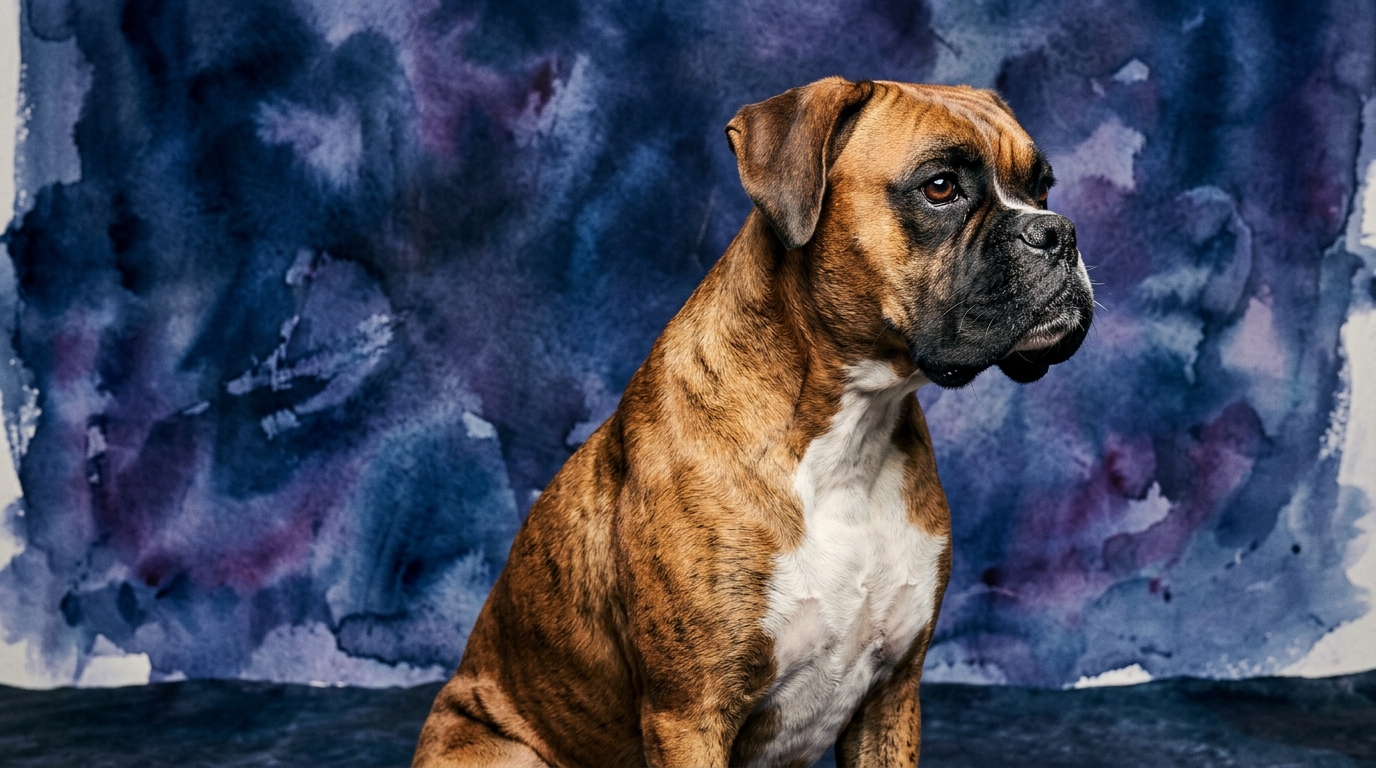
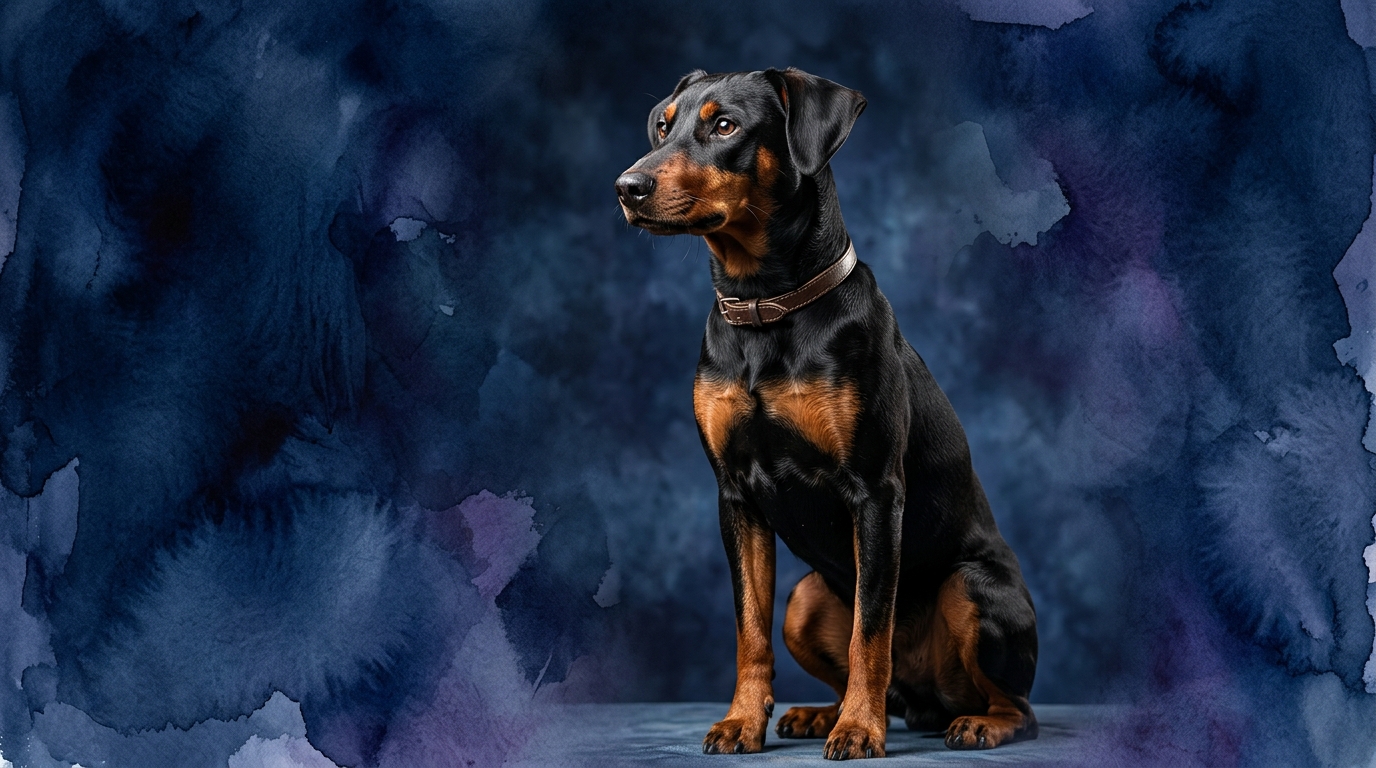
Side-by-Side Cognitive Profiles: Boxer vs German Pinscher
Delving into the cognitive strengths of these two distinct working breeds, the Boxer (Coren rank #48) and the German Pinscher (not Coren-ranked), reveals a mosaic of similar and divergent capabilities. Both breeds demonstrate a practical aptitude for navigating their world, yet their priorities and expressions of intelligence vary significantly across key dimensions.
The Boxer's cognitive profile begins with Problem Solving rated at 3/5, indicating an ability to effectively tackle immediate environmental challenges, often through a blend of physical exploration and trial-and-error. Their Training Speed also stands at 3/5, suggesting they grasp new commands and routines at a moderate pace, requiring consistent and engaging methods to solidify learning. However, where Boxers truly shine is in Social Intelligence, scoring an exceptional 5/5; they are profoundly attuned to human emotions and social dynamics, making them remarkably empathetic and responsive companions. Their Instinctive Drive is strong at 4/5, encompassing a protective nature alongside a zest for interactive play and physical activity. Finally, their Memory is rated 3/5, signifying a solid capacity to recall learned behaviors and familiar associations.
In contrast, the German Pinscher presents a profile that, while numerically similar in some aspects, manifests differently in application. Their Problem Solving capability also rates 3/5, reflecting a direct and efficient approach to practical challenges, often relying on keen observation and quick decision-making rather than extensive experimentation. Training Speed for the German Pinscher is 3/5, meaning they learn at a steady rate, though their independent streak necessitates clear, motivating, and consistent instruction. Their Social Intelligence is 3/5; while affectionate with their inner circle, they tend to be more reserved with strangers and less overtly focused on universal human approval than the Boxer. An Instinctive Drive of 3/5 reflects their vigilant nature and moderate prey drive, rooted in their historical role as farm guardians and ratters. Their Memory, like the Boxer's, is 3/5, enabling them to retain commands and routines effectively, particularly those consistently reinforced.
Where the Boxer Excels Cognitively
The Boxer's most prominent cognitive advantage lies in their unparalleled Social Intelligence, scoring a full 5/5 compared to the German Pinscher's 3/5. This isn't merely about friendliness; it signifies an exceptional capacity to interpret and respond to human emotions, intentions, and subtle social cues. Boxers often anticipate their owner's needs or mood shifts, offering comfort or initiating play at just the right moment. They possess an innate ability to form deep, reciprocal emotional bonds, making them incredibly intuitive and empathetic family members.
This heightened social acumen means a Boxer is more likely to be motivated by praise, connection, and the desire to please their human companions. When faced with a complex social scenario, such as navigating a new group of people or understanding a nuanced household rule, the Boxer's superior social processing allows them to adapt and integrate more smoothly, often seeking guidance and validation from their primary caregivers. Their enthusiasm for interaction translates into a greater willingness to engage in cooperative tasks and a profound understanding of their place within the human family structure.
Where the German Pinscher Holds a Cognitive Edge
While the raw scores might suggest parity or even a slight deficit, the German Pinscher's distinct cognitive advantage emerges from its particular blend of Problem Solving (3/5) and a more independent Social Intelligence (3/5). This combination often translates into a greater self-reliance in decision-making and a focused, efficient approach to practical tasks. Unlike the Boxer, who might look to their human for social cues in a challenging situation, the German Pinscher is more inclined to assess and act independently.
Their historical role as vermin hunters and property guardians cultivated a sharper, more autonomous form of ingenuity. When presented with a novel environmental challenge, such as securing a perimeter or outsmarting a small critter, the German Pinscher is likely to employ direct, self-initiated strategies with less reliance on human direction or emotional validation. This independent cognitive style means they can be remarkably effective at tasks requiring sustained focus and individual initiative, making them adept at navigating their environment with a confident, self-assured intellect.
Ease of Training: Behavioral Differences Unpacked
When it comes to ease of training, the Boxer generally presents as a more straightforward candidate for most owners, primarily due to their superior Social Intelligence. Their strong desire to please and deep emotional connection to their humans means they are highly motivated by positive reinforcement, praise, and the opportunity to engage in cooperative activities. They often find joy in the training process itself, viewing it as a shared experience that strengthens their bond. While their Training Speed is 3/5, their willingness to engage and their responsiveness to social feedback can make the learning curve feel smoother.
The German Pinscher, with its 3/5 Training Speed and more independent Social Intelligence, requires a different approach. They are certainly capable of learning, but their inherent self-reliance means they are less likely to be driven purely by the desire to please. Training a German Pinscher often benefits from shorter, more engaging sessions that challenge their intellect and provide clear, consistent boundaries. Owners must be creative in maintaining their interest and demonstrating the value of compliance, as a German Pinscher may question the utility of a command if it doesn't align with their own perceived objectives. Their vigilance and moderate instinctive drive also mean early socialization and consistent boundary setting are crucial to channel their natural tendencies productively.
Matching Breeds to Lifestyles: Active vs. Relaxed Owners
The choice between a Boxer and a German Pinscher often boils down to an owner's lifestyle and what they seek in a canine companion. For moderately active owners who prioritize deep emotional connection and a highly responsive, empathetic family member, the Boxer is an excellent fit. Their robust Instinctive Drive (4/5) means they thrive on regular exercise, interactive play, and mental stimulation, but their high Social Intelligence ensures they are always eager to share these activities with their human family. They will happily join for jogs, fetch games, and cuddle sessions on the couch, adapting their energy to the family's rhythm while always seeking companionship.
Conversely, the German Pinscher is better suited for active owners who appreciate a dog with a more independent spirit and a keen, vigilant nature. While their Instinctive Drive is 3/5, it manifests as a purposeful energy that benefits from structured activities like agility, obedience, or scent work that tap into their problem-solving skills and focus. They require consistent physical and mental outlets to prevent boredom, and their self-reliant social intelligence means they are content to work alongside their owner rather than constantly seeking emotional validation. Owners who enjoy outdoor adventures, consistent training routines, and a dog that maintains a certain degree of autonomy will find a rewarding partnership with a German Pinscher.
The Verdict
Choose the Boxer if you prioritize a deeply empathetic, highly social companion who thrives on close interaction and emotional attunement, excelling in family settings where connection is paramount.
Opt for the German Pinscher if you seek an independent, vigilant, and self-reliant companion, appreciating their keen focus on practical tasks and a less overtly demonstrative social presence.
🧠 Find Your Pet's IQ Score
Our Pet IQ Lab assessment covers 25+ tests across 5 cognitive dimensions — personalized to your breed.
Take the Full IQ Test →Frequently Asked Questions
Are Boxers better guard dogs than German Pinschers?
Boxers possess a strong protective drive and will guard their family with enthusiasm, often using their physical presence and imposing stature as a deterrent. German Pinschers are vigilant and alert, making them excellent watchdogs who will bark to signal perceived threats, often with a more reserved and observing approach rather than immediate physical confrontation.
Do German Pinschers get along with children as well as Boxers?
Boxers are generally very patient and playful with children, thriving on family interaction and often forming strong, protective bonds due to their high social intelligence. German Pinschers can be good with children in their own family but may be more reserved or less tolerant of boisterous play from unfamiliar children, requiring careful supervision and early socialization.
Which breed is more prone to separation anxiety?
Given their exceptionally high social intelligence and deep need for companionship, Boxers are generally more prone to developing separation anxiety if left alone for extended periods without adequate mental and social stimulation. German Pinschers, with their greater independence, tend to cope better with solitude, provided they receive sufficient exercise and engaging activities when their owners are present.