
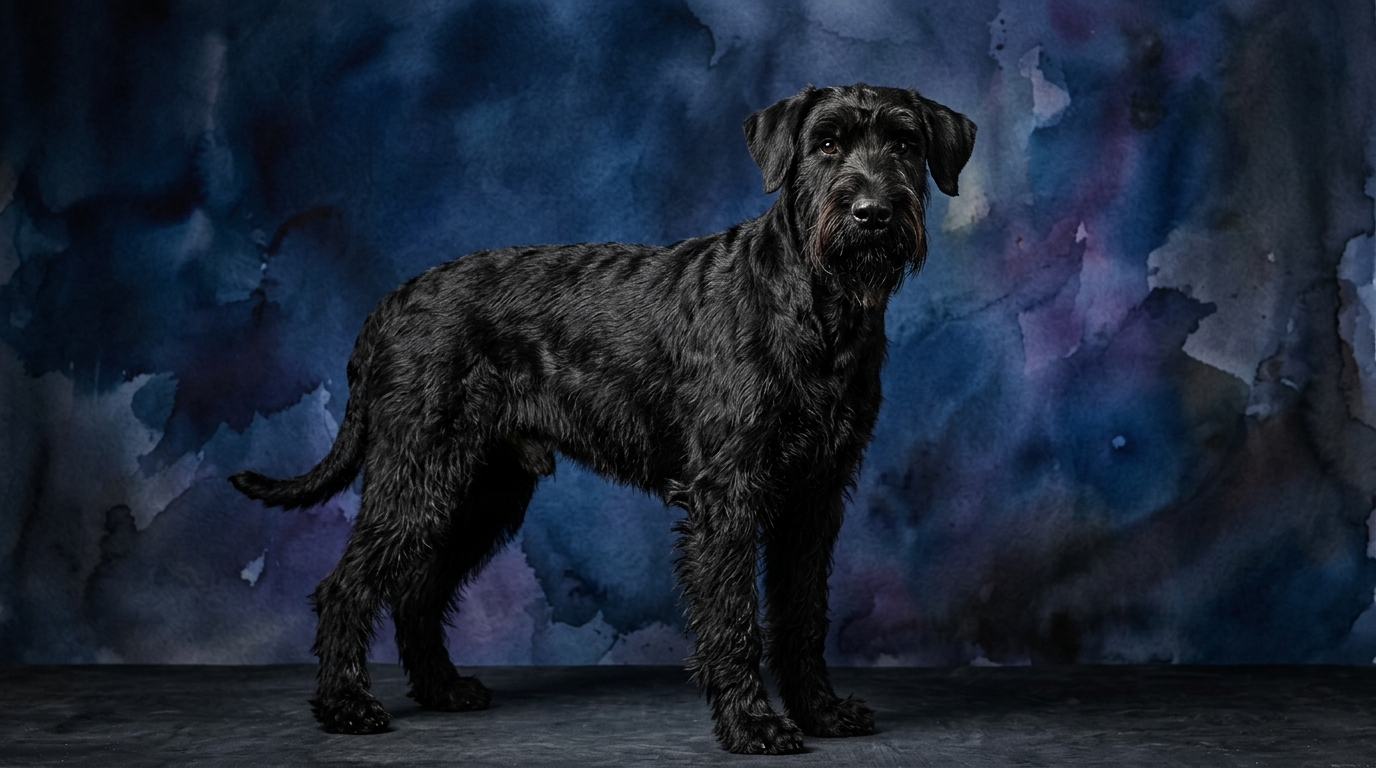
Side-by-Side Cognitive Profiles: Boxer vs. Giant Schnauzer
The Cosmic Pet Pet IQ Lab evaluates canine cognition across five crucial dimensions: Problem Solving, Training Speed, Social Intelligence, Instinctive Drive, and Memory. These metrics offer a granular view into how different breeds perceive and interact with their world, providing a more nuanced understanding than generalized labels.
The Boxer, ranking #48 on the Coren scale, presents a unique cognitive blueprint. Their Problem Solving is rated 3/5, indicating a moderate aptitude for navigating novel challenges. Training Speed also sits at 3/5, suggesting they grasp new commands with consistent effort but may require more repetitions. Where the Boxer truly excels is Social Intelligence, scoring a perfect 5/5, reflecting their profound ability to read human emotions and bond deeply. Their Instinctive Drive is a robust 4/5, manifesting as high energy and a zest for activity, while their Memory is a solid 3/5, enabling them to recall learned behaviors over time.
In contrast, the Giant Schnauzer, holding a more prominent #28 on the Coren scale, showcases a different set of cognitive strengths. Their Problem Solving ability is strong at 4/5, indicating an adeptness at strategizing and overcoming obstacles. This is mirrored in their Training Speed, also 4/5, suggesting a quicker assimilation of new commands and concepts. Their Social Intelligence is a moderate 3/5, implying a loyal but often more reserved demeanor compared to the Boxer. The Giant Schnauzer's Instinctive Drive is 3/5, pointing to a controlled energy output, and their Memory is an impressive 4/5, allowing for excellent retention of complex information.
The difference in Coren rankings, 48 for the Boxer and 28 for the Giant Schnauzer, broadly suggests that the Giant Schnauzer tends to understand new commands with fewer repetitions and obey the first command more consistently. However, a deeper dive into the specific IQ dimensions reveals that 'understanding' and 'obedience' are just two facets of a dog's cognitive world, and other strengths can be equally valuable depending on an owner's lifestyle and preferences.
Where the Boxer's Mind Shines Brightest
The Boxer's standout cognitive strength lies in their exceptional Social Intelligence, scoring a remarkable 5/5. This dimension highlights their profound capacity for empathy, their ability to intuit human moods, and their drive to engage in meaningful interaction. A Boxer often forms an incredibly deep, almost telepathic bond with their family, responding not just to commands but to subtle shifts in tone and body language, making them profoundly intuitive companions.
Their robust Instinctive Drive, rated 4/5, further complements their social nature. This drive is often channeled into spirited play, boisterous affection, and a protective vigilance over their loved ones. It's a drive that fuels their need for activity and interaction, ensuring they are always ready for an adventure or a cuddle, and making them highly responsive to social cues during play or training.
While their Problem Solving and Training Speed are moderate, the Boxer's cognitive prowess is not about rapid, detached learning. Instead, their mind excels in dynamic social contexts, where their strong emotional connection and playful drive motivate them to participate and engage. They may not instantly grasp a complex puzzle, but they will work tirelessly and joyfully alongside their human companion, often finding solutions through persistence and social cooperation.
Unpacking the Giant Schnauzer's Cognitive Strengths
The Giant Schnauzer’s cognitive profile reveals a mind geared for focused tasks and robust retention. Their Problem Solving ability, rated 4/5, indicates a strategic approach to challenges, where they are more likely to analyze a situation and devise a solution. Coupled with their impressive Memory score of 4/5, they are adept at retaining complex sequences and applying learned behaviors to new contexts, making them excellent candidates for intricate obedience routines or utility work.
This capacity for focused learning is further supported by their Training Speed, also 4/5. Giant Schnauzers typically require fewer repetitions to master new commands and concepts, absorbing instruction efficiently. This efficiency is a hallmark of their cognitive makeup, allowing them to progress quickly through training stages and excel in disciplines requiring precision and consistency.
While their Social Intelligence is a moderate 3/5, this doesn't diminish their loyalty; rather, it suggests a more discerning and sometimes reserved social approach. Their cognitive strengths are often applied to mastering tasks and understanding their role within a structured environment. They form deep bonds, but their expression of affection might be less exuberant and more focused on their primary caregiver, relying on their strong memory and problem-solving skills to navigate their world effectively.
Training Dynamics: Boxer vs. Giant Schnauzer
When considering ease of training, the data suggests a Giant Schnauzer generally picks up new commands more quickly than a Boxer. With a Training Speed of 4/5, combined with their strong Problem Solving (4/5) and Memory (4/5), the Giant Schnauzer often grasps concepts with fewer repetitions and retains them for longer periods. Their focused demeanor allows for more direct instruction absorption, making them a good fit for structured, goal-oriented training programs.
The Boxer, with a Training Speed of 3/5, may require a bit more patience and creativity during initial command acquisition. However, their exceptional Social Intelligence (5/5) means they are profoundly motivated by positive human interaction and eager to please their family. Training a Boxer often benefits from being framed as a fun, bonding experience, leveraging their playful nature and strong desire for connection. Their occasional 'clownish' antics are often a manifestation of their social engagement rather than a lack of understanding, and a consistent, reward-based approach works wonders.
Ultimately, consistency is key for both breeds. For the Giant Schnauzer, clear, firm, and intellectually stimulating instruction is most effective, capitalizing on their mental acuity. For the Boxer, training thrives when it's infused with joy, positive reinforcement, and a strong emphasis on strengthening the human-canine bond. The Giant Schnauzer's lower Instinctive Drive (3/5) compared to the Boxer's (4/5) might also mean they are less prone to spontaneous distractions, making them more receptive to structured guidance in certain environments.
Lifestyle Suitability: Active vs. Purpose-Driven Owners
Owners seeking a highly interactive, socially engaged companion will find a wonderful match in the Boxer. Their high Instinctive Drive (4/5) and boundless energy, coupled with their exceptional Social Intelligence, mean they thrive in active households that can provide ample opportunities for play, long walks, and family involvement. A Boxer needs an owner who enjoys channeling their exuberance into positive outlets and who cherishes a deeply connected, often boisterous, relationship. They are not content with long periods of solitude or a sedentary lifestyle; their social and physical needs are paramount.
The Giant Schnauzer, while also an active breed, suits owners who appreciate a more purpose-driven engagement. Their cognitive strengths in Problem Solving (4/5) and Memory (4/5) make them ideal for structured activities such as advanced obedience, agility, tracking, or protection work. These dogs benefit immensely from consistent mental challenges that tap into their strategic thinking. Their moderate Social Intelligence suggests they form strong, loyal bonds with their primary handlers, but may be more reserved with strangers, requiring an owner who understands and respects their focused, sometimes independent, nature.
It's important to note that neither breed is suitable for truly 'relaxed' owners in the sense of minimal daily engagement. Both are working breeds demanding significant investment in terms of time, training, and exercise. The distinction lies in the *type* of engagement: the Boxer seeks social, energetic fun and connection, while the Giant Schnauzer flourishes with structured, intellectually stimulating challenges and a clear sense of purpose.
The Verdict
Choose a Boxer if you seek a highly social, effervescent companion who thrives on family interaction, playful engagement, and offers intuitive emotional connection, even if training requires a bit more creative patience.
Opt for a Giant Schnauzer if you desire a focused, capable working partner who excels at structured learning, complex tasks, and independent problem-solving, and you are prepared for dedicated, consistent training.
🧠 Find Your Pet's IQ Score
Our Pet IQ Lab assessment covers 25+ tests across 5 cognitive dimensions — personalized to your breed.
Take the Full IQ Test →Frequently Asked Questions
Is a Boxer or Giant Schnauzer better for first-time dog owners?
Neither breed is typically recommended for absolute first-time dog owners due to their working breed natures and needs for consistent training and socialization. However, a Boxer's social intelligence might make them slightly more forgiving of minor training inconsistencies, provided their significant exercise and social needs are consistently met.
Do Boxers and Giant Schnauzers get along with children?
Boxers, with their high social intelligence, often form strong, playful bonds with children, but their exuberance and size require supervision to ensure safe interactions. Giant Schnauzers can be excellent family protectors and loyal to children within their family unit, though their social approach might be more reserved, necessitating careful introductions and boundary setting.
Which breed requires more mental stimulation to prevent boredom?
Both breeds require significant mental stimulation to prevent boredom. The Giant Schnauzer's higher problem-solving and memory scores mean they excel with structured training, puzzle toys, and advanced obedience. Boxers, while also needing engagement, often find their mental stimulation through interactive play and social interaction with their family, thriving on connection.