
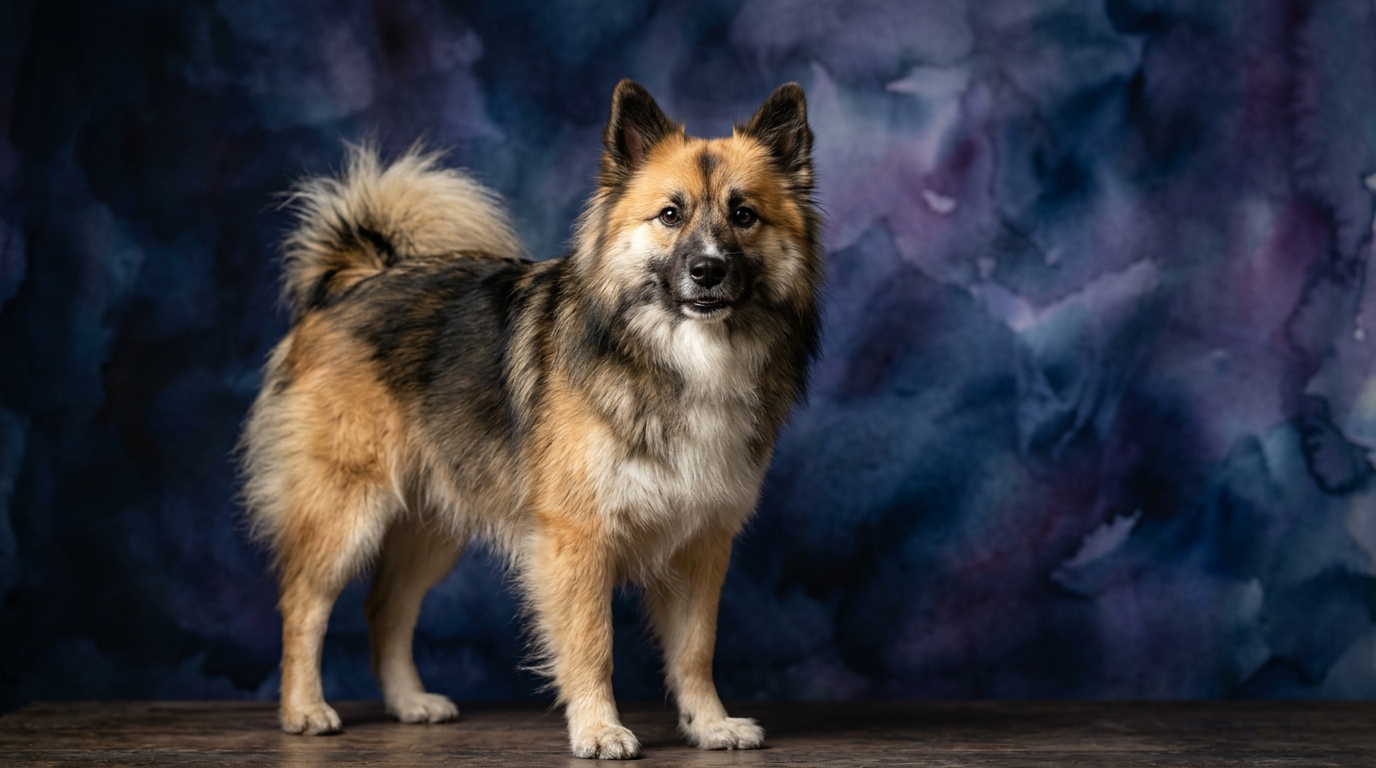
Side-by-Side IQ Profile: Boxer vs. Icelandic Sheepdog
At The Cosmic Pet Pet IQ Lab, we evaluate canine intelligence across five key dimensions. For the Boxer, a breed ranked #48 by Coren, and the Icelandic Sheepdog, a herding breed without a specific Coren ranking, their cognitive blueprints reveal both shared and divergent strengths.
Boxer Cognitive Profile:
Problem Solving (3/5): Boxers demonstrate a moderate capacity for independent problem-solving, often approaching challenges with a blend of physical assertiveness and curiosity. They might, for instance, figure out how to open a simple latch to access a desired area or retrieve a toy that has rolled under furniture through persistent nudging and pawing. However, for more abstract or multi-step puzzles, they tend to rely on human guidance or repetitive trial-and-error rather than intricate strategic planning. Their solutions are often direct and less about complex foresight.
Training Speed (3/5): Boxers learn new commands and routines at a moderate pace, thriving on consistency and positive reinforcement. Their enthusiasm can sometimes manifest as a short attention span, especially in a distracting environment, meaning training sessions need to be engaging, relatively brief, and frequent. While they grasp concepts, solidifying them into reliable behaviors requires patient repetition and making the learning process fun and rewarding to maintain their focus.
Social Intelligence (5/5): This is where Boxers genuinely shine. They possess an exceptional ability to interpret subtle human cues, emotional states, and intentions, forming profoundly intuitive bonds with their families. A Boxer might sense a change in an owner's mood, offering a gentle nudge or leaning in for comfort, or respond with playful antics to lighten a somber atmosphere. This high social IQ makes them incredibly empathetic companions, deeply attuned to the social dynamics within their household and eager to participate.
Instinctive Drive (4/5): Boxers exhibit a strong, multifaceted instinctive drive, rooted in their working and protection heritage. This manifests as a vigilant protective instinct for their family and territory, combined with a vigorous play drive that often involves energetic bursts and a desire to 'mouth' or carry objects. Their high energy levels and inherent drive mean they thrive when given ample outlets for physical activity and mental engagement, whether through structured play, scent work, or guarding duties.
Memory (3/5): Boxers show a moderate capacity for memory. They generally retain learned commands, routines, and the identities of familiar people and places effectively, particularly when reinforced regularly. While they remember specific training cues and household rules, recalling complex sequences of events or infrequent instructions might require refresher sessions to maintain proficiency and prevent skill fade.
Icelandic Sheepdog Cognitive Profile:
Problem Solving (3/5): Icelandic Sheepdogs display a moderate ability in practical problem-solving, particularly within their immediate environment. They are adept at navigating varied terrains and can figure out straightforward solutions to challenges, such as finding the easiest path around an obstacle or locating a lost item in the yard. Their problem-solving is often geared towards practical, observable outcomes, aligning with their historical role in managing livestock and navigating open landscapes.
Training Speed (3/5): Icelandic Sheepdogs learn new commands at a moderate pace, responding well to clear, consistent instruction and positive reinforcement. Their desire to please their handler and their generally cooperative nature aid in the learning process. However, their alert nature and sensitivity to environmental stimuli can sometimes lead to momentary distractions, requiring a patient and engaging trainer to keep them focused during sessions.
Social Intelligence (3/5): Icelandic Sheepdogs possess a moderate level of social intelligence. They are generally friendly, outgoing, and form strong, affectionate bonds with their families. While they are attuned to their owners' presence and generally respond to cues, they may not exhibit the same depth of nuanced emotional interpretation or anticipatory empathy as the Boxer. Their social interactions are often more direct and less about intricate emotional mirroring, focusing on their role within the family unit as a whole.
Instinctive Drive (3/5): The instinctive drive in Icelandic Sheepdogs is moderate and primarily centered on their ancient herding heritage. This manifests as a natural inclination to keep their 'flock' (family members, other pets) together, often through gentle nudging, circling, or a characteristic 'herding bark' used to alert or gather. While present, this drive is typically less intense and less physically demanding than the Boxer's broader working vigor, requiring consistent mental stimulation rather than constant high-impact physical exertion.
Memory (3/5): Icelandic Sheepdogs possess a moderate memory, capable of retaining commands, daily routines, and a strong recognition of familiar people and places. Their ability to remember environmental details and the movements of their 'flock' was historically crucial for their herding duties. Consistent positive reinforcement effectively solidifies their recall of instructions and helps them maintain proficiency over time.
Where the Boxer Wins Cognitively
The Boxer's distinct cognitive advantage lies squarely in its social intelligence, rated at a robust 5/5. This breed exhibits an unparalleled capacity for empathy and emotional attunement, sensing the subtle shifts in human mood and responding with comforting presence or playful antics. For instance, a Boxer might instinctively offer a gentle nuzzle to a distressed owner or initiate a game to uplift spirits, demonstrating a deeper interpretive capacity for human emotional states than the Icelandic Sheepdog. This nuanced understanding makes them exceptionally intuitive family companions, often anticipating needs or offering unsolicited affection. This high social IQ also significantly contributes to their strong desire to be close to their people, fostering an almost telepathic bond within the household.
Where the Icelandic Sheepdog Wins Cognitively
While the Icelandic Sheepdog's individual IQ scores are consistently moderate, its cognitive strength shines through the practical application of its herding instincts within specific environmental contexts. Unlike the Boxer, whose instinctive drive is more generalized and physically expressed, the Icelandic Sheepdog's cognitive processes are finely tuned for observation, situational awareness, and the subtle management of movement. This breed often demonstrates a keen, almost watchful awareness of its surroundings, combined with a persistent, gentle drive to keep its human 'flock' together, a trait less pronounced in the Boxer's more direct approach. Their moderate instinctive drive, coupled with practical problem-solving abilities, allows them to excel in tasks requiring careful monitoring, spatial reasoning, and a natural inclination to organize, historically crucial for livestock management and navigating complex terrains.
Which Is Easier to Train and Why
Both breeds share a 3/5 rating for training speed, suggesting neither is inherently 'easier' in terms of raw learning pace. However, their distinct social intelligence and instinctive drives create different training dynamics. The Boxer's high social intelligence means they are often deeply motivated by pleasing their owner and thrive on positive interaction, making them highly responsive to praise and affection. Their strong, generalized instinctive drive, while requiring channeling through structured activities, means they eagerly engage in tasks that provide mental and physical challenge. Conversely, the Icelandic Sheepdog's moderate social intelligence implies they might not be as intensely driven by human emotional connection during training; their motivation often stems more from task completion and consistency. Their herding instincts can manifest as a tendency to 'manage' their environment or use barking to communicate, requiring consistent redirection and clear boundaries. While both require patience, the Boxer's intrinsic desire for social connection and active engagement often makes the *process* of training feel more collaborative and emotionally rewarding for the owner, provided their exuberance is managed with consistent guidance. The Icelandic Sheepdog, while certainly trainable and eager to learn, may respond best to more structured, task-oriented motivation rather than relying as heavily on emotional bonding during initial instruction.
Which Suits Active Owners vs. Relaxed Owners
For active owners seeking a dynamic, highly engaged partner, the Boxer, with its 4/5 instinctive drive and boundless energy, is an excellent fit. They thrive on vigorous exercise, structured play, and activities that challenge both their bodies and their social acumen, such as competitive dog sports, long runs, or engaging obedience work. Their need for significant mental and physical stimulation means they are not content with a sedentary lifestyle and can become restless without proper outlets. Conversely, while the Icelandic Sheepdog is also an active breed, its moderate instinctive drive (3/5) means its activity needs, while consistent, are often less intense and less demanding of high-impact exertion than the Boxer's. They enjoy regular, moderate exercise, like daily walks, hiking, and opportunities to explore and observe their surroundings, but may not demand the same level of sustained athletic commitment. Therefore, the Icelandic Sheepdog could suit an owner who enjoys consistent outdoor activity and mental engagement but perhaps not the high-octane demands of a Boxer, making them a better choice for those who appreciate regular, purposeful engagement without needing extreme athletic dedication.
The Verdict
Choose a Boxer if you desire an emotionally intuitive, highly social companion who thrives on deep personal connection and vigorous physical and mental engagement, offering boundless affection and a strong protective instinct.
Opt for an Icelandic Sheepdog if you prefer a companion with a practical, observant nature, moderate activity needs, and a gentle herding instinct, offering a loyal presence within a consistently active household.
🧠 Find Your Pet's IQ Score
Our Pet IQ Lab assessment covers 25+ tests across 5 cognitive dimensions — personalized to your breed.
Take the Full IQ Test →Frequently Asked Questions
Do Boxers and Icelandic Sheepdogs bark a lot?
Boxers generally have a moderate tendency to bark, often as an alert or during play, reflecting their protective instincts. Icelandic Sheepdogs, due to their herding background, are known to be more vocal, using barking to communicate and manage their 'flock,' which can include alerting to perceived changes in their environment.
Are Boxers or Icelandic Sheepdogs better with children?
Boxers, with their high social intelligence and playful nature, often form strong bonds with children and can be very patient family companions. Icelandic Sheepdogs are also generally good with children, displaying a gentle, watchful demeanor, though their herding instincts might lead them to gently 'herd' smaller children, which requires supervision.
Which breed is more independent?
Neither breed is considered highly independent. Boxers crave close human companionship due to their exceptional social intelligence. Icelandic Sheepdogs, while not as emotionally dependent, still prefer to be part of their family unit, reflecting their historical role as working partners.