
Side-by-Side Cognitive Profile: Boxer vs. Komondor
The Cosmic Pet Pet IQ Lab assesses canine intelligence across five critical dimensions. The Boxer, a Working breed with a Coren rank of #48, scores a moderate 3/5 in both Problem Solving and Training Speed. Its Social Intelligence is a perfect 5/5, reflecting a profound ability to interpret human cues and integrate into social structures. Instinctive Drive is robust at 4/5, signaling a strong internal motivation for activity, while Memory sits at 3/5.
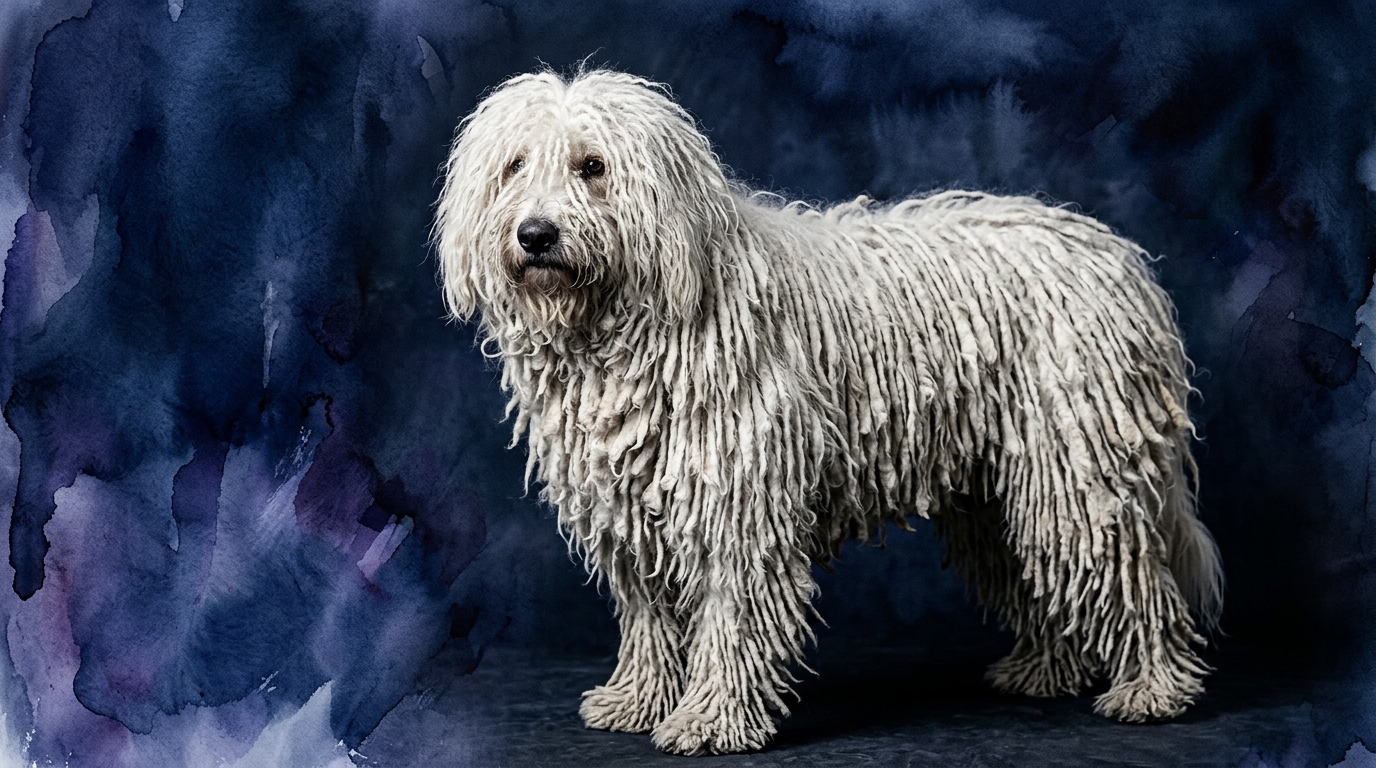
The Komondor, also a Working breed but with a Coren rank of #67, presents a different cognitive blueprint. It matches the Boxer with a 3/5 in both Problem Solving and Training Speed, suggesting a similar pace in learning and tackling new situations, though its approach is markedly different. Its Social Intelligence is a more reserved 3/5, indicating a greater degree of self-reliance. Instinctive Drive is also 3/5, primarily channeled into its ancient guarding role, and its Memory is a standard 3/5.
Where the Boxer Excels Cognitively
The Boxer's cognitive edge primarily resides in its exceptional Social Intelligence (5/5). This isn't just about being friendly; it's a sophisticated capacity to perceive, interpret, and respond to human emotions, intentions, and communication signals with remarkable accuracy. A Boxer can often anticipate an owner's mood or next action, making them incredibly intuitive partners. This high social acumen translates into a profound ability to form strong, cooperative bonds, excelling in activities where partnership is paramount, such as competitive obedience, agility, or therapy work.
Their 4/5 Instinctive Drive, while not the highest, fuels an enthusiastic engagement with these social interactions, providing the mental energy and eagerness to participate actively alongside their human companions. This drive is often expressed as a robust playfulness and a persistent desire for shared activity, making them highly motivated by collaborative tasks. They thrive on the mental stimulation derived from working *with* a person, internalizing human approval as a powerful reinforcer.
Where the Komondor Shows Unique Cognitive Strengths
While sharing a 3/5 score in Problem Solving with the Boxer, the Komondor's cognitive strength lies in the *application* of this ability, deeply intertwined with its independent nature and specialized Instinctive Drive (3/5). Centuries of solitary livestock guardianship have ingrained in the Komondor a unique form of autonomous problem-solving. This isn't about solving puzzles for human entertainment; it's about evaluating environmental cues, assessing potential threats, and making strategic decisions to protect its charges without direct human command.
Their problem-solving manifests as a self-directed vigilance and a capacity for independent judgment in complex, real-world scenarios. Their Instinctive Drive, though rated 3/5, is singularly focused on this guardian role, manifesting as an unwavering commitment to their territory and family. Their lower Social Intelligence (3/5) is not a deficit in their context; rather, it supports their independence, meaning they don't constantly look to humans for direction or validation, which is crucial for a dog bred to operate alone in vast pastures.
Trainability: Boxer vs. Komondor
When considering ease of training, the Boxer undeniably presents a more straightforward path for most owners, despite both breeds sharing a 3/5 Training Speed score. The key differentiator is the Boxer's exceptional Social Intelligence (5/5). Boxers are inherently eager to engage with their human counterparts and are highly attuned to feedback, praise, and approval. This makes them incredibly receptive to positive reinforcement training methods; they actively seek to understand what is being asked of them and are motivated by the connection and shared activity with their owner.
In contrast, the Komondor's moderate Training Speed (3/5), coupled with its lower Social Intelligence (3/5), results in a more challenging training experience. Komondors are intelligent and capable of learning, but their strong independence means they are less motivated by human approval and more by their own assessment of a situation's utility or logic. Training a Komondor requires immense patience, consistency, and a deep understanding of their self-reliant nature; owners must earn their respect and present commands as logical necessities rather than requests for enthusiastic cooperation.
Matching Canine Cognition to Owner Lifestyles
The distinction between these two breeds regarding owner lifestyle is quite pronounced, primarily due to their differing instinctive drives and social needs. The Boxer, with its 4/5 Instinctive Drive and 5/5 Social Intelligence, is an ideal match for active owners who desire a truly cooperative and engaged canine partner. These dogs thrive on consistent physical and mental stimulation that involves their human companions. Activities like advanced obedience, agility, long hikes, or vigorous interactive play sessions are not just beneficial but essential for a Boxer's well-being, as they need outlets for their energy and their deep desire for shared purpose.
On the other hand, the Komondor, while not suitable for truly 'relaxed' owners in the sense of minimal effort, appeals to a different kind of owner. Its 3/5 Instinctive Drive is primarily channeled into its ancient role as a vigilant guardian, and its 3/5 Social Intelligence means it's less demanding of constant interactive play or human-centric social engagement. Komondors are self-sufficient and require an owner who understands and respects their independent nature and strong territorial instincts, providing a secure environment where they can fulfill their guardian role. Owners must be 'active' in managing their environment and socialization, but prepared for a powerful, self-thinking dog that often makes its own decisions rather than constantly seeking human direction.
The Verdict
Choose a Boxer if you seek an engaging, socially astute partner eager for cooperative activities and deeply integrated family life, thriving on shared experiences and consistent interaction.
Opt for a Komondor if you appreciate a highly independent, self-reliant guardian with a strong sense of purpose, capable of autonomous decision-making, and are prepared to provide the necessary space and understanding for their unique, ancient temperament.
🧠 Find Your Pet's IQ Score
Our Pet IQ Lab assessment covers 25+ tests across 5 cognitive dimensions — personalized to your breed.
Take the Full IQ Test →Frequently Asked Questions
What makes Boxers so socially intelligent compared to many other breeds?
Boxers' remarkable social intelligence stems from their history as companion and working dogs, requiring close cooperation with humans. This has fostered an innate ability to read subtle human cues, emotions, and intentions, making them exceptionally attuned to their owner's needs and desires.
How does a Komondor's independence affect its trainability and daily life?
A Komondor's independence means they learn readily but are less inclined to perform simply for human approval. Training requires immense patience and consistency, focusing on logical necessity over enthusiastic cooperation. In daily life, this translates to a dog that makes its own decisions, often acting as a self-appointed guardian rather than constantly seeking direction.
Are Boxers or Komondors generally better suited for families with young children?
Boxers, with their high social intelligence and playful nature, often integrate well into families and can be wonderful, patient companions for children when properly socialized and trained. Komondors, due to their strong guardian instincts and independent nature, require very careful, early socialization and supervision with children, as their protective instincts might be misdirected if not managed correctly.