
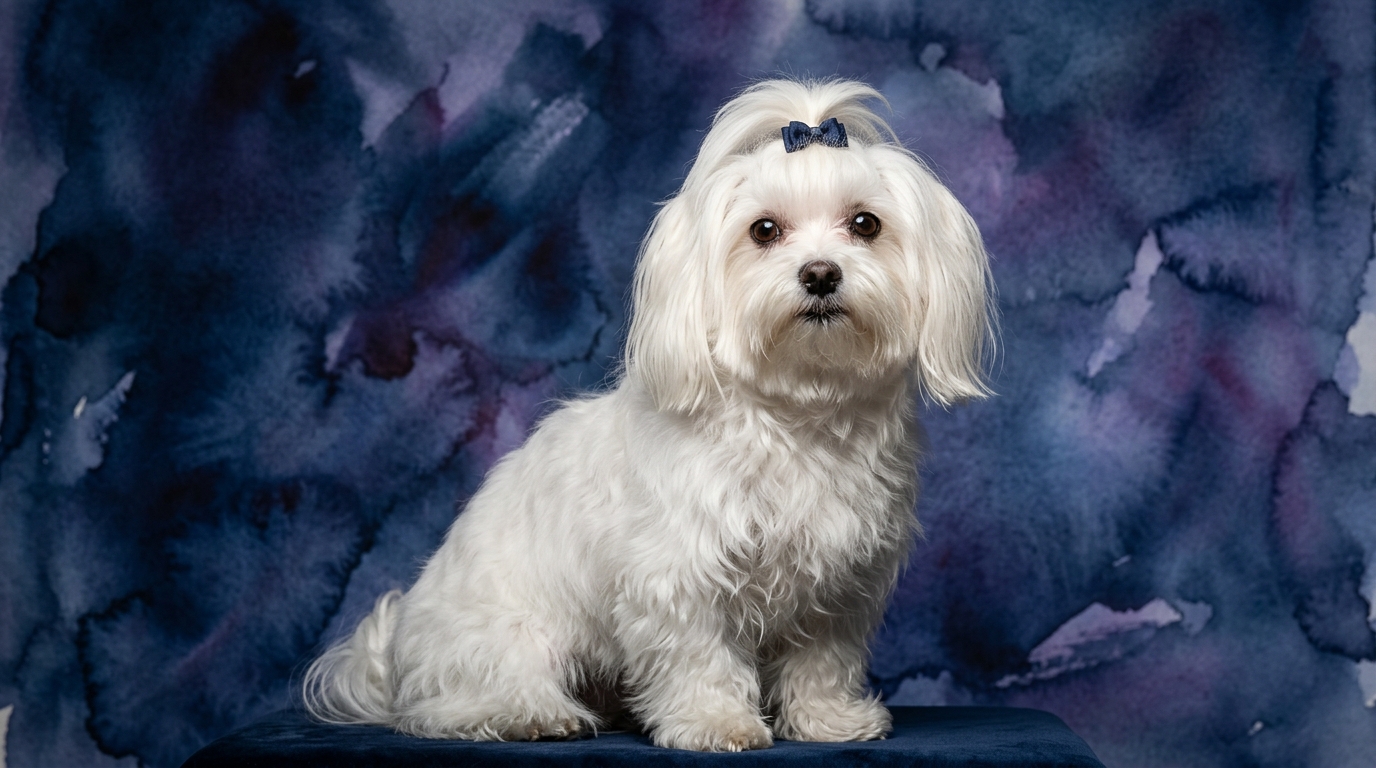
Side-by-Side IQ Profile: Boxer vs Maltese
The Cosmic Pet IQ Lab assesses canine intelligence across five key dimensions, offering a detailed look at how different breeds process the world. For the Boxer, a Working group dog with a Coren rank of #48, their profile shows a balanced aptitude. Problem Solving scores 3/5, indicating a moderate ability to navigate novel situations or puzzles, often employing physical methods. Their Training Speed is also 3/5, suggesting a steady pace in acquiring new commands with consistent repetition. Social Intelligence stands out at a perfect 5/5, reflecting exceptional attunement to human cues and emotional states. An Instinctive Drive of 4/5 highlights their pronounced natural urges for activity, guarding, or play, while Memory is rated 3/5 for recalling learned behaviors and familiar contexts.
The Maltese, a Toy group dog with a Coren rank of #59, shares several cognitive similarities with the Boxer, particularly in human-centric intelligence. Like the Boxer, their Problem Solving is 3/5, implying a similar capacity for tackling simple challenges, though their approach might lean more towards engaging their human companions. Training Speed also sits at 3/5, indicating they can learn new tasks effectively with appropriate methods. Crucially, their Social Intelligence mirrors the Boxer’s at 5/5, showcasing an equally profound ability to connect with and understand human emotions and intentions. The primary divergence lies in Instinctive Drive, where the Maltese scores 2/5, suggesting a much lower inclination towards traditional working or hunting behaviors. Memory, like the Boxer, is rated 3/5, allowing them to retain routines and associations.
Where the Boxer Wins Cognitively
The Boxer’s cognitive strengths are deeply rooted in their working heritage and robust physical nature, particularly evident in their higher Instinctive Drive (4/5 compared to the Maltese’s 2/5). This drive translates into a more pronounced capacity for goal-oriented physical problem-solving. For instance, a Boxer is more likely to methodically push obstacles aside or strategize how to retrieve a hidden toy using their body, demonstrating a persistent engagement with the physical environment to achieve a desired outcome. Their problem-solving often involves manipulating objects and understanding spatial relationships in a way that aligns with their historical roles in tasks requiring physical engagement and determination.
Furthermore, their elevated Instinctive Drive means Boxers are more naturally inclined to engage in activities that leverage their stamina and focus, such as agility courses, protection sports, or complex scent work. While their Training Speed is similar to the Maltese, this inherent drive means they are often more motivated by tasks that tap into their natural inclinations for movement and purpose. This cognitive advantage allows them to excel in structured environments where their energy and focus can be channeled into learning and executing multi-step commands related to a 'job,' often demonstrating a tenacious spirit in mastering physical challenges.
Where the Maltese Wins Cognitively
While the Maltese shares a 5/5 Social Intelligence score with the Boxer, their lower Instinctive Drive (2/5) subtly shifts how this intelligence manifests, often giving them an edge in specific social cognitive applications. With fewer distractions from environmental stimuli like prey or territorial urges, the Maltese can dedicate an intense, singular focus to human interaction. This allows them to become exceptionally adept at discerning minute changes in human tone, facial expressions, and body language, often anticipating needs or moods with remarkable precision. Their problem-solving (3/5) frequently takes a social form; they might strategically employ charming behaviors, vocalizations, or persistent nudges to communicate desires or elicit specific responses from their owners, showcasing a nuanced understanding of social dynamics within the household.
This breed's cognitive strengths are optimized for companionship. Their ability to remain highly attentive to their human counterparts, unburdened by strong external drives, means they excel at forming profound emotional bonds and providing comfort. They can 'read the room' with exquisite sensitivity, often choosing opportune moments to offer affection or solicit attention. This finely tuned social cognition, combined with their manageable size, makes them masters of intimate, reciprocal interaction, where their intelligence shines in fostering deep emotional connections and navigating complex interpersonal relationships within their human family.
Which Is Easier to Train and Why?
Both Boxers and Maltese share a 3/5 rating for Training Speed, implying neither is inherently 'easier' in a universal sense; rather, their training approaches differ due to their distinct behavioral profiles. The Boxer’s 4/5 Instinctive Drive means they often bring enthusiasm and a desire for a 'job' to training sessions, especially when physical activity or a clear goal is involved. They respond well to consistent, engaging training that channels their energy and offers mental stimulation, but their exuberance and occasional independent streak require a firm yet positive hand. A Boxer might apply their problem-solving skills to find novel ways to get a desired treat, sometimes testing boundaries, requiring a trainer to be clear and consistent in their expectations.
The Maltese, with its 2/5 Instinctive Drive, tends to be less distracted by external environmental factors, potentially leading to more focused attention on the trainer in quiet settings. Their 5/5 Social Intelligence makes them highly motivated by praise, affection, and positive reinforcement from their beloved humans, making them eager to please. However, their small size and strong bond can sometimes lead to 'small dog syndrome' if not properly socialized and trained, where they might use their problem-solving to manipulate situations through charming persistence rather than direct obedience. Training success for the Maltese often hinges on making it a positive, bond-building experience, rather than physically demanding drills, to cultivate their responsiveness and prevent unwanted behaviors rooted in over-indulgence.
Which Suits Active Owners vs. Relaxed Owners?
The Boxer, with its 4/5 Instinctive Drive and 3/5 Problem Solving, thrives with active owners who can meet their significant needs for physical exercise and mental engagement. These dogs require consistent outlets for their energy, whether through long walks, vigorous play, or participation in dog sports like agility or obedience trials. Their cognitive makeup means they enjoy tasks that challenge them both physically and mentally, often seeking opportunities to 'work' or engage in structured activities. Owners who appreciate a canine companion eager to join them on adventures and who can dedicate time to active training and play will find the Boxer an incredibly rewarding and engaged partner, preventing boredom that could lead to destructive behaviors.
Conversely, the Maltese, characterized by its 2/5 Instinctive Drive and 5/5 Social Intelligence, is an ideal fit for more relaxed owners who prioritize constant companionship and intimate interaction over strenuous activity. While they still benefit from daily walks and playtime, their primary need is for consistent human presence and emotional engagement. Their cognitive strengths are best utilized in a home environment where they can be close to their people, offering and receiving affection, and engaging in subtle social exchanges. Owners who are home frequently, enjoy a lapdog’s presence, and can provide ample social stimulation and gentle mental games will find the Maltese an exceptionally devoted and emotionally responsive companion, perfectly suited to a calmer lifestyle.
The Verdict
Choose a Boxer if you are an active owner seeking a robust, engaged companion with a strong drive for physical activity and who thrives on structured training and mental challenges.
Opt for a Maltese if you are a relaxed owner prioritizing constant companionship, nuanced social interaction, and a less physically demanding but deeply emotionally responsive canine friend.
🧠 Find Your Pet's IQ Score
Our Pet IQ Lab assessment covers 25+ tests across 5 cognitive dimensions — personalized to your breed.
Take the Full IQ Test →Frequently Asked Questions
Are Boxers and Maltese equally good at learning tricks?
Both breeds have a 3/5 Training Speed, suggesting they can learn tricks effectively. The Boxer might excel in tricks involving physical prowess due to their drive, while the Maltese, leveraging their high social intelligence, may quickly learn tricks that earn them praise and attention from their owner.
Do Boxers or Maltese need more mental stimulation?
Boxers, with their 4/5 Instinctive Drive and problem-solving applied physically, typically require more structured mental stimulation through training, puzzles, and activities to channel their energy constructively. Maltese, while also needing engagement, find significant mental stimulation through constant social interaction and companionship, rather than intense physical 'work' tasks.
How does social intelligence differ between these two breeds, given they both score 5/5?
While both Boxers and Maltese score 5/5 in Social Intelligence, their expression differs. The Boxer's social intelligence is often paired with their drive, leading to enthusiastic, protective bonding, and a desire to participate in family activities. The Maltese's social intelligence, with a lower instinctive drive, manifests as an intense, focused attunement to human emotions and needs, often leading to more subtle, anticipatory companionship and a profound emotional connection.