Side-by-Side IQ Profile: Boxer vs. Sealyham Terrier
To truly understand the cognitive makeup of these two distinct breeds, we delve into The Cosmic Pet Pet IQ Lab's five core dimensions of intelligence for each.
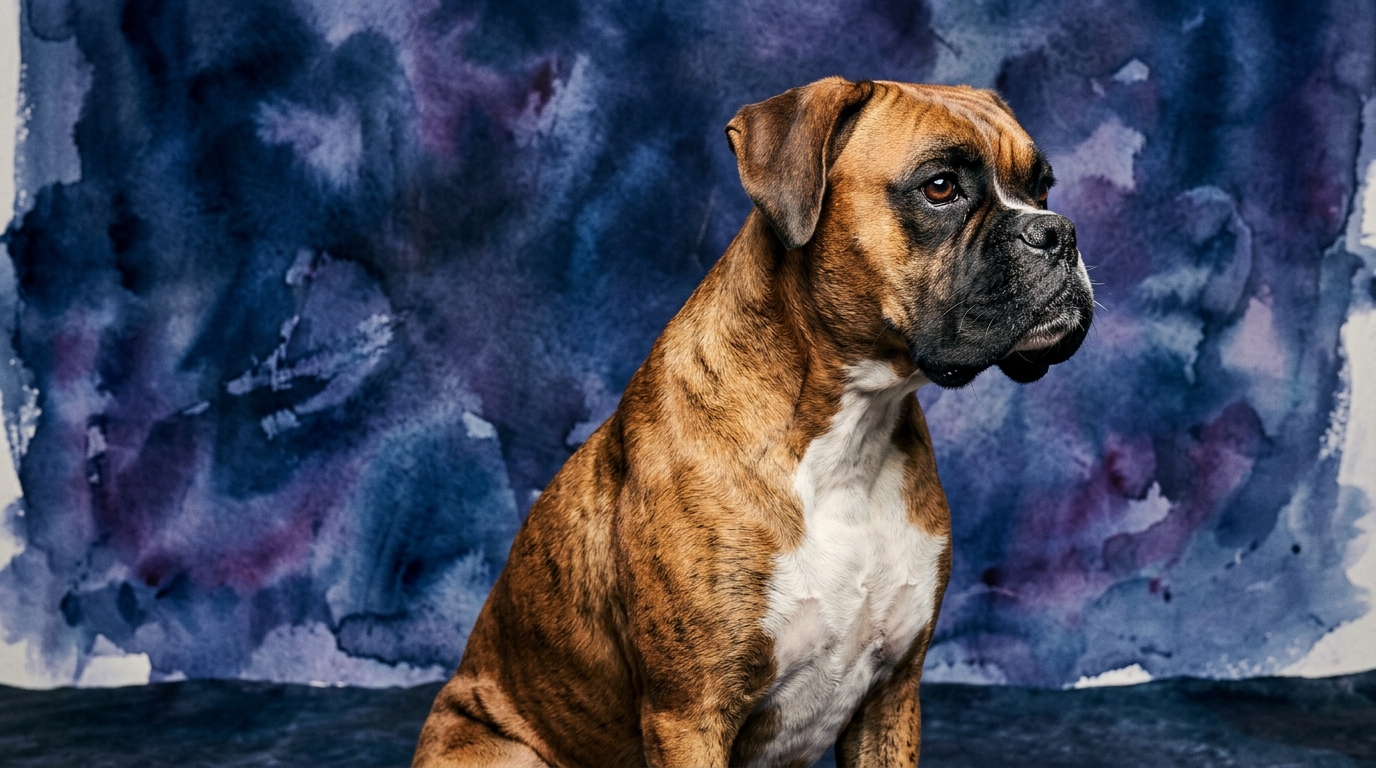
The Boxer, a dog from the Working group and Coren-ranked #48, demonstrates a balanced cognitive profile with particular strengths in social interaction. Their Problem Solving is rated at 3/5; they can figure out straightforward puzzles or navigate minor obstacles, often with a direct, physical approach, but complex, multi-step challenges may require guidance. Training Speed is also 3/5, meaning they require consistent, positive reinforcement and clear instructions, with their enthusiasm sometimes requiring patient repetition for complex commands rather than instant grasp. Where Boxers truly shine is in Social Intelligence, scoring a perfect 5/5, indicating an exceptional attunement to human emotions and social cues, thriving on interaction and forming deep bonds. Their Instinctive Drive is strong at 4/5, fueling their engagement in activities rooted in their working heritage, such as guarding or energetic play. Memory stands at 3/5; they exhibit an average capacity for commands, routines, and experiences, retaining learned behaviors and familiar places.
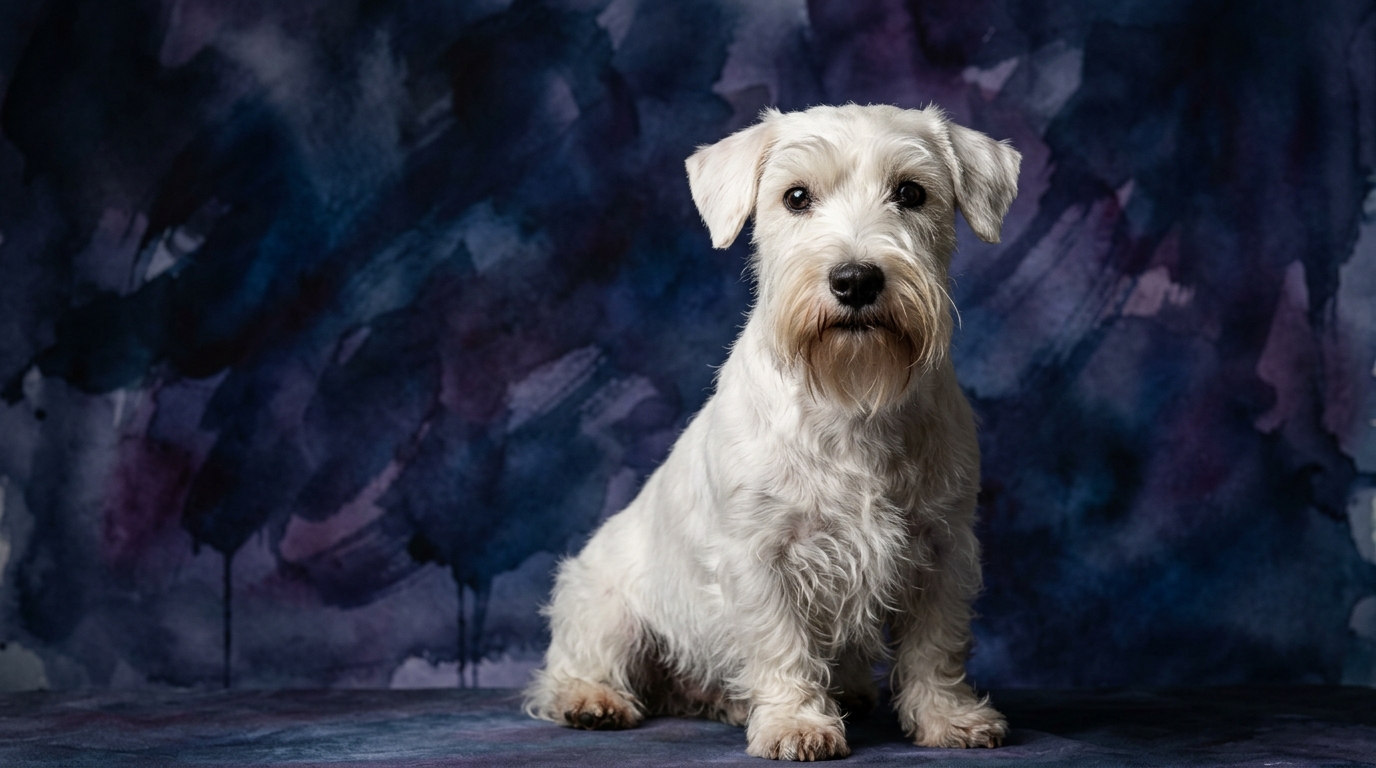
The Sealyham Terrier, a member of the Terrier group and not Coren-ranked, presents a profile marked by terrier tenacity and independent focus. Their Problem Solving capacity is 3/5, allowing them to tackle practical challenges, particularly those related to their instincts like navigating tight spaces, with solutions often persistence-driven. Training Speed is 3/5, similar to the Boxer, requiring engaging, reward-based methods and understanding their sometimes-stubborn nature; consistency is key. Sealyhams display average Social Intelligence at 3/5; they connect well with primary family but may not display the broad social awareness or constant desire for human interaction seen in some other breeds; they are affectionate but content alone. Their Instinctive Drive, rated at 3/5, primarily manifests in focused terrier traits like prey drive, digging, and determined pursuit of small animals, intense in specific situations but less generalized than a Boxer's. Memory is 3/5, an average capacity for commands, routines, and significant events, retaining learned behaviors and experiences, particularly if tied to strong associations.
Where the Boxer Wins Cognitively
Boxers distinctly outpace Sealyham Terriers in social intelligence, scoring a perfect 5/5 compared to the Sealyham's 3/5. This means Boxers possess an exceptional ability to read and respond to human emotions, body language, and vocal tones, making them remarkably intuitive companions. Their higher instinctive drive (4/5 vs 3/5) further enhances this, as it often manifests as a strong desire for cooperative interaction and engagement in shared activities. Boxers are more likely to initiate play, seek out human connection for comfort or direction, and adjust their behavior based on subtle social cues. For instance, a Boxer might instinctively pick up on a owner's stress and offer a comforting nudge, unlike a Sealyham, which might not interpret such a nuanced social signal. This makes Boxers particularly adept at roles requiring close partnership, such as assistance work or competitive obedience where human-canine synchronicity is paramount. Their social acumen allows them to predict and respond to human intentions with greater fluidity, fostering a deeper, more seamlessly integrated relationship.
Where the Sealyham Terrier Wins Cognitively
While the Sealyham Terrier's scores might not individually surpass the Boxer's in this comparison, their unique cognitive strengths lie in their focused tenacity and independent application of problem-solving, particularly when driven by their instinctive terrier pursuits. With a 3/5 in both problem-solving and instinctive drive, the Sealyham excels at persistent, self-directed tasks. Unlike the Boxer, whose drive is often geared towards cooperative action, the Sealyham's drive is intensely focused on specific objectives, such as pursuing quarry or navigating complex underground environments. This means a Sealyham, despite an 'average' problem-solving score, might display greater independent resourcefulness in sustained, solitary effort to achieve a goal it deems important, like finding a hidden toy or bypassing a barrier to a perceived 'prey' item. Their cognitive 'win' is in the unwavering, self-motivated application of their problem-solving skills to tasks that resonate with their heritage, often demonstrating a singular-minded determination that can be both admirable and challenging for owners.
Which is Easier to Train and Why
The Boxer generally presents as the easier breed to train, primarily due to its superior social intelligence (5/5) and robust instinctive drive (4/5) which often translates into a strong desire to please and cooperate with its human partners. Boxers thrive on interaction and positive reinforcement, quickly forming associations between commands and rewards when their human is actively engaged. Their natural inclination towards cooperative tasks means they are more likely to readily offer desired behaviors and maintain focus on their handler during training sessions. In contrast, the Sealyham Terrier, with average scores in training speed (3/5) and social intelligence (3/5), coupled with an instinctive drive (3/5) that is more self-directed, can be more challenging. Sealyhams possess the classic terrier independence; they understand commands but might choose to obey only if it aligns with their immediate interests or if the reward is sufficiently compelling. Their intelligence is often applied to "what's in it for me," rather than cooperative effort. This requires a trainer to be exceptionally patient, creative, and consistent, using high-value rewards to capture and maintain the Sealyham's attention against its natural inclination for independent action.
Which Suits Active Owners vs. Relaxed Owners
For active owners seeking a canine partner for shared adventures, the Boxer is an excellent fit. Its high instinctive drive (4/5) and exceptional social intelligence (5/5) mean Boxers thrive on regular, vigorous exercise that often involves human interaction, such as long runs, hikes, competitive dog sports like agility or obedience, and extended play sessions. They possess the stamina and enthusiasm to keep pace with an active lifestyle and genuinely enjoy being involved in every family activity. Their need for physical and mental engagement is significant, and they can become boisterous or destructive if under-exercised. The Sealyham Terrier, while certainly not a couch potato, is more adaptable to a slightly less intensely active owner, provided their specific exercise needs are met. With an average instinctive drive (3/5), Sealyhams require regular walks, secure off-leash play in a fenced yard, and opportunities for mental stimulation, particularly scent work or "hunting" games that tap into their terrier heritage. They can be content with a more relaxed indoor life if their daily outdoor requirements are consistently met, but their independence means they may not seek out constant human-led activity in the same way a Boxer does. For a relaxed owner, a Sealyham might be suitable if prepared to provide structured exercise and mental engagement, focusing on quality engagement over constant high-energy pursuits.
The Verdict
Choose the Boxer if you desire a highly social, cooperative, and intuitive companion for an active lifestyle, thriving on shared experiences and deep emotional connection.
Opt for the Sealyham Terrier if you appreciate a resilient, independent spirit that excels at self-directed tasks and can be content with structured, focused engagement rather than constant social interaction.
🧠 Find Your Pet's IQ Score
Our Pet IQ Lab assessment covers 25+ tests across 5 cognitive dimensions — personalized to your breed.
Take the Full IQ Test →Frequently Asked Questions
Do Boxers and Sealyham Terriers learn at the same pace?
Both breeds have an average training speed of 3/5, suggesting they learn new commands at a similar rate, requiring consistency and positive reinforcement. However, the Boxer's higher social intelligence can make them appear more eager to please during training.
Which breed is more likely to excel in dog sports?
The Boxer, with its higher social intelligence and instinctive drive, is generally more inclined to excel in cooperative dog sports like obedience, rally, and agility, where teamwork with a handler is key. Sealyhams can participate but might require more motivation.
How do their problem-solving approaches differ despite similar scores?
While both score 3/5 in problem-solving, a Boxer's approach is often more collaborative or physical, seeking human input. A Sealyham's problem-solving, driven by its terrier instincts, tends to be more independent, persistent, and focused on specific, self-rewarding tasks.