Side-by-Side Cognitive Profiles
At The Cosmic Pet Pet IQ Lab, we evaluate canine cognition across five key dimensions. Let's examine how the Boxer (Coren rank #48) and the Standard Schnauzer (Coren rank #22) measure up.
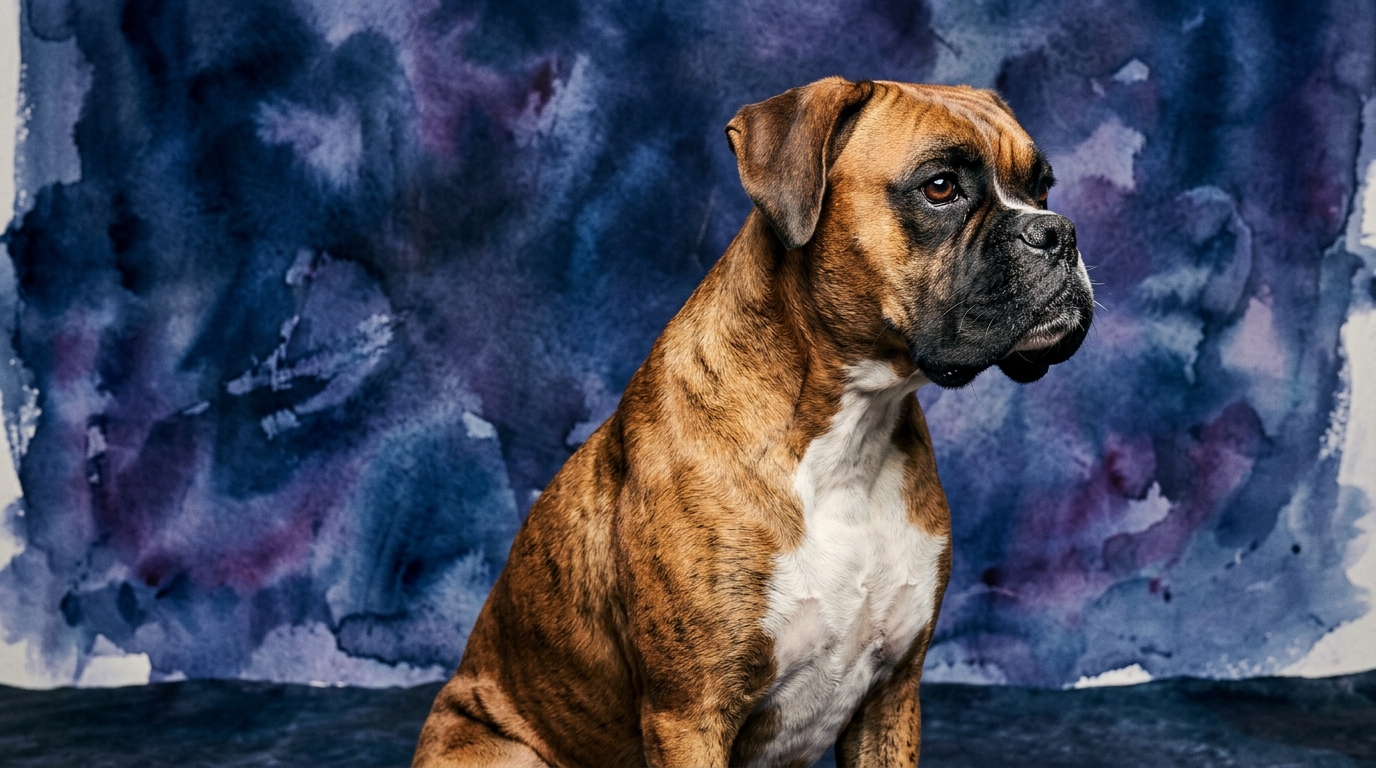
The Boxer's cognitive profile highlights their strong interpersonal skills. Their Problem Solving is rated 3/5, meaning they approach novel challenges with enthusiasm but might rely more on trial-and-error or human guidance rather than intricate, self-devised solutions. Their problem-solving often benefits from clear, consistent direction. Training Speed for Boxers is 3/5; while eager to please, they can exhibit a playful exuberance and occasional stubborn streak, meaning new commands might take a moderate number of repetitions to solidify. Consistency and positive reinforcement are key to their learning curve. Where Boxers truly shine is in Social Intelligence, earning a perfect 5/5. This breed excels in understanding human emotions and social cues, forming deep bonds and often anticipating their owner's moods or intentions. Their strong desire for interaction makes them highly attuned companions. Their Instinctive Drive is 4/5, possessing a notable prey drive and protective instincts, stemming from their history as hunting and guard dogs. This drive manifests as vigilance and a readiness to engage with their environment, often with a boisterous energy. Finally, their Memory is 3/5; they remember learned commands and routines reasonably well, but their recall might not be as sharp or long-lasting as some other breeds without regular reinforcement. Their memory is sufficient for daily life but less for complex, multi-step sequences over time.
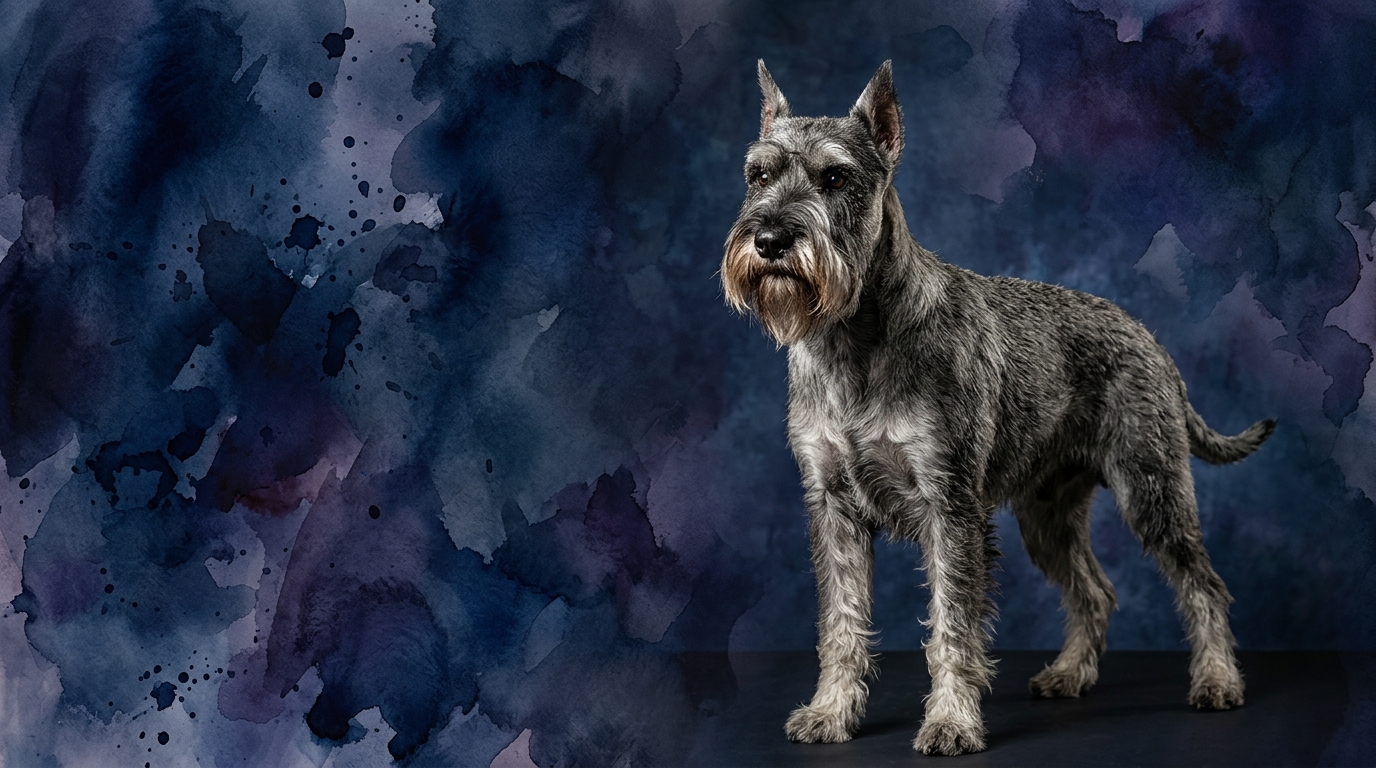
The Standard Schnauzer's cognitive profile showcases a more independent and focused intellect. Their Problem Solving is 4/5, demonstrating a higher capacity for independent thought and figuring out solutions to obstacles. They can analyze situations and devise strategies, often displaying cleverness in navigating their environment or achieving goals. Training Speed for Standard Schnauzers is 4/5; these dogs typically grasp new concepts and commands quickly, requiring fewer repetitions than many breeds. Their focus and desire to understand tasks contribute to their efficient learning process. In Social Intelligence, they score 3/5. While affectionate with their families, Standard Schnauzers are generally more reserved and less overtly demonstrative in their social interactions compared to Boxers. They understand cues but prioritize their personal space and tasks over constant human engagement. Their Instinctive Drive is 3/5; their historical role as ratters and farm dogs gives them a moderate prey drive and territorial instinct, but it's often more focused and less overtly boisterous than a Boxer's. They are alert and watchful, but not typically as high-energy in their expression of drive. Their Memory is 4/5, exhibiting strong recall for commands, routines, and experiences, retaining information effectively over time. This robust memory contributes to their consistent performance in trained tasks.
Where the Boxer Cognitively Excels
The Boxer's standout cognitive strength lies in their exceptional social intelligence. With a perfect 5/5, they possess an unparalleled ability to read human emotions, intentions, and subtle body language. This translates into an intuitive understanding of their family members, often anticipating needs or offering comfort without explicit instruction. They thrive on connection, actively seeking interaction and reciprocal emotional engagement, making them highly empathetic companions. This deep social bond is a core part of their cognitive makeup, influencing their learning and motivation, as they are often driven by a desire to please and connect with their people.
While both breeds have drives, the Boxer's instinctive drive (4/5) leans heavily into a robust protective nature, often expressed with more overt enthusiasm and presence. Their vigilance and readiness to act are pronounced, making them formidable, albeit friendly, guardians. This strong drive isn't just about chasing; it's about an inherent awareness of their surroundings and a quick, confident response to perceived changes, often expressed through their characteristic 'wiggle butts' and expressive faces when greeting familiar faces, contrasting with a more serious alert for strangers. Their protective instinct is deeply tied to their social intelligence, as they guard those they have bonded with so intensely.
Where the Standard Schnauzer Cognitively Excels
The Standard Schnauzer truly excels in problem-solving (4/5), demonstrating a keen analytical mind. They are adept at navigating complex situations, whether it's figuring out how to open a gate or devising a strategy to retrieve a hidden toy. Their approach is often more deliberate and less reliant on external cues than a Boxer's, showcasing an impressive capacity for independent thought and sequential reasoning. This cognitive strength makes them excellent candidates for advanced obedience, agility, or scent work where independent decision-making and strategic thinking are highly valued.
With a 4/5 in both training speed and memory, the Standard Schnauzer demonstrates a superior ability to acquire and retain new information. They pick up commands quickly, often requiring fewer repetitions, and maintain that knowledge over extended periods. This efficiency stems from a focused attention span and a strong associative memory, allowing them to build a complex repertoire of behaviors. This translates into a dog that can master intricate sequences and remember them reliably, making them a joy for those who enjoy consistent, high-level training and want a dog that can perform tasks with precision and independence.
Ease of Training: Boxer vs. Standard Schnauzer
Based on their cognitive profiles, the Standard Schnauzer generally presents as an easier dog to train, particularly for tasks requiring precision and consistent recall. Their higher scores in training speed (4/5) and memory (4/5) mean they absorb new commands efficiently and retain them reliably. A Standard Schnauzer is often more task-oriented, focusing on the exercise at hand with a desire to understand and execute. They might require less repetition and can progress to more complex sequences faster. For example, teaching a multi-step agility course or a complex obedience routine might see a Standard Schnauzer master the sequence with fewer sessions, recalling the individual elements and their order accurately and performing them consistently.
The Boxer, while certainly trainable and eager to please, might require more patience and consistency due to their training speed (3/5) and memory (3/5), coupled with their high social intelligence (5/5) and energetic drive (4/5). Their exuberance and desire for social interaction can sometimes be a delightful distraction. A Boxer might learn a command but occasionally 'forget' it in an exciting environment, or choose to solicit attention rather than perform the exact task. Their strong desire for human connection means their motivation is often tied to praise and interaction, which can be harnessed effectively but also means they might test boundaries more often, especially during adolescence. Training a Boxer often involves channeling their joyful energy and maintaining engagement through play, whereas a Standard Schnauzer might be more intrinsically motivated by the challenge of the task itself, valuing the 'job' above overt social engagement during training sessions.
Suitability for Active vs. Relaxed Lifestyles
For active owners who enjoy consistent mental and physical engagement, both breeds can be a good fit, but they suit different types of activity. The Standard Schnauzer thrives with structured activities that challenge their problem-solving and memory, such as advanced obedience, agility, tracking, or scent work. Their moderate instinctive drive and focused nature make them excellent partners for goal-oriented tasks. They enjoy long walks, hikes, and mentally stimulating games, but their energy is often more contained and directed. Owners who appreciate a dog that learns intricate routines and performs with precision will find a rewarding companion in the Schnauzer, especially for competitive dog sports.
The Boxer, with its higher instinctive drive (4/5) and boundless energy, is an excellent match for active owners who appreciate a playful, boisterous companion ready for anything. They excel in activities that involve running, jumping, and interacting with their human, such as fetch, jogging, or even dog sports like flyball. Their powerful build and enthusiastic nature mean they need ample physical exercise to prevent boredom. Owners who enjoy a dog with a strong personality and a constant zest for life, who will enthusiastically join in on outdoor adventures and then cuddle up closely, will find the Boxer a perfect partner for an active, family-centric lifestyle.
For more relaxed owners, neither breed is truly a 'couch potato,' but the Standard Schnauzer might be a slightly better fit if their exercise needs are met through regular, but perhaps less intense, daily walks and structured playtime. Their moderate social intelligence means they are content with periods of independent activity, not constantly demanding attention. A relaxed owner who can still provide daily mental enrichment and physical exercise will find the Schnauzer adaptable. The Boxer, however, with its intense social intelligence and higher drive, generally requires a more consistently engaged owner who is prepared for their high energy levels and constant desire for interaction. A truly relaxed owner might find the Boxer's needs for stimulation overwhelming without dedicated effort.
The Verdict
Opt for a Boxer if you seek a deeply empathetic, highly social companion who thrives on close family interaction and enthusiastic play, and you are prepared to channel their joyful energy through consistent, positive training.
Select a Standard Schnauzer if you value a clever, independent problem-solver that excels in structured learning and enjoys mentally challenging activities, and you appreciate a dog with focused drive and reliable memory.
🧠 Find Your Pet's IQ Score
Our Pet IQ Lab assessment covers 25+ tests across 5 cognitive dimensions — personalized to your breed.
Take the Full IQ Test →Frequently Asked Questions
Is a Boxer or Standard Schnauzer better for a first-time dog owner?
A Standard Schnauzer might be slightly more manageable for a first-time owner due to their quicker training speed and focused nature, provided the owner is committed to consistent mental and physical stimulation. Boxers, while loving, require an owner who can confidently manage their enthusiastic energy and strong social demands from the start, which can be a lot for someone new to dog ownership.
Do Boxers or Standard Schnauzers require more grooming?
Standard Schnauzers generally require more grooming due to their dense, wiry double coat which needs regular brushing, stripping, or clipping to prevent matting and maintain coat health, often every 6-8 weeks. Boxers have a short, smooth coat that requires minimal grooming, primarily occasional brushing and baths to keep them looking their best.
Which breed is more vocal, the Boxer or Standard Schnauzer?
Standard Schnauzers tend to be more vocal, often using barks to alert their owners to new sights or sounds, stemming from their watchdog instincts and a natural inclination to communicate. Boxers can be vocal when excited or playing, but are generally less prone to constant alert barking unless specifically trained for it, often expressing themselves through body language more than sound.