
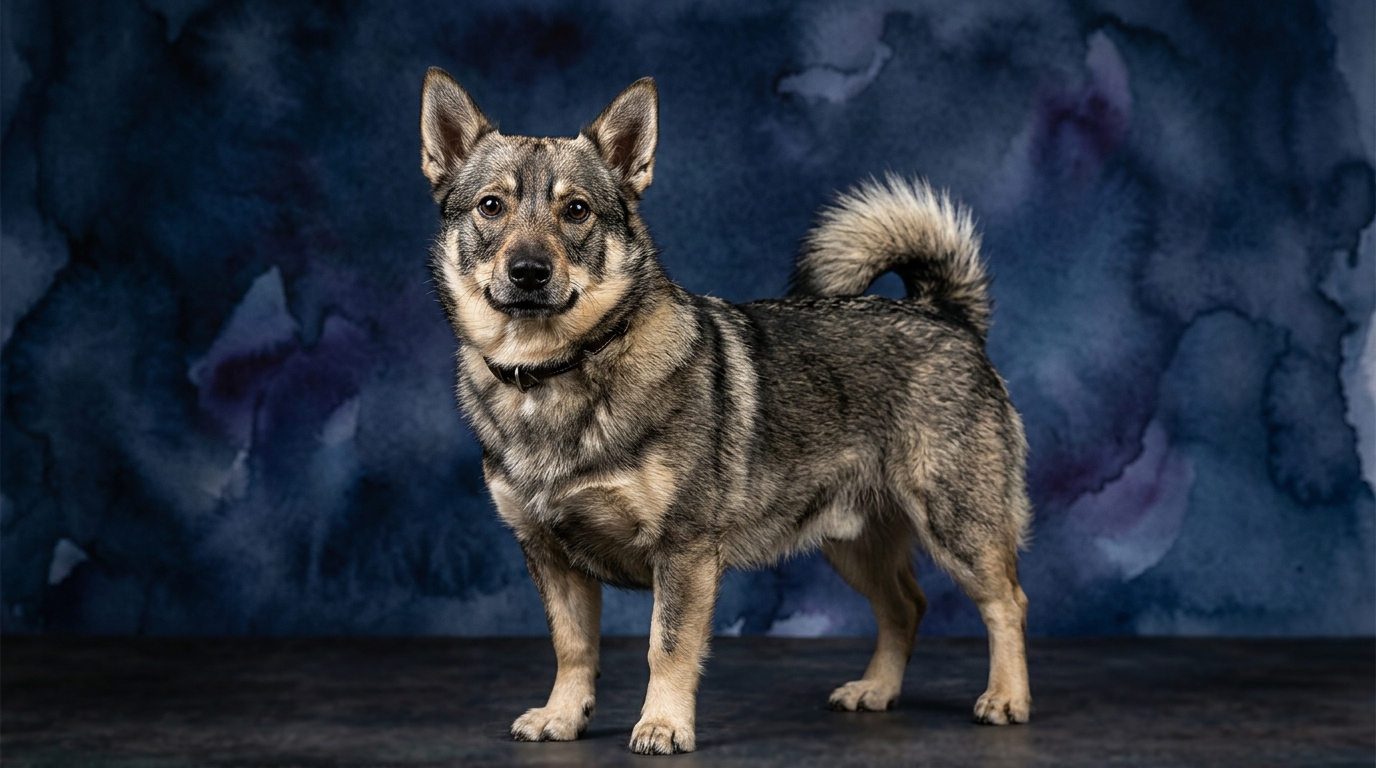
Side-by-Side Cognitive Profiles: Boxer vs. Swedish Vallhund
To understand the unique mental fabric of these two breeds, The Cosmic Pet Pet IQ Lab employs five key dimensions of canine intelligence. Examining these scores side-by-side illuminates where each breed's cognitive strengths and inclinations truly lie.
For the Boxer, a Working breed ranked #48 by Coren, their profile is as follows:
Problem Solving (3/5): Boxers exhibit a moderate capacity for navigating novel challenges, often approaching new situations with a blend of curiosity and physical exploration. They tend to learn by doing, sometimes experimenting with different actions rather than meticulous planning. Their solutions frequently involve direct engagement with the environment or seeking human assistance, leveraging their strong social bond.
Training Speed (3/5): The Boxer absorbs new commands and routines at a steady, consistent pace. They are receptive learners, but their often-exuberant nature and strong instinctive drives can sometimes lead to momentary lapses in focus. Effective training relies heavily on engaging their attention, consistent positive reinforcement, and making lessons enjoyable to counteract potential distractibility.
Social Intelligence (5/5): This is a cornerstone of the Boxer's cognitive makeup. They possess an exceptional ability to interpret the nuances of human emotion, body language, and vocal inflections. This profound empathy allows them to form deep, reciprocal bonds, often anticipating their owner's needs or moods. Their desire to be involved and connected is a powerful motivator in all interactions.
Instinctive Drive (4/5): Rooted in their working heritage, Boxers carry a robust inherent drive for activity, protection, and purpose. This isn't merely high energy; it's a deep-seated need to engage in meaningful tasks, whether that's vigorous play, guarding their family, or participating in structured activities. This drive, when properly channeled, makes them enthusiastic and dedicated participants.
Memory (3/5): Boxers demonstrate a moderate capacity for retaining learned behaviors, routines, and specific experiences. They readily remember family members and established commands, especially those frequently practiced. While complex sequences or commands used infrequently might require occasional refreshers, their memory is generally reliable for daily life and basic obedience.
The Swedish Vallhund, a Herding breed not ranked by Coren, presents a different yet equally fascinating cognitive landscape:
Problem Solving (3/5): Swedish Vallhunds approach problem-solving with a practical, observational intelligence. They are adept at assessing situations, often taking a moment to survey their environment before acting. Their solutions tend to be methodical and efficient, focusing on the most direct or energy-conserving path, a trait valuable in their herding duties.
Training Speed (3/5): Vallhunds learn at a consistent, moderate pace, demonstrating good retention with clear and patient instruction. Their herding background instills a desire for structure and mental engagement, making them responsive to training that is fair, consistent, and stimulating. While not lightning-fast, their learning is reliable and enduring.
Social Intelligence (3/5): Vallhunds exhibit a moderate level of social attunement. They are devoted to their families and can accurately read human cues, though perhaps with less overt emotional display or constant need for interaction than some breeds. Their social engagement is often purposeful, appreciating companionship but also valuing their own space.
Instinctive Drive (3/5): The Vallhund's instinctive drive is distinctly shaped by its herding purpose. It manifests as a keen interest in movement, observation, and "gathering" or controlling their environment. This drive is more about mental engagement and strategic movement than raw physical output, making them naturally inclined towards tasks that involve precision and thoughtful action.
Memory (3/5): Vallhunds possess a moderate and practical memory, capable of retaining complex commands, intricate routines, and spatial layouts. Their ability to recall specific pathways or the movements of livestock underscores a functional memory system that serves their working capabilities well, ensuring consistency in learned behaviors.
Where the Boxer Excels Cognitively
The Boxer's cognitive strengths are most pronounced in its outstanding Social Intelligence, scoring a perfect 5 out of 5. This isn't merely friendliness; it's a profound capacity for empathy and understanding human emotional states, intentions, and subtle cues. Boxers are masters at forming deep, intuitive bonds, often anticipating their owner's needs or moods with remarkable accuracy. This makes them exceptionally responsive companions in daily life and highly motivated partners in activities requiring close human-dog cooperation. Their 4 out of 5 Instinctive Drive further complements this, providing a powerful, inherent motivation for purposeful activity. This translates into a strong desire to engage in physical tasks, play vigorously, and act as a dedicated family guardian. This combination of deep social connection and robust drive means Boxers often approach tasks with an enthusiastic, collaborative spirit, making them particularly adept at roles where human interaction and a strong work ethic are paramount.
Where the Swedish Vallhund Shines Cognitively
While the Swedish Vallhund's cognitive profile features consistent 3 out of 5 scores across all dimensions, their distinct advantage lies in the balanced and highly functional nature of this intelligence, particularly how it applies to their herding heritage. Their Problem Solving, Training Speed, and Memory, all at a steady 3/5, combine to create a remarkably adaptable and reliable canine mind. This breed isn't prone to extreme highs or lows in specific cognitive areas; instead, they offer a consistent, methodical approach to learning and task execution. Their Instinctive Drive, though rated 3/5, is specifically honed for intricate herding, emphasizing observation, agility, and strategic control rather than raw power. This means Vallhunds excel in activities demanding precision, focus, and thoughtful movement, like obedience, agility, or tracking. Their cognitive 'win' is in their practical, well-rounded intelligence, making them dependable, consistent learners who can effectively manage complex, multi-step challenges once trained, especially those requiring spatial awareness and nuanced control over their environment.
Training Dynamics: Which Breed is Easier to Guide?
When evaluating which breed might be easier to train, both the Boxer and the Swedish Vallhund score a 3 out of 5 in Training Speed, suggesting a similar pace of learning new commands. However, the *mechanisms* and *approaches* to training differ significantly due to their other cognitive strengths. The Boxer often appears more straightforward to train because of its exceptional 5/5 Social Intelligence. They are profoundly motivated by human attention, praise, and the joy of shared activity, making them highly responsive to positive reinforcement and clear, engaging communication. Their eagerness to please and deep attunement to human cues can make them seem to 'read minds,' fostering a strong training bond. Yet, their robust 4/5 Instinctive Drive requires consistent outlets; without proper mental and physical engagement, this energy can manifest as distractibility. In contrast, the Swedish Vallhund, while equally capable of learning at a 3/5 Training Speed, often requires a more nuanced approach. Their 3/5 Social Intelligence means they value companionship but might not be as overtly driven by pleasing their owner alone. Their distinct Herding Instinctive Drive means they thrive on tasks that engage their natural desire to observe, organize, and control. Trainers might need to be more creative in incorporating these natural drives into lessons, making tasks feel purposeful and rewarding for the Vallhund. Both breeds require consistency, but the Boxer's inherent social eagerness often translates into an enthusiastically collaborative student, while the Vallhund brings a focused, methodical, and often independent approach to learning.
Lifestyle Match: Active vs. Relaxed Owners
For owners seeking an active, intensely engaged canine partner, the Boxer frequently proves to be an ideal match. Their significant 4/5 Instinctive Drive necessitates regular, vigorous exercise and substantial mental stimulation. They thrive on activities like long runs, challenging hikes, and participation in dog sports such as agility, obedience, or protection work. Their exceptional 5/5 Social Intelligence also means they require consistent human interaction and can become quite unhappy if left alone for prolonged periods without engagement. These dogs are best suited for individuals or families who can dedicate ample time to both physical activity and deep social bonding. Conversely, while certainly not sedentary, the Swedish Vallhund, with its consistent 3/5 scores across the board, might be a better fit for owners who appreciate activity but perhaps on a more moderate and intellectually focused scale. Their Herding Instinctive Drive (3/5) means they enjoy tasks that stimulate their minds and bodies, such as herding games, trick training, or scent work, but their energy output is often more contained and purposeful than the Boxer's exuberant bursts. They adapt well to a home environment where their cognitive needs are met through structured play and consistent mental challenges, making them suitable for owners who enjoy thoughtful, consistent engagement without necessarily requiring extreme athleticism.
The Verdict
Choose the Boxer if you desire a profoundly social, effusive companion who thrives on intense human interaction and vigorous physical activity, and you are prepared to channel their strong working drive.
Opt for the Swedish Vallhund if you appreciate a balanced, versatile canine mind that excels in structured tasks and requires consistent, thoughtful mental engagement, and you value a companion with a practical, methodical approach to life.
🧠 Find Your Pet's IQ Score
Our Pet IQ Lab assessment covers 25+ tests across 5 cognitive dimensions — personalized to your breed.
Take the Full IQ Test →Frequently Asked Questions
Do Boxers need a lot of exercise?
Yes, Boxers possess a robust Instinctive Drive (4/5) and benefit significantly from regular, vigorous exercise to keep them physically fit and mentally content. Daily walks, playtime, and opportunities for purposeful activity are essential for their well-being.
Are Swedish Vallhunds good with children?
Swedish Vallhunds, with their moderate Social Intelligence (3/5) and herding instincts, can be good with children, often enjoying supervising them. However, their herding tendency might lead to nipping at heels, so early socialization and supervision are key to harmonious interactions.
How do the problem-solving abilities compare between the two breeds?
Both breeds score 3/5 in Problem Solving, indicating a moderate aptitude. Boxers may approach problems with more physical directness and social reliance, while Vallhunds typically use a more observational, methodical, and practical strategy, often related to their herding instincts and environmental assessment.