
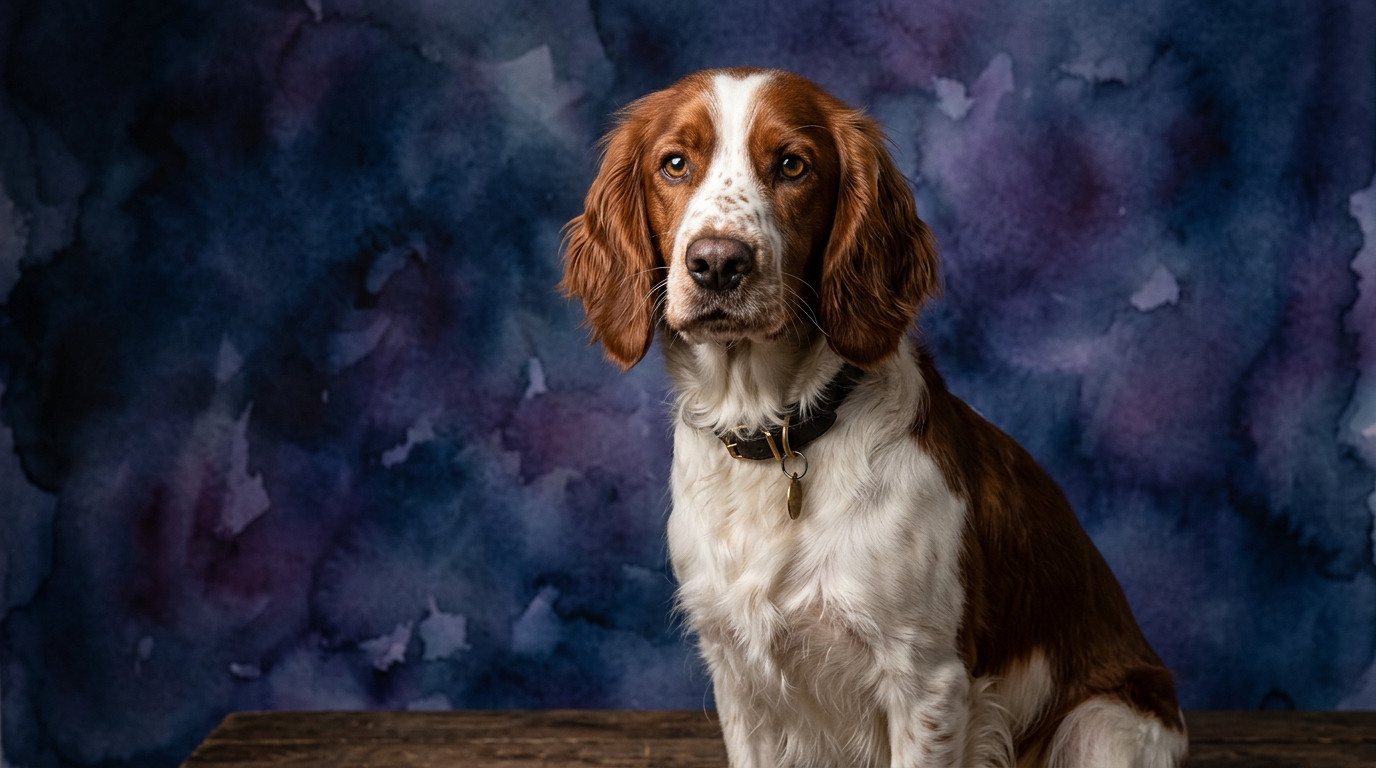
Side-by-Side IQ Profile: Boxer vs. Welsh Springer Spaniel
The Cosmic Pet Pet IQ Lab employs a five-dimensional framework to assess canine intelligence, offering a granular view beyond general perceptions. For the Boxer, a working breed ranked #48 by Coren, its profile shows Problem Solving at 3/5, Training Speed at 3/5, Social Intelligence at 5/5, Instinctive Drive at 4/5, and Memory at 3/5. This suggests a dog deeply connected to its human companions with a strong natural vigor, yet one that approaches novel challenges and learning at a moderate pace.
In contrast, the Welsh Springer Spaniel, a sporting breed with a higher Coren rank of #31, presents a different cognitive blueprint. Its IQ scores are Problem Solving 4/5, Training Speed 4/5, Social Intelligence 3/5, Instinctive Drive 3/5, and Memory 4/5. This profile indicates a dog with a notable capacity for independent thought and quicker learning, though its social attunement and inherent drive are more moderate compared to its Boxer counterpart. Understanding these specific scores helps us appreciate the unique mental strengths each breed brings.
Where the Boxer Wins Cognitively
The Boxer's standout cognitive strength lies in its exceptional Social Intelligence, scoring a perfect 5/5. This isn't just about friendliness; it signifies a profound ability to interpret human emotions, body language, and subtle social cues. Boxers are masters at reading their family's moods, often anticipating needs or offering comfort precisely when it’s most fitting. This deep attunement makes them incredibly responsive to their owner's emotional state and seamlessly integrated members of the household social structure, fostering an almost intuitive bond.
Furthermore, the Boxer’s robust Instinctive Drive, rated at 4/5, gives it a distinct edge in certain contexts. Rooted in their working heritage, this drive manifests as a natural vigilance and a strong inclination towards protective behaviors and vigorous physical engagement. This isn't merely about energy; it's an inherent motivation for tasks requiring alertness, strength, and stamina, whether it's guarding their family, engaging in intense play, or participating in physically demanding dog sports. Their drive ensures they approach life with a powerful, purposeful zest.
Where the Welsh Springer Spaniel Wins Cognitively
The Welsh Springer Spaniel demonstrates superior Problem Solving skills, earning a strong 4/5. This indicates a commendable aptitude for independent thought and navigating novel challenges. These dogs are often observed methodically figuring out how to retrieve a toy from a tricky spot, finding their way around an unexpected obstacle, or adapting quickly to new environments. Their cognitive flexibility allows them to learn efficiently from exploratory endeavors and approach new situations with a confident, analytical mindset, often finding solutions without constant human intervention.
Complementing their problem-solving prowess, the Welsh Springer Spaniel also excels in Training Speed (4/5) and Memory (4/5). These scores combine to create a highly receptive and efficient learner. They grasp new commands and concepts with fewer repetitions than many breeds and retain that knowledge for longer periods. This means less need for constant refreshers and a quicker accumulation of learned behaviors, making them reliable in remembering complex routines and obedience cues over time. Their ability to quickly absorb and recall information streamlines the training process significantly.
Which is Easier to Train and Why?
Based on the IQ Lab data, the Welsh Springer Spaniel generally presents as the easier breed to train. Their higher scores in Training Speed (4/5) and Memory (4/5) mean they pick up new commands and routines more rapidly and retain that information effectively over time. They tend to be eager students, often focusing intently on tasks and responding well to positive reinforcement, which translates into quicker progress and a more robust understanding of learned behaviors. An owner might find a Welsh Springer Spaniel mastering a new trick in fewer sessions and remembering it weeks later.
The Boxer, with scores of 3/5 in both Training Speed and Memory, requires a more patient and persistent approach. While certainly capable of learning, their playful nature and occasional independent streak mean training sessions often need to be shorter, more engaging, and more frequent to achieve the same level of retention. Their strong social intelligence means they thrive on positive interaction and connection during training, but the pace of acquiring and solidifying new skills will typically be slower than that of a Welsh Springer Spaniel. Consistency is paramount to overcome their tendencies towards distraction or 'selective hearing.'
Which Suits Active Owners vs. Engaged Owners?
The Boxer is an ideal match for highly engaged, active owners who can integrate their dog deeply into family life and provide consistent, vigorous physical activity. Their exceptional social intelligence (5/5) means they thrive when constantly interacting with their human companions, seeking deep connection and participation in all activities. Coupled with a robust instinctive drive (4/5), Boxers excel in structured sports, protection work, or intense play that harnesses their energy and focus, requiring an owner who can consistently provide both physical outlets and profound social engagement. They are not content to be mere background companions.
The Welsh Springer Spaniel, with its higher problem-solving score (4/5) and good memory (4/5), is better suited for active, task-oriented owners who enjoy engaging their dog's mind and body in tandem. Activities like scent work, retrieving games, agility, or extensive hikes where they can explore and figure things out independently greatly appeal to their cognitive profile. While highly active, their social intelligence (3/5) suggests they might be slightly less demanding of constant human emotional attunement than a Boxer, allowing for more independent exploration during activities, making them excellent companions for owners who appreciate a blend of physical challenge and mental stimulation.
The Verdict: When to Choose Each Breed
Understanding the nuanced cognitive profiles of the Boxer and Welsh Springer Spaniel is key to finding your ideal canine companion. Both breeds offer unique joys, but their mental aptitudes align with different lifestyles and owner expectations.
The Verdict
For families seeking a deeply empathetic, protective companion who thrives on intense social interaction and structured activity, a Boxer's unique blend of loyalty and vigor is unparalleled. Choose a Boxer if you desire a dog that lives to be part of your every move and offers an intuitive emotional connection.
Opt for a Welsh Springer Spaniel if you value a quick-learning, adaptable companion adept at problem-solving, ready for engaging activities like scent work or agility, and capable of more independent thought. This breed suits owners who appreciate a dog that can learn efficiently and enjoy exploring the world with a keen, inquisitive mind.
🧠 Find Your Pet's IQ Score
Our Pet IQ Lab assessment covers 25+ tests across 5 cognitive dimensions — personalized to your breed.
Take the Full IQ Test →Frequently Asked Questions
Are Boxers stubborn during training?
Boxers can exhibit a playful independence during training, sometimes appearing stubborn due to their moderate training speed. Consistency, engaging methods, and positive reinforcement are key to overcoming this, as their strong social bonds mean they ultimately want to please their loved ones.
Do Welsh Springer Spaniels need a lot of mental stimulation?
Yes, Welsh Springer Spaniels, with their strong problem-solving and memory skills, benefit greatly from mental challenges. Activities like puzzle toys, obedience training, scent games, and agility keep their minds sharp and prevent boredom, channeling their natural curiosity constructively.
Which breed is better with children?
Both can be wonderful with children, though their approaches differ. The Boxer's high social intelligence often makes them intuitive and patient with family members, while the Welsh Springer Spaniel's generally amiable nature makes them gentle playmates. Supervision is always essential with any dog and child, ensuring safe and positive interactions for everyone.