
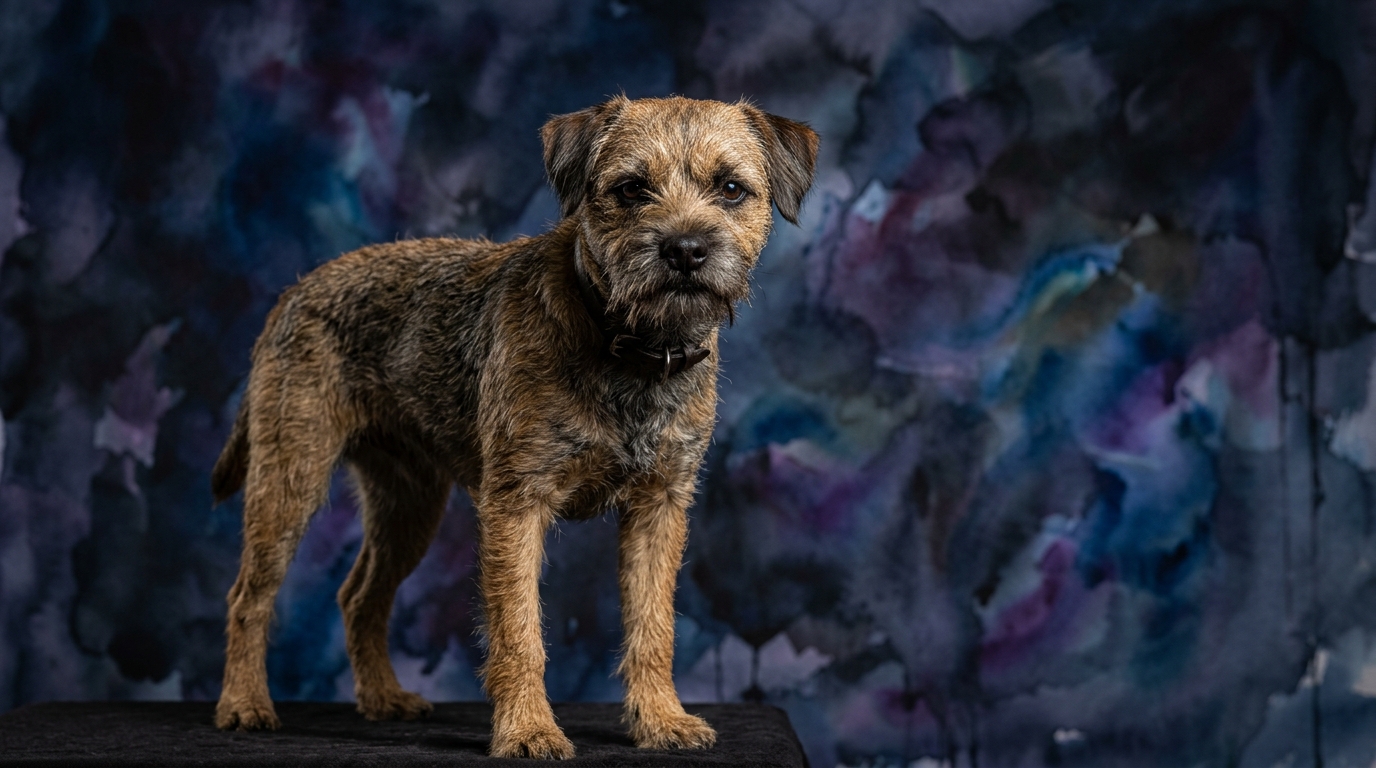
Side-by-Side IQ Profile: Boykin Spaniel vs. Border Terrier
In The Cosmic Pet Pet IQ Lab, the Boykin Spaniel presents a balanced cognitive profile, scoring 3/5 across all five dimensions: Problem Solving, Training Speed, Social Intelligence, Instinctive Drive, and Memory. This consistent performance suggests a dog that is capable and adaptable without leaning heavily into any single cognitive strength. Their Problem Solving at 3/5 indicates they can navigate moderate challenges, while a Training Speed of 3/5 means they acquire new commands at a steady pace, requiring consistent reinforcement. Their Social Intelligence at 3/5 points to an ability to understand human cues and integrate well into family dynamics. An Instinctive Drive of 3/5 reflects their moderate hunting and retrieving instincts, making them purposeful but not overwhelming. Finally, Memory at 3/5 suggests they retain learned behaviors and experiences adequately over time. This breed is not currently ranked on Stanley Coren's intelligence scale, offering a fresh perspective solely from our IQ Lab metrics.
The Border Terrier, in contrast, exhibits a more specialized cognitive profile within our IQ Lab. They score 4/5 in Problem Solving, Training Speed, and Memory, highlighting a greater aptitude in these areas. Their Problem Solving at 4/5 indicates a resourceful and persistent approach to overcoming obstacles, often finding creative solutions. A Training Speed of 4/5 suggests a relatively quick grasp of new commands and routines, making them responsive learners. Their Memory also scores 4/5, meaning they retain information and learned behaviors effectively over extended periods. Like the Boykin, their Social Intelligence is rated 3/5, indicating a good capacity for understanding social cues and interacting appropriately. Their Instinctive Drive also stands at 3/5, reflecting a strong, but not extreme, inherent drive for their traditional terrier work. Notably, the Border Terrier holds a respectable #30 rank on Stanley Coren's scale of working and obedience intelligence, underscoring their recognized cognitive capabilities.
Where the Boykin Spaniel Wins Cognitively
While the Border Terrier edges out the Boykin in several quantifiable metrics, the Boykin Spaniel's cognitive strength lies in its balanced and adaptable temperament, stemming directly from its consistent 3/5 scores across the board. This equilibrium means Boykins are often less prone to the intense focus or sometimes obsessive tendencies that can accompany breeds with higher problem-solving or instinctive drives. Their 3/5 Problem Solving, for instance, suggests they are less likely to overthink or persist relentlessly on a task that isn't immediately yielding results, potentially making them more amenable to redirection when faced with complex puzzles. This balanced cognitive profile contributes to a generally agreeable disposition, where their moderate instinctive drive (3/5) is channeled into cooperative retrieving rather than independent, sometimes stubborn, pursuit. Their social intelligence (3/5) combined with this balanced outlook fosters a dog that integrates smoothly into a family structure, less likely to challenge authority through persistent, clever schemes. For owners seeking a dog whose cognitive functions are geared towards cooperative partnership rather than independent ingenuity, the Boykin’s consistent 'middle-ground' scores become a distinct advantage, offering a predictable and harmonious mental landscape.
Where the Border Terrier Wins Cognitively
The Border Terrier's cognitive advantages are evident in its higher scores across crucial dimensions: Problem Solving (4/5), Training Speed (4/5), and Memory (4/5). This combination makes them exceptionally adept at quickly understanding and executing commands, retaining complex sequences, and independently devising solutions to environmental challenges. Their superior Problem Solving means they are often more creative in overcoming obstacles, whether it's figuring out how to open a gate or retrieving a toy from a difficult spot, demonstrating a resourcefulness that often surprises owners. A Training Speed of 4/5 translates directly into faster acquisition of new skills, allowing them to excel in obedience, agility, or other dog sports where rapid learning is key. Coupled with a Memory score of 4/5, these learned behaviors are not only quickly absorbed but also retained with remarkable tenacity, minimizing the need for constant re-training. Their Coren ranking of #30 further solidifies their standing as a breed that excels in understanding and executing human directives efficiently. This cognitive profile positions the Border Terrier as a highly capable and mentally agile companion, constantly engaging with their environment and eager to learn, provided their intelligent minds are adequately stimulated.
Which is Easier to Train and Why?
Based on The Cosmic Pet Pet IQ Lab metrics, the Border Terrier is generally easier to train than the Boykin Spaniel, primarily due to its higher scores in Training Speed (4/5) and Memory (4/5). A Border Terrier's quicker grasp of new commands means fewer repetitions are needed for them to understand and perform a task reliably. Their superior memory ensures that once a behavior is learned, it is retained effectively, leading to more consistent responses over time and in various environments. For example, teaching a Border Terrier a multi-step retrieve or a complex agility sequence will likely progress faster, as they can string together commands and remember the entire routine with greater ease.
In contrast, the Boykin Spaniel, with its 3/5 in both Training Speed and Memory, will require more patience and consistency during training. While certainly trainable and eager to please within their Sporting group context, they may need more repetitions to solidify new commands and might require occasional refreshers to maintain their understanding. This doesn't mean the Boykin is untrainable; rather, their learning curve is steadier, demanding a more methodical approach from the owner. Their agreeable nature often compensates for the slightly slower learning speed, but for owners prioritizing rapid command acquisition and robust recall, the Border Terrier’s cognitive profile offers a more straightforward training experience.
Which Suits Active Owners vs. Relaxed Owners?
Both the Boykin Spaniel and the Border Terrier are breeds that thrive with active engagement, making them less suitable for truly 'relaxed' or sedentary owners. However, the nature of their activity preferences and cognitive drives differs. The Boykin Spaniel, a Sporting breed, requires consistent, structured exercise that taps into their retrieving instincts. Their 3/5 Instinctive Drive translates into a desire for purposeful work, such as long walks, swimming, or retrieving games. When their physical and moderate mental needs are met, Boykins are often content to relax indoors, exhibiting a calm and affectionate demeanor. Their balanced cognitive profile makes them less likely to invent their own 'trouble' out of boredom, provided they have had adequate outlets for their energy.
The Border Terrier, with its higher Problem Solving (4/5) and terrier heritage, demands a different kind of activity. Their energy is often described as relentless and their minds are constantly seeking engagement. They need outlets for chasing, digging, and exploring, and their intelligence means they can become quite ingenious in finding their own entertainment if not adequately stimulated. A bored Border Terrier might creatively problem-solve ways to escape, chew, or vocalize, making them more challenging for owners who prefer a more hands-off approach to enrichment. Active owners who enjoy varied outdoor adventures, puzzle toys, and consistent mental challenges will find the Border Terrier a rewarding partner. For owners who are active but prefer a dog whose cognitive energy is less intensely focused on independent exploration and more on cooperative tasks, the Boykin Spaniel might offer a slightly more manageable blend of activity and tranquility.
The Verdict
Choose the Boykin Spaniel if you desire a cooperative companion with a balanced cognitive profile, thriving on structured retrieving and moderate activity, offering a predictable and agreeable mental landscape.
Choose the Border Terrier if you seek a highly capable, resourceful partner capable of rapid learning and persistent problem-solving, thriving on varied mental challenges and vigorous, exploratory physical activity.
🧠 Find Your Pet's IQ Score
Our Pet IQ Lab assessment covers 25+ tests across 5 cognitive dimensions — personalized to your breed.
Take the Full IQ Test →Frequently Asked Questions
Are Boykin Spaniels good with children and other pets?
With a Social Intelligence score of 3/5, Boykin Spaniels generally adapt well to family life, often displaying patience and an agreeable nature with children. Early socialization is still key, but their balanced temperament usually makes them suitable companions. They typically coexist peacefully with other pets, especially if introduced thoughtfully.
How much mental stimulation does a Border Terrier need to prevent destructive behaviors?
Given their 4/5 Problem Solving and Memory, Border Terriers require significant mental stimulation to prevent boredom and potential destructive behaviors. Daily puzzle toys, training sessions, varied walks exploring new scents, and consistent engagement are crucial to channel their sharp minds positively. A lack of mental outlets can lead them to invent their own 'work,' which might include digging, chewing, or excessive barking.
Do Boykin Spaniels and Border Terriers have similar exercise requirements?
While both are active breeds, their exercise needs differ in nature. Boykin Spaniels thrive on structured activities like retrieving, swimming, and long walks that tap into their sporting instincts. Border Terriers need more varied and vigorous exercise that allows for chasing, exploring, and digging, reflecting their tenacious terrier heritage and higher problem-solving drive.