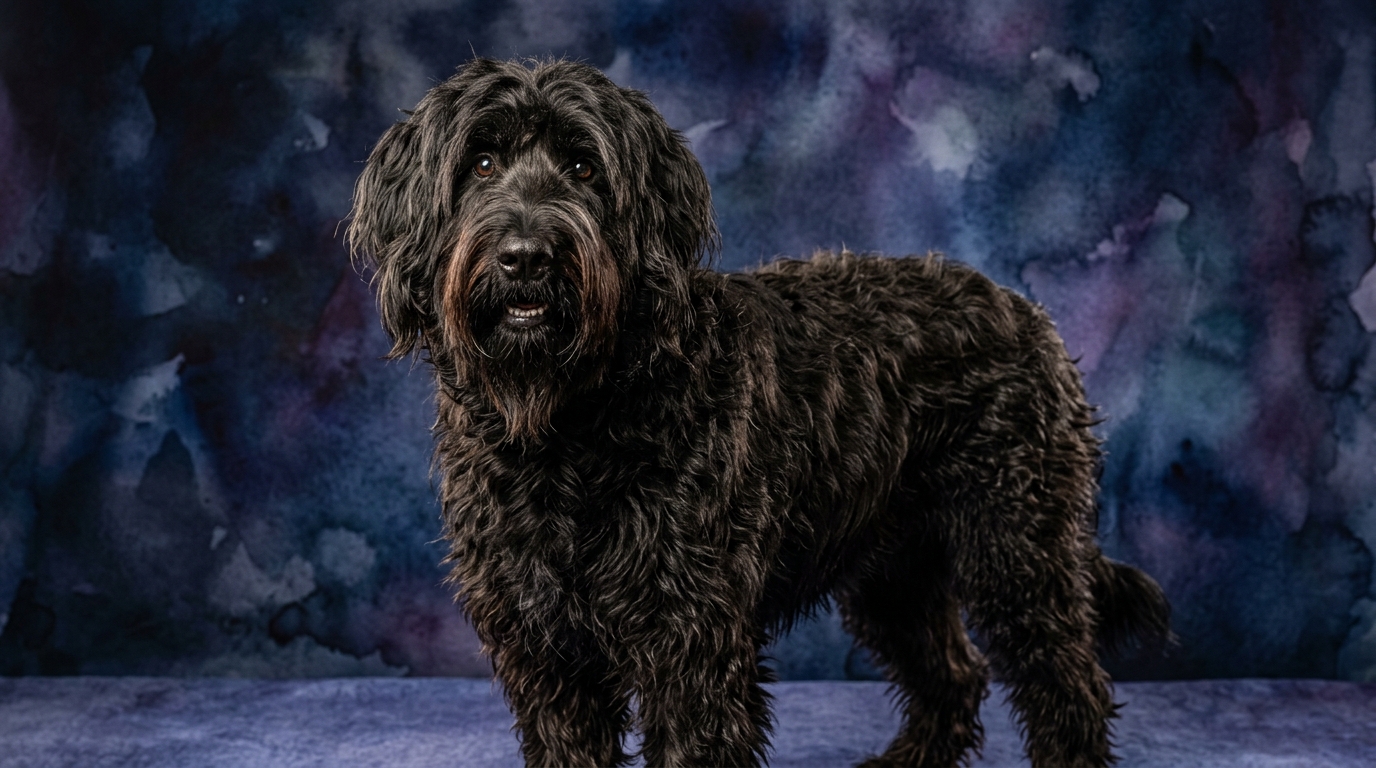

Side-by-Side IQ Profile
**Briard**: A Herding breed, the Briard scores 4/5 in Problem Solving, indicating a strong capacity for independent thought and creative solutions, often applied to managing livestock or household situations. Their Training Speed, also 4/5, suggests they learn new commands and routines with efficiency, though their independence can sometimes require patience. Social Intelligence at 3/5 implies they understand and respond to human cues, but with a degree of self-reliance. An Instinctive Drive of 3/5 points to a moderate but present genetic inclination for herding and protection, guiding their actions. Finally, a Memory score of 4/5 ensures they retain learned information and experiences effectively.
**Chesapeake Bay Retriever**: As a Sporting breed, the Chesapeake Bay Retriever also earns a 4/5 in Problem Solving, demonstrating adeptness at navigating complex environments to retrieve game or overcome obstacles. Their Training Speed, mirroring the Briard at 4/5, signifies a quick grasp of tasks, particularly those involving their strong working drive. Social Intelligence at 3/5 means they are responsive to their handler, forming strong bonds, but their focus might often be task-oriented. An Instinctive Drive of 3/5 highlights their inherent desire to retrieve, swim, and work in challenging conditions. Their Memory, also 4/5, allows them to recall specific locations of fallen game or intricate training sequences.
Where the Briard Wins Cognitively
The Briard’s cognitive strengths often manifest in nuanced, anticipatory reasoning, stemming from its herding heritage. A Briard excels at reading subtle environmental cues and predicting movement, not just of a flock, but also of family members or unfamiliar individuals entering their space. Their problem-solving isn't just about executing a task, but often about *preventing* an undesirable outcome, such as guiding children away from a perceived danger or subtly intervening in a tense interaction. This involves complex spatial awareness and a sophisticated understanding of social dynamics within their “flock” – their human family. Their memory likely plays a significant role in recalling past interactions and applying learned strategies, making them adept at adapting their protective behaviors. This independent problem-solving, often without direct command, is where their cognitive profile shines, requiring a blend of observation, recall, and self-initiated action.
Where the Chesapeake Bay Retriever Wins Cognitively
The Chesapeake Bay Retriever’s cognitive prowess is most evident in its unwavering focus and methodical approach to a specific, often physically demanding, task. Their problem-solving excels in scenarios requiring sustained attention, precise navigation, and enduring effort, such as marking multiple falls of game in dense cover or retrieving from icy waters. This involves exceptional spatial memory for tracking multiple points, a keen ability to use scent alongside sight, and the mental fortitude to persist despite environmental challenges. Their instinctive drive, coupled with their memory, allows them to master complex retrieving patterns, distinguishing between various scents and terrains. A Chessie’s cognitive strength lies not in subtle intervention, but in robust, determined execution of a mission, often requiring them to independently assess the safest or most efficient path to a target and return it, a process demanding significant working memory and environmental processing.
Which is Easier to Train and Why
While both breeds boast a Training Speed of 4/5, the practical experience of training them can differ significantly due to their underlying temperaments and drives. The Briard, with its independent problem-solving and protective instincts, often requires a trainer who understands their need for purpose and consistency. They can be brilliant students when motivated, but their self-reliant nature means they might question commands or seek to solve a problem their own way if they perceive it as more efficient. Training a Briard demands variety and engagement to prevent boredom and to channel their herding drive productively, perhaps through agility or advanced obedience. Real behavioral differences include their tendency to “manage” their family, which, while endearing, requires clear boundaries to prevent unwanted herding or nipping. In contrast, the Chesapeake Bay Retriever’s formidable drive and determination, while excellent for their intended purpose, can translate into a stubborn streak in general obedience. They learn quickly, but their strong will means they require a firm, consistent, and confident handler who can harness their intense focus. A Chessie might not “question” a command, but they might decide the task isn't as interesting as chasing a squirrel, necessitating strong motivational tools and early socialization. Their powerful retrieving instinct means training must often focus on impulse control. Therefore, neither is “easy” in the conventional sense; the Briard demands a nuanced, patient approach, while the Chessie requires strong leadership to direct their intense drive.
Which Suits Active Owners vs. Relaxed Owners
Neither the Briard nor the Chesapeake Bay Retriever is suited for a truly relaxed, sedentary owner; both possess significant energy and cognitive needs. However, their ideal owner profiles diverge based on the *type* of activity and interaction they thrive on. The Briard is an excellent fit for active owners who enjoy structured outdoor activities like hiking, long walks, or participating in dog sports such as agility or herding trials. They require mental engagement that satisfies their problem-solving and protective instincts, often enjoying being an integral part of family activities where they can “contribute.” An owner who appreciates a vigilant companion and is prepared to channel their independent decision-making into constructive outlets will find a deeply loyal partner. The Chesapeake Bay Retriever, conversely, demands an owner with an even higher commitment to vigorous, often water-centric, activity. They are ideal for dedicated outdoor enthusiasts, hunters, or individuals passionate about canine sports like dock diving or advanced retrieving. Their endurance and drive mean they need daily, intense physical exertion to be content, thriving on a job to do, especially one involving water. Owners prepared for a robust, determined companion and able to provide consistent, challenging physical and mental outlets will find the Chessie an unparalleled working partner.
The Verdict
Select a Briard if you seek a protective, independently thinking companion who will vigilantly oversee your family, thriving on mental challenges and structured activities that engage their herding and problem-solving abilities.
Opt for a Chesapeake Bay Retriever if you are an intensely active outdoor enthusiast, particularly drawn to water sports or hunting, who desires a robust, determined partner with unmatched stamina and retrieving drive.
🧠 Find Your Pet's IQ Score
Our Pet IQ Lab assessment covers 25+ tests across 5 cognitive dimensions — personalized to your breed.
Take the Full IQ Test →Frequently Asked Questions
Do Briards require extensive grooming?
Yes, Briards possess a long, shaggy double coat that requires regular brushing, typically several times a week, to prevent matting and keep it healthy. This grooming routine is essential for their comfort and coat integrity.
Are Chesapeake Bay Retrievers good family dogs?
Chesapeake Bay Retrievers can be devoted family dogs, forming strong bonds with their human companions, but their strong will and energy mean they thrive best with experienced owners and consistent training. Early socialization is crucial to ensure they are well-adjusted with children and other pets.
What are the key differences in their exercise needs?
While both are active, the Briard needs consistent daily walks, mental stimulation, and opportunities for purposeful activity like herding or agility, whereas the Chesapeake Bay Retriever demands more intense, often water-based, exercise daily to satisfy their high drive and endurance.