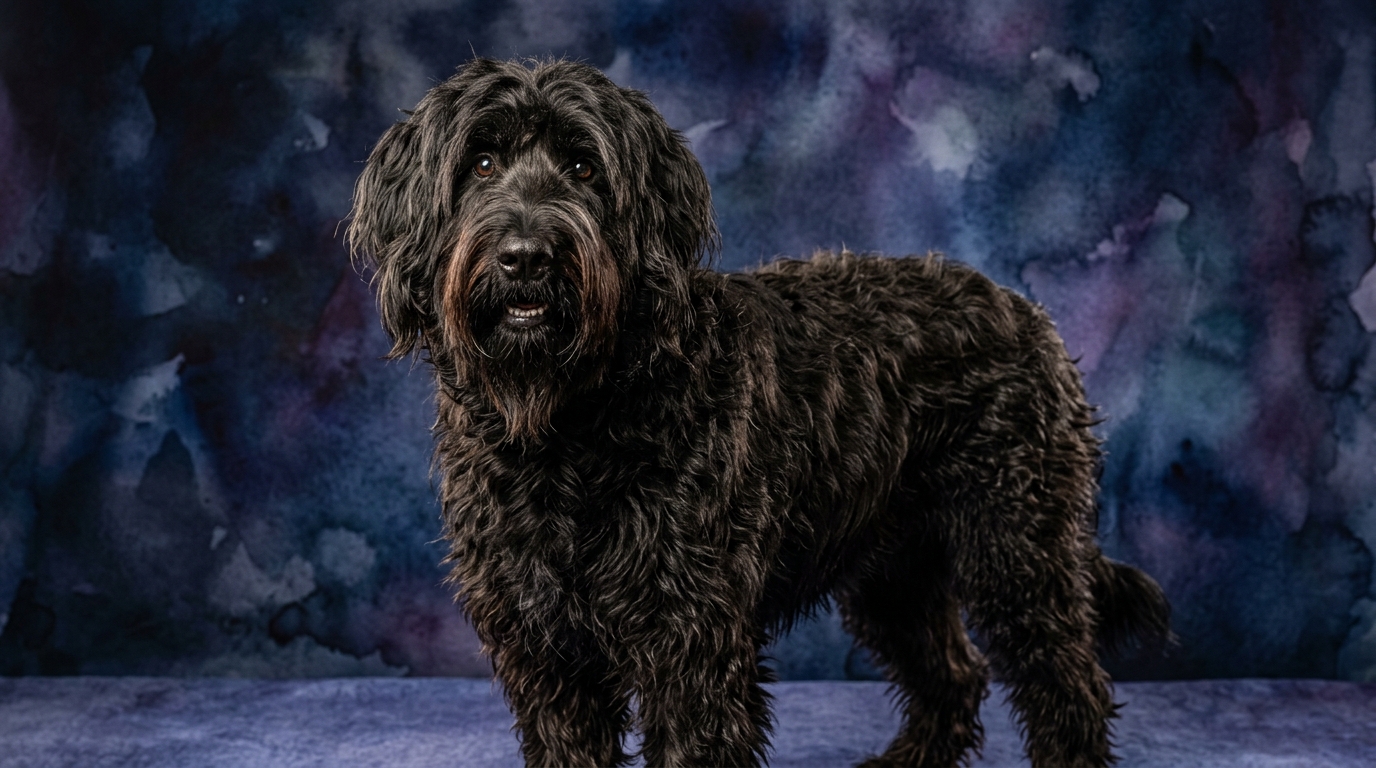
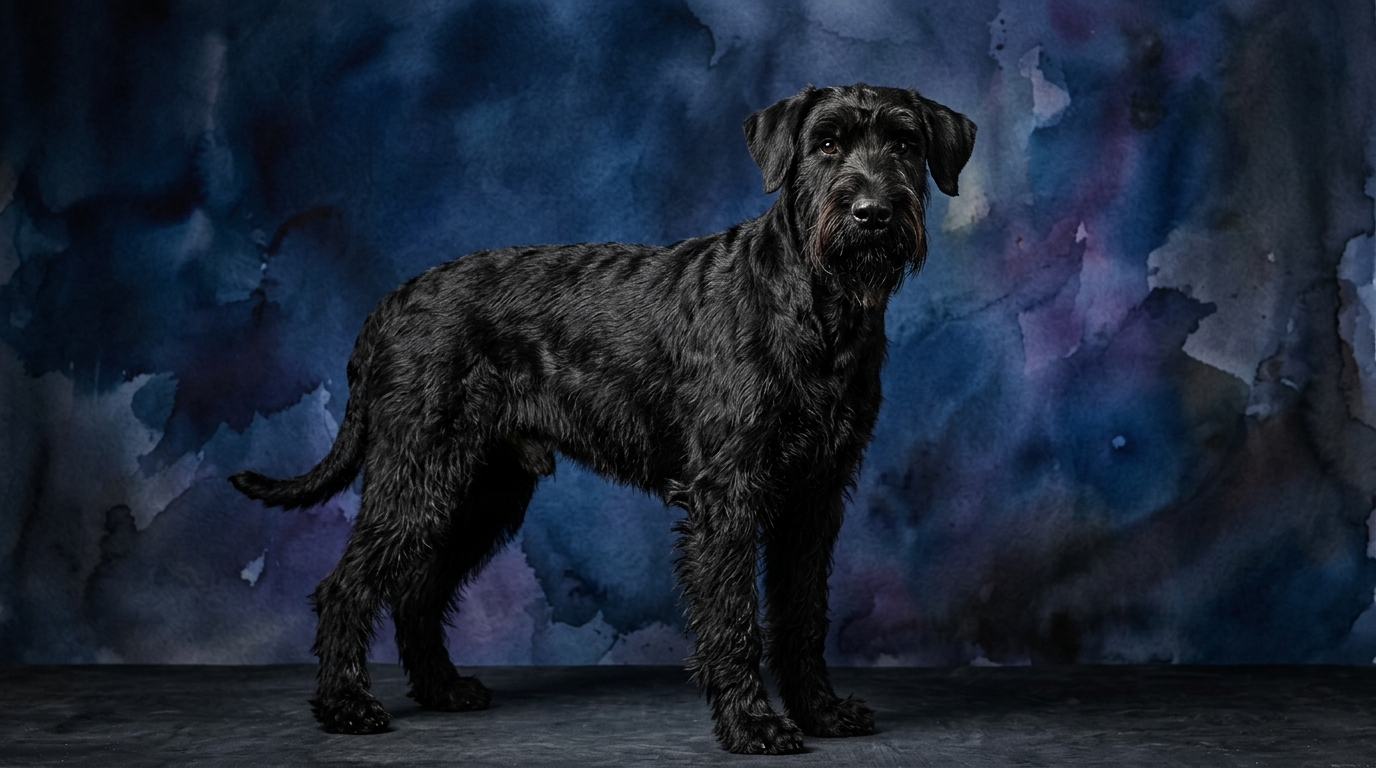
Side-by-Side Cognitive Profile: Briard vs. Giant Schnauzer
At The Cosmic Pet Pet IQ Lab, we evaluate canine intelligence across five key dimensions. For both the Briard and the Giant Schnauzer, these assessments yield identical raw scores, a testament to their robust cognitive faculties. However, their breed groups — Herding for the Briard and Working for the Giant Schnauzer — suggest these scores reflect different underlying expressions of intelligence.
The Briard, a Herding dog with a Coren rank of #30, exhibits a Problem Solving score of 4/5, often manifesting as a strategic ability to anticipate and manipulate group dynamics, such as livestock movement. Its Training Speed, also 4/5, highlights a quick grasp of complex, multi-step commands, particularly those involving spatial awareness and control. Social Intelligence at 3/5 means it forms deep bonds with its family, reading subtle cues, though often reserved with strangers. An Instinctive Drive of 3/5 indicates a present but channelable herding instinct, allowing for adaptability. Its Memory, 4/5, supports retention of complex routines and environmental details crucial for managing a flock or navigating familiar territories.
The Giant Schnauzer, a Working dog with a Coren rank of #28, shares the Briard's 4/5 Problem Solving score, but this often translates to adeptness in assessing situations for potential threats and devising strategies for protection or task completion. Its Training Speed of 4/5 signifies rapid absorption of new commands, particularly those requiring precision, focus, and a clear objective. Social Intelligence, also 3/5, reflects loyalty and protectiveness towards its inner circle, discerning of strangers. An Instinctive Drive of 3/5 points to strong guarding and territorial tendencies, purposeful and typically controllable. Its Memory, 4/5, demonstrates excellent recall for learned tasks, specific individuals, and routines, essential for security and service roles.
Where the Briard Wins Cognitively
The Briard's cognitive strengths often lie in its nuanced understanding of dynamic environments and living entities. Its herding heritage cultivates a sophisticated 'situational awareness' that transcends simple obedience. A Briard can subtly influence movement, anticipate reactions from animals or people, and adapt its approach on the fly, demonstrating a fluid problem-solving capacity tailored to organic, unpredictable scenarios.
This involves a keen ability to read body language and predict patterns of behavior, allowing it to guide rather than merely react. Their social intelligence, while rated similarly to the Giant Schnauzer, might be more attuned to the collective dynamics of a group, making them exceptional at managing multi-dog households or complex family interactions with a gentle authority. This cognitive bent emphasizes strategic foresight and gentle manipulation, a testament to their historical role as guardians and managers of the flock, requiring a different flavor of mental agility than a more direct, task-oriented approach.
Where the Giant Schnauzer Wins Cognitively
The Giant Schnauzer's cognitive edge often emerges in tasks requiring unwavering focus, robust discernment, and a strong sense of purpose. Their working background has honed a problem-solving ability geared towards specific objectives, often involving protection or service. This breed excels at assessing situations for threats, identifying unusual elements, and executing precise, learned responses with remarkable consistency.
Their memory, while scoring the same as the Briard, often manifests as an exceptional recall for intricate command sequences and a steadfast adherence to established protocols, vital for roles like police or service work. The Giant Schnauzer's instinctive drive, though rated identically, leans into a protective vigilance that demands a sharp, decisive cognitive process to determine appropriate action. They exhibit a purposeful intelligence, seeking to master tasks and fulfill their perceived duties with a resolute mental fortitude, prioritizing execution and guardianship over subtle manipulation of groups.
Which is Easier to Train and Why
Both breeds share an impressive 4/5 training speed, indicating a rapid ability to absorb new information. However, the *approach* to training and the *type* of handler they respond best to can differ significantly. The Briard, with its herding independence, often thrives on positive reinforcement techniques that engage its problem-solving and self-starting nature. They appreciate varied tasks and might exhibit a creative streak in applying what they've learned, sometimes needing a handler who can channel their ingenuity rather than simply dictate. Their social intelligence, while strong within the family, means they might be less inclined to blindly follow commands from someone they don't respect or trust deeply, requiring a strong, cooperative bond for optimal results.
The Giant Schnauzer, stemming from a working lineage, often responds exceptionally well to clear, consistent, and structured training methods. Their drive to have a 'job' and please a strong, confident leader makes them eager students for obedience, protection sports, or service roles. While equally fast learners, their training success often hinges on a handler who provides firm guidance and unambiguous expectations. Their cognitive strength lies in their capacity for steadfast execution once a task is understood, making them highly reliable in complex sequences, provided the foundation is solid and leadership is clear and consistent. A handler seeking a precise, predictable performance may find the Giant Schnauzer's cognitive approach more aligned with their goals.
Which Suits Active Owners vs. Relaxed Owners
It's crucial to clarify that neither the Briard nor the Giant Schnauzer are suitable for genuinely 'relaxed' owners in the sense of minimal engagement; both demand significant mental and physical stimulation to thrive. These are not breeds content with being couch potatoes.
The Briard, with its herding energy and problem-solving acumen, thrives with owners who can provide outlets for its cognitive drive. This means long, engaging walks, opportunities for 'herding games' (even without livestock), advanced obedience, agility, or scent work that taps into their strategic thinking. Owners who enjoy teaching complex sequences and appreciate a dog that thinks for itself will find a rewarding companion. They need space to roam and a family that includes them in daily activities, channeling their desire to 'manage' the household. Their activity needs are often about purposeful movement and mental engagement rather than just raw physical output.
The Giant Schnauzer requires an owner who can match its robust physical endurance and purposeful mental drive. They excel in structured activities like protection sports, advanced obedience, tracking, or competitive agility where their steadfastness and focus are assets. Their need for a 'job' means they benefit from consistent training and clear responsibilities. Owners who lead active lifestyles, enjoy rigorous training, and can provide firm, consistent leadership will find the Giant Schnauzer a dedicated partner. Their activity needs are often about sustained effort, vigilance, and focused work, making them ideal for someone seeking a working companion rather than a casual exercise buddy. An owner seeking a purely sedentary companion would be overwhelmed by either breed's requirements.
The Verdict
Choose the Briard if you value a companion with nuanced environmental awareness, a subtle approach to problem-solving, and a desire to 'manage' its family with gentle guidance, thriving on creative and varied mental tasks.
Opt for the Giant Schnauzer if you seek a steadfast partner for demanding tasks, a vigilant guardian with unwavering focus, and a dog that excels under clear leadership in structured, purposeful activities.
🧠 Find Your Pet's IQ Score
Our Pet IQ Lab assessment covers 25+ tests across 5 cognitive dimensions — personalized to your breed.
Take the Full IQ Test →Frequently Asked Questions
Do Briards and Giant Schnauzers require similar amounts of exercise?
Both breeds are energetic and require substantial daily exercise, but the *type* differs. Briards benefit from varied, mentally stimulating activities like herding games or long, explorative walks that engage their strategic thinking. Giant Schnauzers thrive on rigorous, purposeful exercise such as protection training, advanced obedience, or sustained running that utilizes their focus and endurance.
Are Briards or Giant Schnauzers better with children and other pets?
Both breeds can be excellent family dogs with proper socialization and training, though their approaches differ. Briards, with their herding instincts, might subtly try to 'manage' children or other pets, needing guidance to ensure gentle interactions. Giant Schnauzers are protective of their family but require clear boundaries and supervision to ensure positive interactions, especially with new animals or boisterous play.
How do their grooming needs compare?
The Briard has a long, shaggy double coat requiring regular brushing several times a week to prevent mats and tangles, plus occasional bathing. The Giant Schnauzer has a dense, wiry double coat that needs professional stripping or clipping every 6-8 weeks, along with regular brushing, to maintain its texture and health and prevent matting.