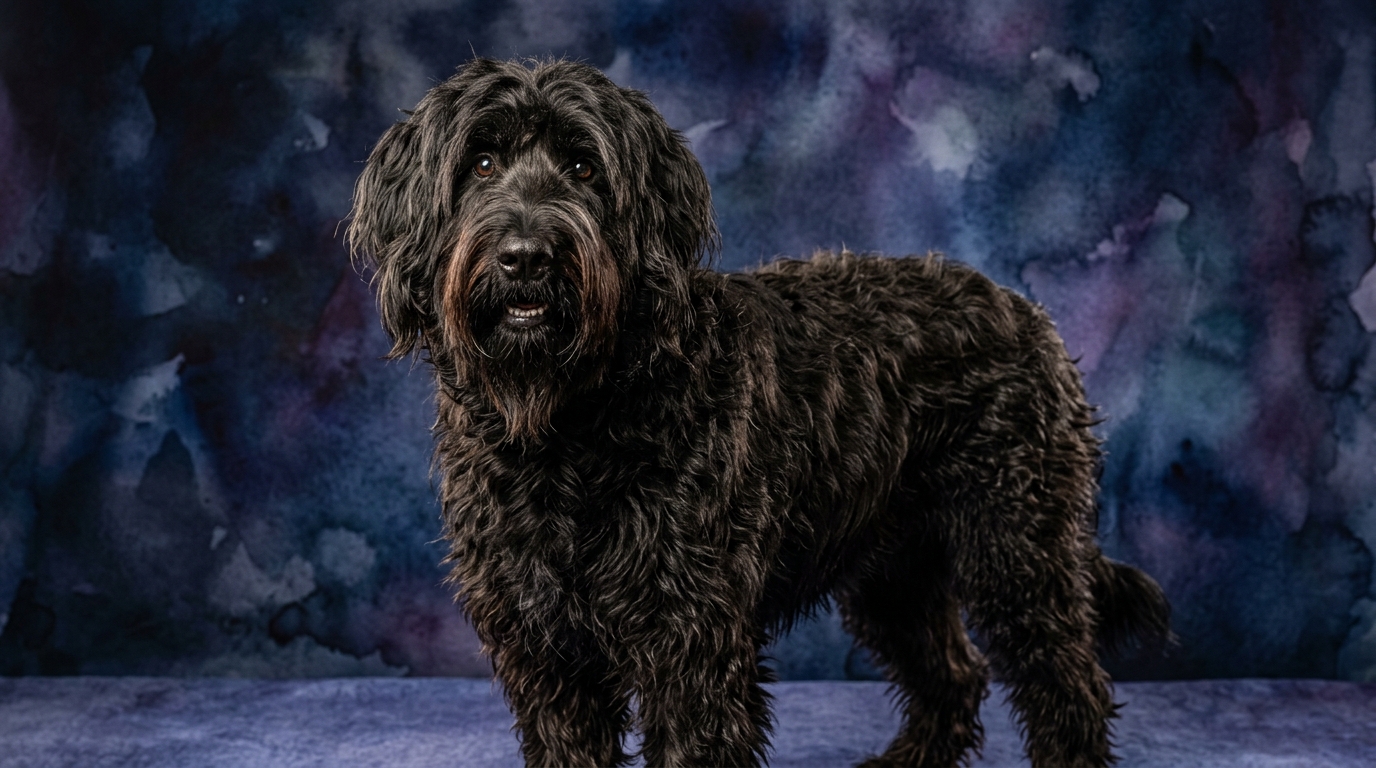
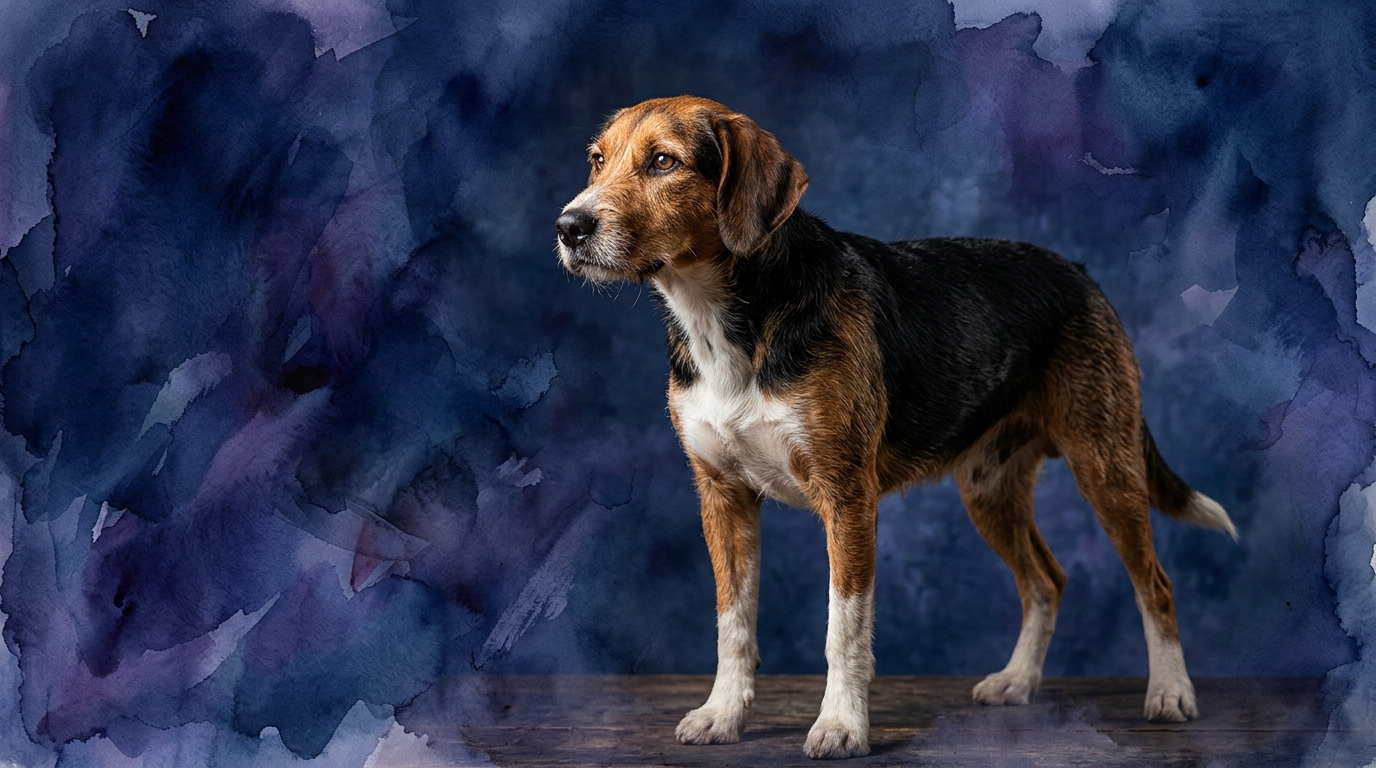
Side-by-Side Cognitive Profiles: Briard vs. Harrier
The Briard, a proud member of the Herding Group, displays a cognitive profile indicative of its demanding historical role. Its Problem Solving ability is rated at 4 out of 5, suggesting a capacity for intricate thought and strategic thinking, essential for managing livestock. This breed doesn't just react; it plans. Its Training Speed, also at a robust 4 out of 5, means new commands and complex routines are absorbed with remarkable efficiency, often requiring fewer repetitions than many other breeds. Social Intelligence sits at 3 out of 5, indicating a solid understanding of human cues and pack dynamics, though perhaps with a degree of independent judgment. Instinctive Drive, at 3 out of 5, reflects a balanced herding instinct that is present but manageable, not overwhelming. Finally, its Memory score of 4 out of 5 points to an excellent capacity for retaining learned behaviors and recalling specific situations, making it a reliable partner over time.
In contrast, the Harrier, a quintessential Hound, presents a cognitive makeup finely tuned for its pursuit of game. Its Problem Solving ability is rated 3 out of 5, indicating proficiency in solving direct, linear challenges, particularly those related to tracking and scent work, but potentially less aptitude for abstract or multi-step puzzles. Training Speed also registers at 3 out of 5, meaning Harriers learn new commands at a steady pace, requiring consistent and patient reinforcement. Social Intelligence matches the Briard at 3 out of 5, suggesting a sociable nature and an awareness of its human companions, often expressed through its pack-oriented demeanor. Its Instinctive Drive is also 3 out of 5, reflecting a strong, persistent prey drive that is central to its identity but not uncontrollably zealous. The Harrier's Memory score of 3 out of 5 indicates a functional ability to recall learned information, sufficient for its tasks but perhaps not as expansive as breeds with higher scores.
Where the Briard Excels Cognitively
The Briard's cognitive strengths truly shine in areas demanding intricate thought and sustained focus. Its superior Problem Solving (4/5) means a Briard is more likely to figure out how to open a complex gate, retrieve a toy from an awkward spot, or even anticipate a handler's next move during an agility course. This isn't just about brute force; it's about evaluating options and executing a strategy. Coupled with its higher Training Speed (4/5), Briards demonstrate an impressive ability to generalize learned behaviors across different environments and scenarios, making them highly adaptable students. They grasp concepts quickly, moving beyond simple rote memorization to understanding the 'why' behind a command. Furthermore, the Briard's robust Memory (4/5) ensures that once a lesson is learned, it tends to stick. This means less 're-training' and more reliable performance of complex sequences, crucial for a breed historically responsible for guarding and moving livestock independently. Their capacity to remember specific past interactions and adjust their behavior accordingly gives them a nuanced understanding of their environment and handlers.
Where the Harrier's Cognition Holds Its Own
While the Harrier's scores might appear numerically lower, its cognitive profile is perfectly optimized for its purpose, demonstrating a specific kind of functional intelligence. Its Problem Solving at 3/5 is highly effective within its domain: unraveling complex scent trails, navigating varied terrain to follow game, and working cooperatively within a pack structure. This isn't about abstract problem-solving, but incredibly focused, sensory-driven deduction. The Harrier's Instinctive Drive (3/5) is its central cognitive engine; it's a persistent, unwavering focus on scent that, while sometimes challenging in a domestic setting, is a testament to its specialized mental architecture. This drive allows it to ignore distractions that would derail other breeds, maintaining an incredible focus on its primary task. Its Social Intelligence (3/5) is also a strong point, fostering a harmonious pack mentality, whether with other dogs or its human family. Harriers often exhibit a friendly, cooperative spirit within their social group, understanding their place and responding well to communal cues, making them delightful companions who thrive on interaction and shared activity, even if their independent nature can sometimes overshadow their desire to please.
Training Ease: A Tale of Two Learning Styles
When it comes to training, the Briard generally presents a smoother, faster learning curve due to its superior Training Speed (4/5) and Problem Solving (4/5). These dogs quickly make associations between commands and actions, often requiring fewer repetitions to solidify a new behavior. Their strong memory (4/5) means that once a command is mastered, it's likely to be retained for the long term. A Briard will often anticipate what is expected of them, sometimes even offering behaviors before a cue is fully given, demonstrating their proactive cognitive engagement. They thrive on mental challenges and complex tasks, making them excellent candidates for advanced obedience, agility, or competitive herding. Their herding background instills a desire to work closely with their human, contributing to their responsiveness.
The Harrier, with its 3/5 scores in both Training Speed and Problem Solving, requires a different approach. While certainly trainable, they may need more consistent repetition and patience. Their primary cognitive focus is often on their powerful sense of smell and their instinctive drive, which can make them more prone to distraction, particularly by interesting scents in the environment. Training a Harrier often involves creative methods to hold their attention and make lessons engaging, leveraging their love for food or play. Their hound independence means they might question the 'why' of a command more than a Briard, or simply prefer to follow their nose. While they possess social intelligence, their desire to please can sometimes be secondary to their inherent drive, meaning a trainer must be adept at making the desired behavior more rewarding than the allure of a scent trail. Early and consistent socialization and positive reinforcement are key to channeling their energies effectively.
Matching Canine Cognition to Owner Lifestyle
For active owners seeking a deeply engaged canine partner who thrives on mental stimulation and collaborative work, the Briard is an exceptional match. Its high scores in problem-solving, training speed, and memory mean it needs more than just physical exercise; it requires a job for its mind. Owners who enjoy dog sports like obedience, rally, agility, or even search and rescue will find the Briard's cognitive capabilities a tremendous asset. They do best with owners who are consistent, confident leaders, capable of providing structured training and varied mental enrichment activities daily. A Briard will relish complex puzzle toys, learning new tricks, and having a purpose, which aligns perfectly with an owner who enjoys an active, mentally stimulating lifestyle alongside their dog. Their social intelligence also means they enjoy being involved in family activities and appreciate close companionship, making them a dedicated family member for an active household.
Conversely, the Harrier suits active owners who appreciate a dog with a robust, independent spirit and a strong desire to explore the world through scent. While they need significant physical exercise to satisfy their hound energy, their cognitive needs are less about complex problem-solving and more about fulfilling their instinctive drive. Owners who enjoy long hikes, trail running, or even participating in scent work or tracking sports will find the Harrier's natural abilities a joy to witness. They thrive with owners who understand and respect their hound nature, providing outlets for their powerful nose and endurance. While they are social, their focus can shift to an interesting scent, so owners must be prepared for a dog that might occasionally prioritize a trail over a direct command. They are not necessarily for a 'relaxed' owner in terms of physical activity, but their cognitive demands are different – less about being a 'thinking' partner in complex tasks and more about being an independent, driven explorer. Their social intelligence means they are happy to join family adventures, but might not be as constantly 'checking in' as a Briard.
The Verdict
Choose the Briard if you seek a highly trainable, mentally agile partner eager for complex tasks and collaborative work, thriving on consistent structure and varied mental stimulation.
Opt for the Harrier if you desire a robust, independent companion with an incredible nose, suited for active owners who appreciate a dog driven by instinct and the thrill of the chase.
🧠 Find Your Pet's IQ Score
Our Pet IQ Lab assessment covers 25+ tests across 5 cognitive dimensions — personalized to your breed.
Take the Full IQ Test →Frequently Asked Questions
Do Briards get bored easily without mental stimulation?
Yes, a Briard's high problem-solving and memory scores mean they require consistent mental engagement. Without it, they can become bored and potentially develop undesirable behaviors, as their minds are wired for work and challenge.
Is a Harrier's independent nature difficult to manage?
A Harrier's independence, stemming from its strong instinctive drive, can be a challenge if not understood and channeled. Consistent training and providing outlets for their scent-driven nature are crucial to managing this trait effectively, making them rewarding companions.
Which breed is better for first-time dog owners?
Neither breed is typically recommended for first-time owners without significant prior research and commitment. Both require experienced handling, substantial exercise, and dedicated training, though the Briard's trainability might be slightly more forgiving for a novice committed to consistent mental engagement.