
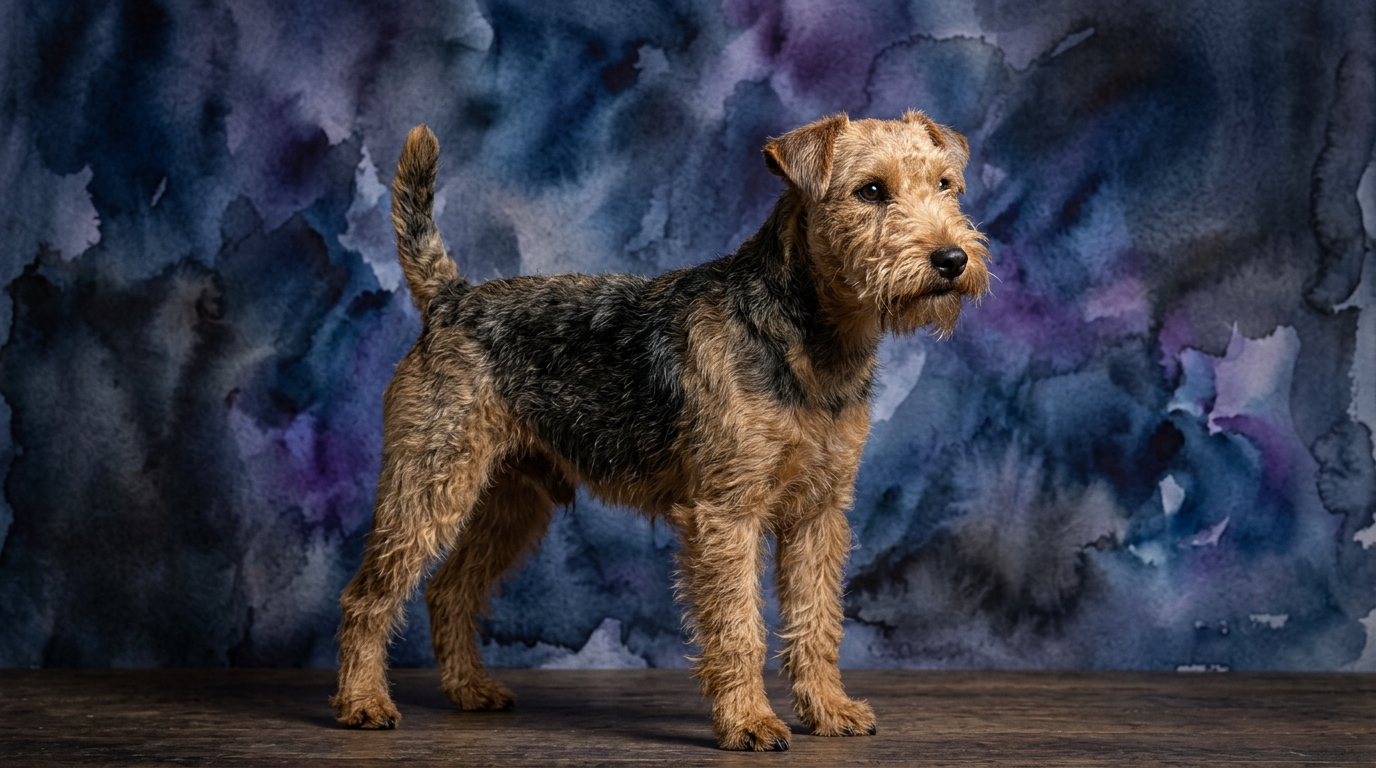
Side-by-Side IQ Profile: Briard vs. Lakeland Terrier
**Problem Solving:** The Briard (4/5) exhibits a robust capacity for independent thought and strategic action, crucial for a herding dog managing livestock. They assess situations to devise solutions, whether anticipating animal movements or navigating complex terrain, demonstrating adaptive and innovative problem-solving beyond mere command following. Lakeland Terriers (3/5) display practical, task-specific problem-solving, particularly when fueled by their prey drive. They resourcefully overcome obstacles in pursuit of a target, often demonstrating direct, instinct-driven solutions for immediate, tangible objectives rather than abstract multi-step tasks.
**Training Speed:** The Briard (4/5) demonstrates efficient training speed, quickly grasping and retaining commands due to a strong desire to cooperate. Their ability to connect actions with consequences and generalize behaviors contributes to swift skill acquisition, making them highly responsive to consistent positive reinforcement. Lakeland Terriers (3/5) learn at a moderate pace, often requiring more repetition. Their independent nature means they might weigh command value against their own interests, necessitating engaging, varied, and shorter training sessions to maintain focus and enthusiasm.
**Social Intelligence:** The Briard (3/5) shows moderate social intelligence, forming strong bonds with family and often exhibiting protective instincts. While attuned to their established pack, interactions with strangers can be reserved, requiring careful socialization for graceful navigation of novel social situations. Also moderately socially intelligent, Lakeland Terriers (3/5) are typically affectionate and interactive with family. They can be outgoing and curious with strangers, though some display terrier feistiness; proper socialization from a young age helps them adapt confidently to various social settings.
**Instinctive Drive:** The Briard's (3/5) instinctive drive centers on its herding heritage: gathering, protecting, and controlling family or other pets. This manifests as a watchful, protective nature requiring appropriate outlets like herding activities or structured 'jobs' to prevent misdirection. The Lakeland Terrier's (3/5) instinctive drive is strongly tied to vermin hunting, characterized by pronounced prey drive, keen scenting, and persistent determination to pursue and dig. Providing safe channels for this innate drive, such as earthdog trials, is crucial for their well-being.
**Memory:** The Briard (4/5) possesses robust memory, recalling complex command sequences, routines, and experiences over long periods, vital for a herding dog. This strong retention contributes significantly to their training efficiency and reliable application of past learning to new challenges. Lakeland Terriers (3/5) have a solid memory for routines, commands, and experiences, though perhaps less for complex sequences than the Briard. Their recall supports consistent training and effective environmental navigation, remembering paths and favored spots.
Where the Briard Wins Cognitively
The Briard's cognitive profile distinctly outperforms the Lakeland Terrier in areas crucial for cooperative work and complex task execution. With a Problem Solving score of 4/5, compared to the Lakeland's 3/5, Briards demonstrate a greater aptitude for independent strategic thinking and adapting to novel situations. This isn't merely about following directions but about evaluating circumstances and formulating solutions, a legacy from their role in managing livestock without constant human instruction. Furthermore, their Training Speed (4/5 vs. 3/5) and Memory (4/5 vs. 3/5) indicate a more efficient learning process and superior retention of information. This means a Briard can grasp new concepts more quickly and recall them reliably, making multi-stage commands and nuanced behavioral adjustments more accessible. Their cognitive strengths lie in their capacity for thoughtful engagement, consistent learning, and a profound ability to internalize and apply past experiences to new challenges, all geared towards working in partnership.
Where the Lakeland Terrier Wins Cognitively
While the Lakeland Terrier's raw scores might not surpass the Briard's, their cognitive strengths are specialized and equally valuable within their own domain. The Lakeland Terrier, with its instinctive Drive of 3/5 (equal to the Briard but manifested differently), possesses an unparalleled tenacity and single-minded focus when pursuing a task related to its historical purpose. Their problem-solving, though rated 3/5, is often characterized by a relentless determination to overcome obstacles in pursuit of a goal, such as digging out quarry. This isn't about broad strategic thinking but about focused, persistent application of effort. Their social intelligence, also rated 3/5, allows them to be engaging and adaptable in various social contexts, often displaying a confident and curious demeanor that belies their size. The Lakeland's cognitive 'win' lies in its unwavering resolve and specialized problem-solving directed by its keen senses and prey drive, making them formidable in tasks requiring grit and independent action rather than collaborative herding.
Which is Easier to Train and Why
Considering their respective cognitive profiles, the Briard generally presents as the easier breed to train. Their higher Training Speed (4/5), combined with superior Problem Solving (4/5) and Memory (4/5), means they typically absorb and recall commands more readily. Briards were bred to work closely with humans, often requiring them to respond to subtle cues and execute complex herding patterns. This heritage translates into a natural inclination for cooperation and a desire to please their handler, making them receptive to structured training. In contrast, the Lakeland Terrier's 3/5 across these dimensions suggests a more independent learning style. Their strong instinctive drive and historical role as solo hunters mean they often evaluate commands based on their own perceived utility or interest. While perfectly capable of learning, training a Lakeland often demands more patience, creativity, and a consistent demonstration of what's in it for them, compared to the Briard's more inherent willingness to comply.
Which Suits Active Owners vs. Relaxed Owners
The cognitive and instinctive profiles of these breeds offer clear guidance for owner lifestyles. The Briard, with its robust problem-solving, memory, and herding drive (3/5), thrives with active owners who can provide consistent mental engagement and structured activities. They require more than just physical exercise; their minds need to be challenged through advanced obedience, dog sports, or even simulated herding tasks. A Briard with an under-stimulated mind might develop undesirable behaviors as they seek to fulfill their innate need to 'work.' Conversely, while the Lakeland Terrier also possesses an active nature due to its strong instinctive drive (3/5) and need for physical outlets, their cognitive profile makes them adaptable to owners who might be less inclined towards highly structured, cooperative 'work.' They excel with owners who can provide outlets for their prey drive and curiosity, such as long walks with opportunities for sniffing, secure digging areas, or engaging puzzle toys. They can be content with varied, less formal activities, making them suitable for active owners who prefer independent exploration over intricate partnered tasks. A truly relaxed owner, however, might struggle with the inherent drives and energy levels of both breeds, as neither is content to be a couch potato without adequate mental and physical stimulation.
The Verdict
Choose the Briard if you are an owner seeking a highly cooperative, intelligent partner for advanced training, dog sports, or a 'job' that utilizes their strategic problem-solving and excellent memory.
Opt for the Lakeland Terrier if you appreciate an independent, tenacious companion with a specialized drive, and you are prepared to channel their focused energy and natural curiosity into engaging, often self-directed, activities.
🧠 Find Your Pet's IQ Score
Our Pet IQ Lab assessment covers 25+ tests across 5 cognitive dimensions — personalized to your breed.
Take the Full IQ Test →Frequently Asked Questions
Does Coren ranking apply to both breeds equally?
The Coren ranking system specifically measures 'working and obedience intelligence,' which aligns with a dog's ability to learn and obey human commands. The Briard is ranked, indicating its performance in these areas, whereas the Lakeland Terrier is not, suggesting its intelligence manifests more in independent problem-solving and instinctive behaviors not typically measured by Coren's criteria.
How does the 'instinctive drive' differ between a Herding dog like the Briard and a Terrier like the Lakeland?
For the Briard, instinctive drive primarily involves gathering, protecting, and controlling, aimed at livestock or family. The Lakeland Terrier's drive, however, is intensely focused on hunting and pursuing small prey, often involving digging and a relentless chase. Both are powerful, but their manifestations and targets are distinct.
Can a Lakeland Terrier excel in obedience despite its lower training speed score?
Absolutely. While their training speed is rated moderately, Lakeland Terriers are capable learners. Their success in obedience often depends on the trainer's ability to make sessions highly engaging, varied, and rewarding, leveraging their tenacity and curiosity rather than relying solely on a desire to please. Consistency and positive reinforcement are key.