Side-by-Side IQ Profile: British Shorthair vs. Nebelung
The Cosmic Pet Pet IQ Lab assesses feline intelligence across five key dimensions, providing a standardized framework for comparison. While both the British Shorthair and the Nebelung achieve a consistent 3/5 across all categories, understanding the specific behavioral manifestations of these scores is crucial to appreciating their individual cognitive styles.
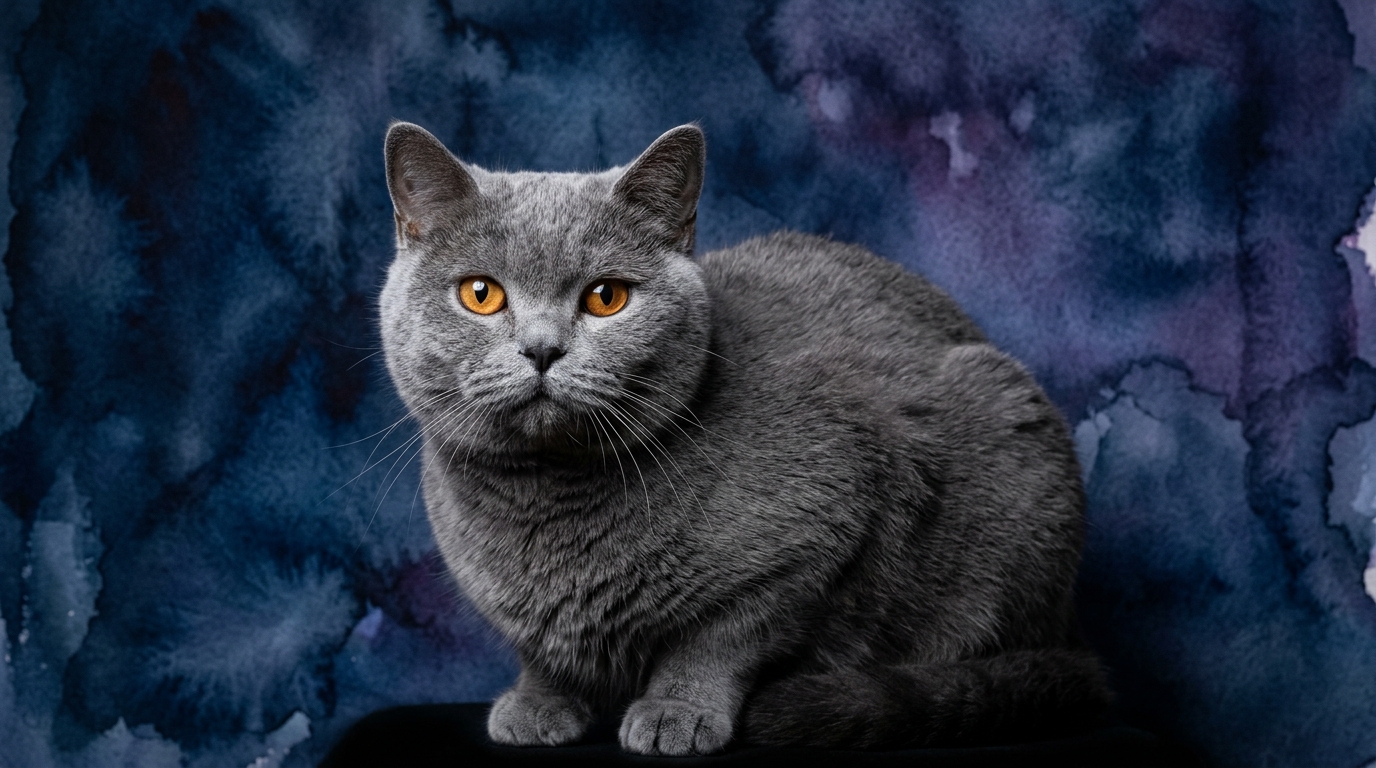
British Shorthair (IQ: Problem Solving 3/5, Training Speed 3/5, Social Intelligence 3/5, Instinctive Drive 3/5, Memory 3/5): The British Shorthair approaches challenges with a pragmatic, often direct mindset. They excel at navigating their home environment efficiently, remembering the easiest routes to favored sunbeams or food bowls, and can figure out simple mechanisms like pushing open a slightly ajar door. Their problem-solving isn't typically characterized by intricate planning but rather by a persistent, trial-and-error method that gets the job done without unnecessary fuss. These felines are quite capable of learning routines and basic commands, especially when positive reinforcement is applied consistently. Their learning is often driven by a desire for comfort and predictability, rather than an eagerness to please. They absorb household rhythms quickly, understanding meal times, playtime cues, and boundaries, making them straightforward to integrate into a structured home environment. British Shorthairs are adept at observing and understanding human moods and household dynamics, preferring a calm and predictable social setting. They offer a quiet, dignified companionship, recognizing personal space and responding to gentle invitations for interaction. Their social acumen allows them to form strong, albeit often understated, bonds with their chosen humans, adapting their presence to the family's general activity level. Possessing a moderate prey drive, the British Shorthair often expresses this through focused, deliberate play. They enjoy stalking and pouncing on interactive toys, showing a concentrated effort rather than explosive bursts of energy. This instinct is typically well-managed within a home setting, satisfied by regular play sessions that allow them to exercise their natural hunting sequences. Their memory is robust for routines, preferred resting spots, and the people within their immediate circle. They remember past interactions, both positive and negative, contributing to their consistent behavior patterns and their selective affection. This strong spatial and social memory helps them navigate their world with confidence and maintain their established preferences.
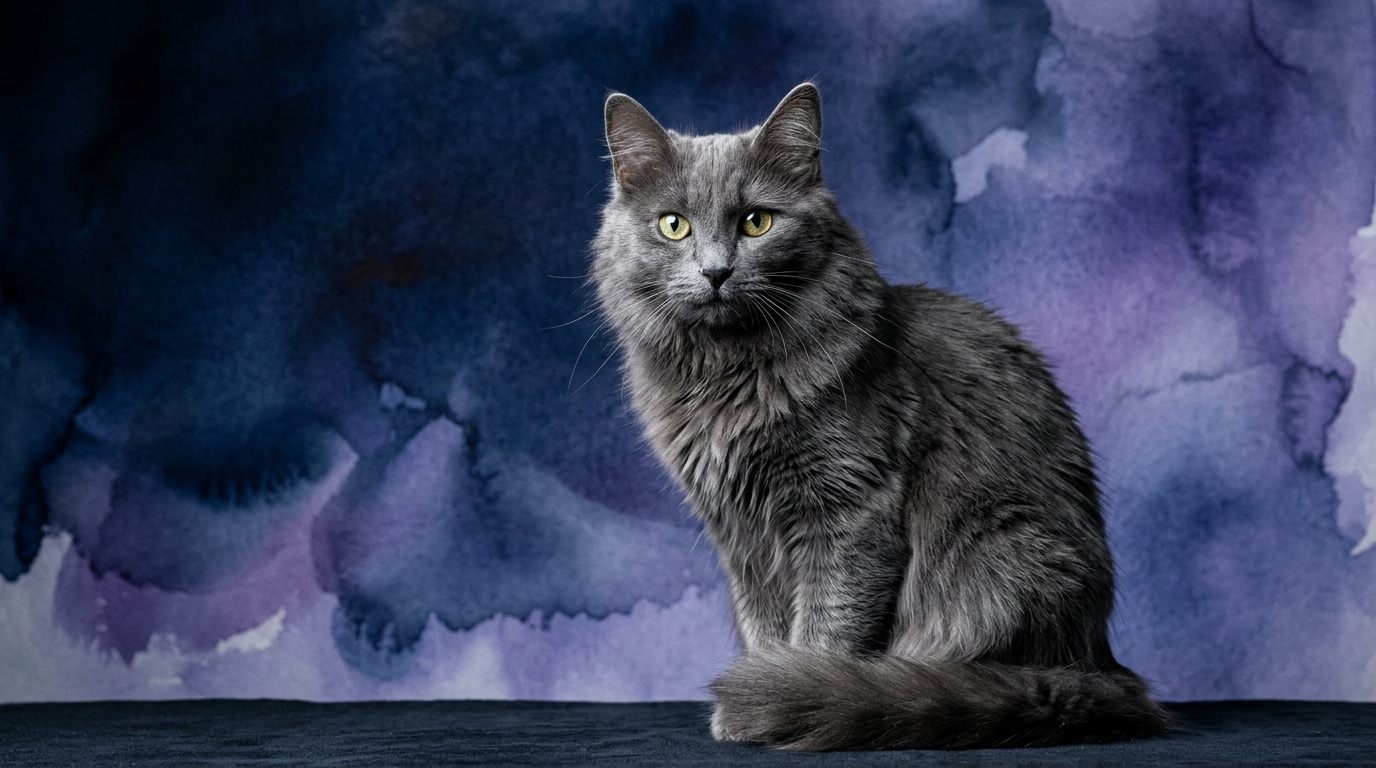
Nebelung (IQ: Problem Solving 3/5, Training Speed 3/5, Social Intelligence 3/5, Instinctive Drive 3/5, Memory 3/5): The Nebelung demonstrates a thoughtful and often analytical approach to problem-solving. Before acting, they frequently observe situations, considering different angles to reach a desired toy or manipulate an object. This quiet ingenuity can manifest in creative solutions to minor obstacles, indicating a preference for mental processing over impulsive action, even if the outcome score is similar to their British counterpart. Nebelungs are highly trainable, particularly when their sensitive nature is understood and a deep bond is fostered with their trainer. They respond exceptionally well to gentle, consistent positive reinforcement, learning new commands and even tricks with surprising efficiency once trust is established. Their motivation often stems from the desire to engage with their beloved human, making training a bonding experience. This breed excels in forming profound, often singular, bonds with their primary human companions. They are exceptionally attuned to emotional nuances, reading subtle changes in tone and body language, and often anticipating their owner's needs or moods. Their communication is subtle yet clear, expressing affection and desires through soft purrs, gentle nudges, and observant gazes, showcasing a sophisticated understanding of human-feline interaction. The Nebelung possesses a refined and elegant hunting instinct, often enjoying intricate play that mimics the stalk-and-pounce sequence of a predator. Their play is often focused and graceful, requiring mental engagement as much as physical exertion. Providing outlets for this drive through interactive toys and structured play sessions is crucial for their well-being, satisfying their innate predatory behaviors. Nebelungs exhibit an excellent memory for individuals, routines, and both positive and negative experiences, which significantly influences their behavior and attachments. They vividly recall past events, contributing to their strong loyalties and their characteristic reservedness with strangers. This acute memory helps them build a complex internal map of their social and physical world.
Where the British Shorthair Wins Cognitively
The British Shorthair's cognitive strengths often manifest in their remarkable adaptability and pragmatic approach to daily life. While both breeds score similarly in problem-solving, the British Shorthair tends to be less prone to overthinking or anxiety in novel situations. They possess a quiet resilience, adapting to changes in routine or environment with a steady, self-assured demeanor, quickly re-establishing their comfort zones based on memory of safe spaces and established rhythms. Their practical problem-solving, such as efficiently navigating new furniture arrangements or easily manipulating a simple door latch, often appears more straightforward and less burdened by the observational contemplation that might characterize a Nebelung's initial response. This robust independence in processing and adapting allows them to thrive in a broader range of domestic settings without excessive stress.
Where the Nebelung Wins Cognitively
The Nebelung truly shines in the depth of its social intelligence and its nuanced, analytical problem-solving. While their overall IQ scores align, the Nebelung's ability to read subtle emotional cues from their primary human companion, often anticipating needs or moods, suggests a highly sophisticated level of social cognition that goes beyond mere observation. Their approach to obstacles, while not always faster, tends to be more thoughtful and observational, sometimes involving a period of quiet contemplation before executing a solution. This can lead to more elegant or less brute-force resolutions for complex (though still feline-level) puzzles. Furthermore, their memory for social interactions and their environment is particularly acute, fostering profound, almost telepathic, bonds with their chosen people and contributing to their selective, yet deeply affectionate, social nature.
Which is Easier to Train and Why
The perceived “ease” of training between these two breeds is less about their raw intellectual capacity and more about their inherent motivations and temperaments. The British Shorthair, with its independent and self-assured demeanor, is generally responsive to consistent positive reinforcement for basic commands and litter training. They learn routines quickly and adhere to them, not necessarily out of an intense desire to please, but because they appreciate predictability and comfort. Their training speed is solid, but their motivation often stems from personal gain or the establishment of a harmonious, predictable household rhythm rather than an intense drive for social engagement or approval.
The Nebelung, on the other hand, can be equally trainable and often capable of more complex learning, but their success hinges heavily on the strength and quality of the bond they share with their trainer. Being more sensitive and forming deep attachments, they are highly receptive to gentle, patient methods and thrive on positive interaction that reinforces their connection. They might learn intricate tricks or respond to nuanced vocal cues if the training process strengthens their bond, demonstrating a willingness to engage cognitively for the sake of their beloved human. However, harsh, inconsistent, or emotionally distant training methods can cause them to withdraw and become resistant, making the process significantly more challenging. Therefore, while both score 3/5, the Nebelung's training efficacy is profoundly tied to emotional connection and trust, whereas the British Shorthair's is linked more directly to practical reinforcement and established habit.
Suited for Active vs. Relaxed Owners
For the truly relaxed owner seeking a calm, self-sufficient companion who provides a soothing presence, the British Shorthair often presents a more natural and effortless fit. Their moderate activity level and profound enjoyment of quiet lounging mean they don't demand constant, high-energy engagement. While they appreciate interaction and affection, they are perfectly content to entertain themselves, observe from a comfortable perch, or simply be present in the room, making them ideal for households that value a tranquil atmosphere and a feline that can manage its own emotional and physical needs for much of the day.
The Nebelung, while not overtly boisterous or requiring strenuous exercise, benefits greatly from owners who are prepared for more interactive and emotionally resonant engagement. Their refined instinctive drive and sophisticated social intelligence mean they thrive with owners who provide structured, engaging play sessions that mimic hunting scenarios, and who are consistently present for affectionate, communicative interaction. They aren't necessarily for “active” owners in the sense of constant running and jumping, but rather for “engaging” owners who understand and cater to their need for mental stimulation, deep emotional connection, and a predictable, yet stimulating, environment. An owner who enjoys teaching tricks and having meaningful, quiet interactions will find the Nebelung a profoundly rewarding companion.
The Verdict
Choose a British Shorthair if you seek a calm, independent feline companion who appreciates routine and offers quiet, self-sufficient presence in a tranquil household environment. They are a good match for owners who value practicality and a steady temperament over intense emotional demands.
Opt for a Nebelung if you are prepared to build a deep, singular bond with a sensitive and observant cat who thrives on consistent, gentle interaction and engaging play that satisfies their thoughtful nature. They are best suited for owners who cherish profound emotional connections and are willing to invest time in their feline's nuanced social and mental stimulation.
🧠 Find Your Pet's IQ Score
Our Pet IQ Lab assessment covers 25+ tests across 5 cognitive dimensions — personalized to your breed.
Take the Full IQ Test →Frequently Asked Questions
Are British Shorthairs good at learning tricks?
British Shorthairs can learn tricks with consistent positive reinforcement, particularly those that offer a clear reward or fit into a predictable routine. While not typically eager to perform complex sequences, they are capable of mastering basic commands if the training is patient and rewarding for them.
How does a Nebelung's shyness relate to its social intelligence?
A Nebelung's characteristic shyness often stems from its refined social intelligence and selective bonding. They are highly attuned to social cues and prefer to observe new individuals before forming trust, indicating a thoughtful approach to social interactions rather than a lack of understanding.
Do both breeds enjoy puzzle toys equally?
Both breeds can enjoy puzzle toys, but their engagement might differ; British Shorthairs approach them pragmatically for a reward, while Nebelungs might engage with more observational analysis. Nebelungs, with their thoughtful problem-solving, may spend more time strategizing before manipulating the toy, whereas British Shorthairs might use more direct, trial-and-error methods.