
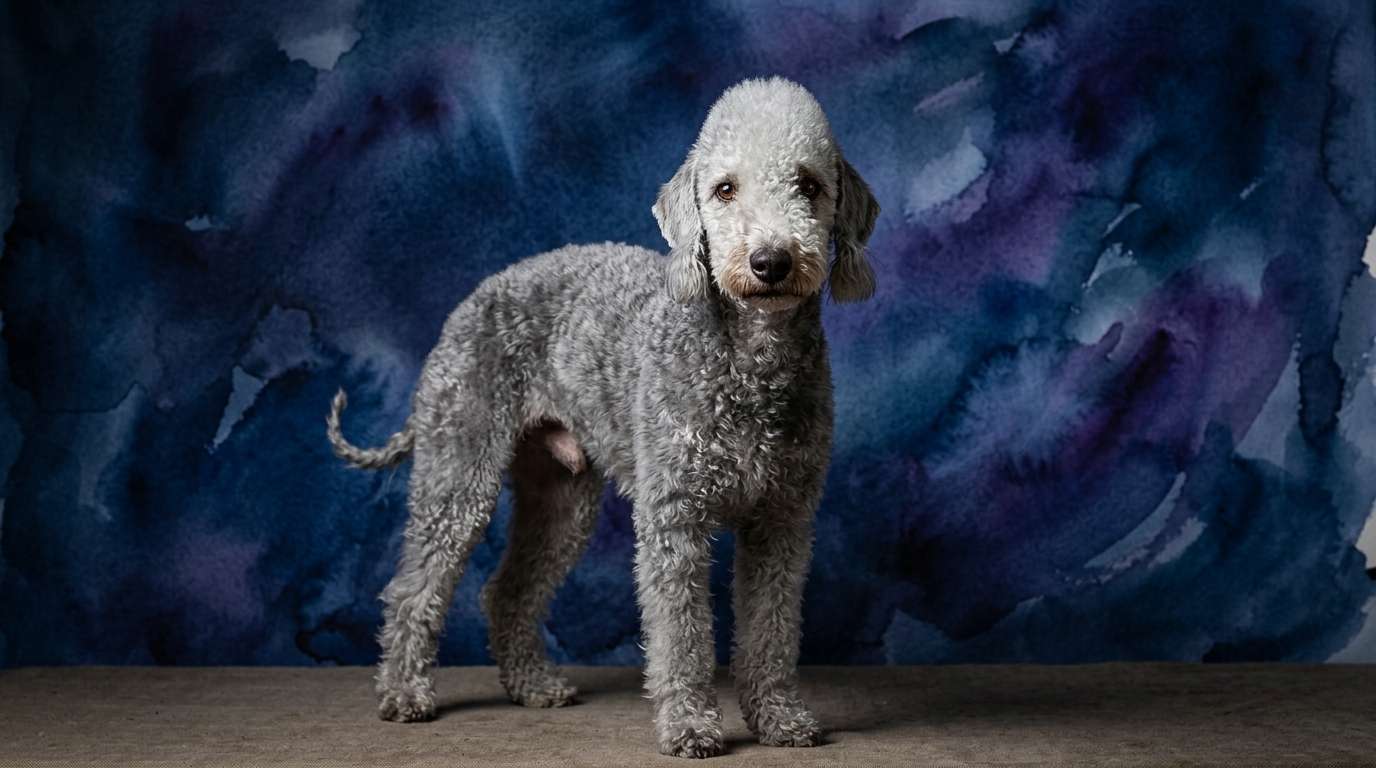
Side-by-Side IQ Profile: Brittany vs. Bedlington Terrier
The Cosmic Pet Pet IQ Lab provides a comprehensive framework to assess canine intelligence across five crucial dimensions, allowing us to delve into the specific cognitive strengths and styles of these two distinct breeds.
The Brittany, a member of the Sporting group and notably ranked #19 by Coren for working intelligence, presents a compelling cognitive profile. Their Problem Solving (4/5) is characterized by an impressive ability to assess and navigate complex situations, particularly in environments requiring spatial awareness or strategic thinking to locate and retrieve. This isn't just rote learning; it's an active mental engagement with their surroundings, allowing them to adapt and innovate solutions. Their Training Speed (4/5) is equally robust, indicating a swift uptake of new commands and routines. This rapid learning curve stems from a combination of eagerness to please and a focused attention span, making them highly responsive to consistent, positive reinforcement. While their Social Intelligence (3/5) is moderate, they are generally amiable and understand basic human cues, though their primary cognitive drive often remains task-oriented rather than deeply focused on nuanced social dynamics. The Instinctive Drive (3/5) is powerfully expressed through their inherent bird-dog tendencies, guiding their actions with an almost innate sense of purpose in the field, influencing their curiosity and engagement. Perhaps their most remarkable cognitive asset is their Memory (5/5), which is exceptional. Brittanys demonstrate a profound capacity for long-term recall, remembering learned sequences, specific locations, and past experiences with striking accuracy, which is invaluable for consistent performance across various disciplines.
The Bedlington Terrier, a distinctive member of the Terrier group, offers a cognitive blueprint rooted in persistence and a balanced approach rather than rapid intellectual sprints. Their Problem Solving (3/5) is marked by a direct, often tenacious application of effort. While they may not devise intricate strategies as quickly as some breeds, they compensate with unwavering determination, often succeeding through repeated attempts and sheer will, particularly in tasks involving exploration or overcoming physical barriers. Their Training Speed (3/5) is steady; they are capable learners but may require more repetitions and patience, as their independent terrier spirit means they process information and comply at their own rhythm. Social Intelligence (3/5) in the Bedlington is generally adequate for family life, allowing them to understand fundamental social cues. However, their historical role often fostered a degree of independence, meaning they might be more reserved with strangers or in novel social settings, relying on familiar bonds. The Instinctive Drive (3/5) is distinctly terrier-like, manifested in a strong urge to dig, chase, and explore small spaces, influencing their curiosity and engagement with their environment. While present, it's often more about persistent investigation than the wide-ranging pursuit seen in sporting dogs. Finally, their Memory (3/5) is functional and reliable for retaining learned behaviors and routines, but perhaps without the extraordinary depth or recall speed observed in breeds with a higher score, particularly for highly complex or long-sequence tasks.
Where the Brittany Excels Cognitively
The Brittany clearly demonstrates a cognitive edge in several key areas, making them a standout for roles requiring sharp intellect and retention. Their superior Problem Solving (4/5) means they aren't just waiting for instructions; they're actively processing scenarios and devising solutions, particularly in tasks requiring spatial reasoning, navigating complex environments, or figuring out how to achieve a goal independently. This proactive, analytical approach makes them adept at independent work, a trait honed by generations of field experience. Furthermore, their Training Speed (4/5) significantly outpaces the Bedlington, indicating a quicker assimilation of new commands and routines. They often require fewer repetitions to solidify a behavior, making initial training phases remarkably efficient and allowing for rapid progression to advanced skills. The most significant cognitive advantage for the Brittany, however, lies in its exceptional Memory (5/5). This breed can recall intricate sequences, past experiences, and specific locations with remarkable precision, a trait invaluable for tasks requiring consistent performance over time, remembering complex hunting patterns, or mastering elaborate dog sports. This robust memory system allows them to build a deep repertoire of learned behaviors and adapt effectively based on prior knowledge, making them highly reliable partners.
Where the Bedlington Terrier's Cognition Shines
While the Bedlington Terrier's numerical scores might appear more modest compared to the Brittany, their cognitive strengths manifest differently, often through their inherent terrier tenacity and focused persistence. Their Problem Solving (3/5) and Instinctive Drive (3/5), while not top-tier in broad application, combine to create an incredibly determined and focused approach to specific tasks, especially those involving digging, exploring confined spaces, or persistently investigating. Where a Brittany might strategize, a Bedlington will often apply relentless determination, repeatedly attempting to achieve a goal with unwavering resolve. This unwavering persistence, rooted in their breed history as vermin hunters, means they are not easily deterred once they set their mind to something, often outlasting challenges through sheer will. Their moderate scores across the board can also be interpreted as a balanced cognitive profile, less prone to the potential for boredom or overstimulation that sometimes accompanies exceptionally high intellect in other breeds. Their cognitive style prioritizes direct action and sustained effort over intricate planning, a valuable trait for owners seeking a dog with robust, unwavering purpose in their chosen pursuits, often leading to a charmingly single-minded focus that can be very effective.
Training Aptitude: Which Breed Learns Faster?
Based on their cognitive profiles, the Brittany is generally easier to train compared to the Bedlington Terrier. The Brittany's higher Problem Solving (4/5) and significantly faster Training Speed (4/5) mean they not only grasp new concepts more quickly but also apply that understanding to novel situations with greater ease. Their exceptional Memory (5/5) ensures that once a command or routine is learned, it's retained with remarkable consistency, reducing the need for constant refreshers. Behaviorally, Brittanys are often eager to please and possess a strong drive to work alongside their human partners, making them highly receptive to instruction. In contrast, while the Bedlington Terrier's Training Speed (3/5) is respectable, their inherent terrier independence means they may occasionally require more patience and creative motivation. Their problem-solving approach is often more about tenacious trial-and-error than strategic planning, which can translate to a slightly slower learning curve for complex tasks. While both breeds respond well to positive reinforcement, the Brittany's cognitive makeup predisposes them to a smoother, more rapid training experience for a wider range of activities.
Lifestyle Match: Active vs. Relaxed Owners
When considering lifestyle compatibility, the Brittany unequivocally aligns with active owners. Their Sporting group heritage, combined with high scores in Problem Solving, Training Speed, and Memory, indicates a dog that thrives on consistent mental and physical engagement. They excel in activities like hunting, agility, obedience, and extensive hiking, requiring owners who can provide daily outlets for their considerable energy and sharp intellect. A Brittany without sufficient stimulation can become bored or destructive, channeling their impressive cognitive abilities into less desirable behaviors. The Bedlington Terrier, while certainly not a couch potato, can suit a broader range of owners, including those who are active but perhaps not intensely so. Their moderate instinctive drive and problem-solving capacity mean they appreciate regular walks, play sessions, and opportunities for exploration and digging, but their energy requirements are generally less demanding than the Brittany's. They are well-suited to owners who enjoy consistent daily exercise and engagement but might not be looking for a dog to accompany them on extreme endurance activities. Their independent streak also means they can be content with periods of self-entertainment, provided their core needs are met.
The Verdict
Opt for a Brittany if you're an active owner seeking a highly trainable, intelligent partner for advanced training, dog sports, or field activities, valuing exceptional memory and problem-solving prowess.
Select a Bedlington Terrier if you appreciate a moderately active, tenacious companion with a balanced cognitive profile, valuing their independent spirit and persistent approach to life's challenges.
🧠 Find Your Pet's IQ Score
Our Pet IQ Lab assessment covers 25+ tests across 5 cognitive dimensions — personalized to your breed.
Take the Full IQ Test →Frequently Asked Questions
Is a Brittany good for first-time dog owners?
A Brittany's intelligence and trainability can be a boon for first-time owners willing to commit to consistent training and ample exercise. However, their high energy and need for mental stimulation mean they are best suited for individuals prepared for an active lifestyle and dedicated to channeling their cognitive drives effectively.
Do Bedlington Terriers need a lot of exercise?
Bedlington Terriers require regular, moderate exercise to stay healthy and happy, including daily walks and opportunities for off-leash play in a secure area. While not as demanding as some high-energy breeds, consistent physical and mental engagement prevents boredom and helps manage their terrier instincts.
How do their social intelligence levels impact family life?
Both breeds score 3/5 in social intelligence, meaning they generally interact well with their immediate family but may not be as outwardly effusive or naturally attuned to complex social nuances as some other breeds. Brittanys are often task-focused, while Bedlingtons might exhibit a more independent or reserved demeanor with strangers, requiring consistent positive socialization from an early age.