
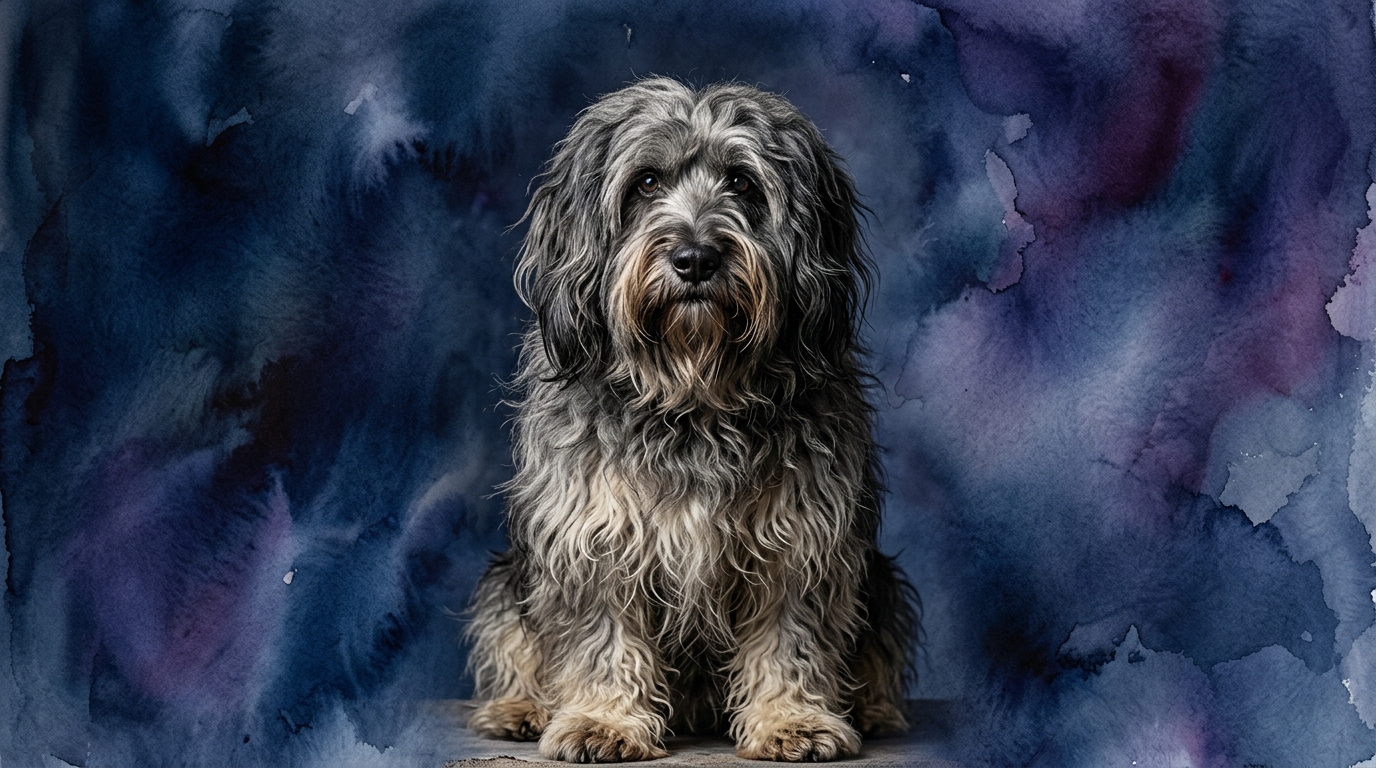
Side-by-Side Cognitive Profiles: Brittany vs. Polish Lowland Sheepdog
The Cosmic Pet Pet IQ Lab employs a five-dimensional framework to assess canine cognition, offering a granular look beyond general assumptions. For the Brittany, a Sporting breed, its profile is quite sharp: Problem Solving 4/5, Training Speed 4/5, Social Intelligence 3/5, Instinctive Drive 3/5, and an impressive Memory 5/5. This breed also holds a respectable Coren rank of #19, indicating a strong capacity for understanding and obeying commands, often with fewer repetitions.
In contrast, the Polish Lowland Sheepdog (PON), a Herding breed, presents a different cognitive signature, which is not currently Coren-ranked but still offers valuable insights into its operational intelligence. Its scores are: Problem Solving 3/5, Training Speed 3/5, Social Intelligence 3/5, Instinctive Drive 3/5, and Memory 3/5. While these scores are generally a point lower than the Brittany's, they reflect a robust and functional intelligence suited to its traditional role, rather than any deficit in overall capabilities. Each breed’s profile paints a picture of how their minds are wired for their specific vocations and interactions with the world.
Where the Brittany Excels Cognitively
The Brittany's cognitive strengths are particularly evident in its remarkable Memory (5/5) and its efficient Problem Solving (4/5) and Training Speed (4/5). This combination makes the Brittany an exceptional candidate for complex, multi-stage tasks that require not only quick learning but also the retention of intricate sequences over time. Imagine a bird dog needing to remember the precise location of a downed bird, the scent trail back to its handler, and a series of hand signals—all without hesitation. This breed’s superior memory allows it to recall vast amounts of information, from specific command cues to the layout of a hunting field or agility course, making it highly adaptable to varied and challenging environments.
Furthermore, the Brittany’s elevated problem-solving ability means it can quickly assess novel situations and devise effective strategies, whether it's navigating an obstacle course or figuring out how to retrieve a toy from an awkward spot. This isn't just about raw learning; it's about applying learned principles to new contexts. Its rapid training speed ensures that new behaviors are acquired efficiently, solidifying its role as a highly responsive and capable working partner. These cognitive advantages are deeply ingrained in its sporting heritage, where precision, recall, and swift execution are paramount to success.
Where the Polish Lowland Sheepdog Shines Cognitively
While the Polish Lowland Sheepdog's scores might appear numerically lower, its cognitive strengths are tailored to the nuanced demands of a herding breed, manifesting as a different kind of operational intelligence. Its Problem Solving (3/5) is less about rapid-fire, varied tasks and more about sustained, independent decision-making within a dynamic, living environment. A PON must constantly evaluate the movements of a flock, anticipate their behavior, and subtly guide them, often without direct human command. This requires a thoughtful, persistent approach to problem-solving, where resilience and an understanding of group dynamics are crucial.
The PON's Social Intelligence (3/5) and Instinctive Drive (3/5) are perfectly balanced for its herding role. It possesses the acumen to read the subtle cues of livestock and its human handler, combined with the innate motivation to manage a flock. This isn't about being the fastest to learn a trick, but about possessing a deep, practical understanding of its 'job' and the autonomy to execute it effectively. Its Memory (3/5), while not as prodigious as the Brittany's, is sufficient for retaining the routines, boundaries, and specific behaviors required for long-term flock management, demonstrating a functional and practical application of its cognitive resources rather than a purely academic one.
Which Is Easier to Train and Why?
When comparing ease of training, the Brittany (Training Speed 4/5) generally presents a swifter learning curve than the Polish Lowland Sheepdog (Training Speed 3/5). The Brittany’s higher problem-solving capacity and exceptional memory mean it grasps new commands and concepts more quickly and retains them with fewer repetitions. This breed is often eager to please and possesses a strong work ethic, making it highly receptive to positive reinforcement methods and structured training sessions. Its background as a bird dog means it's bred to work cooperatively with a handler, focusing intently on tasks and signals.
The Polish Lowland Sheepdog, while certainly trainable, may require more patience and consistency due to its moderately lower training speed and its inherent independence, a trait valuable in a herding dog expected to make decisions autonomously. While it learns, it might not do so with the same rapid enthusiasm as the Brittany, sometimes appearing more thoughtful or even stubborn. Training a PON often benefits from understanding its herding instincts – using activities that simulate herding or problem-solving tasks can be highly motivating. Owners might find that while the Brittany thrives on varied, fast-paced training, the PON responds better to consistent, routine-based instruction that respects its independent nature and provides clear, logical reasons for compliance.
Matching Breeds to Lifestyles: Active vs. Relaxed Owners
For owners seeking an active, engaged canine partner, the Brittany is an outstanding choice. Its high instinctive drive, combined with superior memory and problem-solving skills, means it thrives on consistent physical activity and mental challenges. Brittanys excel in dog sports like agility, flyball, and, of course, field trials, requiring an owner who can commit to daily rigorous exercise, training sessions that challenge its sharp mind, and opportunities for purposeful work. A Brittany without sufficient outlets for its energy and intelligence can become restless or mischievous, making it ideal for individuals or families with an adventurous, outdoor-oriented lifestyle.
The Polish Lowland Sheepdog, while not a sedentary breed, offers a different pace and focus, making it suitable for owners who appreciate a thoughtful companion but may not be seeking the same level of constant, high-octane activity as required by a Brittany. PONs still need regular exercise and mental engagement, but their herding background means they often find satisfaction in structured routines, patrolling their territory, or engaging in tasks that require sustained focus rather than explosive bursts of speed. They can adapt to various living situations as long as their need for a 'job' and consistent interaction is met. Owners who value a loyal, somewhat independent, and watchful companion, and who are willing to provide moderate daily exercise and engaging mental puzzles, would find a strong bond with a PON. They are less about frantic energy and more about deliberate purpose, fitting well with owners who enjoy a more methodical approach to canine partnership.
The Verdict
Choose the Brittany if you seek a highly trainable, energetic partner for diverse dog sports, hunting, or an active outdoor lifestyle where rapid learning and recall are paramount.
Opt for the Polish Lowland Sheepdog if you appreciate a thoughtful, independent companion suited to consistent routines and tasks that leverage its herding instincts, requiring a more patient, understanding approach to training.
🧠 Find Your Pet's IQ Score
Our Pet IQ Lab assessment covers 25+ tests across 5 cognitive dimensions — personalized to your breed.
Take the Full IQ Test →Frequently Asked Questions
Are Brittanys good family dogs despite their high drive?
Yes, Brittanys can be wonderful family dogs, especially for active families who can provide ample exercise and mental stimulation. Their social intelligence of 3/5 means they generally get along well with people and other pets, though early socialization is always beneficial for a well-adjusted temperament.
How much exercise does a Polish Lowland Sheepdog need daily?
Polish Lowland Sheepdogs require moderate daily exercise, typically 60-90 minutes, which can include walks, playtime, or engaging in activities like herding trials or obedience. While not as relentlessly energetic as some sporting breeds, consistent physical and mental engagement prevents boredom and promotes well-being for this intelligent herding dog.
Do Polish Lowland Sheepdogs bark a lot due to their herding instincts?
As herding dogs, PONs can be vocal, using barks to communicate or alert. Their instinctive drive (3/5) means they might be prone to 'sounding the alarm' when they perceive something out of place. Consistent training and early socialization can help manage excessive barking by teaching them appropriate times and contexts for vocalization.