Side-by-Side IQ Profile: Unpacking Identical Scores
The Cosmic Pet Pet IQ Lab assigns both the Bull Terrier and the Harrier a 3/5 rating across problem-solving, training speed, social intelligence, instinctive drive, and memory. While these scores are numerically identical, the practical application and manifestation of these cognitive traits are heavily influenced by their breed origins and inherent temperaments.
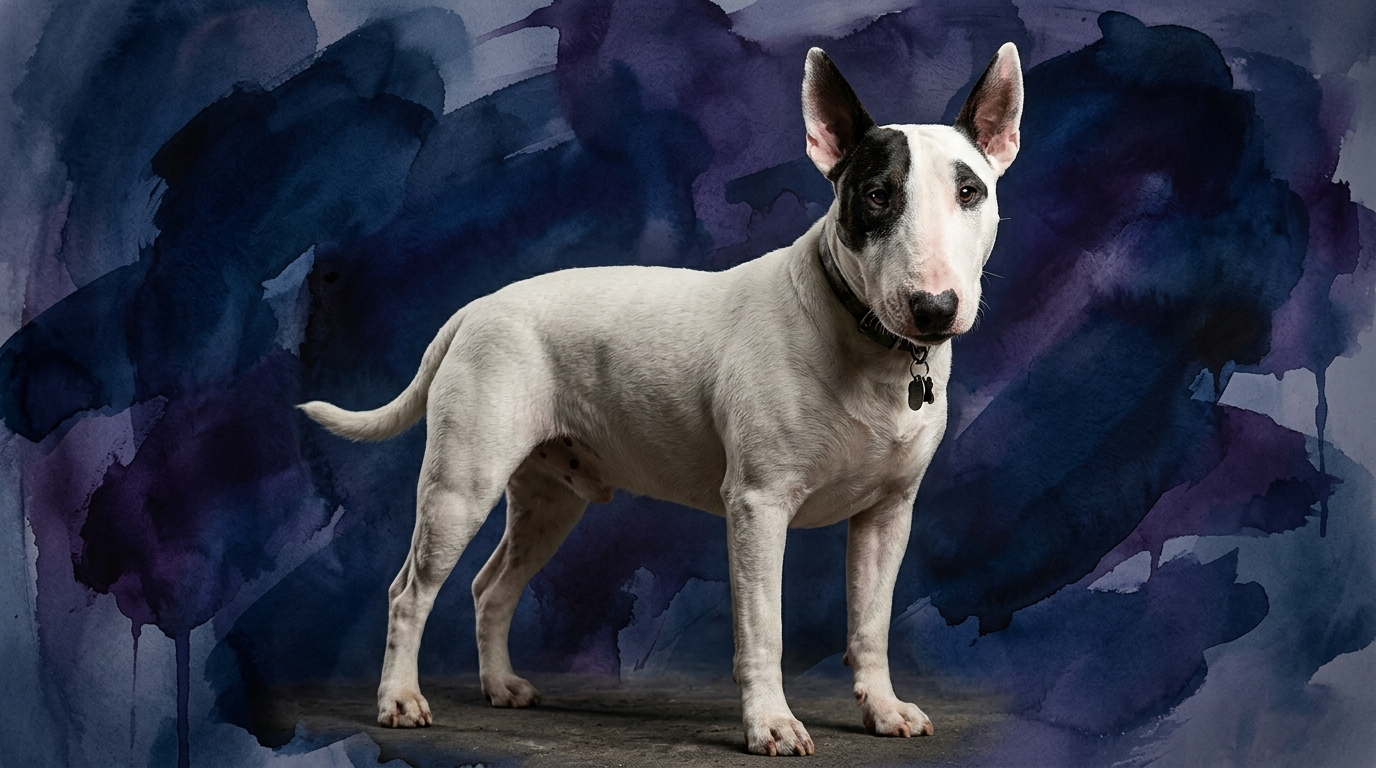
For the Bull Terrier, a breed historically developed for sport and companionship, a 3/5 in Problem Solving often translates to a tenacious, sometimes independent approach to overcoming physical or mental obstacles. Their Training Speed at 3/5 indicates they are capable learners, though their strong will can sometimes present as a challenge to consistency. Social Intelligence at 3/5 suggests they form deep bonds with their chosen humans, often displaying a protective or deeply affectionate nature within their immediate social circle. Their Instinctive Drive, also 3/5, is typically expressed as a strong prey drive towards smaller animals and a robust desire for physical engagement. Memory at 3/5 means they retain learned commands and experiences effectively, both positive and negative.
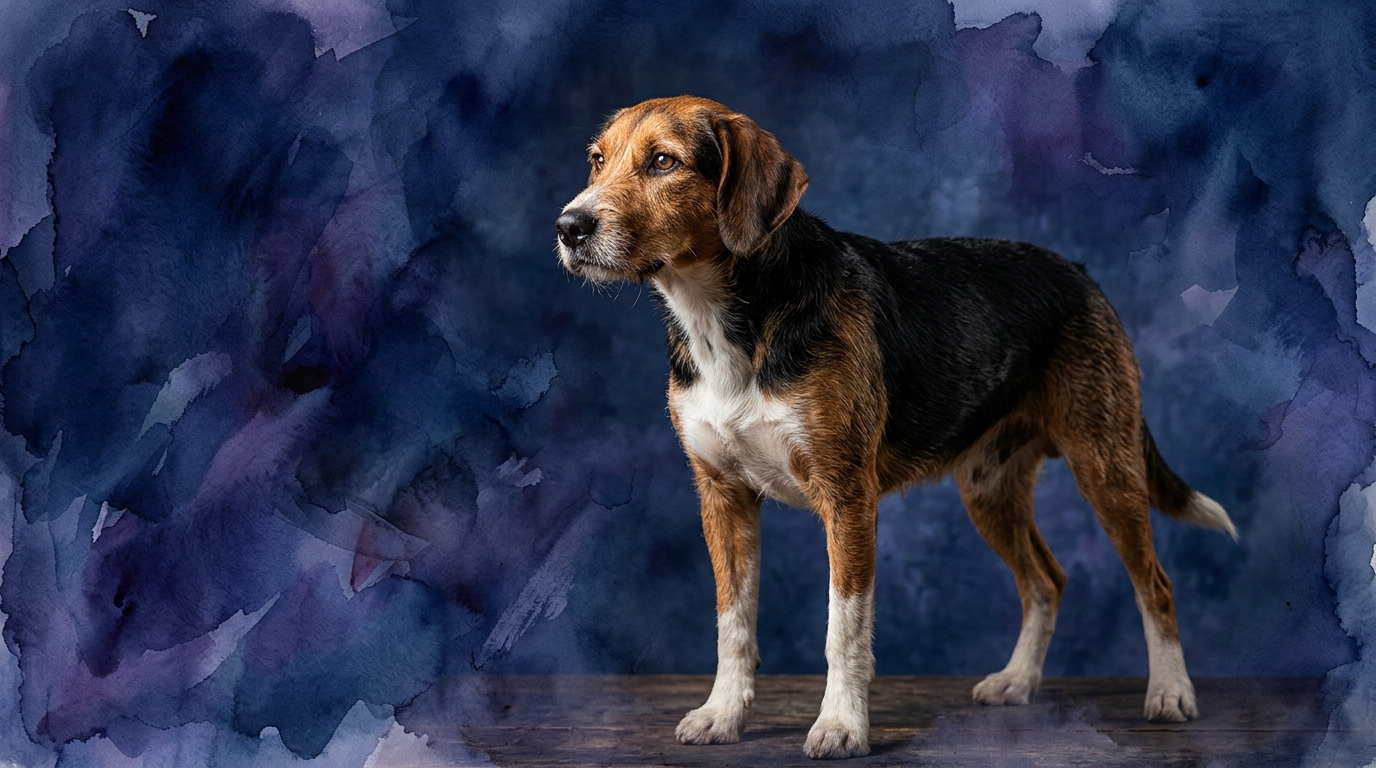
The Harrier, a traditional scent hound, interprets these same 3/5 scores through a very different lens. Their Problem Solving at 3/5 is often geared towards navigating complex scent trails and overcoming environmental challenges in pursuit of quarry, requiring sustained focus and deductive reasoning based on olfactory information. Training Speed at 3/5 means they can grasp commands, but their deep-seated Instinctive Drive (3/5) for scent work can easily override other directives, demanding patient and consistent reinforcement. Social Intelligence at 3/5 is typically expressed as a strong pack mentality, making them generally amenable to other dogs and often forming a cooperative bond with their human 'pack leader.' Their Memory at 3/5 is particularly strong for scent recognition and the layout of hunting grounds, crucial for their working role.
Where the Bull Terrier Wins Cognitively
The Bull Terrier’s cognitive strengths often shine in scenarios requiring independent thought and robust determination. Their 3/5 Problem Solving, when paired with their terrier tenacity, makes them adept at figuring out how to access desired objects or navigate tricky household situations. They might systematically test boundaries or devise methods to get what they want, showcasing a persistent, trial-and-error approach that can be both impressive and challenging for owners.
Furthermore, their particular brand of 3/5 Social Intelligence can lead to an unparalleled devotion to their core family. While they might not be universally outgoing, their deep, focused bonds mean they are acutely attuned to their primary human's moods and intentions, often anticipating needs or offering comfort in a way that feels profoundly personal. This specific social attunement, coupled with their memory, allows them to build complex relational histories with their closest companions, remembering subtle cues and past interactions with remarkable clarity.
Where the Harrier Wins Cognitively
The Harrier's cognitive prowess is undeniably rooted in its exceptional sensory processing and application, particularly its olfactory intelligence. Their 3/5 Instinctive Drive isn't just a general urge; it's a highly specialized cognitive function involving the sophisticated interpretation of scent. This allows them to process vast amounts of environmental information, track intricate trails, and discriminate between various odors with precision, a complex mental feat that far surpasses a simple drive.
Their 3/5 Problem Solving manifests in their ability to methodically work a scent line, overcoming obstacles like changes in wind direction or terrain, demonstrating a focused, sequential problem-solving strategy directly tied to their natural purpose. Moreover, their 3/5 Social Intelligence, stemming from their pack heritage, makes them inherently cooperative in a group setting. They understand and respond to pack dynamics, which translates into effective teamwork with human handlers in activities like tracking or field trials, where synchronized effort is key to success.
Which is Easier to Train and Why?
Despite both breeds scoring 3/5 in Training Speed, their overall trainability diverges due to their other cognitive traits and inherent drives. The Bull Terrier, while capable of learning quickly, can present challenges due to its independent nature and strong will. Their 3/5 Problem Solving might lead them to test boundaries or seek alternative solutions to commands if they perceive an easier path or greater reward, requiring consistent, firm, and engaging training methods to maintain their focus and cooperation. Their memory will recall inconsistencies in training, so clarity is paramount.
The Harrier, conversely, often responds well to positive reinforcement but can be profoundly distracted by its powerful 3/5 Instinctive Drive for scent. In an open environment, a captivating scent can easily override even well-learned commands, making reliable recall and focus particularly challenging without extensive, specialized training. While they are eager to please their 'pack,' their primary cognitive engagement is often with their nose, meaning training needs to be highly motivating and often incorporate their natural desire to follow a trail to be most effective. Both breeds benefit immensely from early socialization and consistent, reward-based training, but the specific strategies needed to overcome their respective 'distractions' differ considerably.
Which Suits Active Owners vs. Relaxed Owners?
Neither the Bull Terrier nor the Harrier could be accurately described as suited for truly 'relaxed' or sedentary owners, as both possess significant energy levels and require mental engagement. However, their activity needs differ in nature.
The Bull Terrier, with its robust physical build and 3/5 instinctive drive, thrives with owners who can provide consistent, vigorous exercise and mental stimulation. They enjoy structured playtime, walks, and activities that challenge their 3/5 problem-solving abilities, such as puzzle toys or obedience training. An active owner who enjoys daily walks, interactive games, and perhaps dog sports like agility or flyball would find a Bull Terrier a rewarding companion. Without sufficient outlets, their independent nature and energy can lead to boredom and potentially destructive behaviors, making them unsuitable for those seeking a purely ornamental pet.
The Harrier, a true working hound, demands an even more specific type of activity. Their powerful 3/5 instinctive drive, particularly for scent work, means they need opportunities to use their nose and cover ground. Owners who enjoy long, investigative hikes, jogging, or participate in dog sports like tracking, scent work, or even field trials will find a Harrier a perfect match. Their endurance and need for sustained physical and mental engagement, often involving exploring varied environments, make them ideal for highly active, outdoors-oriented individuals or families. A relaxed owner who cannot commit to their extensive exercise and mental stimulation requirements, especially those related to their olfactory senses, would likely find a Harrier challenging to manage.
The Verdict
Choose a Bull Terrier if you value a tenacious, independently thinking companion who forms deep family bonds and can be engaged with varied mental and physical challenges.
Opt for a Harrier if you are an active, outdoors-loving individual who can provide extensive opportunities for scent work, long explorations, and appreciates a cooperative, pack-oriented companion.
🧠 Find Your Pet's IQ Score
Our Pet IQ Lab assessment covers 25+ tests across 5 cognitive dimensions — personalized to your breed.
Take the Full IQ Test →Frequently Asked Questions
Do identical IQ scores mean Bull Terriers and Harriers learn the same way?
No, identical IQ scores of 3/5 indicate a similar capacity for learning and cognitive function, but their breed-specific traits mean they process information and respond to training differently. A Bull Terrier's learning is often influenced by its strong will, while a Harrier's is heavily impacted by its powerful scent drive.
Which breed is better for a first-time dog owner?
Neither breed is typically recommended for a first-time dog owner due to their specific needs and strong personalities. Both require consistent training, significant socialization, and an understanding of their unique drives, which can be challenging for inexperienced handlers.
How important is early socialization for these two breeds?
Early and consistent socialization is critically important for both Bull Terriers and Harriers. For Bull Terriers, it helps temper their protective instincts and ensures they are well-adjusted to various people and situations; for Harriers, it helps them integrate well into diverse social environments beyond their immediate 'pack' and manage their strong prey drive.