
Side-by-Side IQ Profile: Deconstructing the 3/5 Score
At first glance, the data from The Cosmic Pet Pet IQ Lab reveals an intriguing parity: both the Bull Terrier and the Lakeland Terrier register a consistent 3/5 across all five cognitive dimensions. This identical numerical ranking, however, masks a world of difference in how these breeds express their mental faculties, deeply rooted in their historical roles and inherent temperaments. For the Bull Terrier, a 3/5 in problem Solving often manifests as a tenacious, sometimes physical, approach to overcoming obstacles. Their robust build and unwavering determination mean they might try to push through, dig under, or persistently manipulate an object to achieve a goal, rather than using intricate deductive reasoning. This score reflects a capacity for learning from trial and error, particularly when motivated by a desired outcome.
When we look at the Bull Terrier's 3/5 in training Speed, it indicates a moderate pace of acquiring new commands. This isn't a reflection of inability, but rather a characteristic Bull Terrier independence and a need for clear, consistent motivation. They learn, but often on their own terms, requiring an engaging trainer who understands their strong will. Their social Intelligence at 3/5 suggests they form deep, loyal bonds with their immediate family, often displaying a unique sensitivity to their human companions' moods. However, this social acumen might not extend as broadly to unfamiliar people or dogs, reflecting a more selective social sphere. The instinctive Drive of 3/5 speaks to their terrier heritage—a moderate prey drive and a propensity for digging or chasing, though often expressed with a more playful, less intense focus than some other terriers. Finally, their 3/5 memory suggests they retain learned behaviors and routines effectively, but might require periodic refreshers for less frequently practiced commands, particularly if their strong will leads to 'selective' recall.
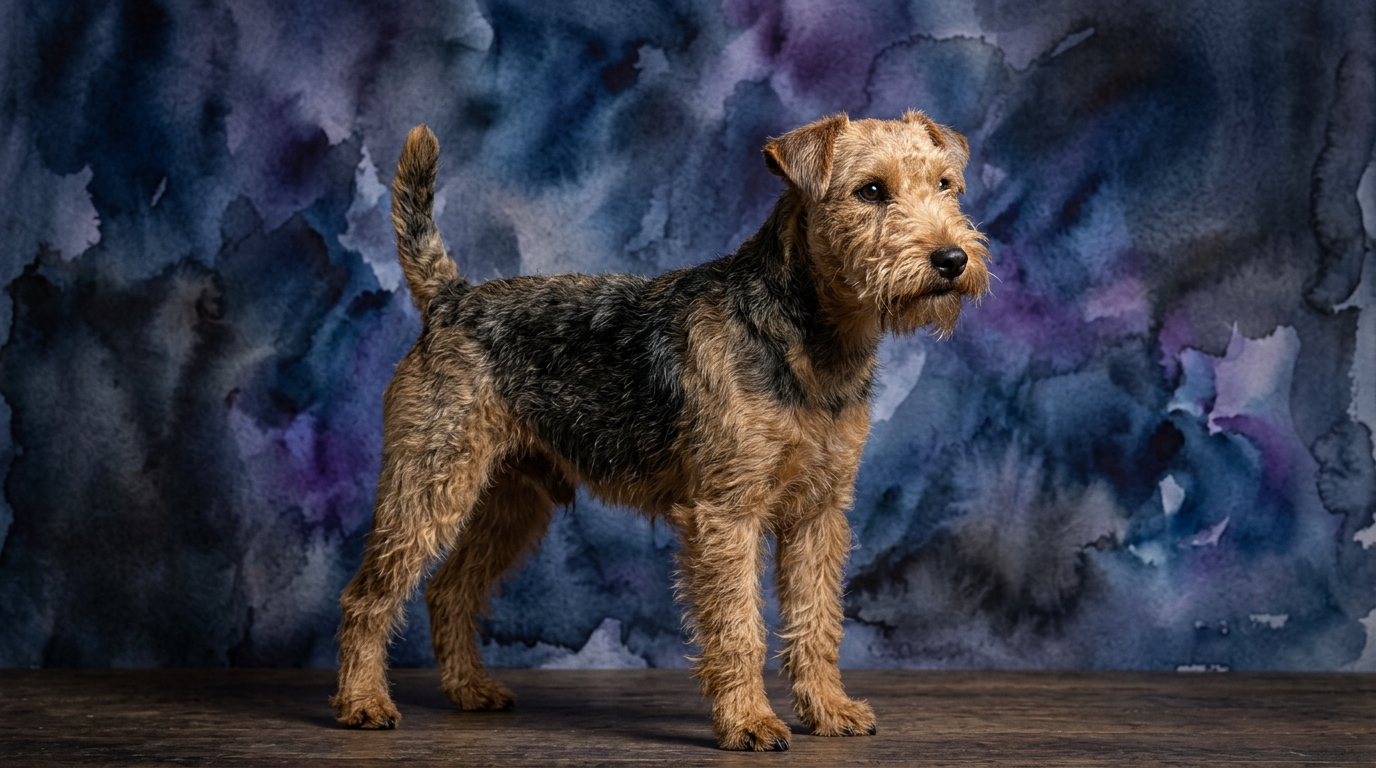
The Lakeland Terrier, while sharing the same 3/5 scores, applies its intelligence with a distinct terrier zest and agility. Their 3/5 in problem Solving often translates into quick, resourceful thinking, especially when faced with environmental challenges. A Lakeland might swiftly assess a situation, exploring various approaches to outmaneuver or outsmart an obstacle, driven by their historical role as vermin hunters. This isn't brute force; it's often a clever, almost strategic, mental process to achieve their objective.
Lakeland Terriers also show a 3/5 in training Speed, but this is often characterized by a keen desire to engage and learn, coupled with a propensity for boredom if tasks become repetitive. They pick up commands well when the training is varied, fun, and taps into their innate curiosity, but their independent spirit means they require a trainer who can keep them mentally stimulated and engaged. Their social Intelligence at 3/5 reflects a generally outgoing and confident nature, capable of forming strong bonds while also being more readily adaptable to new people and situations than some other terriers, though they retain a typical terrier wariness. The 3/5 instinctive Drive is a strong indicator of their working heritage; they possess a pronounced prey drive, an urge to explore, and a natural inclination to dig and hunt, making them alert and active companions. Their 3/5 memory means they are adept at remembering routines and commands, especially those associated with enjoyable activities or their natural instincts, ensuring that once a behavior is learned, it tends to stick.
Where the Bull Terrier Wins Cognitively
The Bull Terrier's cognitive strengths often lie in their remarkable tenacity and their profound capacity for focused dedication to a task, particularly when it involves their beloved people or a highly motivating reward. While their problem-solving scores are identical, a Bull Terrier's 3/5 might manifest as an unyielding persistence in figuring out how to retrieve a deeply hidden toy or how to outsmart a puzzle feeder, driven by a powerful desire for the outcome. This isn't always about speed, but about an impressive, almost stubborn, resolve. Their social intelligence, while potentially more selective, allows them to develop an extraordinarily deep and empathetic bond with their chosen family members, often demonstrating a nuanced understanding of human emotions and routines within their intimate circle. This specific application of social intelligence can make them exceptionally attuned companions, offering a unique brand of loyal, steadfast affection.
Where the Lakeland Terrier Wins Cognitively
The Lakeland Terrier truly shines with its agile and quick-witted approach to its environment, a testament to its heritage as a working dog. While both breeds score 3/5 in problem-solving, a Lakeland's intelligence often presents as rapid assessment and adaptability, making them adept at navigating complex or changing situations with a certain cleverness. They possess a remarkable ability to 'think on their feet,' quickly devising solutions to immediate challenges, whether it's finding the fastest route through an obstacle course or figuring out how to get into a forbidden space using their agility and observation. Their instinctive drive, also a 3/5, is often channeled into a vibrant curiosity and an exploratory nature, making them keen observers of their surroundings and quick to investigate anything new. This cognitive nimbleness, combined with their strong memory, allows them to learn and adapt to diverse environments and experiences with impressive efficiency, making them excellent partners for varied activities.
Which is Easier to Train and Why
When considering ease of training, despite both breeds scoring 3/5 in training speed, their distinct temperaments create different experiences. The Bull Terrier, with its strong-willed and independent nature, often requires a trainer who is exceptionally patient, consistent, and uses positive reinforcement to build trust and motivation. Their learning isn't necessarily slow, but they possess a discerning mind and will often weigh whether a command is truly worth their effort. Training a Bull Terrier effectively means engaging their attention with high-value rewards and making sessions fun and varied, preventing boredom that can lead to stubbornness. They respond best to clear, unambiguous signals and a confident leader who understands their robust personality.
The Lakeland Terrier, while also an independent thinker typical of terriers, often presents a different set of training challenges and rewards. Their intelligence and eagerness to engage can make them quick learners, but their tendency towards boredom and their strong instinctive drive mean training must remain stimulating and novel. They thrive on variety and interactive games that tap into their natural curiosity and prey drive. A Lakeland might learn a command quickly, but might also decide to ignore it if something more interesting, like a squirrel, captures their attention. Therefore, training a Lakeland requires creativity, a sense of humor, and a commitment to maintaining their engagement through varied activities and consistent reinforcement, ensuring that their cleverness is channeled constructively rather than into mischievous pursuits.
Which Suits Active Owners vs. Relaxed Owners
For owners seeking a companion that thrives on consistent activity and mental engagement, the Lakeland Terrier is often an ideal match. Their robust instinctive drive and quick problem-solving skills mean they require regular physical exercise combined with plenty of mental stimulation. They excel with active owners who enjoy activities like hiking, agility, earthdog trials, or long, exploratory walks where their keen senses and agile minds can be put to good use. A Lakeland Terrier will quickly become bored and potentially mischievous if not given outlets for their energy and intelligence, making them less suitable for purely relaxed, sedentary lifestyles. They are best suited for individuals or families who are prepared to integrate their dog into an active, adventurous routine.
The Bull Terrier, while certainly not a couch potato, can adapt to a slightly less intensely active lifestyle, provided their needs for strong social connection and structured physical activity are met. They require regular exercise to maintain their muscular physique and mental well-being, but their activity often centers around playtime with their family, brisk walks, or controlled outdoor adventures. They are excellent companions for owners who appreciate a loyal, robust presence and are willing to provide consistent training and companionship. While they enjoy activity, their intelligence often manifests in a desire for engaging with their human companions rather than constant independent exploration, making them suitable for owners who can dedicate time to interactive play and training sessions, even if their overall lifestyle isn't one of constant high-octane adventure. They can be a good fit for owners who are relaxed in their demeanor but committed to providing structured engagement and a strong, loving bond.
The Verdict: Choosing Your Canine Companion
The Verdict
Choose the Bull Terrier if you value a loyal, robust companion with a unique personality and are prepared for consistent, patient training to navigate their strong will, offering a profound, steadfast bond.
Opt for the Lakeland Terrier if you lead an active, adventurous lifestyle and seek a quick-witted, agile companion who thrives on varied mental and physical challenges, bringing an energetic, curious spirit to every day.
🧠 Find Your Pet's IQ Score
Our Pet IQ Lab assessment covers 25+ tests across 5 cognitive dimensions — personalized to your breed.
Take the Full IQ Test →Frequently Asked Questions
Do Bull Terriers and Lakeland Terriers have similar energy levels?
While both are energetic terriers, their energy manifests differently. Lakeland Terriers typically possess a higher, more consistent drive for independent exploration and activity, whereas Bull Terriers often prefer to engage in structured play and activities with their human companions, though they still require substantial exercise.
Are these breeds good with children?
Both breeds can be good with children when properly socialized from a young age and raised in a household that teaches respect for animals. However, a Bull Terrier's robust play style might be better suited for older, more respectful children, while a Lakeland's spirited nature requires supervision to ensure positive interactions.
What kind of mental stimulation do these breeds need?
Bull Terriers benefit from puzzle toys, interactive games with their owners, and consistent training to challenge their problem-solving skills and prevent boredom. Lakeland Terriers thrive on varied activities like scent work, agility, and exploration that tap into their keen senses and natural hunting instincts, requiring constant mental engagement to satisfy their clever minds.