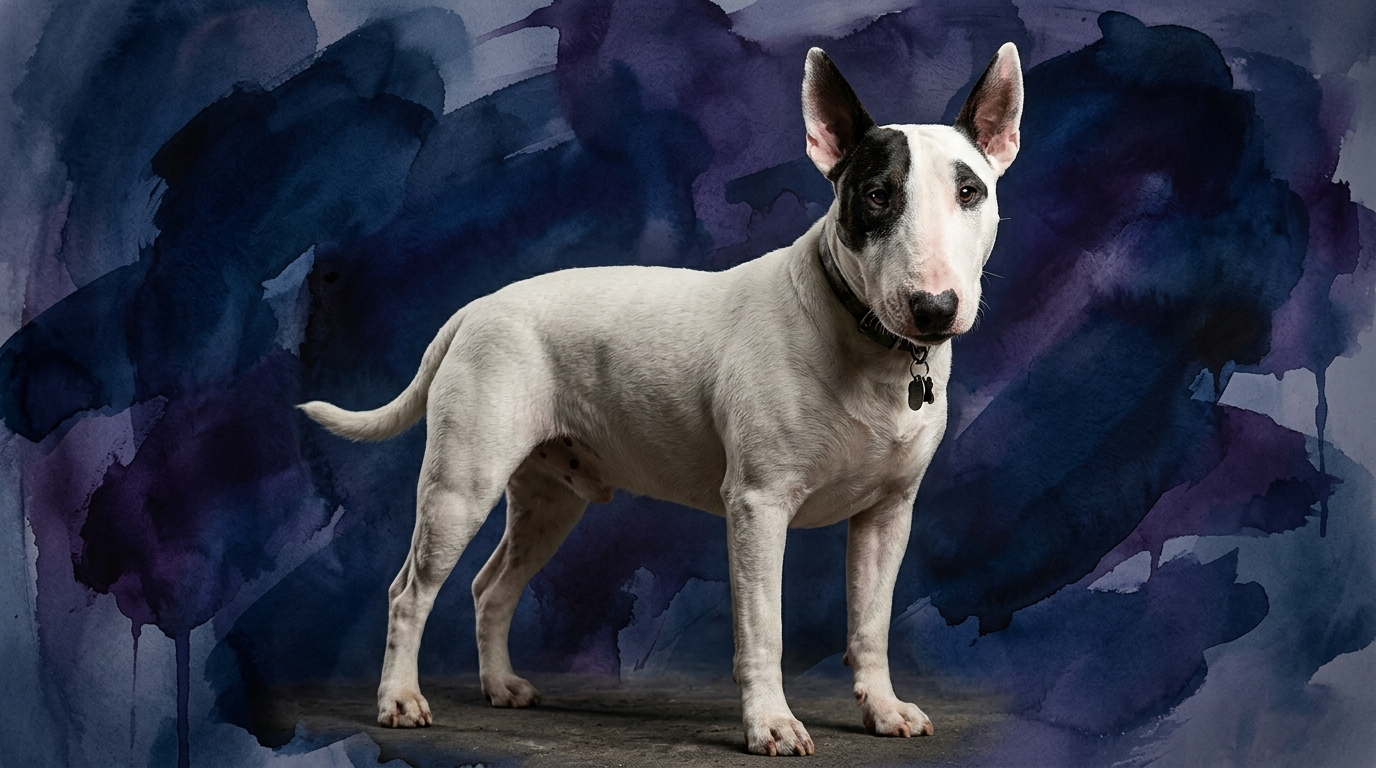
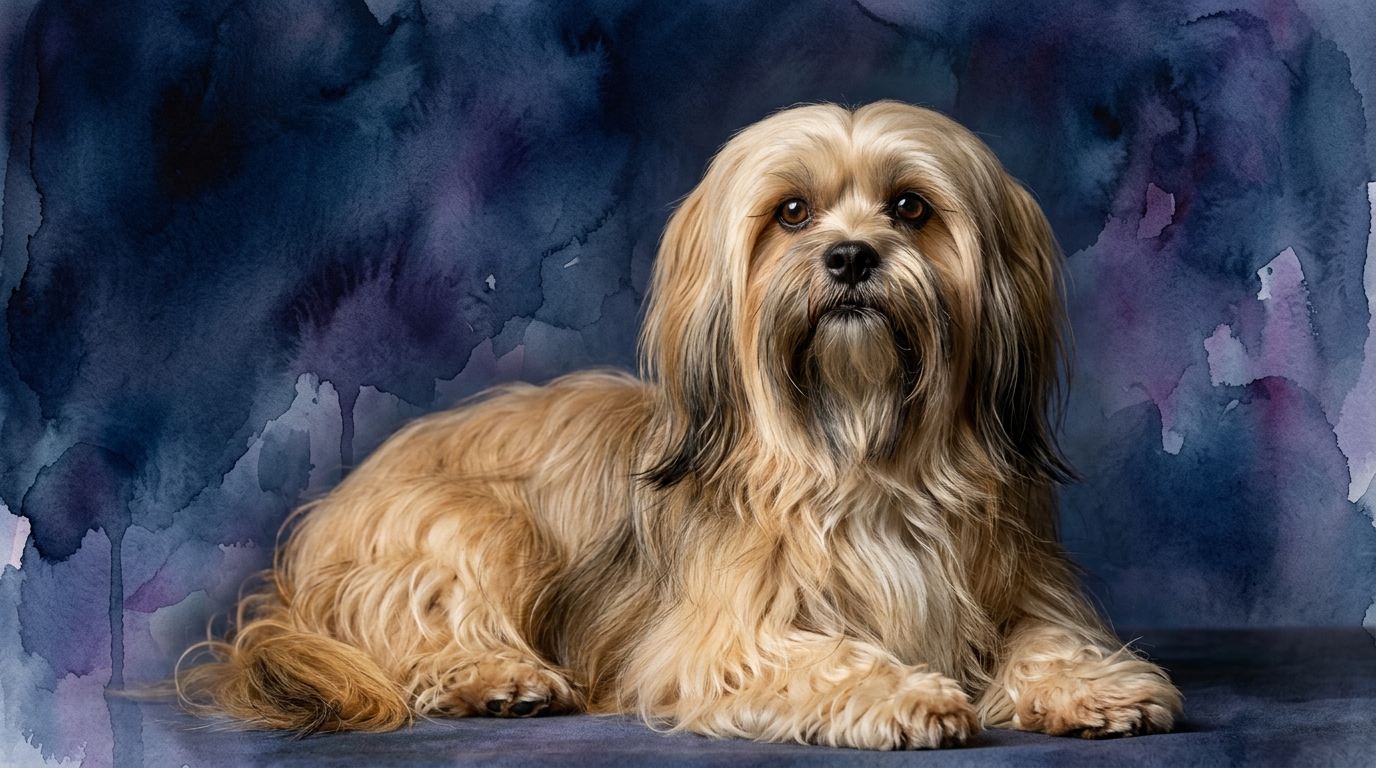
Side-by-Side Cognitive Profiles: More Than Just Numbers
Delving into the cognitive makeup of the Bull Terrier and the Lhasa Apso through The Cosmic Pet Pet IQ Lab presents an intriguing revelation: both breeds consistently score 3 out of 5 across all five dimensions of intelligence – problem solving, training speed, social intelligence, instinctive drive, and memory. This numerical equivalence, however, only tells part of the story; the true fascination lies in how these identical scores translate into distinct behavioral patterns and cognitive expressions, deeply influenced by their ancestral roles and physical attributes.
For the Bull Terrier, a 3/5 in problem solving often manifests as a tenacious, physical approach to challenges, whether it's figuring out how to retrieve a toy from a tight spot or persistently digging. Their training speed, also a 3/5, suggests they are capable learners but require engaging methods and consistency to overcome their independent streak, a hallmark of their terrier heritage. A 3/5 in social intelligence means they are typically devoted to their immediate family but can be direct in their interactions with strangers or other dogs, benefiting greatly from early socialization. Their instinctive drive, rated 3/5, is often channeled into vigorous play, pursuit games, and a determined focus on tasks they find stimulating. Finally, their 3/5 memory allows them to retain routines and commands effectively, provided they are reinforced consistently.
The Lhasa Apso, sharing the same 3/5 across the board, interprets these scores through a different lens. Their problem-solving at 3/5 often involves clever, sometimes subtle, manipulation of their environment or human companions to achieve desired outcomes, rather than brute force. Their training speed of 3/5 highlights their discerning nature; they learn best when they perceive a clear benefit or respect the trainer, often showing an independent streak that can be mistaken for stubbornness. A 3/5 in social intelligence is expressed as a keen ability to differentiate between family and strangers, making them excellent, albeit sometimes vocal, watchdogs. Their instinctive drive, also 3/5, is predominantly territorial and protective, focusing on vigilance and guarding. Their 3/5 memory is adept at recalling who belongs and who doesn't, contributing to their selective social interactions and their ability to anticipate household routines.
Despite their identical scores, the Bull Terrier and Lhasa Apso demonstrate how a dog's inherent breed characteristics heavily influence the practical application of their cognitive abilities. The Bull Terrier's robust physicality and working-class history lend themselves to a more overt, energetic display of intelligence, while the Lhasa Apso's ancient role as a sentinel within Himalayan monasteries has cultivated a more nuanced, discerning, and subtly strategic cognitive style. Understanding these manifestations is key to appreciating their unique intellectual contributions.
Where the Bull Terrier Cognitively Excels
The Bull Terrier, with its 3/5 cognitive scores, particularly shines in scenarios demanding physical engagement and a robust persistence. Their problem-solving ability, while moderate, is often coupled with a powerful physical presence, enabling them to tackle puzzles or retrieve objects that require more than just mental dexterity—they bring a determined physical effort to the task. This tenacity, rooted in their breed history, means they are not easily deterred once they set their mind to something, whether it's figuring out how to get to a dropped toy under furniture or mastering a complex agility course.
Furthermore, their 3/5 instinctive drive, combined with a moderate memory, makes them particularly adept at learning and performing sequences of physical activities. Owners who engage them in structured play, scent work, or obedience training that incorporates movement will observe their focus and endurance. They exhibit a purposeful energy, applying their cognitive resources to physically demanding tasks with a vigor that can be truly impressive, making them responsive partners in active pursuits.
Where the Lhasa Apso Cognitively Shines
The Lhasa Apso's 3/5 cognitive profile often manifests as a more subtle, observational intelligence, particularly in their problem-solving. Rather than direct physical force, a Lhasa Apso might employ clever strategies, such as persistent vocalization, strategic positioning, or even 'training' their owners through consistent cues to achieve their desires. Their ability to read situations and human emotions, while scoring 3/5 in social intelligence, often appears more refined and discerning, making them adept at navigating complex household dynamics.
Their moderate memory, combined with their instinctive drive for guardianship, allows them to excel at identifying and remembering who belongs in their territory and who does not. This translates into an impressive ability to recall past interactions, informing their judgments about strangers or new situations with a level of cautious assessment. This discerning nature, while sometimes perceived as aloofness, is a testament to their focused social intelligence and contributes to their effectiveness as a vigilant, albeit independent, companion.
Training Dynamics: Independence vs. Tenacity
Neither the Bull Terrier nor the Lhasa Apso are breeds that typically offer immediate, eager compliance, both scoring 3/5 in training speed. The Bull Terrier's training journey is often marked by their exuberant energy and a strong-willed, occasionally stubborn nature. They require trainers who can harness their tenacity through positive reinforcement, making sessions fun and engaging to prevent boredom and maintain their focus. Their moderate memory necessitates consistent repetition to solidify learned behaviors, particularly in distracting environments. Success with a Bull Terrier comes from channeling their physical drive and making training feel like a rewarding game.
The Lhasa Apso's training challenges stem from their independent and somewhat regal disposition; they are not inherently motivated by pleasing their human. Their 3/5 social intelligence means they learn best when they respect the trainer and perceive a clear benefit to themselves, often evaluating commands before complying. House-training can be a particular hurdle due to their territorial instincts and moderate memory for designated elimination areas. Both breeds demand patience, short and engaging sessions, and a deep understanding of their individual motivations to achieve consistent and reliable results.
Lifestyle Match: Active Engagement vs. Regal Companionship
For active owners seeking a robust partner, the Bull Terrier, with its 3/5 instinctive drive and sturdy build, presents an excellent choice. They thrive on structured exercise, interactive play, and mental challenges that tap into their problem-solving skills and moderate memory. Owners who enjoy long walks, vigorous games of fetch, or even participation in dog sports will find a fulfilling connection, as their social intelligence allows them to form strong, affectionate bonds within their family unit. They need an environment that allows them to expend their physical and mental energy productively.
Conversely, the Lhasa Apso is often a better fit for more relaxed owners who appreciate a discerning and independent companion. While they benefit from regular, moderate exercise, their 3/5 instinctive drive is more geared towards guarding and companionship than intense physical activity. Their moderate social intelligence means they are content observing and interacting on their own terms, providing a dignified and watchful presence. They flourish in a calm home environment where their moderate memory allows them to settle into predictable routines, offering loyal, albeit sometimes aloof, companionship.
The Verdict
Choose a Bull Terrier if you seek a tenacious, physically engaged companion for active pursuits and enjoy a dog that approaches challenges with determined vigor, thriving on consistent, fun training.
Opt for a Lhasa Apso if you prefer a discerning, independent companion who excels at subtle communication and thrives in a stable home environment, offering loyal guardianship with a touch of regal aloofness.
🧠 Find Your Pet's IQ Score
Our Pet IQ Lab assessment covers 25+ tests across 5 cognitive dimensions — personalized to your breed.
Take the Full IQ Test →Frequently Asked Questions
Do Bull Terriers and Lhasa Apsos learn at the same pace?
Both breeds score 3/5 in training speed, indicating a moderate learning pace. However, their motivations differ: Bull Terriers learn best with engaging, physical activities, while Lhasa Apsos require clear benefits and respect for the trainer due to their independent nature.
How do their problem-solving skills differ despite identical scores?
A Bull Terrier's 3/5 problem-solving often involves direct, physical manipulation and persistence. In contrast, a Lhasa Apso's 3/5 problem-solving tends towards clever observation and strategic manipulation of their environment or human behavior to achieve desired outcomes.
Are either of these breeds good for first-time dog owners?
Both breeds, with their moderate training speed and independent streaks, can be challenging for first-time owners. They require consistent, patient training and socialization, making them more suitable for owners prepared to invest significant time and effort into understanding their unique cognitive and behavioral needs.