
Side-by-Side Cognitive Profiles: Bull Terrier vs. Rat Terrier
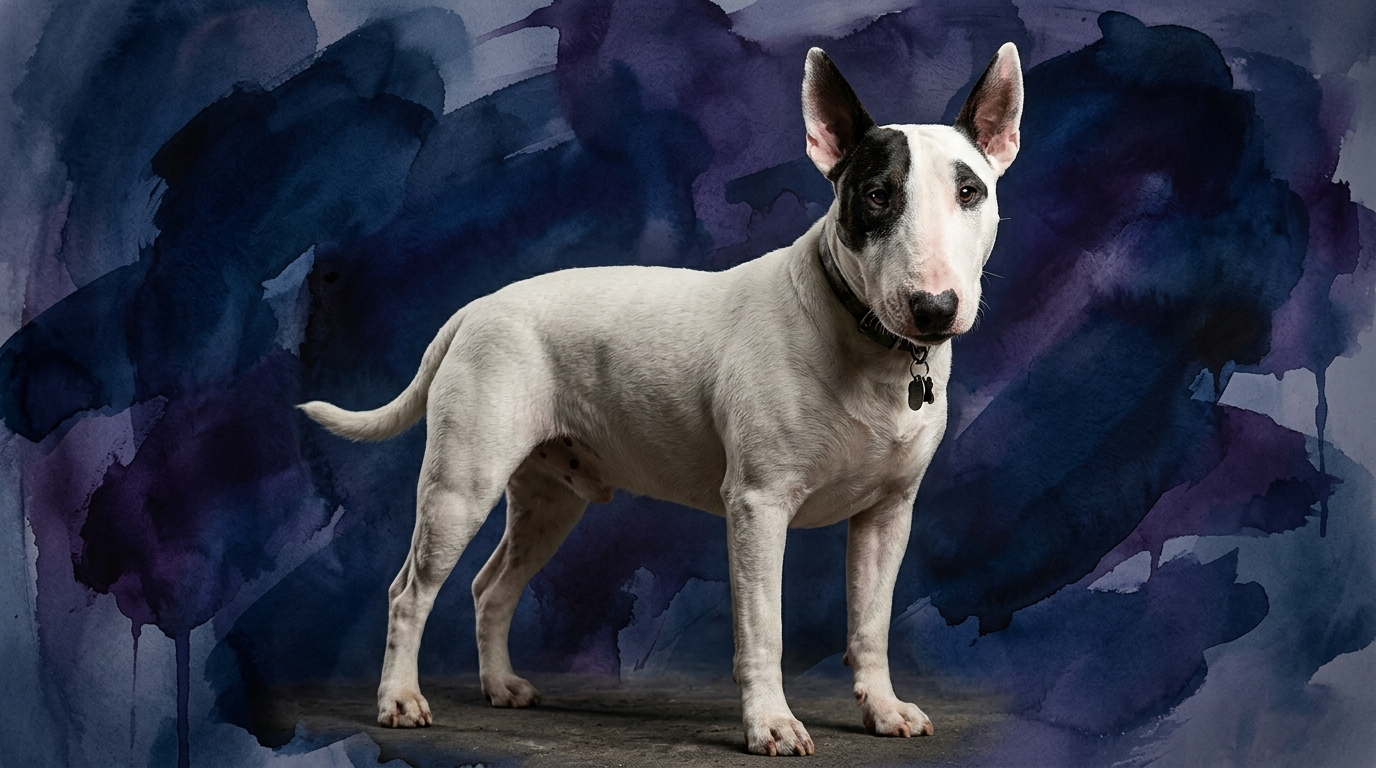
Delving into the Bull Terrier's cognitive makeup, we find a breed with a Coren rank of #66, indicating an average working and obedience intelligence. Their Problem Solving is rated 3/5, meaning they demonstrate moderate aptitude in navigating challenges, often employing persistence and physical strength to achieve goals. Their approach can be direct, sometimes requiring guidance to find the most efficient solution rather than brute force. Training Speed is also 3/5; these dogs possess an average capacity for learning new commands, understanding instructions at a steady pace. However, their independent and sometimes stubborn nature means that consistency and positive reinforcement are crucial to translate understanding into reliable execution. Social Intelligence at 3/5 indicates Bull Terriers are moderately adept at interpreting human cues and social dynamics within their established family unit. They form strong bonds and can be protective, but may be more reserved or less overtly expressive with strangers or in new social settings. Their Instinctive Drive, rated 3/5, manifests as a blend of protective instincts and a moderate prey drive. This score reflects a dog that is aware of its surroundings and potential threats, and while not excessively driven by instinct, can certainly be motivated by it. Finally, Memory at 3/5 means Bull Terriers exhibit an average memory for learned commands, routines, and experiences. They recall past training and associations, which aids in maintaining learned behaviors over time, though occasional refreshers are beneficial.
The Rat Terrier, while not Coren-ranked, presents an intriguing comparison with identical raw scores across the board. Their Problem Solving is 3/5, showing a moderate ability to figure out puzzles and overcome obstacles. They are often quick to assess situations and can devise clever, if sometimes mischievous, solutions, leveraging their agility and sharp senses. Training Speed, also 3/5, means these compact Terriers learn commands at an average rate, often picking up new tasks with enthusiasm. Their quickness can be a double-edged sword; while they grasp concepts readily, their high energy and potential for distraction demand engaging and varied training sessions. Social Intelligence at 3/5 displays moderate social perceptiveness, particularly within their immediate family. They are attuned to their owners' moods and intentions, often eager to please, though they can be more reserved or cautious around unfamiliar people or animals. Their Instinctive Drive, rated 3/5, is primarily rooted in a strong prey drive, reflecting their history as vermin hunters. This score indicates a dog that is alert, responsive to environmental stimuli, and possesses a natural inclination to chase and capture small fast-moving objects. Their Memory, also 3/5, signifies an average capacity for remembering training, routines, and experiences. They retain information effectively, allowing them to build upon previous learning, making consistent reinforcement valuable for long-term retention.
Where the Bull Terrier Wins Cognitively
Despite identical raw scores, the Bull Terrier's cognitive strengths often lean towards a more robust, independent application of their intellect. Their problem-solving, while rated 3/5, often involves a determined, single-minded focus that can be advantageous in tasks requiring persistence. For instance, a Bull Terrier might spend a considerable amount of time figuring out how to retrieve a toy from a difficult spot, relying on their physical strength and unwavering resolve rather than delicate manipulation. This steadfastness, combined with their moderate social intelligence, often translates into a dog that, once committed to a task or a person, demonstrates remarkable loyalty and follow-through, even if it takes a bit longer to get there. Their memory, while average, reinforces this persistence, allowing them to recall successful strategies for overcoming past hurdles.
This distinct cognitive profile means that Bull Terriers can excel in activities that demand endurance and a certain degree of mental toughness. While not always the quickest to grasp a new concept, once it clicks, their retention can be solid, and their application of that learning is often unwavering. This makes them particularly suited for owners who appreciate a dog with a strong will and who are prepared to engage with their dog's unique blend of physical and mental tenacity, guiding their considerable resolve towards constructive outcomes rather than letting it manifest as stubbornness.
Where the Rat Terrier Wins Cognitively
The Rat Terrier, while also scoring 3/5 across the board, showcases its cognitive strengths through a different lens: agility of thought and a keen, responsive nature. Their problem-solving, though rated identically, often manifests as a quick, exploratory approach, using their sharp senses and nimble bodies to investigate and manipulate their environment. For example, a Rat Terrier might quickly assess multiple routes to a hidden treat, opting for the most efficient path with minimal hesitation, rather than a forceful, persistent effort. This quickness of thought, combined with their moderate social intelligence, makes them highly responsive to subtle environmental cues and human intentions, often appearing to anticipate commands or situations. Their instinctive drive, heavily geared towards prey, also sharpens their focus and reaction times in specific contexts.
This breed's cognitive edge lies in its vivacity and adaptability, making them excel in dynamic situations. While their memory is rated 3/5, their ability to rapidly link cause and effect in fast-paced scenarios is impressive. They thrive on novelty and mental stimulation that taps into their natural curiosity and energy. Owners who value a dog that is quick on its feet, both physically and mentally, and enjoys engaging in varied, stimulating activities will find the Rat Terrier's cognitive style particularly rewarding. Their intelligence shines in their ability to react swiftly and learn from immediate feedback, making them excellent companions for interactive games and agility sports.
Training Dynamics: Bull Terrier vs. Rat Terrier
Comparing ease of training between the Bull Terrier and Rat Terrier reveals nuances beyond identical "Training Speed 3/5" scores. The Rat Terrier often presents as easier to train for a wider range of activities due to their inherent eagerness to engage and their quick, responsive nature. Their strong prey drive, while needing management, can also be channeled into highly motivating play-based training. They tend to pick up commands swiftly, and their agility of thought means they can adapt to new training methods or environments with less resistance. However, their high energy and potential for distraction mean that training sessions must be kept stimulating and relatively short to maintain focus.
The Bull Terrier, on the other hand, while capable of understanding commands at an average pace, requires a more patient and consistent approach. Their independent streak and occasional stubbornness mean that convincing them to *perform* a command reliably can be more challenging than simply teaching them to *understand* it. Success with a Bull Terrier often hinges on building a strong, trusting relationship and employing positive reinforcement techniques that appeal to their desire for companionship and routine. Their training benefits from clear boundaries and a firm, yet gentle, hand that guides their considerable will, rather than trying to overpower it. Therefore, while both require commitment, the Rat Terrier's eagerness can make initial training phases feel more fluid, whereas the Bull Terrier demands a deeper, more consistent investment in motivation and rapport.
Lifestyle Match: Active Owners vs. Relaxed Owners
When considering lifestyle compatibility, the distinctions in how Bull Terriers and Rat Terriers apply their cognitive abilities become quite clear. The Rat Terrier, with its quick intellect and high energy levels, is an ideal match for active owners. These dogs thrive on consistent physical and mental engagement, enjoying activities like agility, flyball, hiking, or long, varied walks that stimulate both their bodies and minds. Their quick problem-solving and responsive nature make them excellent partners for interactive games and canine sports where rapid decision-making is key. An owner who enjoys a dynamic, on-the-go lifestyle and can provide ample opportunities for exercise and novel experiences will find the Rat Terrier a joyously engaging companion.
The Bull Terrier, while also requiring regular exercise, often fits better with owners who appreciate a more structured, perhaps less frenetic, pace. Their persistence in problem-solving and moderate instinctive drive mean they benefit from consistent routines and mentally stimulating activities that don't necessarily require constant high-speed action. While they enjoy play and walks, they are often content with a good chew toy or a puzzle game at home after their exercise needs are met, settling into a relaxed family environment. Their social intelligence, while strong within their family, means they are often more content with familiar surroundings and people. Therefore, a relaxed owner who can provide consistent guidance, structure, and a deep bond, alongside moderate daily activity, will find the Bull Terrier's steadfast companionship deeply rewarding.
The Verdict
Choose a Bull Terrier if you value a steadfast, persistent companion who thrives on consistent guidance and a strong bond, appreciating their unwavering resolve in problem-solving and loyal companionship.
Opt for a Rat Terrier if you seek an agile, quick-witted partner eager for diverse activities and mental challenges, ready to engage in dynamic play and respond swiftly to new stimuli.
🧠 Find Your Pet's IQ Score
Our Pet IQ Lab assessment covers 25+ tests across 5 cognitive dimensions — personalized to your breed.
Take the Full IQ Test →Frequently Asked Questions
Do Bull Terriers and Rat Terriers learn at the same pace?
While both breeds score 3/5 in training speed, their learning styles differ. Rat Terriers often grasp concepts quickly due to their eagerness, but require consistent engagement to manage potential distractions. Bull Terriers understand at an average pace but may need more motivation and patience to consistently execute commands due to their independent nature.
Which breed is better at puzzle toys?
Both breeds can enjoy puzzle toys. Rat Terriers might approach them with quick, agile exploration, leveraging their sharp senses to find solutions rapidly. Bull Terriers might exhibit more persistent, focused effort, sometimes using physical strength to solve puzzles, demonstrating remarkable determination.
How does their social intelligence impact family life?
Both breeds have moderate social intelligence. Bull Terriers typically form deep, protective bonds with their immediate family, often showing reservedness with strangers. Rat Terriers are also attuned to their family's moods and can be eager to please, though they might be cautious or bark at unfamiliar people or situations, reflecting their alert nature.