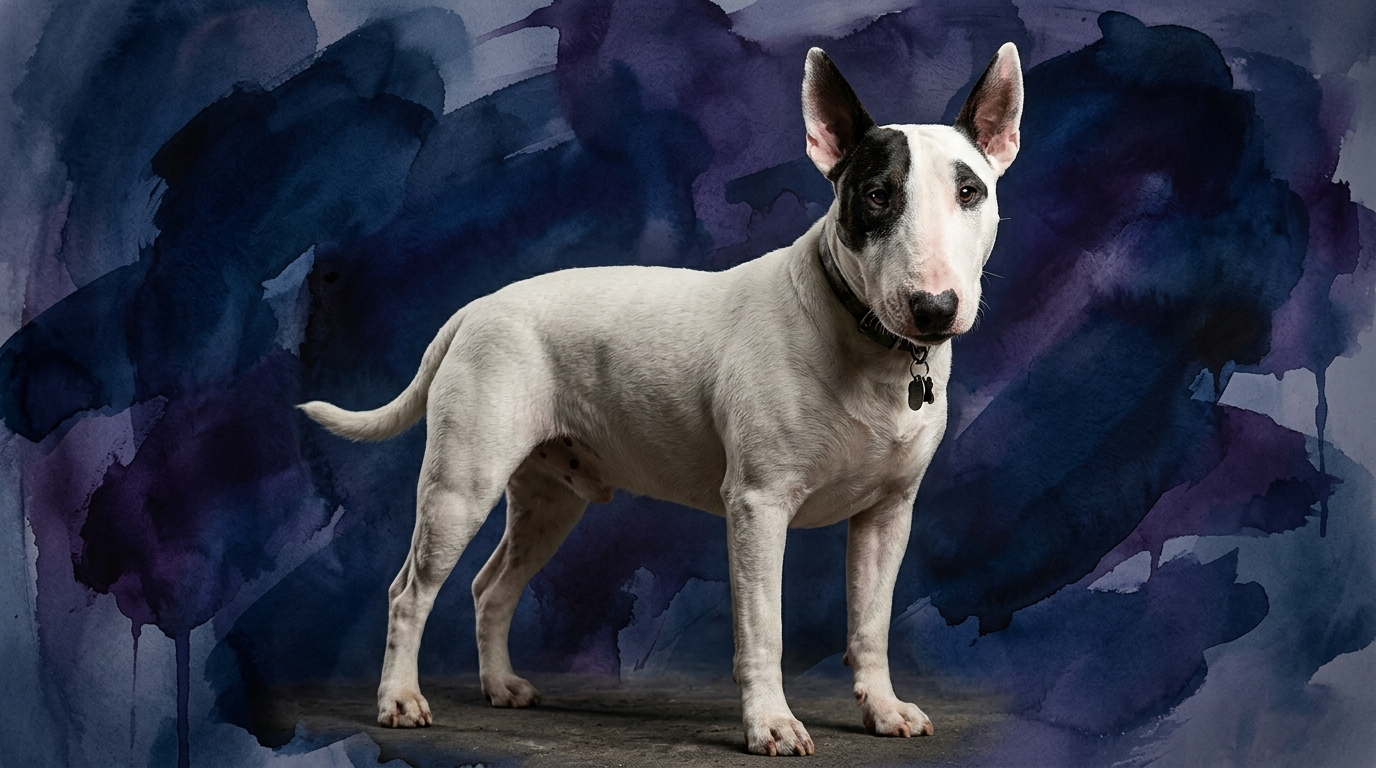
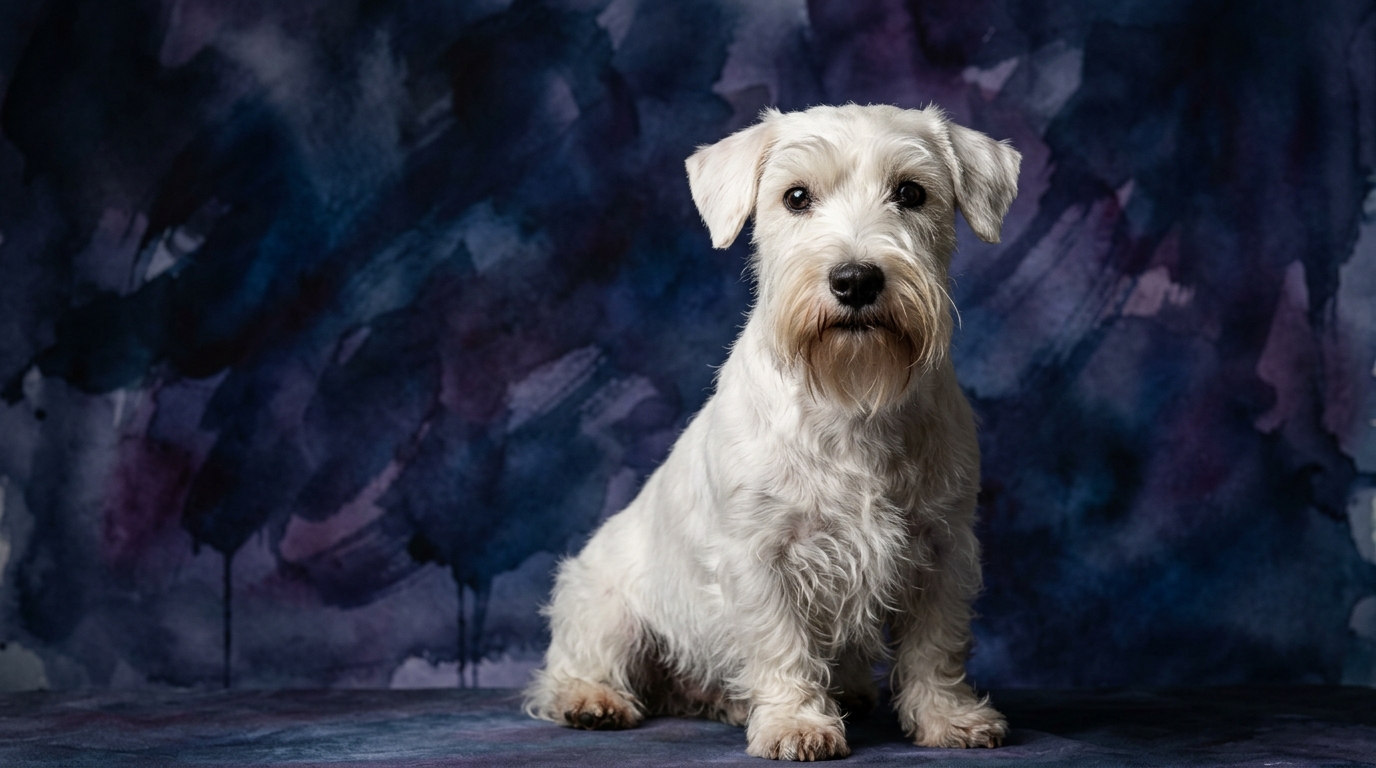
Side-by-Side Cognitive Profiles: A Deeper Look at 3/5 Scores
At The Cosmic Pet Pet IQ Lab, both the Bull Terrier and the Sealyham Terrier register a consistent 3/5 across all five cognitive dimensions: Problem Solving, Training Speed, Social Intelligence, Instinctive Drive, and Memory. This uniform scoring indicates that neither breed possesses an inherent, overwhelming advantage in any single cognitive area, suggesting a moderate, balanced intellectual capacity. However, understanding what a '3/5' truly means within the context of each breed's unique heritage is crucial.
For the Bull Terrier, a Coren rank of #66 places them firmly within the average working intelligence category, indicating a reasonable capacity for obedience and adaptive learning. Their 3/5 in Problem Solving often manifests as a clever, sometimes stubborn, determination to achieve their goals, whether it's figuring out how to open a cabinet or engaging in complex play. Their Training Speed at 3/5 means they grasp new commands at a moderate pace, but their strong will can sometimes make consistent execution a challenge. Social Intelligence at 3/5 suggests they are adept at navigating human family dynamics, often forming strong bonds and understanding subtle cues, though sometimes with a boisterous enthusiasm. An Instinctive Drive of 3/5 reflects a moderate prey drive and robust protective instincts, often channeled into vigorous play or guarding behaviors. Finally, their Memory at 3/5 indicates they retain learned behaviors and routines fairly well, remembering past interactions and boundaries over time.
The Sealyham Terrier, while not Coren-ranked, also exhibits a 3/5 across the board. Their 3/5 in Problem Solving is frequently applied to more independent, self-directed tasks, such as navigating complex outdoor environments or strategizing to pursue a scent, reflecting their historical role as a tenacious hunter. Training Speed at 3/5 means they are capable learners, but their independent spirit and deep-seated terrier instincts often mean they prioritize their own objectives, requiring patient and creative motivation. Their Social Intelligence, also 3/5, tends to be finely tuned for smaller, familiar social circles, reading cues within their immediate family or assessing potential 'prey' with sharp discernment, rather than seeking broad social appeasement. An Instinctive Drive of 3/5 in a Sealyham is particularly potent, manifesting as a strong, focused drive for digging, exploring, and scent work, a direct legacy of their badger and otter hunting past. Their Memory at 3/5 allows them to recall specific locations of interest, learned hunting paths, or where they last encountered an intriguing smell, making them effective independent operators.
Where the Bull Terrier Cognitively Excels
Despite identical 3/5 scores, the Bull Terrier’s cognitive strengths often shine in environments demanding robust social navigation and a certain level of cooperative problem-solving with humans. Their Coren rank of #66, while not a direct IQ measure, suggests a higher propensity for traditional obedience and a more readily channeled focus compared to unranked breeds. This means their 3/5 Training Speed, when combined with their 3/5 Social Intelligence, often translates into a dog that, with consistent guidance, is more inclined to integrate into complex human routines and respond to diverse commands.
The Bull Terrier’s 3/5 Problem Solving is frequently applied to understanding and manipulating their immediate social environment. They can be remarkably clever at discerning how to get attention, open doors, or engage in interactive puzzle toys that require abstract thought within a human-centric framework. Their 3/5 Memory, in this context, allows them to build a comprehensive mental map of their family’s habits, preferences, and the boundaries they've successfully tested, making them adept at learning and adapting to household rules, even if they sometimes choose to bend them.
Where the Sealyham Terrier Cognitively Excels
The Sealyham Terrier's cognitive prowess, while numerically similar, finds its true expression in independent, self-driven tasks that demand tenacity and acute environmental awareness. Their 3/5 Instinctive Drive is not merely a moderate urge; it is a highly focused, purpose-built instinct honed over generations for hunting vermin. This manifests in their 3/5 Problem Solving as an exceptional ability to navigate complex terrain, locate hidden scents, and devise strategies to access perceived prey, often with minimal human direction. They excel at tasks requiring persistence and an unwavering focus on a goal they've set for themselves.
Their 3/5 Social Intelligence, while not always outwardly demonstrative, is keenly attuned to the subtleties of their immediate surroundings and the intentions of other animals or perceived threats. They are observant and can quickly assess a situation, making independent judgments based on their ingrained hunting wisdom. The Sealyham's 3/5 Memory is particularly effective for remembering details about their territory, the locations of interesting smells, or the best routes through a challenging outdoor space, enabling them to operate with impressive self-sufficiency in relevant contexts.
Which is Easier to Train and Why
Despite both breeds scoring a 3/5 in Training Speed, the Bull Terrier generally presents as easier to train for traditional obedience. Their Coren ranking indicates a greater willingness to comply with human directives, and their 3/5 Social Intelligence often translates into a desire to please their primary caregivers, strengthening the training bond. While they possess a strong will, a Bull Terrier typically responds well to positive reinforcement and consistent methods, learning commands and routines at a moderate pace, often eager to engage in structured activities with their owners. Their 3/5 Memory helps solidify learned behaviors over time, provided the training is clear and consistent.
The Sealyham Terrier, conversely, can be more challenging for conventional training, not due to a lack of cognitive capacity (their 3/5 Training Speed is equal), but because of their profound independence and powerful 3/5 Instinctive Drive. Their historical role demanded self-reliance and the ability to make decisions without human oversight, leading to a temperament that, while intelligent, is less inherently inclined towards eager obedience. Training a Sealyham requires immense patience, creativity, and a deep understanding of their terrier nature, often leveraging their natural drives in a structured manner. They learn, but they often require more compelling motivation and may decide if a command aligns with their own agenda before complying, making their 3/5 Problem Solving a double-edged sword in a training context.
Suitability for Active vs. Relaxed Owners
For active owners seeking a robust, engaging companion, the Bull Terrier often proves to be an excellent match. Their 3/5 Instinctive Drive, while moderate, combines with their strong physique and playful nature to demand regular, vigorous exercise and mental stimulation. They thrive on interactive games, long walks, and activities that challenge their 3/5 Problem Solving, such as agility or advanced obedience. An active owner who can consistently provide structured outlets for their energy and intelligence will find a Bull Terrier to be a loyal and enthusiastic partner, preventing boredom-induced behaviors and fostering their 3/5 Social Intelligence through shared adventures.
The Sealyham Terrier, while also requiring regular activity, may suit owners who appreciate a more independently-minded companion, perhaps falling between truly relaxed and highly active. Their 3/5 Instinctive Drive, particularly for scenting and digging, means they need opportunities to explore and engage these natural behaviors, making secure outdoor spaces and varied walks essential. While they enjoy interaction, their 3/5 Social Intelligence often means they are content with periods of independent activity after their exercise needs are met, making them less demanding of constant human engagement than some other breeds. Owners who enjoy observing their dog's self-directed problem-solving and appreciating their tenacious spirit will find a Sealyham rewarding, provided their moderate exercise and mental stimulation needs are met in a way that respects their inherent independence.
The Verdict
Choose a Bull Terrier if you seek a robust, socially astute companion eager to engage in structured activities and integrate deeply into family life, and you are prepared for consistent, positive training to channel their strong will.
Opt for a Sealyham Terrier if you admire a tenacious, independent spirit with a keen focus on environmental exploration and scent work, and you are willing to embrace creative, patient training methods that respect their self-reliant nature.
🧠 Find Your Pet's IQ Score
Our Pet IQ Lab assessment covers 25+ tests across 5 cognitive dimensions — personalized to your breed.
Take the Full IQ Test →Frequently Asked Questions
Are Bull Terriers truly stubborn, given their 3/5 problem-solving and instinctive drive?
While their 3/5 scores indicate moderate problem-solving and drive, Bull Terriers can exhibit strong-willed behavior, which is often perceived as stubbornness. This stems from their determination to achieve their own goals and their tendency to weigh whether complying with a command is worthwhile, rather than a lack of understanding.
How does a Sealyham Terrier's hunting background influence its IQ, even with 3/5 scores?
The Sealyham's hunting background profoundly shapes how its 3/5 scores manifest. Its 3/5 instinctive drive is highly specialized for prey pursuit, influencing its problem-solving towards independent strategies for scenting and digging, and its memory for environmental details crucial to hunting, making its intelligence very purpose-driven.
Is the Coren ranking the definitive measure of a dog's intelligence for these breeds?
No, the Coren ranking primarily assesses 'working and obedience intelligence,' which reflects a dog's trainability and compliance. While the Bull Terrier's #66 rank suggests a moderate capacity for traditional training, the Sealyham's unranked status doesn't imply lower overall intelligence, but rather a different application of its cognitive abilities, as highlighted by the Pet IQ Lab's five dimensions.