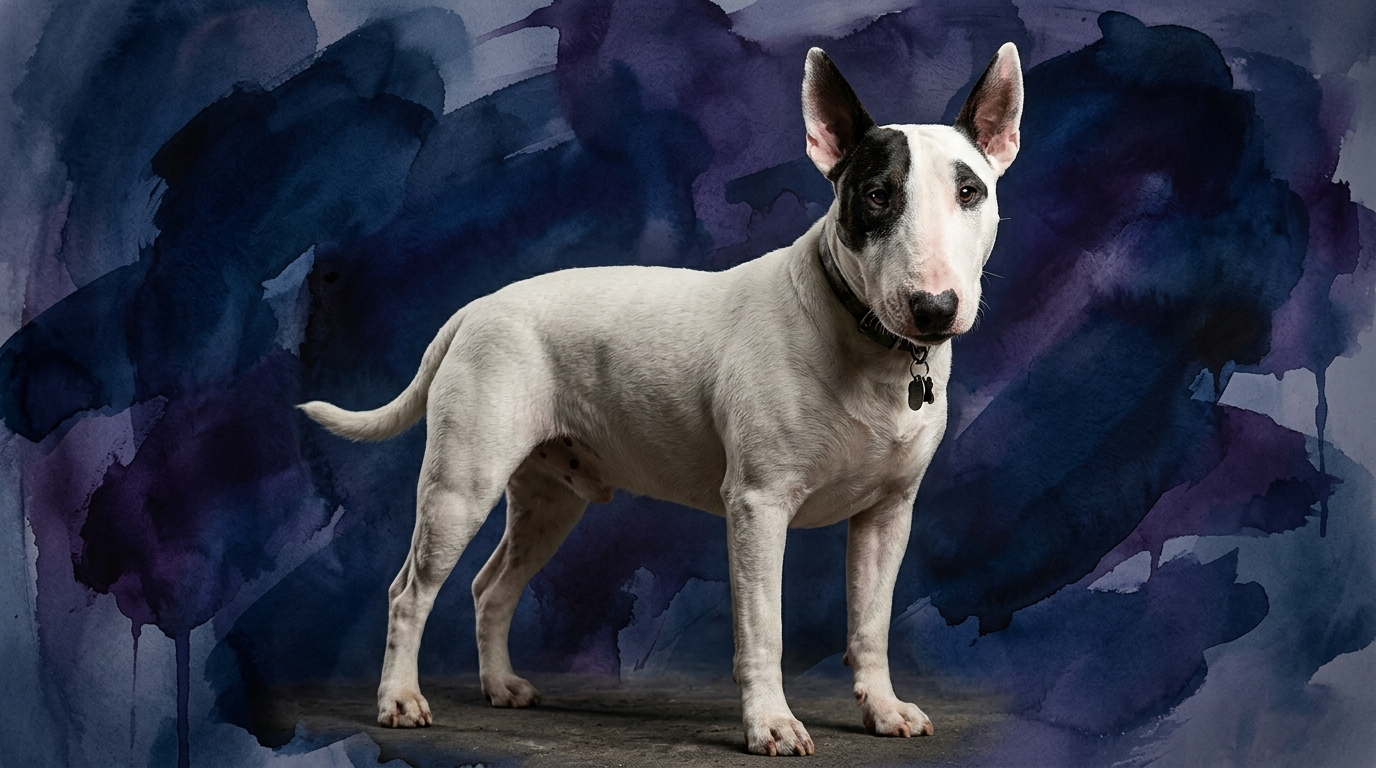
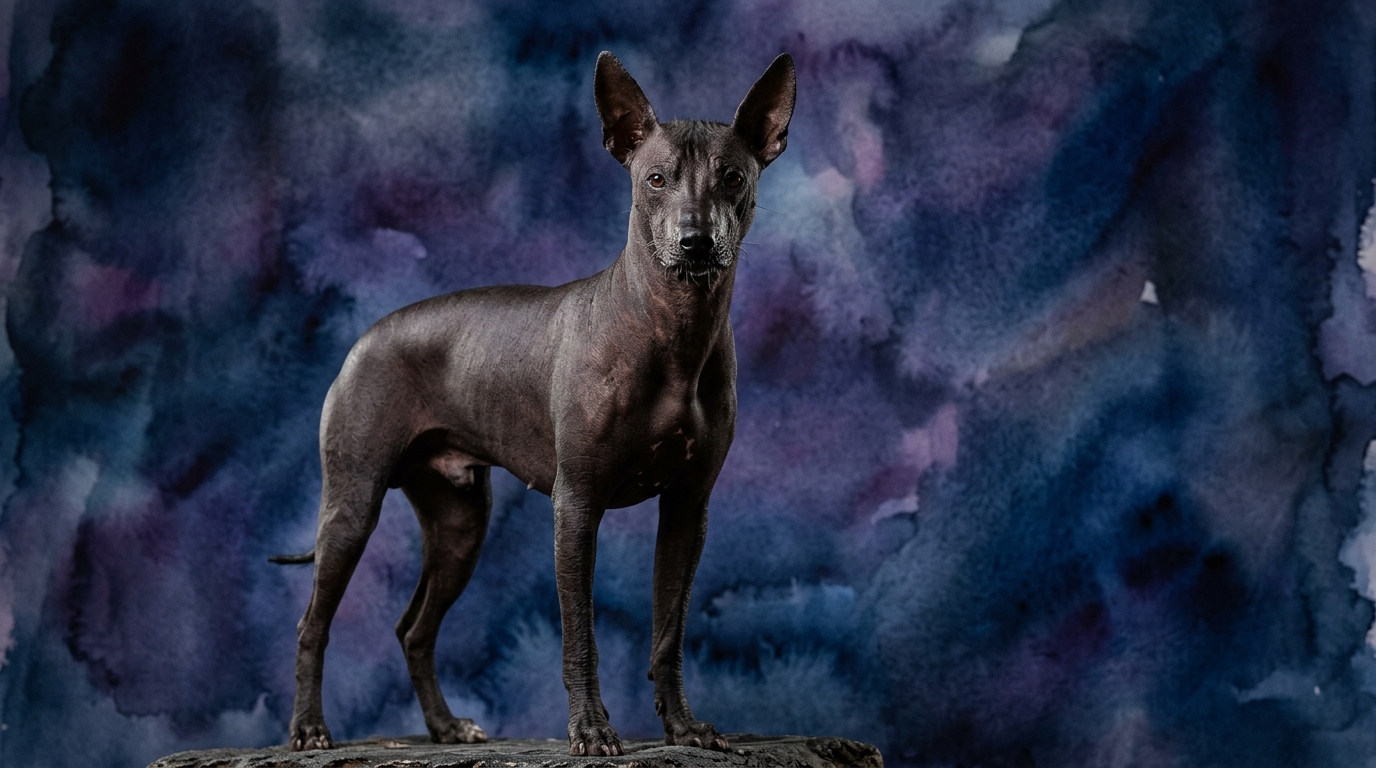
Side-by-Side IQ Profile: Bull Terrier vs. Xoloitzcuintli
At The Cosmic Pet Pet IQ Lab, we assess canine intelligence across five key dimensions, offering a nuanced view beyond simplistic labels. Both the Bull Terrier and the Xoloitzcuintli register a consistent 3 out of 5 across all metrics, suggesting a foundational level of cognitive competence that, while similar in score, manifests uniquely in each breed's daily life and learning.
For **Problem Solving**, both breeds score 3/5. The Bull Terrier often approaches novel challenges with a tenacious, sometimes clownish, persistence. Their solutions might involve trial-and-error, driven by a desire for engagement or a toy. The Xoloitzcuintli, with its ancient lineage, tends to observe and analyze before acting, often finding practical solutions rooted in efficiency and self-preservation, particularly concerning their environment or resources.
In **Training Speed**, both breeds achieve 3/5. A Bull Terrier can learn commands at a moderate pace, but their independent streak and occasional stubbornness mean that consistency and making training fun are paramount. They might understand quickly but choose to comply based on motivation. The Xoloitzcuintli, while equally capable of learning at a moderate speed, is a sensitive breed that thrives on positive reinforcement and clear communication; harsh methods can lead to withdrawal or resistance, impacting their perceived training speed.
**Social Intelligence** also stands at 3/5 for both. The Bull Terrier exhibits social intelligence through their often boisterous affection and ability to gauge moods, particularly within their immediate family, often seeking to be the center of attention. They understand social cues related to play and companionship. The Xoloitzcuintli, on the other hand, expresses its social intelligence through a more reserved, watchful demeanor. They are acutely aware of their family's emotional states and routines, often forming deep, almost telepathic bonds with their chosen humans, though they can be aloof with strangers.
Their **Instinctive Drive** is rated 3/5. The Bull Terrier's drive is often rooted in their terrier heritage, manifesting as a strong prey drive, a desire for physical activity, and a need for mental stimulation to prevent boredom. They are driven by interaction and purpose. The Xoloitzcuintli's instinctive drive is deeply tied to their historical role as guardians and companions. This includes a strong territorial instinct, a desire to be close to their pack, and an innate watchfulness, often expressed through keen senses and a tendency to alert to perceived threats.
Finally, for **Memory**, both breeds score 3/5. Bull Terriers possess a good memory for routines, commands, and experiences, both positive and negative, which influences their future interactions and learning. They remember where the treats are and who offers the best games. The Xoloitzcuintli also has a robust memory, particularly for people, places, and past events that have impacted them. They recall training cues reliably and remember those who have treated them kindly or poorly, influencing their interactions long-term.
Where the Bull Terrier Wins Cognitively
The Bull Terrier's cognitive strengths often shine in their approach to playful challenges and their sheer tenacity. While their problem-solving score is a 3/5, their unique combination of curiosity and a stubborn refusal to give up can make them excel in tasks requiring sustained effort, especially when a reward or engaging interaction is at stake. They possess a robust ability to adapt their playful tactics to elicit a reaction or achieve a desired outcome, often demonstrating a creative, albeit sometimes chaotic, brilliance in their pursuit of fun. Their strong desire for interaction and attention also means they are often more overtly engaged in human-initiated cognitive games, seeking to understand and participate actively.
Where the Xoloitzcuintli Wins Cognitively
The Xoloitzcuintli's cognitive advantages often lie in their observational acumen and nuanced social understanding within their trusted circle. Despite an identical 3/5 for social intelligence, their ancient guardian role has honed a subtle perceptiveness; they excel at reading unspoken cues and anticipating routines, often knowing what their human intends before a command is given. This sensitivity allows them to pick up on subtle changes in their environment or their owner's mood with remarkable accuracy. Their quiet intelligence translates into a refined ability to assess situations, making them less prone to impulsive actions and more inclined towards thoughtful, calculated responses, particularly concerning the welfare of their family.
Which is Easier to Train and Why
While both breeds hold a 3/5 in training speed, the practical experience of training them can differ significantly due to their distinct temperaments. The Bull Terrier, despite their capacity to learn, often presents a challenge due to their independent nature and occasional stubbornness. They require an owner who can make training highly engaging, consistent, and fun, often needing creative methods to bypass their 'terrier brain' that might prefer to do its own thing. Training a Bull Terrier demands patience, a sense of humor, and an understanding of their deep desire for connection, using positive reinforcement to channel their spirited energy.
The Xoloitzcuintli, on the other hand, is generally more sensitive and deeply attuned to their owner's emotions. While they also require consistency, their learning is enhanced by a calm, gentle approach. They are less likely to outright defy but can become withdrawn or resistant if training methods are harsh or inconsistent. Their social intelligence means they quickly grasp what is expected when taught clearly and positively, but their aloofness with strangers and strong protective instincts mean early, consistent socialization is critical. An owner who understands their nuanced communication and builds a trusting relationship will find the Xoloitzcuintli a willing and eager student, albeit one who may take a bit longer to open up to new people or environments during training sessions.
Which Suits Active Owners vs. Relaxed Owners
For active owners, the Bull Terrier often aligns perfectly with a lifestyle that embraces regular physical activity and mental engagement. Their spirited nature and robust build mean they thrive on daily walks, vigorous play sessions, and even dog sports like agility or obedience. An active owner who can provide consistent stimulation, channel their terrier drive into productive outlets, and enjoy their playful antics will find the Bull Terrier a fulfilling companion. Their need for social interaction and engaging activities makes them less suited for owners seeking a purely relaxed, low-maintenance presence.
The Xoloitzcuintli offers a fascinating blend that can suit both moderately active and more relaxed owners, provided their specific needs are met. While they enjoy bursts of intense play and brisk walks, particularly in warmer weather, they are equally content to spend long periods lounging beside their human companions. Their ancient lineage as companions and guardians means they value quiet closeness and observation. A relaxed owner who appreciates a watchful, devoted, and relatively calm presence in the home, but is still committed to daily walks and consistent mental enrichment, would find a Xoloitzcuintli a wonderful match. However, their need for warmth and protection from extreme elements means their activity must be managed carefully, making them less ideal for owners seeking a rugged, all-weather outdoor companion.
The Verdict: When to Choose Each
The Verdict
Choose a Bull Terrier if you are an active, patient owner who appreciates a spirited, tenacious, and playful companion eager to engage in games and training challenges, and can provide consistent mental and physical stimulation.
Opt for a Xoloitzcuintli if you seek a devoted, watchful, and sensitive companion who thrives on deep bonds within their family, appreciating their quiet intelligence and requiring a calm, consistent environment with moderate activity.
🧠 Find Your Pet's IQ Score
Our Pet IQ Lab assessment covers 25+ tests across 5 cognitive dimensions — personalized to your breed.
Take the Full IQ Test →Frequently Asked Questions
Do Bull Terriers and Xoloitzcuintli have similar energy levels?
While both breeds enjoy activity, Bull Terriers generally possess a higher, more consistent energy level requiring regular vigorous exercise and mental games. Xoloitzcuintli can have bursts of energy but are often content with moderate activity and enjoy significant periods of quiet relaxation indoors, especially due to their need for warmth.
Are Xoloitzcuintli difficult to train because they are not Coren-ranked?
Not being Coren-ranked does not mean a Xoloitzcuintli is difficult to train; it simply means they weren't included in that specific study. Their 3/5 training speed score indicates they learn at a moderate pace, but their sensitivity means they thrive with positive reinforcement and gentle, consistent methods, making them responsive learners for the right owner.
Which breed is better with children?
Both breeds can be good with children when properly socialized and raised together, but their temperaments differ. Bull Terriers are often playful and tolerant, but their boisterous nature requires supervision with very young children. Xoloitzcuintli are deeply loyal to their family and can be gentle, but their reserved nature means they prefer calm interactions and may be less tolerant of rough play from unfamiliar children.