
The Cosmic Pet Pet IQ Lab: Side-by-Side Cognitive Profiles
The Cosmic Pet Pet IQ Lab employs five distinct dimensions to assess a dog's cognitive strengths, offering a nuanced view beyond simplistic labels. For the English Bulldog, a non-sporting breed, their profile shows a unique blend of moderate instincts with high social acumen. Their Problem Solving is rated at 2/5, indicating they generally approach novel challenges with less initiative and prefer straightforward solutions or human assistance. Training Speed also sits at 2/5, suggesting they require consistent repetition and strong motivation to grasp and retain new commands. However, their Social Intelligence shines at 4/5, reflecting a keen ability to read human cues and integrate into family dynamics. Instinctive Drive is a moderate 3/5, a remnant of their historical purpose, now largely expressed as a desire for comfort and routine. Finally, their Memory is 2/5, meaning they retain basic routines and commands but may struggle with complex sequences or a large repertoire of tasks.
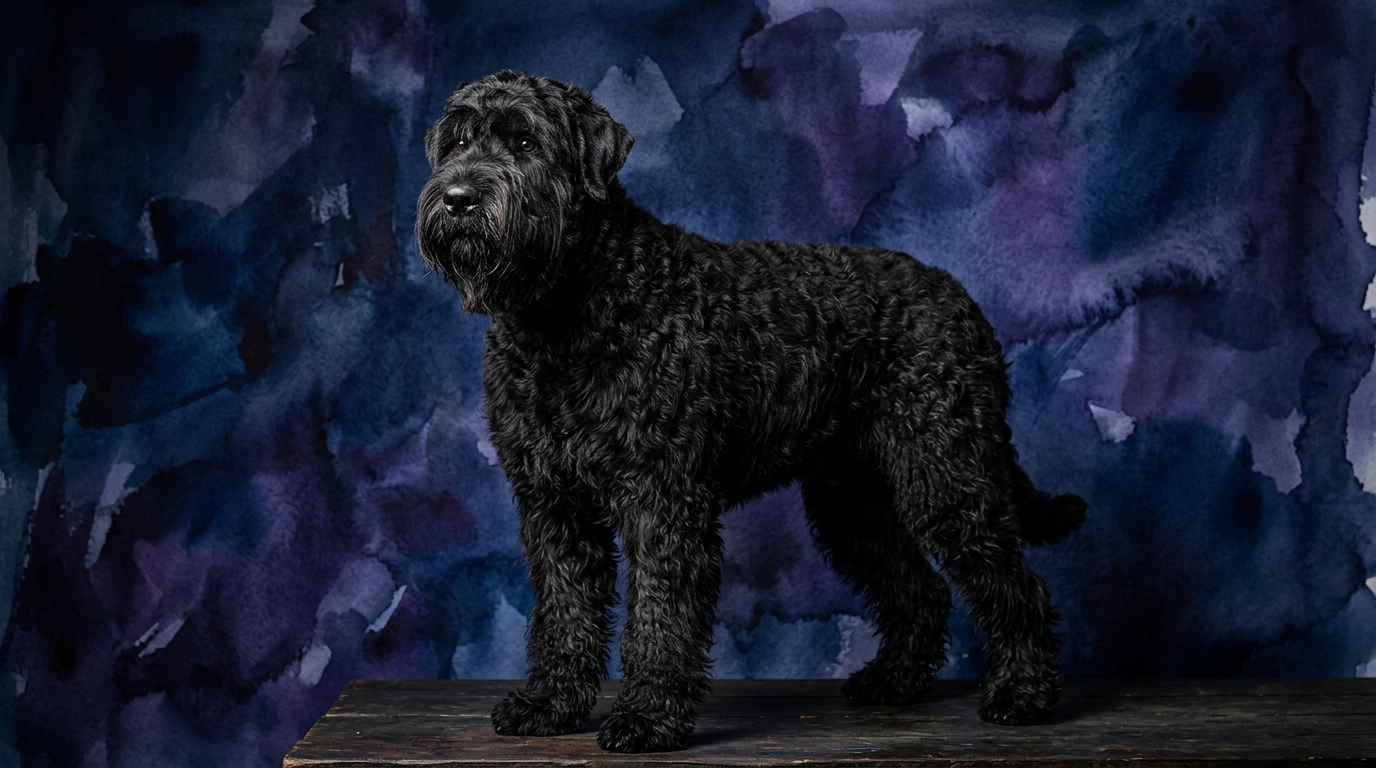
In contrast, the Black Russian Terrier, a working breed, presents a more balanced and robust cognitive profile across several dimensions, though it lacks a Coren rank. Its Problem Solving is rated 3/5, suggesting a moderate capacity to figure out novel situations and adapt strategies, showing more initiative than the Bulldog. Training Speed is also 3/5, indicating they learn new commands at a respectable pace with consistent effort and can generalize concepts more effectively. Their Social Intelligence is 3/5, meaning they understand family dynamics and are devoted to their core group, though they can be reserved with strangers. Instinctive Drive is 3/5, reflecting their strong protective and guarding instincts, driven by purpose and loyalty. Their Memory is also 3/5, denoting good retention of commands, routines, and past experiences, allowing them to recall learned behaviors reliably.
Where the English Bulldog Cognitively Excels
The English Bulldog's standout cognitive strength lies squarely in its Social Intelligence, scoring an impressive 4/5. This breed possesses an exceptional ability to understand and respond to human emotions, subtle body language, and household routines. They are masterful at charming their way into laps and hearts, often anticipating their human companions' needs for comfort or attention without explicit cues. Their capacity to integrate seamlessly into a family unit and form strong, perceptive bonds is a hallmark of their cognitive makeup, often surpassing the Black Russian Terrier in this specific domain. Bulldogs leverage this high social acumen to navigate their world, often achieving their desires through endearing persistence and a deep understanding of their human's affections, rather than through complex problem-solving. This makes them incredibly intuitive about human moods and exceptional emotional support companions, demonstrating a profound capacity for interpersonal connection within their chosen 'pack'.
Where the Black Russian Terrier Cognitively Excels
The Black Russian Terrier demonstrates a more robust and versatile cognitive toolkit for independent action and learning, particularly excelling in Problem Solving (3/5), Training Speed (3/5), and Memory (3/5). Their problem-solving capacity allows them to approach and often resolve moderately complex novel situations with greater initiative, whether it involves figuring out how to access a desired object or navigating an unfamiliar environment. This practical problem-solving skill is directly linked to their superior training speed; they can grasp new concepts and commands more quickly and generalize these learnings to different contexts with less repetition than the Bulldog. Coupled with their better memory, Black Russian Terriers retain learned behaviors more reliably over extended periods, making them well-suited for advanced training, complex sequences, and specialized tasks. Their cognitive profile reflects a dog capable of processing information and executing tasks with greater independence, efficiency, and adaptability, attributes shaped by their working dog heritage.
Training Dynamics: Bulldog vs. Black Russian Terrier
When it comes to trainability, the Black Russian Terrier generally proves to be the more responsive and efficient student for obedience and complex tasks. Their higher scores in problem-solving, training speed, and memory mean they can process and retain commands with greater efficiency. They typically respond well to structured, consistent training methods and possess the capacity to learn a wide array of commands, including those required for protection work, advanced obedience, or specialized roles. Their background as a working breed instilled a desire for purpose and partnership in tasks, making them receptive to clear direction and eager to please their handler through accomplishment.
The English Bulldog, conversely, often presents more significant challenges in formal training due to its lower scores in training speed and problem-solving. Their learning style necessitates substantial patience, high repetition, and compelling, high-value rewards to motivate engagement and retention. Bulldogs are sometimes perceived as stubborn, but this often stems from their preference for comfort and ease over immediate compliance, especially if the motivation isn't strong enough. While they can master basic commands, achieving precision, speed, or complex sequences requires a dedicated and understanding trainer who can work with their inherent desire for leisure rather than against it. Their strong social intelligence means they respond positively to encouragement and affection from beloved humans, but their cognitive processing for acquiring new *tasks* is simply slower and more deliberate.
Matching Breeds to Lifestyles: Active vs. Relaxed Owners
The Black Russian Terrier aligns best with active owners who are prepared to provide consistent mental and physical engagement. Their working dog heritage means they thrive on purpose, structure, and regular activity that stimulates both their body and their considerable cognitive faculties. Owners who enjoy advanced training, dog sports, or have a need for a dedicated and protective companion will find the Black Russian Terrier's cognitive profile and drive to be an excellent match. They require outlets for their problem-solving and protective instincts to prevent boredom, which could manifest as undesirable behaviors. Their moderate social intelligence means they bond deeply with their family, but their focus is on guarding and participating in activities with their core group.
The English Bulldog is ideally suited for relaxed owners who appreciate a calm, affectionate companion content with a more leisurely pace of life. Their lower energy requirements and distinct preference for comfort make them superb couch companions. While they still benefit from short, regular walks to maintain health, they do not demand extensive physical exercise or complex mental challenges. Owners who value deep social interaction and a dog whose primary role is to be a loving, low-key, and charming family member will find the Bulldog's cognitive strengths in social connection and adaptability to a relaxed home environment to be a perfect fit. They excel at simply being present and providing companionship, leveraging their high social IQ to bond profoundly with their people.
The Verdict
Select an English Bulldog if your priority is a deeply affectionate, socially intuitive companion who excels at emotional connection and thrives in a relaxed, family-oriented environment. Their charm and profound capacity for bonding often outweigh their slower learning speed, making them ideal for owners seeking a low-key, devoted presence.
Opt for a Black Russian Terrier if you desire a capable, trainable dog eager to engage in structured activities, learn complex tasks, and provide protective companionship. Their superior problem-solving and training aptitude suit active owners prepared to meet their need for mental stimulation and purposeful engagement.
🧠 Find Your Pet's IQ Score
Our Pet IQ Lab assessment covers 25+ tests across 5 cognitive dimensions — personalized to your breed.
Take the Full IQ Test →Frequently Asked Questions
Is the English Bulldog truly 'stubborn' or just slow to learn?
While often labeled stubborn, the English Bulldog's training challenges stem more from their lower training speed and problem-solving scores, meaning they require more repetition and motivation to grasp and retain new commands. Their preference for comfort often means they'll weigh the effort against the reward, appearing reluctant rather than truly defiant.
Can a Black Russian Terrier be a good family dog despite its protective instincts?
Absolutely, Black Russian Terriers are loyal and devoted to their families, often forming strong bonds with children when properly socialized and trained from a young age. Their protective instincts are typically directed outwards towards strangers, making them excellent guardians, but they are generally gentle and tolerant with their own 'pack'.
How much mental stimulation does a Black Russian Terrier need compared to an English Bulldog?
The Black Russian Terrier requires significantly more mental stimulation, thriving on activities like obedience training, puzzle toys, and purposeful tasks to engage their higher problem-solving and memory capacities. The English Bulldog, while benefiting from gentle engagement, is generally content with less complex mental challenges, preferring social interaction and comfort.