
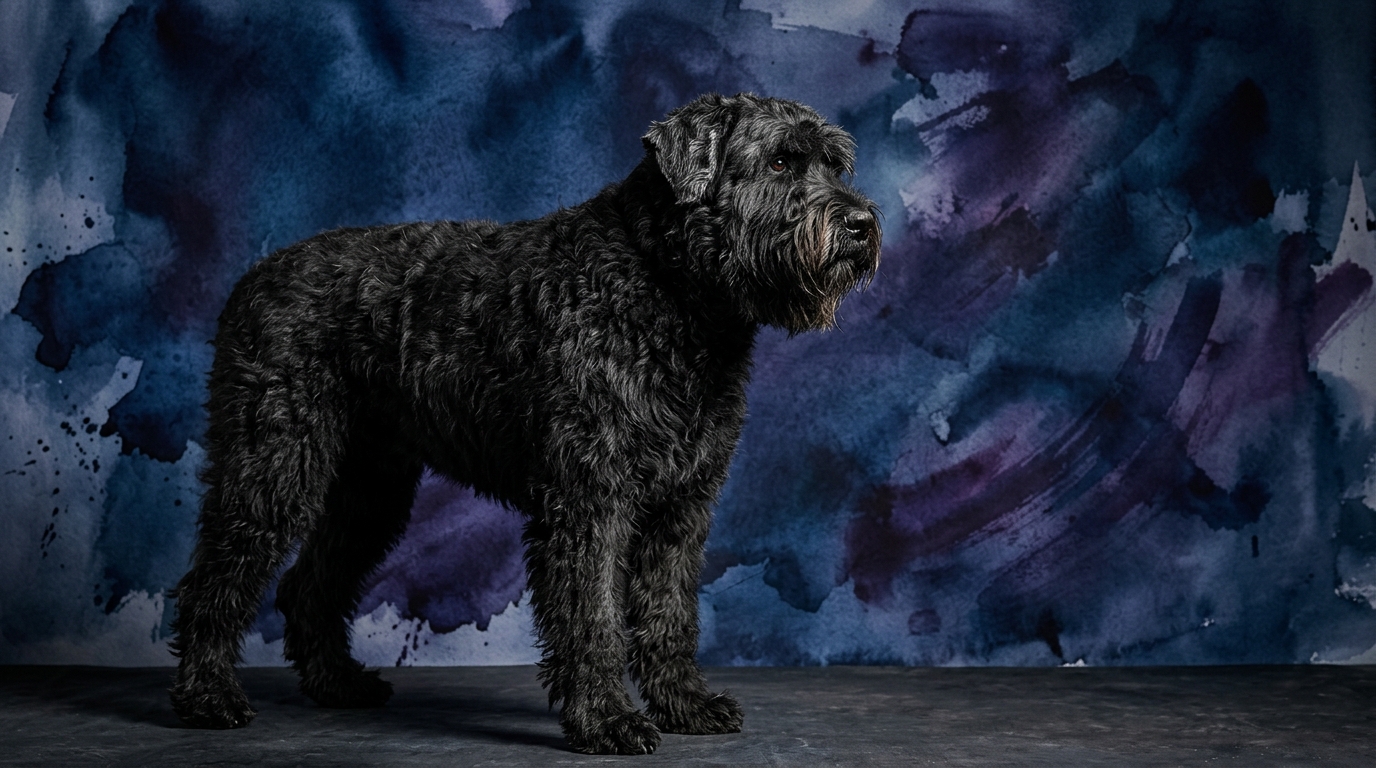
Side-by-Side IQ Profile: Bulldog (English) vs. Bouvier des Flandres
The Cosmic Pet Pet IQ Lab data offers a granular look at the cognitive strengths and tendencies of these two distinct breeds. For the Bulldog (English), Coren-ranked #77, its profile shows a Problem Solving score of 2/5, indicating it's not typically inclined to independently navigate complex puzzles or novel environmental challenges. Its Training Speed is also 2/5, suggesting that learning new commands requires significant repetition and patience. Where the Bulldog truly excels is in Social Intelligence, scoring 4/5, demonstrating a profound ability to understand human cues and emotional states. Its Instinctive Drive is a moderate 3/5, reflecting a steady, self-assured presence, while Memory is 2/5, meaning recalling specific routines over long periods might be a challenge.
The Bouvier des Flandres, though not Coren-ranked, presents a more balanced and often higher-scoring cognitive profile. Its Problem Solving is 3/5, indicating a commendable aptitude for figuring things out and adapting approaches, a trait honed by its working heritage. Training Speed is 3/5, meaning the Bouvier can grasp new commands and routines more efficiently than the Bulldog. Its Social Intelligence is 3/5, capable of forming strong bonds and understanding cues, though perhaps with a more reserved demeanor. Like the Bulldog, its Instinctive Drive is 3/5, translating to a natural inclination for guarding and a strong work ethic. Crucially, its Memory score is 3/5, suggesting a capacity to retain learned behaviors and commands more reliably over time.
Where the Bulldog (English) Wins Cognitively
The Bulldog's cognitive strength lies overwhelmingly in its exceptional Social Intelligence, scoring a 4 out of 5. This indicates a profound capacity for emotional attunement and understanding of human social structures. They are remarkably skilled at reading subtle cues, sensing shifts in mood, and responding with appropriate companionship or comfort. This isn't about solving complex puzzles but about navigating the intricate world of human-dog relationships with finesse. Their ability to integrate seamlessly into a family unit, often becoming an emotional anchor, demonstrates a unique cognitive profile focused on connection rather than demanding tasks. This high social acumen allows them to thrive in environments where close human interaction and empathetic presence are paramount, making them intuitive companions who often anticipate their owner's needs for affection or quiet presence without verbal commands.
Where the Bouvier des Flandres Wins Cognitively
The Bouvier des Flandres demonstrates a more robust cognitive profile across several dimensions crucial for work and advanced training. Their Problem Solving score of 3/5, compared to the Bulldog's 2/5, means they are more likely to independently assess and overcome environmental challenges, showing greater resourcefulness. This trait is invaluable for a dog expected to make decisions in dynamic situations, such as herding livestock or engaging in protection work. Furthermore, their Training Speed (3/5 vs. 2/5) indicates a quicker grasp of new commands and a greater capacity for retaining complex sequences, supported by their superior Memory score (3/5 vs. 2/5). These combined strengths allow the Bouvier to learn multi-step tasks, adapt to varying training scenarios, and consistently apply learned behaviors over time, making them more versatile for demanding roles requiring sustained mental engagement and recall.
Which is Easier to Train and Why
Based on their Cosmic Pet Pet IQ Lab profiles, the Bouvier des Flandres is generally easier to train than the Bulldog (English). The Bouvier's Training Speed of 3/5 suggests they process and assimilate new commands more efficiently, requiring fewer repetitions to achieve mastery. Their superior Problem Solving (3/5) also means they are more inclined to understand the *why* behind a command, making them less reliant on rote memorization and more capable of applying learned behaviors in varied contexts. For instance, a Bouvier might quickly generalize “stay” to different locations and distractions, whereas a Bulldog (with a 2/5 Training Speed and Problem Solving) might need extensive, specific training in each new scenario. The Bulldog’s deliberate pace and lower memory score mean that training sessions need to be shorter, more frequent, and exceptionally consistent, focusing on positive reinforcement to maintain engagement with what they perceive as less immediately rewarding mental effort. The Bouvier's inherent drive to work and please, combined with their cognitive strengths, makes them more amenable to structured training and advanced obedience.
Which Suits Active Owners vs. Relaxed Owners
The distinct cognitive profiles of these two breeds naturally align with different owner lifestyles. The Bulldog (English), with its lower scores in Problem Solving, Training Speed, and Memory, coupled with a moderate Instinctive Drive and high Social Intelligence, is an ideal fit for relaxed owners. Their cognitive makeup suggests a preference for routine, comfort, and companionship over strenuous mental or physical challenges. They thrive in environments where their primary role is to be a beloved, affectionate presence, requiring minimal complex training beyond basic manners and enjoying a slower pace of life. Their strong social acumen means they excel at being a family member who enjoys quiet time and close interaction.
Conversely, the Bouvier des Flandres, with its higher Problem Solving, Training Speed, and Memory scores, along with a moderate Instinctive Drive rooted in herding, is better suited for active owners. This breed's cognitive architecture demands regular mental engagement and physical activity. They excel when given a “job” to do, whether it's advanced obedience, agility, protection work, or simply long, structured walks with training elements. Owners who enjoy dog sports, extensive outdoor activities, or are committed to ongoing training will find the Bouvier's cognitive capabilities and desire for purpose incredibly rewarding. Their intellect requires an outlet, and without it, they may become bored or develop unwanted behaviors.
The Verdict
Choose Bulldog (English) if you desire a devoted, emotionally intuitive companion who excels at reading human moods and thrives on affection, preferring a relaxed pace of life and minimal demands for complex cognitive tasks or strenuous physical activity.
Choose Bouvier des Flandres if you are an active individual or family seeking a mentally agile, trainable partner eager for structured activity, advanced learning, and a purposeful role, capable of independent problem-solving and retaining complex commands over time.
🧠 Find Your Pet's IQ Score
Our Pet IQ Lab assessment covers 25+ tests across 5 cognitive dimensions — personalized to your breed.
Take the Full IQ Test →Frequently Asked Questions
Are Bulldogs truly difficult to train?
Bulldogs are not "difficult" in the sense of being stubborn or disobedient, but their Training Speed (2/5) and Problem Solving (2/5) scores indicate they learn at a slower, more deliberate pace. Success requires patience, consistency, short positive reinforcement sessions, and realistic expectations regarding the complexity of tasks they can master quickly.
Does a Bouvier des Flandres need a job?
While not every Bouvier needs to herd sheep, their higher Problem Solving (3/5) and Training Speed (3/5) scores, combined with their instinctive drive, mean they thrive with mental engagement. Providing them with activities like obedience training, agility, or even complex puzzle toys fulfills their cognitive needs and prevents boredom.
Which breed is better with children?
Both breeds can be good with children, but their approaches differ. The Bulldog's high Social Intelligence (4/5) makes them naturally empathetic and tolerant, often forming strong, gentle bonds. The Bouvier (Social Intelligence 3/5) is also loyal and protective but may require more socialization and training to ensure their natural herding instincts are channeled appropriately around energetic kids.