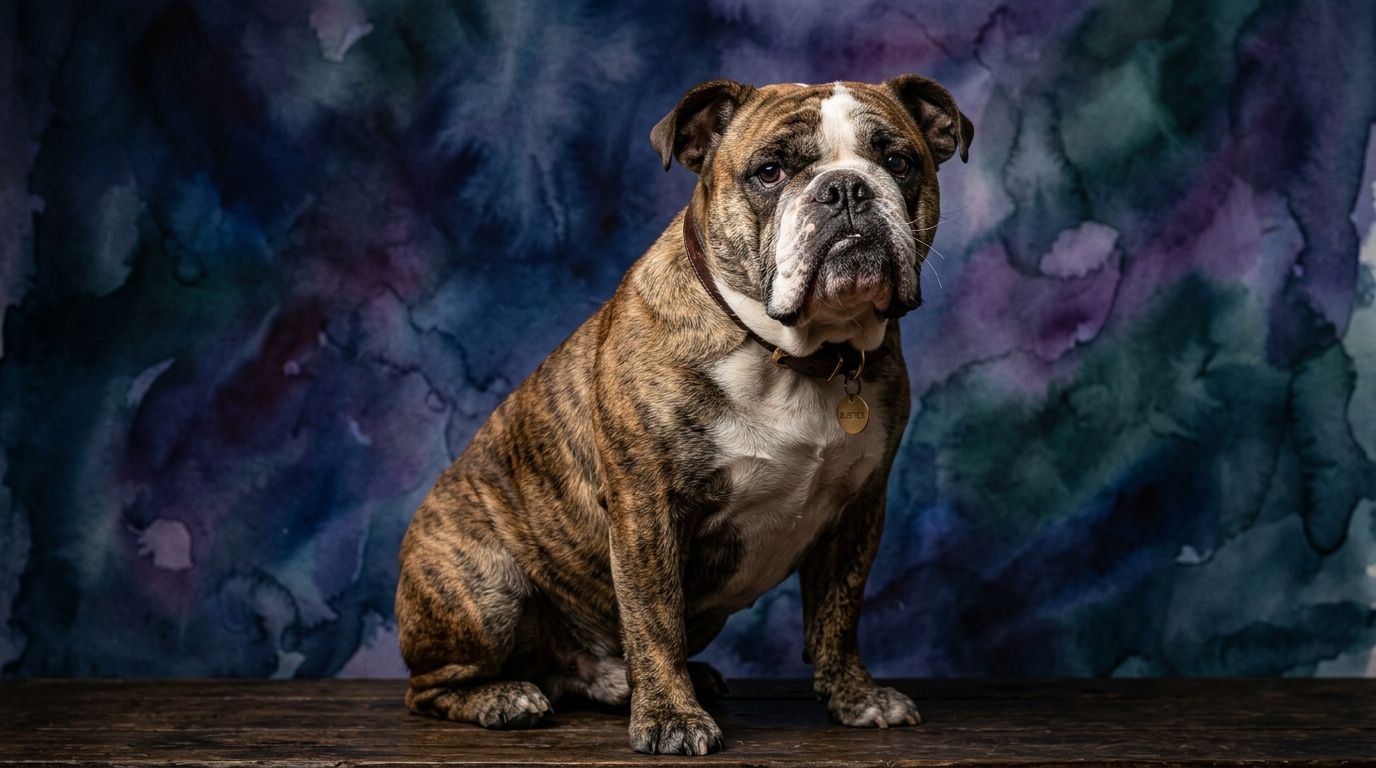
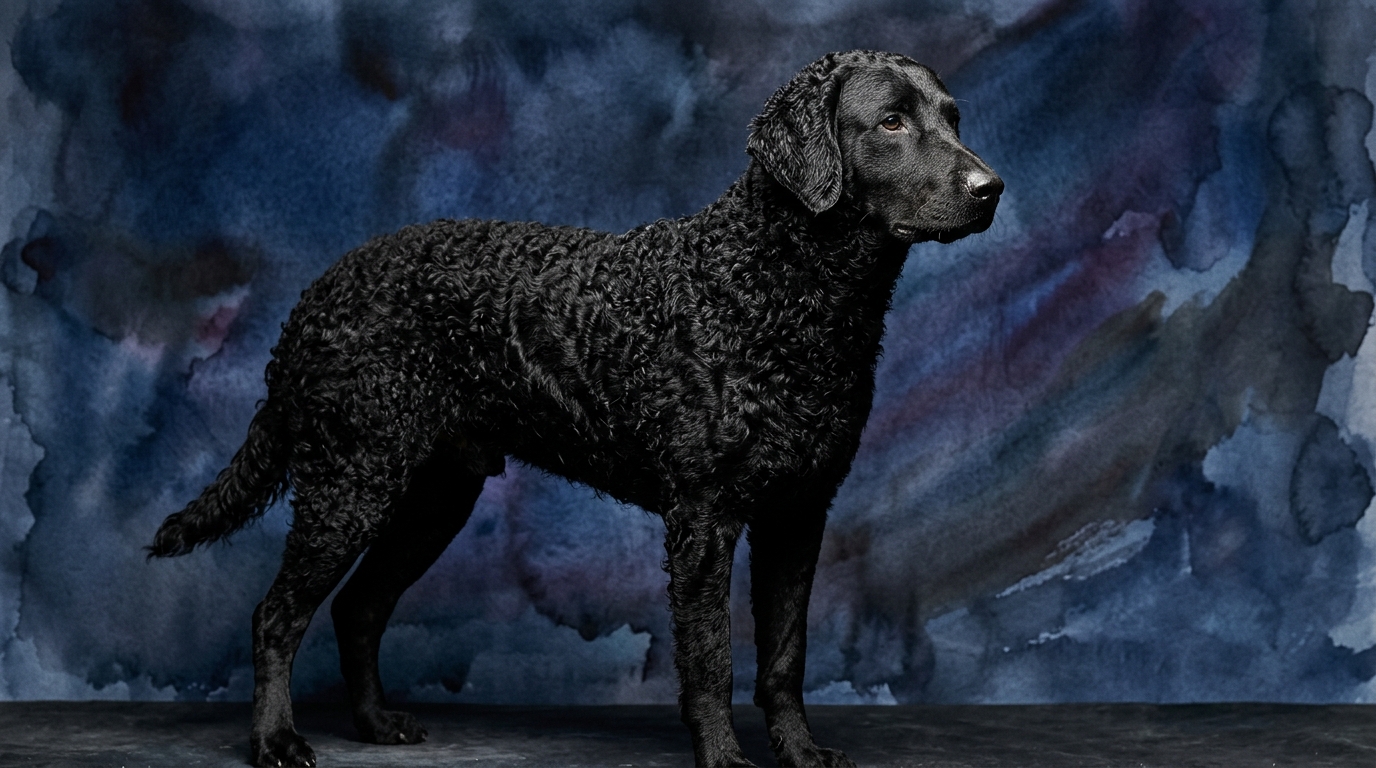
Side-by-Side IQ Profile: Bulldog vs. Curly-Coated Retriever
To understand the cognitive landscape of these two breeds, The Cosmic Pet Pet IQ Lab employs a detailed five-dimensional framework, allowing us to pinpoint specific strengths and areas where each breed may require different approaches. Their respective Coren ranks – Bulldog at #77 and Curly-Coated Retriever at #41 – already hint at distinct operational intelligences.
The **English Bulldog**, a member of the Non-Sporting Group, exhibits the following cognitive traits:
* **Problem Solving (2/5):** Bulldogs typically prefer established routines and may find novel challenges or complex puzzles frustrating. They are not quick to devise new solutions and benefit from clear, consistent guidance, often relying on learned responses rather than innovative thought.
* **Training Speed (2/5):** Learning new commands takes considerable repetition for a Bulldog. Their resolve can sometimes be mistaken for stubbornness, but it often reflects a slower processing speed and a preference for comfort over rapid task acquisition, requiring immense patience from trainers.
* **Social Intelligence (4/5):** This is where Bulldogs truly shine. They possess a remarkable ability to read human emotions, understand subtle social cues, and integrate seamlessly into family dynamics, often sensing when their presence is most needed or a mood shift occurs.
* **Instinctive Drive (3/5):** Their drives are moderate, primarily focused on companionship, comfort, and perhaps a gentle protectiveness of their home and family, rather than strong prey or working instincts.
* **Memory (2/5):** Bulldogs generally require frequent refreshers for learned behaviors. Complex sequences or commands not regularly practiced may fade, necessitating consistent reinforcement to maintain proficiency.
The **Curly-Coated Retriever**, a member of the Sporting Group, presents a different cognitive blueprint:
* **Problem Solving (3/5):** Curly-Coated Retrievers demonstrate a solid capacity for tackling moderate challenges and adapting to new situations. They are capable of figuring out how to achieve a goal, such as navigating a new obstacle course or retrieving an object from a tricky spot.
* **Training Speed (3/5):** These retrievers learn at a good pace, picking up new commands and routines with a reasonable number of repetitions. They respond well to positive reinforcement and clear instruction, making them responsive learners.
* **Social Intelligence (3/5):** Curlys are attuned to their human companions, forming strong bonds and generally understanding household dynamics. While perceptive, their social reading might be slightly less nuanced than the Bulldog's deep emotional connection, focusing more on cooperation than emotional sensing.
* **Instinctive Drive (3/5):** True to their retriever heritage, they possess a moderate to strong drive for retrieving, water work, and engaging in purposeful activities. This drive fuels their desire to participate and cooperate in tasks.
* **Memory (4/5):** Curly-Coated Retrievers exhibit excellent recall for learned behaviors and routines. They can retain complex sequences and commands over extended periods, making them reliable partners for consistent tasks and advanced training.
Where the English Bulldog Wins Cognitively
The English Bulldog's cognitive strength lies primarily in its exceptional Social Intelligence (4/5 compared to the Curly's 3/5). This isn't merely about being affectionate; it's a deep perceptual ability that allows them to excel at reading the nuanced emotional states of their human companions. Bulldogs can often sense tension, sadness, or joy, adjusting their demeanor or offering comfort without explicit prompting. This makes them remarkably perceptive family members, capable of understanding complex household dynamics and individual moods. For instance, a Bulldog might instinctively gravitate towards a quiet, withdrawn family member, offering a comforting presence and a gentle nuzzle. Their skill in understanding subtle human cues allows them to navigate social situations with grace, making them incredibly intuitive and empathetic companions. They are masters of non-verbal communication within a family unit, often anticipating needs or reacting appropriately to shifts in mood, a cognitive advantage that fosters profound emotional bonds and makes them excellent emotional support animals without formal training.
Where the Curly-Coated Retriever Wins Cognitively
The Curly-Coated Retriever demonstrates a clear cognitive advantage in areas demanding operational intelligence, particularly in Problem Solving (3/5 vs. Bulldog's 2/5), Training Speed (3/5 vs. 2/5), and especially Memory (4/5 vs. 2/5). Their higher Coren rank (#41 vs. #77) underscores this capability for learning and executing tasks efficiently. A Curly can more readily assess a novel situation and devise a solution, such as figuring out how to retrieve a toy that has rolled under furniture using a stick, rather than simply waiting for assistance. Their superior memory means they retain complex multi-step commands and routines with greater longevity. This allows for building upon previous training sessions without extensive review, making them more efficient learners for advanced obedience, agility courses, or intricate retrieving sequences. The ability to quickly grasp and recall information makes the Curly an adept partner for tasks requiring consistent, remembered performance, allowing them to excel in various dog sports and working roles.
Which is Easier to Train and Why
Based on their cognitive profiles, the Curly-Coated Retriever is generally easier to train than the English Bulldog, largely due to significant differences in Training Speed and Memory. The Curly's Training Speed of 3/5 means they grasp new commands and concepts with fewer repetitions and a more enthusiastic attitude towards learning. Coupled with their outstanding Memory (4/5), they retain these lessons over time, building a robust repertoire of behaviors. For example, once a Curly learns a complex fetch-and-return sequence, they are likely to recall and execute it reliably even after a break in training, demonstrating their strong retention and responsiveness. This breed’s inherent desire to work and please, rooted in their sporting heritage, also contributes to their trainability, making them more responsive to cues and less likely to 'forget' their lessons.
In contrast, the English Bulldog's Training Speed of 2/5 and Memory of 2/5 present more significant challenges for traditional obedience. They require immense patience, consistency, and a highly motivating reward system. What might be perceived as stubbornness is often a combination of slower processing and less retention, meaning they need many more repetitions to solidify a command, and then consistent refreshing to prevent it from fading. A Bulldog might understand a command in the moment due to its social intelligence and desire to please, but may struggle to recall it reliably a week later without practice. Their training requires breaking tasks into very small, manageable steps and celebrating every minor success, focusing on building strong, simple associations rather than expecting complex, multi-step sequences to be learned quickly.
Which Suits Active Owners vs. Relaxed Owners
The choice between these two breeds significantly hinges on an owner's lifestyle and activity level. The Curly-Coated Retriever is an excellent fit for active owners who relish engaging their dog in mental and physical challenges. Their higher problem-solving ability, strong memory, and moderate instinctive drive make them ideal candidates for dog sports like agility, competitive obedience, dock diving, or field work. They thrive on structured activity, learning new tricks, and having a 'job' to do, whether it's retrieving during a long hike or mastering a complex agility course. An owner who enjoys outdoor adventures and consistent training sessions will find a willing and capable partner in the Curly, as they genuinely enjoy purposeful engagement.
Conversely, the English Bulldog is perfectly suited for more relaxed owners who appreciate a calm, companion-focused presence. Their moderate instinctive drive and lower need for intense mental stimulation mean they are content with leisurely walks, cuddle sessions on the couch, and being a constant, comforting presence. While they enjoy interaction, they do not demand constant activity or complex tasks to be fulfilled. Their high social intelligence means they are deeply attuned to their family's rhythm and derive satisfaction from simply being close and observing. For someone seeking a steadfast, affectionate, and relatively low-energy companion who excels at being a perceptive family member, the Bulldog is an ideal choice, offering profound emotional connection without the need for strenuous activity.
The Verdict
Choose the English Bulldog if you seek a deeply perceptive, affectionate companion who excels at understanding social cues and thrives on a calm, consistent home environment, valuing emotional connection over complex task execution. They are ideal for owners who appreciate a steadfast presence and are prepared for patient, consistent training focused on basic manners.
Opt for the Curly-Coated Retriever if you are an active owner who enjoys engaging your dog in learning, sports, or outdoor adventures, valuing a partner with strong memory, problem-solving skills, and a desire to participate in purposeful activities. They are best for those who can provide consistent mental and physical stimulation and appreciate an efficient learner.
🧠 Find Your Pet's IQ Score
Our Pet IQ Lab assessment covers 25+ tests across 5 cognitive dimensions — personalized to your breed.
Take the Full IQ Test →Frequently Asked Questions
Is the English Bulldog truly 'stubborn' or is it something else?
What often appears as stubbornness in an English Bulldog is more accurately attributed to their lower training speed and memory. They require more repetitions and consistent reinforcement to learn and retain commands, rather than actively choosing to disobey. Their social intelligence means they often understand what you want, but their cognitive processing makes execution harder.
Can a Curly-Coated Retriever live in an apartment?
A Curly-Coated Retriever can adapt to apartment living, but it requires a very active owner committed to providing ample daily exercise and mental stimulation outside the home. Their need for activity and engagement is significant, so regular walks, runs, and training sessions are crucial for their well-being. Without sufficient outlets, they can become bored or destructive.
How do these breeds typically interact with children?
Both breeds can be good with children, but in different ways. The English Bulldog's high social intelligence makes them very tolerant and gentle, often forming deep bonds and being perceptive to a child's mood. The Curly-Coated Retriever, while affectionate, has more energy and a higher drive, so supervision is important to ensure their play doesn't become too boisterous for young children.