
Side-by-Side Cognitive Profiles
Delving into the cognitive blueprints of the English Bulldog and the Komondor reveals a nuanced landscape of mental faculties. The English Bulldog, ranking #77 on the Coren scale, presents a profile emphasizing companionship and social harmony. Its problem-solving ability scores 2 out of 5, indicating a preference for clear directions rather than independent strategizing. Training speed, also at 2 out of 5, suggests that learning new commands requires patience and repetition. However, its social intelligence shines brightly at 4 out of 5, reflecting a deep capacity for understanding human emotions and forming strong bonds. The breed's instinctive drive sits at a moderate 3 out of 5, while its memory registers 2 out of 5, implying retention is best achieved through consistent reinforcement.
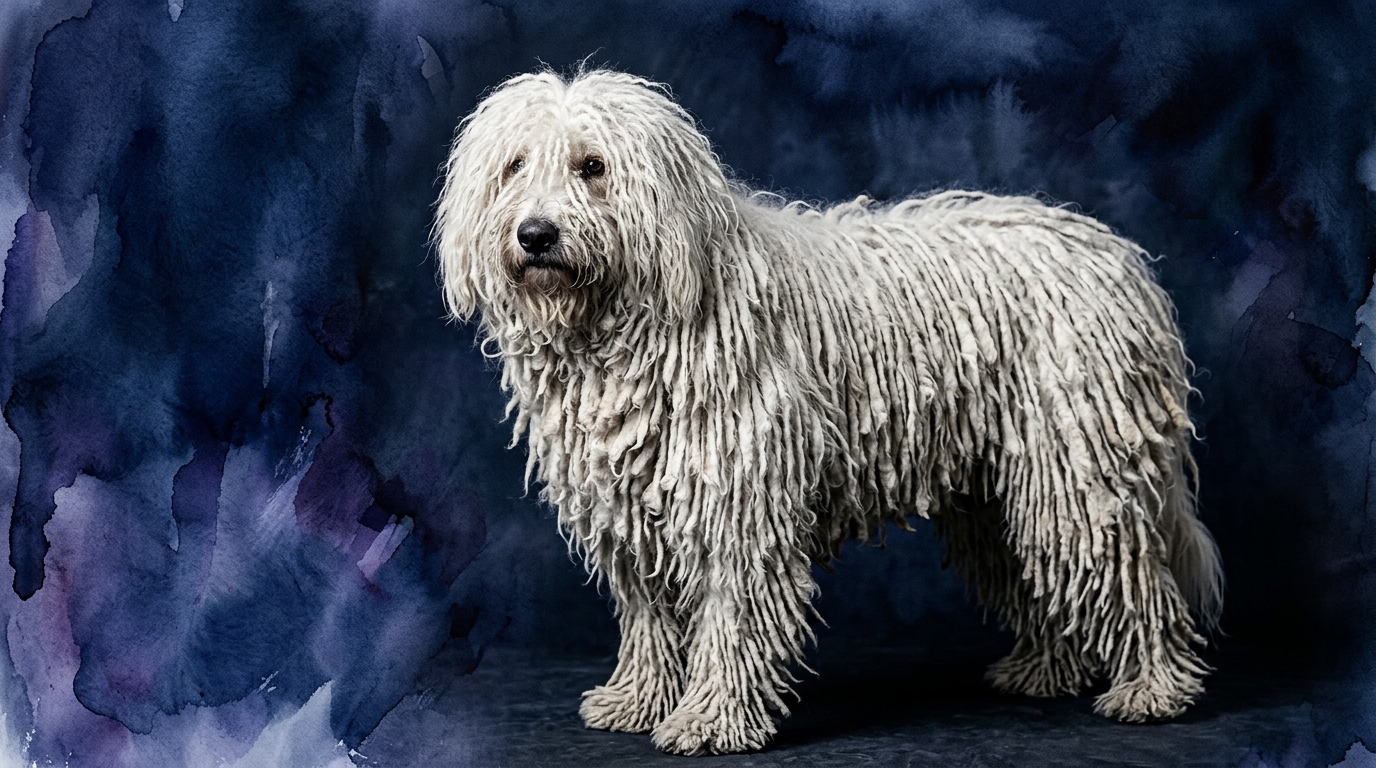
In contrast, the Komondor, with a Coren rank of #67, demonstrates a more independent and capable intellectual framework. Its problem-solving ability is rated 3 out of 5, suggesting a capacity for navigating complex situations and making decisions autonomously, a trait historically crucial for livestock guardians. Training speed also scores 3 out of 5, indicating a quicker grasp of new concepts compared to the Bulldog. Social intelligence for the Komondor is 3 out of 5, pointing to a more reserved but still attentive nature. Its instinctive drive is a solid 3 out of 5, powering its protective instincts, and its memory, at 3 out of 5, allows for better retention of learned behaviors and experiences over time.
Where the English Bulldog Wins Cognitively
The English Bulldog's standout cognitive strength lies unequivocally in its social intelligence, rated at an impressive 4 out of 5. This score signifies an exceptional ability to interpret human cues, understand emotional states, and integrate seamlessly into family dynamics. Unlike breeds with higher problem-solving or training speeds, the Bulldog’s mental wiring prioritizes connection and emotional resonance. They are adept at offering comfort, sensing when their human companions need companionship, and displaying a remarkable tolerance for various household activities and individuals, including children and other pets. This high social acumen means they often require less explicit instruction for appropriate social behavior, instead intuitively adapting to the family's rhythm and emotional landscape.
Their lower scores in problem-solving and training speed do not diminish their social brilliance; rather, they shape it. A Bulldog might not be quick to learn a complex trick, but it will be quick to offer a comforting presence or a playful nudge when sensing a mood shift. This deep emotional intelligence makes them profoundly empathetic companions, excelling in roles where their primary contribution is affectionate presence and unwavering loyalty. Their moderate instinctive drive, coupled with their social aptitude, means they are not prone to excessive independence or strong predatory behaviors, preferring instead to be a central, cherished part of their human 'pack'.
Where the Komondor Wins Cognitively
The Komondor's cognitive advantages are rooted in its capacity for independent thought and learning efficiency, reflected in its superior scores across problem-solving, training speed, and memory (all 3 out of 5). Its problem-solving ability means a Komondor is better equipped to assess situations and act without immediate human direction, a critical trait developed over centuries as a livestock guardian. Faced with a perceived threat or an unfamiliar obstacle, a Komondor is more likely to devise its own solution rather than waiting for a command, demonstrating a thoughtful and strategic approach to its environment.
Furthermore, its training speed and memory scores indicate a dog that can absorb and retain information more readily. While not a breed known for instant obedience, once a Komondor understands a command or a routine, it is likely to commit it to memory and execute it consistently. This combination of cognitive strengths allows the Komondor to excel in tasks requiring sustained focus, independent judgment, and the application of learned behaviors over time, such as patrolling boundaries or discerning friend from foe. Their instinctive drive, also 3 out of 5, is channeled into purposeful action, reinforcing their role as vigilant protectors.
Which is Easier to Train and Why
When it comes to ease of training, the Komondor generally presents a more straightforward path for an experienced handler, primarily due to its higher training speed and memory scores. A Komondor's cognitive makeup allows it to grasp new commands and sequences more quickly and retain them over longer periods. This doesn't mean they are always eager-to-please; their independent problem-solving nature can sometimes lead to a 'what's in it for me?' attitude or a preference for their own judgment. However, with consistent, fair, and engaging training methods that respect their intelligence and working heritage, Komondors can learn complex tasks and become highly proficient in obedience.
The English Bulldog, by comparison, typically requires more patience and a different approach to training. With a training speed of 2 out of 5 and memory at 2 out of 5, Bulldogs often need more repetitions and shorter, fun-filled sessions to internalize commands. Their lower problem-solving score means they are less likely to generalize learned behaviors to new situations without explicit guidance. Training a Bulldog often leverages their high social intelligence; they respond well to positive reinforcement that strengthens their bond with their human, such as praise, gentle attention, and food rewards. Their moderate instinctive drive means they can be persistent in their desires, requiring an owner to be equally persistent and consistent in setting boundaries.
Which Suits Active Owners vs. Relaxed Owners
The English Bulldog is an ideal companion for owners who appreciate a relaxed, low-key lifestyle. Their physical build and moderate energy levels mean they are not suited for strenuous activities or long, demanding hikes. Instead, they thrive on comfortable routines, short walks, and ample indoor companionship. Their high social intelligence makes them excellent couch companions, content to simply be near their human family, observing and participating in a gentle, undemanding way. Owners who value a dog primarily for its affectionate presence, unwavering loyalty, and a calm demeanor will find a Bulldog to be a perfect match, requiring minimal physical exertion but plenty of emotional connection.
The Komondor, while not necessarily requiring intense physical activity in the way a Border Collie might, is better suited for owners who are 'active' in a different sense – active in providing mental engagement, consistent training, and purposeful work. Their historical role as guardians means they thrive with a 'job' to do, even if that job is simply patrolling a secure yard or serving as a vigilant family protector. Their independent problem-solving and protective instincts require an owner who can confidently manage and direct these traits, providing clear structure and boundaries. They are best for experienced owners with ample space, who understand the commitment required to manage a large, intelligent, and often reserved guardian breed, and who can appreciate a dog with a strong sense of self and purpose.
The Verdict
Choose an English Bulldog if you seek a deeply affectionate, tolerant, and relatively low-energy companion whose greatest joy is sharing a relaxed home life and offering unwavering emotional support.
Opt for a Komondor if you are an experienced owner prepared to engage a thoughtful, independent protector with consistent training and a purposeful role, appreciating a dog that combines intelligence with a reserved, watchful nature.
🧠 Find Your Pet's IQ Score
Our Pet IQ Lab assessment covers 25+ tests across 5 cognitive dimensions — personalized to your breed.
Take the Full IQ Test →Frequently Asked Questions
Do English Bulldogs enjoy learning new tricks?
English Bulldogs can learn new tricks, but it often requires more patience and repetition due to their 2/5 training speed and memory scores. They respond best to positive reinforcement and short, engaging sessions that leverage their social intelligence and desire for human interaction.
Are Komondors good with children and other pets?
Komondors can be good with children and other pets, especially if raised with them from a young age and properly socialized. However, their protective instincts (3/5 instinctive drive) mean they may be reserved with strangers and require supervision to ensure their guardian nature is channeled appropriately.
How do their Coren ranks influence their trainability?
The Komondor's Coren rank of #67 suggests a higher capacity for understanding and executing commands compared to the English Bulldog's #77. This aligns with the Komondor's higher training speed and problem-solving scores, indicating it will generally learn and retain obedience commands more readily.