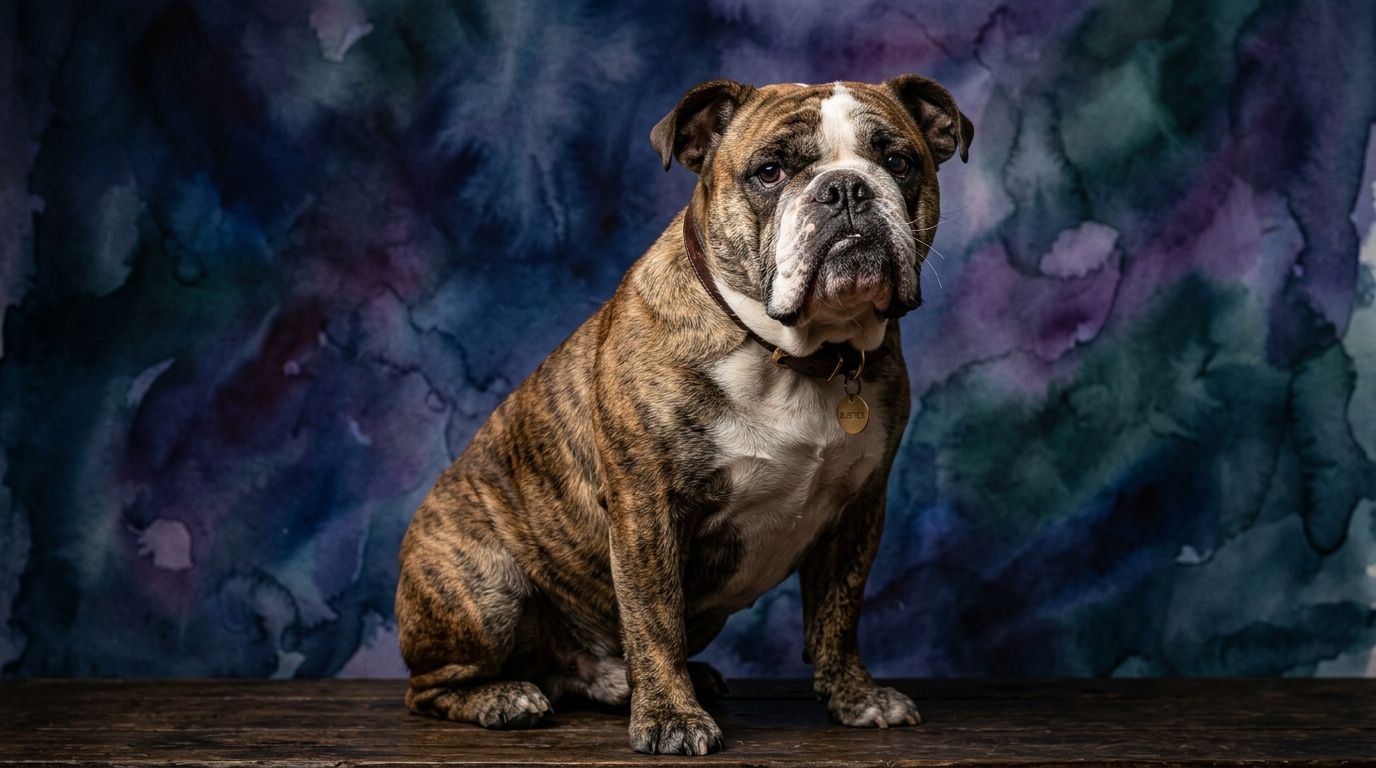
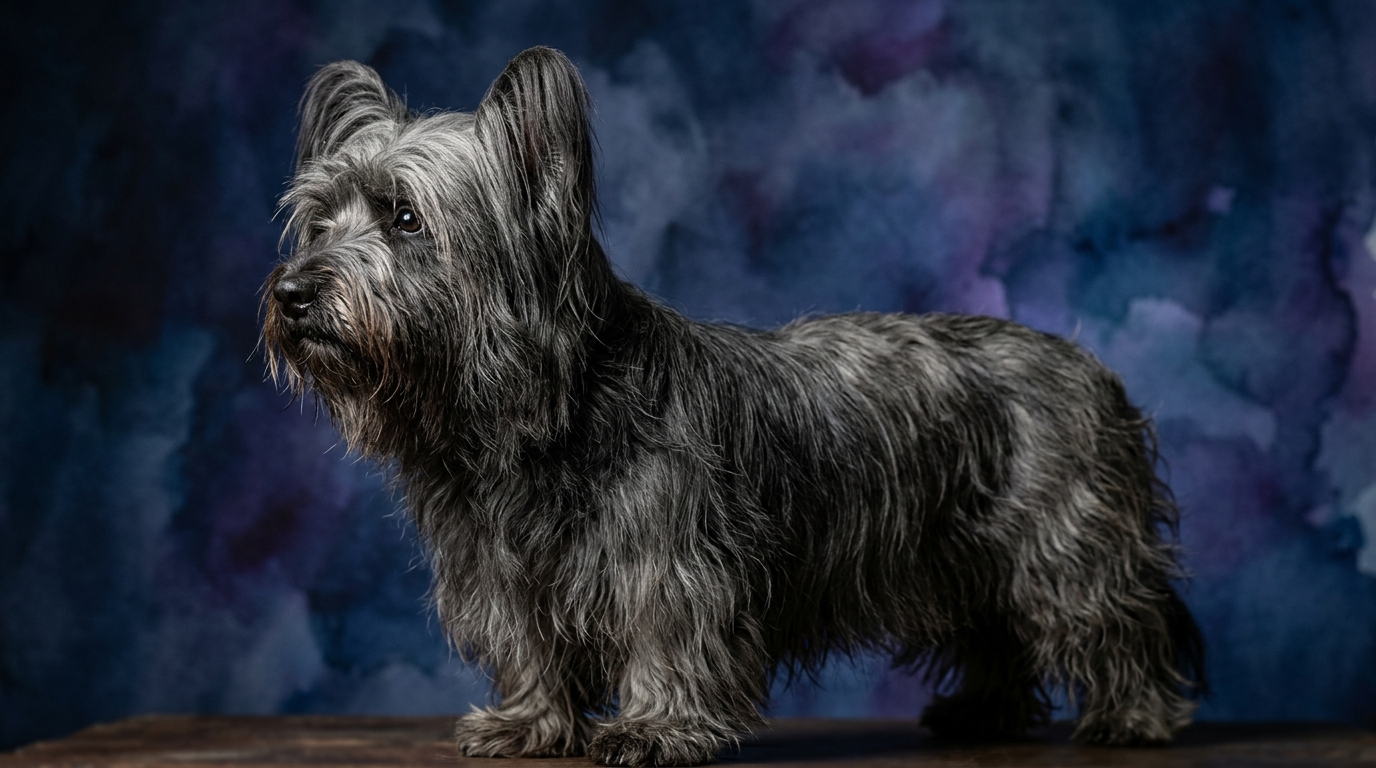
Side-by-Side IQ Profile: English Bulldog vs. Skye Terrier
The English Bulldog, recognized by the American Kennel Club in the Non-Sporting Group and ranking #77 in Coren's intelligence scale, presents a distinctive cognitive blueprint. Our Pet IQ Lab data assigns them a Problem Solving score of 2/5, indicating they may take a more deliberate, sometimes stubborn, approach to novel challenges, often relying on trial-and-error rather than rapid insight. Their Training Speed also sits at 2/5, suggesting that consistent, patient repetition is key to embedding commands, as they aren't typically quick to grasp new instructions. However, the Bulldog truly shines in Social Intelligence with a robust 4/5, reflecting their profound ability to read human emotions, form strong bonds, and navigate social dynamics within a family unit. Their Instinctive Drive is rated 3/5, pointing to a moderate inclination towards their original purpose, though often expressed in a more relaxed manner than some working breeds. Memory, at 2/5, implies that while they can certainly recall learned behaviors and routines, complex sequences or infrequent commands might require frequent refreshing.
In contrast, the Skye Terrier, a member of the Terrier Group and not specifically ranked by Coren, offers a different intellectual signature. The Pet IQ Lab assigns them a Problem Solving score of 3/5, indicating a more agile and resourceful approach to overcoming obstacles, often employing terrier-typical ingenuity to achieve their goals. Their Training Speed also stands at 3/5, suggesting they are generally more receptive to learning new commands and can pick up on cues with moderate repetition. Social Intelligence for the Skye Terrier is 3/5, signifying that while they form deep attachments with their chosen humans, they tend to be more discerning and reserved with strangers, often requiring time to warm up. Their Instinctive Drive is rated 3/5, reflecting their strong terrier heritage of chasing and exploring, albeit often tempered by their companion nature. A Memory score of 3/5 suggests they retain information more readily than the Bulldog, making learned behaviors more enduring over time.
Where the English Bulldog Wins Cognitively
The English Bulldog's primary cognitive strength lies undeniably in its exceptional Social Intelligence, scoring 4/5, which is notably higher than the Skye Terrier's 3/5. This manifests in their unparalleled capacity for emotional attunement and companionship. A Bulldog often appears to intuitively understand the mood of its human family members, offering quiet comfort during distress or joining in celebratory moments with a contented grumble. This superior social acumen makes them adept at integrating into diverse family structures, often forming profound, empathetic bonds. They are masters of subtle communication, using body language and vocalizations to express their needs and desires in a way that is easily understood by their owners, contributing to a harmonious household environment.
Furthermore, while their Problem Solving score is lower, the Bulldog's cognitive process, though slower, is characterized by a persistent and methodical approach. They may not leap to a solution, but once they commit to a task, their sheer determination can see them through. This isn't a flaw in intellect but rather a difference in cognitive style; their resilience in facing a challenge, even if it takes repeated attempts, demonstrates a unique form of mental tenacity. This steadfastness, combined with their high social intelligence, means they often learn best through positive reinforcement and the desire to please their beloved human, rather than through rapid cognitive leaps.
Where the Skye Terrier Wins Cognitively
The Skye Terrier demonstrates a distinct cognitive advantage in areas requiring quicker mental processing and independent thought. With a Problem Solving score of 3/5 compared to the Bulldog's 2/5, Skyes are typically more adept at navigating novel situations and figuring out solutions to puzzles or obstacles on their own. This often translates into a dog that can independently assess a situation, such as how to retrieve a dropped toy from under furniture or bypass a temporary barrier, showcasing a terrier's characteristic ingenuity and self-reliance. Their innate curiosity drives them to explore and interact with their environment in a more investigative manner, often leading to creative solutions.
Moreover, the Skye Terrier's higher scores in Training Speed (3/5) and Memory (3/5) give them an edge in acquiring and retaining new information. They tend to pick up commands more readily and remember them over longer periods, making the initial stages of training potentially less arduous. This cognitive agility allows them to learn a broader repertoire of commands and tricks with moderate effort, and to adapt more swiftly to changes in routine or environment. Their balanced instinctive drive also means they can channel their natural curiosity and energy into structured learning activities more readily than a dog with a lower training speed profile.
Which is Easier to Train and Why
Based on our Pet IQ Lab data, the Skye Terrier generally presents as the easier breed to train. Their Training Speed of 3/5, coupled with a Problem Solving score of 3/5 and Memory at 3/5, means they are typically more receptive to learning new commands, process information faster, and retain what they've learned more effectively. A Skye Terrier's terrier-typical alertness and desire to engage, when properly motivated, can make training sessions productive and rewarding. They often respond well to varied training methods and can progress through obedience tasks with a moderate amount of repetition, making them suitable for owners who enjoy teaching complex sequences.
In contrast, the English Bulldog’s Training Speed and Memory, both rated 2/5, suggest a more patient and consistent approach is necessary. Bulldogs are not inherently resistant to learning, but their cognitive style often requires more repetitions and a slower pace to fully internalize commands. Their lower problem-solving score means they might not independently 'figure out' what is expected as quickly. Owners must be prepared for a training journey characterized by gentle persistence, positive reinforcement, and short, engaging sessions to prevent boredom. While they excel in social understanding, translating that into rapid obedience learning requires a dedicated and understanding trainer who can work with their methodical nature.
Which Suits Active Owners vs. Relaxed Owners
For owners seeking a more relaxed, companion-oriented lifestyle, the English Bulldog is often the ideal choice. Their moderate Instinctive Drive (3/5) and lower scores in Problem Solving and Training Speed mean they are typically content with a less demanding schedule of physical and mental stimulation. While they certainly benefit from regular, gentle walks and some interactive play, their cognitive profile doesn't necessitate constant mental challenges or high-intensity training sessions. Their strong Social Intelligence means they thrive on close human companionship and are happy to be a calm presence in the home, making them perfect for individuals or families who prefer quiet evenings and leisurely activities.
Conversely, the Skye Terrier is better suited for owners who are more active and enjoy engaging their dog's mind and body. Their balanced scores across Problem Solving, Training Speed, and Memory, combined with an Instinctive Drive of 3/5, indicate a dog that appreciates and benefits from consistent mental stimulation and purposeful activity. While not an endurance athlete, a Skye Terrier thrives on opportunities to use its intellect, whether through puzzle toys, scent work, or learning new tricks. They appreciate owners who can provide consistent, engaging training and moderate exercise, allowing them to channel their terrier curiosity and resilience, making them a fit for those who value an interactive and mentally stimulating relationship with their canine companion.
The Verdict: When to Choose Each Breed
Choosing between the English Bulldog and the Skye Terrier ultimately depends on your lifestyle, training philosophy, and desired canine companionship. If you prioritize unwavering loyalty, profound emotional connection, and a calm, steadfast presence that excels in family dynamics, the English Bulldog is likely your ideal match. This breed thrives with owners who appreciate a slower pace, are patient with training, and cherish a dog whose primary joy is simply being with its people, offering comfort and companionship above all else.
However, if you are an owner who values a more mentally agile companion, enjoys engaging in consistent training, and appreciates a dog with an independent, resourceful spirit, the Skye Terrier may be the better fit. This breed will flourish with individuals who can provide consistent mental stimulation, varied activities, and structured learning opportunities, offering a rewarding partnership built on mutual engagement and shared exploration.
The Verdict
Choose the English Bulldog if you seek a calm, deeply affectionate companion whose strong social intelligence makes them a natural family member, and you appreciate a slower, methodical approach to training. They thrive on companionship and gentle interaction.
Opt for the Skye Terrier if you are an active owner who enjoys consistent training, mental enrichment, and a dog with a resourceful, independent spirit. They flourish with owners who provide engaging activities and appreciate their balanced cognitive abilities.
🧠 Find Your Pet's IQ Score
Our Pet IQ Lab assessment covers 25+ tests across 5 cognitive dimensions — personalized to your breed.
Take the Full IQ Test →Frequently Asked Questions
Are English Bulldogs genuinely stubborn during training?
English Bulldogs are often perceived as stubborn due to their lower Training Speed (2/5) and Problem Solving (2/5) scores. This isn't necessarily defiance, but rather a methodical cognitive style that requires more repetition and patience to internalize commands. Positive reinforcement and short, consistent sessions are most effective.
What kind of mental stimulation does a Skye Terrier need?
A Skye Terrier, with its 3/5 scores in Problem Solving and Memory, benefits greatly from varied mental stimulation. This can include puzzle toys, scent games, learning new tricks, or engaging in obedience training that challenges their intellect. They enjoy activities that allow them to use their natural curiosity and resourcefulness.
How do their social intelligence differences impact household living?
The Bulldog's higher Social Intelligence (4/5) means they are generally more openly affectionate and attuned to family emotions, often welcoming strangers more readily. The Skye Terrier's 3/5 social score indicates they form deep bonds with their family but can be more reserved or discerning with outsiders, preferring a smaller, trusted circle.