
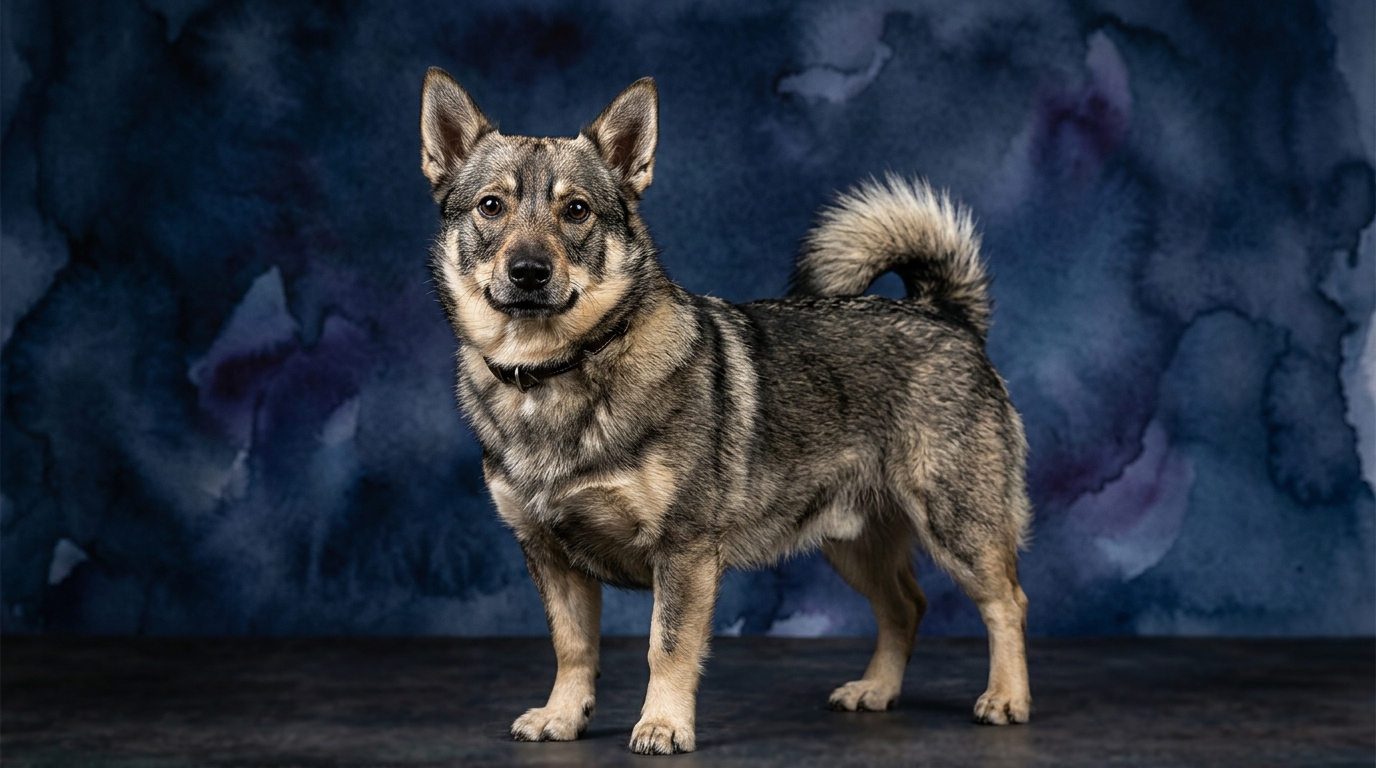
Side-by-Side IQ Profile: Unpacking Cognitive Dimensions
The Cosmic Pet Pet IQ Lab provides a detailed five-dimensional look into canine cognition, and applying this framework to the English Bulldog and Swedish Vallhund uncovers their unique mental architectures. Understanding these scores helps us appreciate how each breed processes information, interacts with their environment, and forms bonds with their human companions.
For Problem Solving, the English Bulldog scores 2/5, indicating a preference for established routines and a less spontaneous approach to novel challenges. They might struggle with complex puzzle toys or finding creative solutions without prior instruction, often relying on their human for guidance rather than independent strategizing. Their cognitive energy is less directed towards abstract problem-solving and more towards comfort and social interaction. The Swedish Vallhund, on the other hand, rates 3/5 in Problem Solving, suggesting a moderate capacity for understanding and navigating new situations. They are more likely to attempt to figure out how things work, perhaps opening a cabinet or devising a way to retrieve a dropped toy. Their herding background primes them for assessing dynamic environments and making quick decisions, translating into a more flexible problem-solving approach.
In Training Speed, the Bulldog again scores 2/5. This suggests a breed that requires significant patience, consistency, and positive reinforcement during training. They aren't quick to pick up new commands or tricks, often displaying a 'what's in it for me?' attitude. Their independent streak means training success hinges on making the process highly rewarding and engaging, often leveraging their social bond with their owner. The Vallhund's 3/5 in Training Speed reflects a dog that generally learns at a respectable pace. While not instantaneous, they are receptive to instruction and enjoy the mental engagement of learning new behaviors. Their moderate training speed makes them a rewarding student for owners who employ clear communication and consistent methods, often motivated by praise and the opportunity to work.
Social Intelligence is a standout for the English Bulldog, scoring an impressive 4/5. This indicates they are highly attuned to human emotions and social cues, forming deep, intuitive bonds with their families. They excel at reading moods, offering comfort, and integrating seamlessly into the family dynamic. Their social cognition allows them to be empathetic companions, often anticipating needs and reacting sensitively to their owners' emotional states, making them excellent family dogs. The Swedish Vallhund scores 3/5 in Social Intelligence, suggesting a good, but perhaps more direct, social connection. They are friendly and enjoy interacting with their family, understanding social structures within the home. While capable of strong bonds, their social intelligence might be more task-oriented or less overtly empathetic compared to the Bulldog, focusing on interaction and engagement rather than subtle emotional attunement.
Instinctive Drive for both breeds is rated 3/5, but its manifestation differs significantly. For the Bulldog, this score points to a moderate level of inherent drives, often manifesting as a protective instinct towards their family and home, and a certain stubborn persistence. Their drive might be expressed as a desire for comfort, routine, and companionship, rather than intense physical or mental tasks. For the Vallhund, their herding heritage means they have an innate drive to gather and control, often expressed through 'nipping' at heels or circling family members. While manageable, this drive requires channeling through appropriate activities like herding games or agility, rather than being a purely comfort-seeking drive like the Bulldog's.
Finally, Memory for the English Bulldog is 2/5, indicating that they may require more frequent repetition to solidify learned behaviors and recall specific events or commands. New rules or routines need consistent reinforcement to become ingrained. This isn't to say they forget their family, but rather that the acquisition and retention of complex information might be slower. The Swedish Vallhund's 3/5 in Memory suggests a moderate ability to retain information over time. They are generally capable of remembering commands, routines, and past experiences with reasonable consistency. While not photographic, their memory supports their trainability and ability to build upon previous learning, making progression in training more straightforward.
Where the English Bulldog Wins Cognitively
The English Bulldog's standout cognitive strength lies in its remarkable Social Intelligence, scoring an impressive 4 out of 5. This isn't about solving complex puzzles, but about an unparalleled capacity for emotional attunement and forming deep, intuitive bonds with their human family. Bulldogs are masters at reading subtle cues – a sigh, a change in tone, a quiet moment – and responding with comforting presence. They integrate into the family fabric not just as pets, but as empathetic members who seem to understand the emotional landscape of their home. This high social acumen means they are exceptionally good at being present and supportive, often anticipating their owner's need for affection or simply a calm, reassuring presence. Their cognitive processing is finely tuned to the nuances of human interaction, making them profoundly connected companions.
Furthermore, their lower scores in Problem Solving and Training Speed, while often perceived as limitations, can be a cognitive 'win' for owners seeking a predictable and low-stress companion. A Bulldog thrives on routine and comfort, their contentment stemming from stability rather than constant novelty. Their cognitive preference for the familiar means they aren't constantly seeking new challenges to satisfy a restless mind, making them ideal for households that appreciate a steady, calm presence rather than an always-on intellectual partner. This preference for simplicity in their mental landscape contributes to their famously placid demeanor and makes them inherently less prone to anxiety stemming from overstimulation or a lack of mental 'work'.
Where the Swedish Vallhund Wins Cognitively
The Swedish Vallhund shines in its practical cognitive abilities, particularly in Problem Solving, Training Speed, and Memory, each rated 3 out of 5. These scores reflect a breed built for active engagement and adaptability. Their moderate Problem Solving capacity means they aren't merely rote learners; they possess a genuine aptitude for assessing novel situations and devising solutions. This could manifest as figuring out how to open a gate, navigating a complex agility course, or understanding the subtle dynamics of a game. Their working heritage demands a dog that can think on its feet, and the Vallhund demonstrates this capability by making independent, intelligent decisions when presented with new challenges.
Complementing this problem-solving prowess is their respectable Training Speed and Memory. Vallhunds are generally eager to learn and retain information efficiently, making them responsive students in various training disciplines. They pick up new commands and routines with a reasonable number of repetitions, allowing for progressive learning in obedience, tricks, or dog sports. This cognitive profile makes them highly trainable and versatile, capable of mastering a wide range of tasks beyond basic commands. Their moderate instinctive drive, rooted in herding, further fuels their desire for engagement and purpose, providing an inherent motivation that makes channeling their cognitive energy into productive activities a rewarding endeavor for both dog and owner. They thrive when given a 'job' to do, even if that job is navigating a new mental game.
Which Is Easier to Train and Why
When it comes to ease of training, the Swedish Vallhund generally presents a more straightforward path for owners, largely due to its balanced cognitive profile. With a Training Speed of 3/5 and Problem Solving at 3/5, Vallhunds are receptive learners who can grasp new concepts and commands with reasonable efficiency. Their moderate memory (3/5) ensures that once learned, behaviors are retained, making for less need for constant re-teaching. Their herding drive, while needing appropriate outlets, can be channeled into focused training, providing intrinsic motivation for tasks and activities. They respond well to consistent, positive reinforcement and thrive on mental engagement, often viewing training sessions as a rewarding collaborative effort with their human.
The English Bulldog, in contrast, presents a greater training challenge, scoring 2/5 in both Training Speed and Problem Solving, and 2/5 in Memory. This doesn't imply a lack of capacity, but rather a different cognitive approach. Bulldogs require immense patience, consistency, and highly motivating rewards. They are not intrinsically driven by a desire to perform complex tasks or learn quickly; their motivation often stems from their strong social bond and a desire for comfort. Their independent streak and preference for routine mean they may appear stubborn when asked to deviate from established patterns or engage in mentally demanding exercises. Training a Bulldog is less about speed and more about building a strong, trusting relationship where they are gently persuaded and rewarded for cooperation, often through praise and favorite treats, making it a marathon of consistent encouragement rather than a sprint.
Which Suits Active Owners vs. Relaxed Owners
The choice between an English Bulldog and a Swedish Vallhund also hinges significantly on an owner's lifestyle and their capacity to meet a dog's specific cognitive and physical needs. The Swedish Vallhund, with its herding lineage and balanced IQ profile, is an ideal match for active owners. Their moderate problem-solving skills and training speed mean they thrive on mental stimulation, enjoying activities like agility, obedience, herding trials, or even complex puzzle toys. Coupled with their inherent energy and moderate instinctive drive, they require regular physical exercise – daily vigorous walks, runs, or play sessions – to keep both their bodies and minds engaged. Owners who enjoy outdoor activities, dog sports, or simply want a companion for adventures will find the Vallhund's adaptable and engaged nature a perfect fit.
Conversely, the English Bulldog is perfectly suited for more relaxed owners who appreciate a calm, less demanding companion. Their lower scores in problem-solving and training speed, combined with their preference for comfort and routine, mean they are content with moderate, consistent exercise, such as leisurely strolls and backyard play. While they enjoy interaction, their cognitive needs are largely met through social bonding and a predictable home environment rather than intense mental challenges or constant novel stimulation. Owners who lead a more sedentary lifestyle, enjoy quiet evenings at home, or seek a steadfast, affectionate presence will find the Bulldog's placid temperament and high social intelligence to be a rewarding and compatible match, requiring less structured 'work' and more shared, comfortable presence.
The Verdict
Choose an English Bulldog if you prioritize a deeply empathetic, calm, and devoted companion who excels at social bonding and thrives on predictable routines, requiring moderate physical and minimal cognitive 'work'.
Opt for a Swedish Vallhund if you seek an agile, mentally engaged partner eager to learn and problem-solve, suitable for an active lifestyle and owners who enjoy structured training, dog sports, and providing consistent mental stimulation.
🧠 Find Your Pet's IQ Score
Our Pet IQ Lab assessment covers 25+ tests across 5 cognitive dimensions — personalized to your breed.
Take the Full IQ Test →Frequently Asked Questions
Are Bulldogs truly stubborn, or is it a misunderstanding of their intelligence?
Bulldogs often appear stubborn due to their lower training speed and preference for routine, rather than a lack of cognitive ability. Their strong social intelligence means they respond best to patient, positive reinforcement that leverages their bond with their owner, rather than commands alone. They are motivated by comfort and companionship more than a desire to perform complex tasks.
Can a Swedish Vallhund live in an apartment?
A Swedish Vallhund can adapt to apartment living if their significant exercise and mental stimulation needs are consistently met. Daily vigorous walks, playtime, and engaging training sessions are crucial to prevent boredom and destructive behaviors. Their moderate instinctive drive means they need outlets for their energy, even in a smaller space.
How do their Coren ranks compare?
The English Bulldog is ranked #77 in Coren's intelligence list, placing them lower in working and obedience intelligence. The Swedish Vallhund is not specifically ranked on Coren's list, but its herding background and higher scores in problem-solving and training speed suggest a greater capacity for working and obedience tasks than the Bulldog. Coren's list primarily measures obedience and working intelligence, which aligns with the Vallhund's general profile more than the Bulldog's.