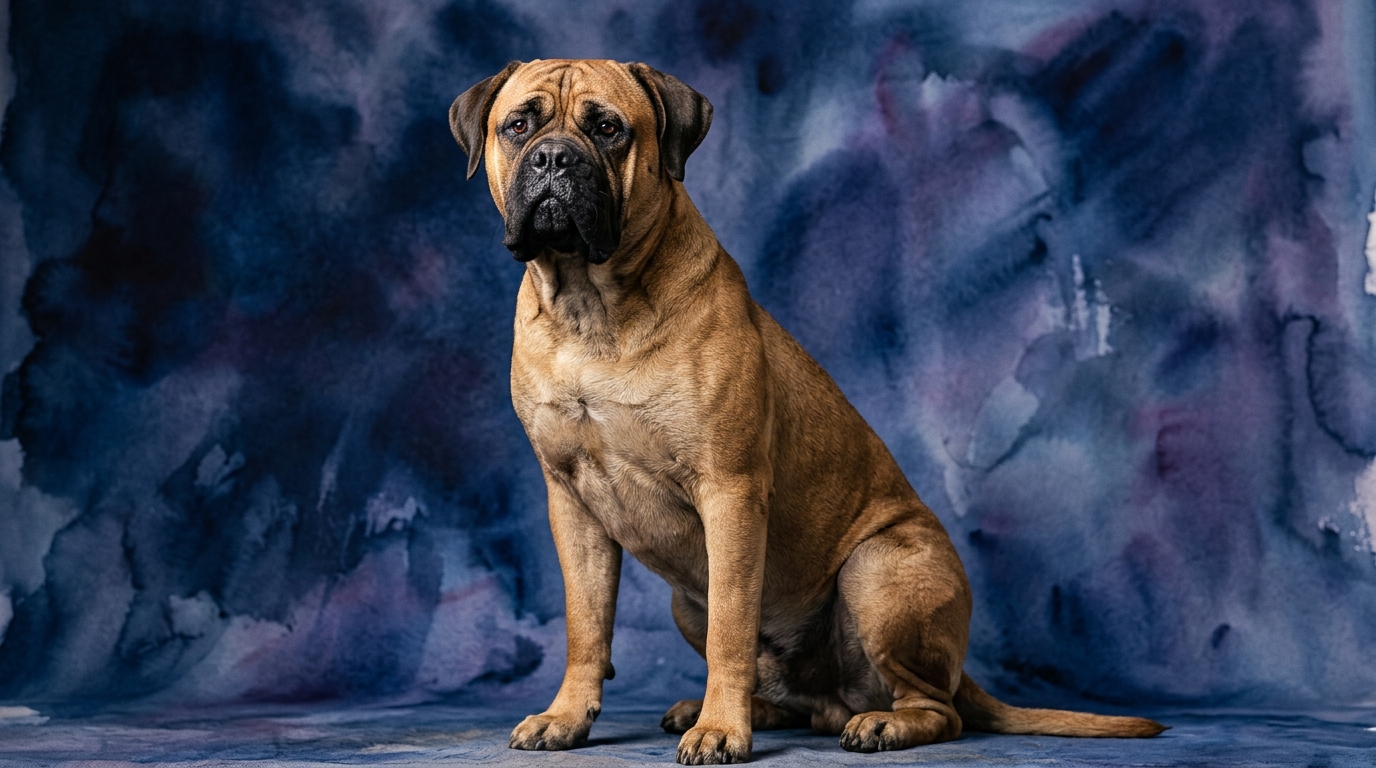
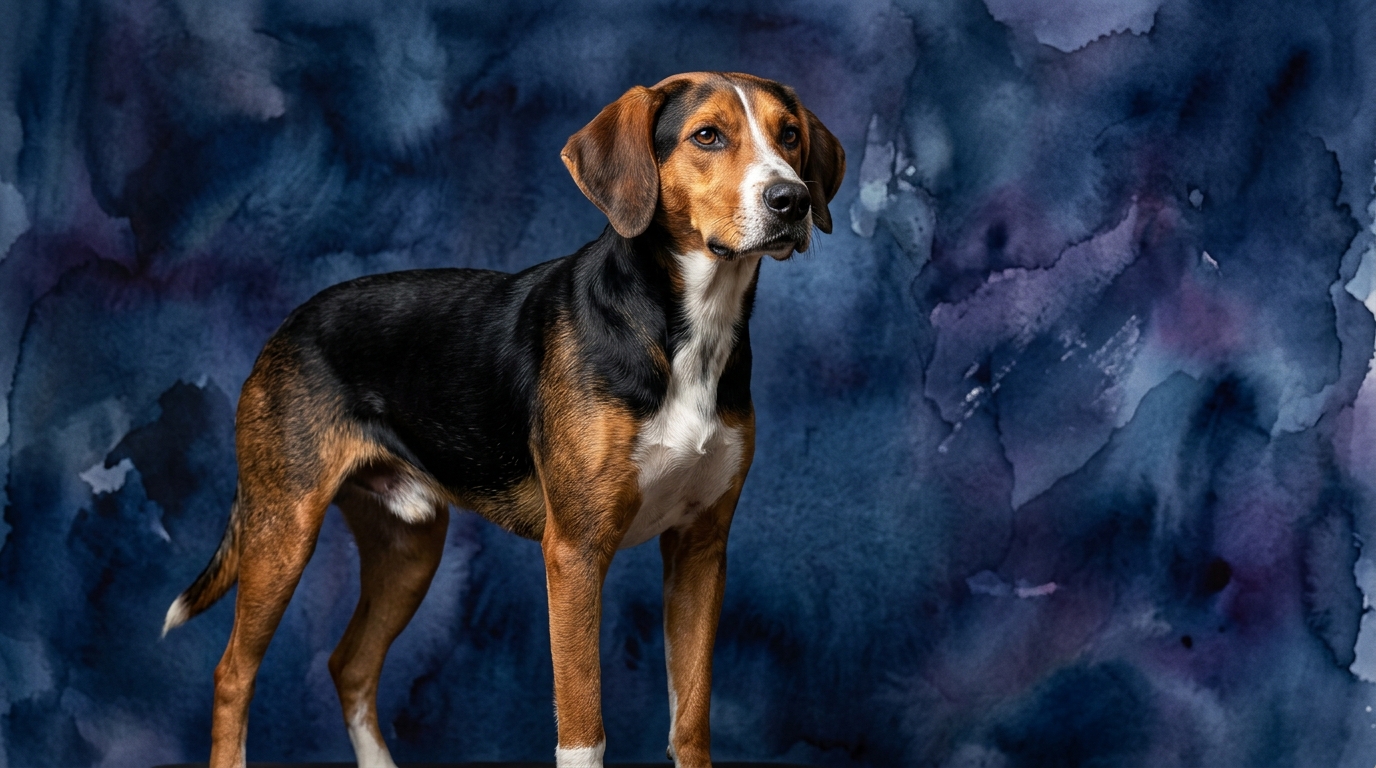
Side-by-Side IQ Profile: Bullmastiff vs. American Foxhound
While both breeds score a uniform 3/5 across the board in the Cosmic Pet Pet IQ Lab, understanding what this score truly signifies for each breed requires looking beyond the number itself and delving into the context of their historical purposes and inherent dispositions. A 3/5 indicates a moderate capacity, but how that capacity is applied differs dramatically between a steadfast guardian and a relentless hunter.
For Problem Solving (3/5), the Bullmastiff exhibits practical, situational intelligence often linked to their protective role. This might involve discerning how to subtly block an entryway or understanding complex household routines, applying past experiences to maintain order and security within their familiar environment. Their solutions are typically direct and grounded in their immediate surroundings. The American Foxhound's 3/5 in problem-solving, conversely, is intrinsically tied to their hunting heritage. In the field, this means an exceptional ability to interpret complex scent trails, navigate varied terrains, and overcome natural obstacles to locate quarry. Their problem-solving is dynamic and persistent, focused on rapid, adaptive decision-making to maintain the chase, rather than strategic, long-term planning.
In Training Speed (3/5), the Bullmastiff demonstrates a moderate learning curve for new commands and routines. They require patience and consistency, often motivated by a desire to please their primary caregivers and establish a clear relationship hierarchy, though their independent streak can lead to selective hearing. Positive reinforcement methods are highly effective in building cooperation. The American Foxhound, while intellectually capable of grasping commands, presents a significant challenge due to their profound instinctive drive. Their attention is easily diverted by compelling environmental stimuli, especially scents, meaning training speed is heavily contingent on the absence of irresistible distractions. Achieving reliable obedience demands immense patience and high-value rewards to compete with their natural inclinations.
Social Intelligence (3/5) in a Bullmastiff manifests as a discerning awareness of human intentions and the social dynamics within their family unit. They are often attuned to moods and can identify perceived threats from outsiders, acting as a watchful yet often gentle presence. This isn't about being overtly gregarious with every stranger, but rather a deep understanding of their immediate social world. For the Foxhound, this score means they can operate effectively within a pack structure, understanding hierarchy and cooperation. With humans, they form strong bonds, but their social interactions are often less about nuanced emotional understanding and more about clear communication during mutual activities, particularly outdoor pursuits; they can be amiable yet somewhat aloof.
Their Instinctive Drive (3/5) for the Bullmastiff centers primarily on guarding and protection. This translates into a natural inclination to be watchful, assess surroundings for threats, and position themselves as a deterrent. Their imposing presence and deep bark often fulfill their protective role without explicit aggression, making them discerning guardians. The American Foxhound's 3/5 score highlights their compelling and unwavering drive to hunt and follow scent. Their nose is their primary guide, and this instinct is deeply ingrained, motivating much of their behavior. It is a persistent, almost obsessive drive that can override other impulses, making them tenacious and singularly focused when a scent is detected.
Finally, Memory (3/5) for the Bullmastiff suggests they reliably remember routines, boundaries, and who belongs to their inner circle. They recall past interactions with individuals, both positive and negative, applying these memories to future encounters, reinforcing their consistent demeanor. For the Foxhound, memory at this level is crucial for recalling complex scent trails, remembering where certain prey might be found, or navigating familiar hunting grounds over vast distances. They possess an excellent spatial memory for explored environments, especially those associated with their hunting drive, allowing them to efficiently cover ground and revisit productive areas, though compelling scents can sometimes temporarily override other memory prompts.
Where the Bullmastiff Wins Cognitively
The Bullmastiff's cognitive strengths truly shine in their capacity for discernment and their steady, watchful nature, particularly within a domestic setting. Despite sharing a 3/5 problem-solving score with the Foxhound, the Bullmastiff excels at evaluating social cues and demonstrating a nuanced understanding of who is welcome and who might pose a perceived threat to their family unit. This isn't merely reactivity but a form of considered judgment, allowing them to differentiate between a friendly visitor and an unwelcome presence with remarkable accuracy and a calm, deliberate response.
Furthermore, their problem-solving, while not geared towards complex abstract puzzles, is highly effective in managing their home environment. They can figure out subtle ways to position themselves to observe a room, or anticipate complex household routines, such as meal times or walk schedules, based on environmental cues. Their memory reinforces this, enabling them to reliably recall past interactions, making them consistent in their demeanor towards familiar faces and appropriately cautious with new ones. This blend of social awareness and practical, home-centric problem-solving gives them a distinct edge in their intended role as a steadfast, discerning protector.
Where the American Foxhound Wins Cognitively
The American Foxhound's cognitive prowess is undeniably superior in the expansive, dynamic environment of the field, where their specialized sensory perception and unwavering instinctive drive are paramount. Their 3/5 problem-solving score translates into an exceptional ability to interpret intricate scent information, tracking quarry over varied and challenging terrain for extended periods. This involves mentally mapping complex trails, anticipating animal movements, and adapting their strategy on the fly—a highly specialized form of intelligence far removed from a household setting, demanding rapid, independent decision-making.
Their memory is particularly impressive when it comes to recalling intricate scent patterns and the geographical layouts of vast hunting areas, allowing them to return to productive spots or pick up a cold trail with efficiency. This isn't just about following a linear path; it's about processing a rich tapestry of olfactory data and making rapid, critical decisions based on it. Coupled with their unwavering instinctive drive, the Foxhound's cognitive strengths are undeniably geared towards sustained, independent pursuit, demonstrating a mental endurance and focused determination that few other breeds can match when engaged in their primary purpose.
Which is Easier to Train and Why
Despite both breeds scoring a 3/5 in training speed, the practical experience of training them diverges significantly due to their intrinsic motivations and distractibility. The Bullmastiff, while capable of exhibiting an independent streak, often possesses a strong desire to please its family members. Their training benefits immensely from consistency, clear expectations, and positive reinforcement, with motivation often stemming from praise, treats, or simply a desire to maintain harmony within their pack. They tend to be more focused on their handler in a controlled environment, making foundational obedience training generally more straightforward.
The American Foxhound, conversely, presents a considerably greater challenge for the average owner when it comes to training. Their powerful instinctive drive to follow scent is an overwhelming motivator that can easily override any learned commands, making them highly prone to distraction. A 3/5 training speed for a Foxhound means they *can* learn, but their attention is constantly pulled by the environment, particularly by compelling odors. Training requires exceptional patience, extremely high-value rewards to compete with their natural urges, and an understanding that proofing commands in stimulating environments will be a long-term, continuous endeavor. Their independent nature, honed for making solitary decisions during a hunt, means they are not inherently inclined to defer to human instruction when a captivating scent calls to them.
Which Suits Active Owners vs. Relaxed Owners
For owners seeking a more relaxed pace of life, the Bullmastiff often proves to be a suitable companion. While they require moderate daily exercise to maintain physical health and prevent boredom, their energy levels are generally lower once their needs are met. They are content to be a steadfast, watchful presence within the home, enjoying quiet companionship and routine. Their cognitive engagement often revolves around observing their environment and interacting thoughtfully with their immediate family, making them a good fit for individuals who appreciate a calm, attentive presence without the demand for constant, high-octane physical activity.
Conversely, the American Foxhound is unequivocally suited for highly active owners who embrace outdoor pursuits with gusto. Their deep-seated instinctive drive and boundless energy necessitate significant daily exercise, ideally incorporating opportunities for scent work, long, vigorous runs, or participation in dog sports, all within securely fenced areas. An owner who can provide consistent, engaging physical and mental challenges will find the Foxhound thrives and remains well-adjusted. Without ample outlets for their innate drives, they can become restless, vocal, and potentially destructive, making them a less ideal choice for those who prefer a more sedentary or indoor-focused lifestyle.
The Verdict
Choose the Bullmastiff if you seek a discerning, protective companion who thrives on routine and offers a calm, watchful presence in the home, valuing loyalty and a steady temperament.
Opt for the American Foxhound if you are a highly active individual or family, passionate about outdoor adventures and prepared to channel a powerful, independent hunting drive into engaging activities and consistent training.
🧠 Find Your Pet's IQ Score
Our Pet IQ Lab assessment covers 25+ tests across 5 cognitive dimensions — personalized to your breed.
Take the Full IQ Test →Frequently Asked Questions
Are Bullmastiffs good with children?
Bullmastiffs are generally patient and protective with children in their family, often acting as gentle giants. However, due to their substantial size, supervision is always recommended to prevent accidental knocks during vigorous play, and early socialization is crucial for all interactions to ensure a well-adjusted temperament.
Do American Foxhounds make good apartment dogs?
American Foxhounds are not ideal apartment dogs due to their high energy levels, vocal tendencies (including their characteristic baying), and profound need for extensive outdoor exercise and mental stimulation. They thrive in homes with large, securely fenced yards and owners committed to providing vigorous daily activity and engagement.
Which breed is more prone to wanderlust?
The American Foxhound is significantly more prone to wanderlust due to their powerful scent drive and independent hunting instincts. They will readily follow a compelling scent for miles, often oblivious to their surroundings, making secure fencing and consistent leash training absolutely essential to prevent them from getting lost or encountering danger.