Side-by-Side IQ Profile: Bullmastiff vs. American Staffordshire Terrier
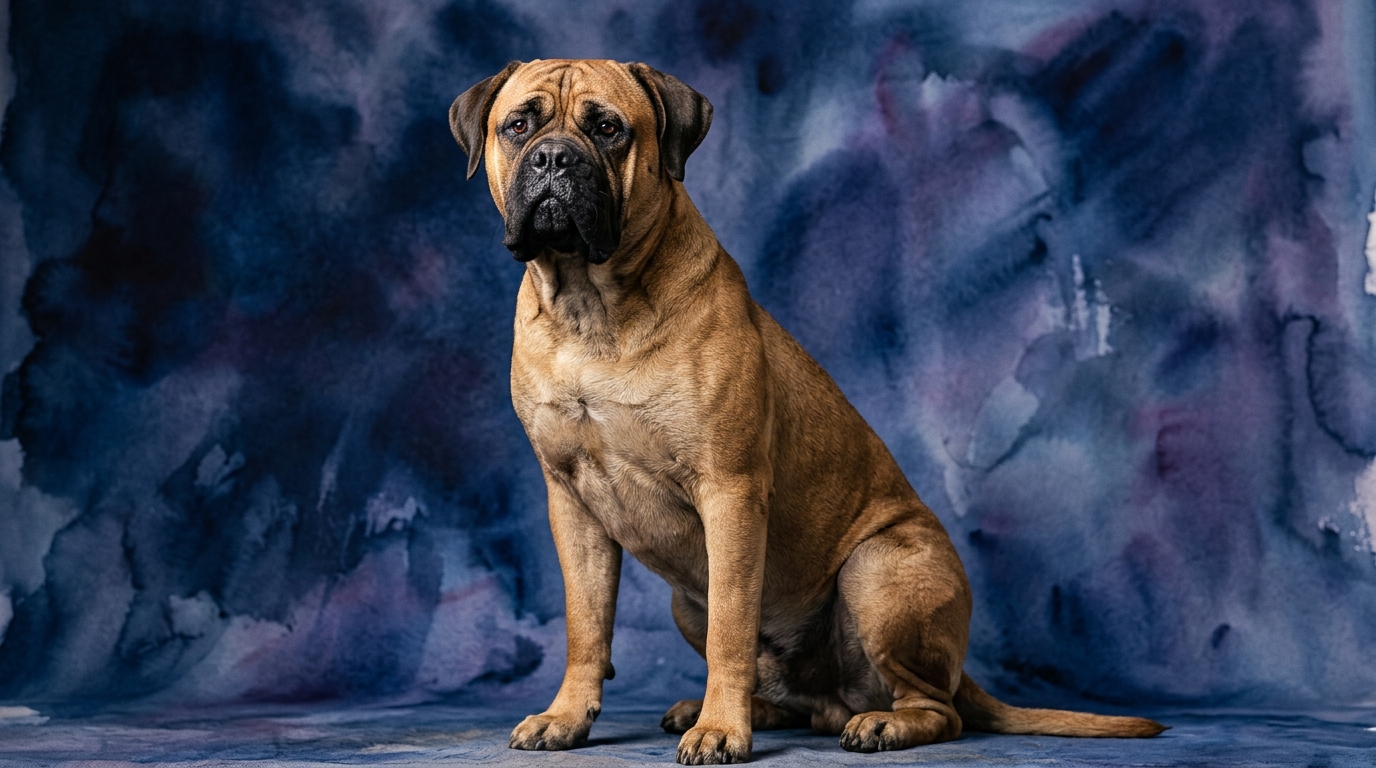
The Bullmastiff, an imposing guardian breed, registers a balanced cognitive profile across most dimensions. Its Problem Solving is rated 3/5, suggesting a capacity for practical solutions, often observed in their protective duties where they assess situations for potential threats. Training Speed also stands at 3/5, indicating a moderate pace of learning new commands and routines, requiring consistent and patient instruction to solidify behaviors. Social Intelligence, at 3/5, points to an ability to understand and respond to human cues and social dynamics within their family unit, though they can be reserved with strangers. Instinctive Drive, also 3/5, reflects their foundational role as watchdogs, relying on inherent protective instincts rather than complex predatory sequences. Finally, Memory scores 3/5, meaning they retain learned information and experiences at a steady rate.
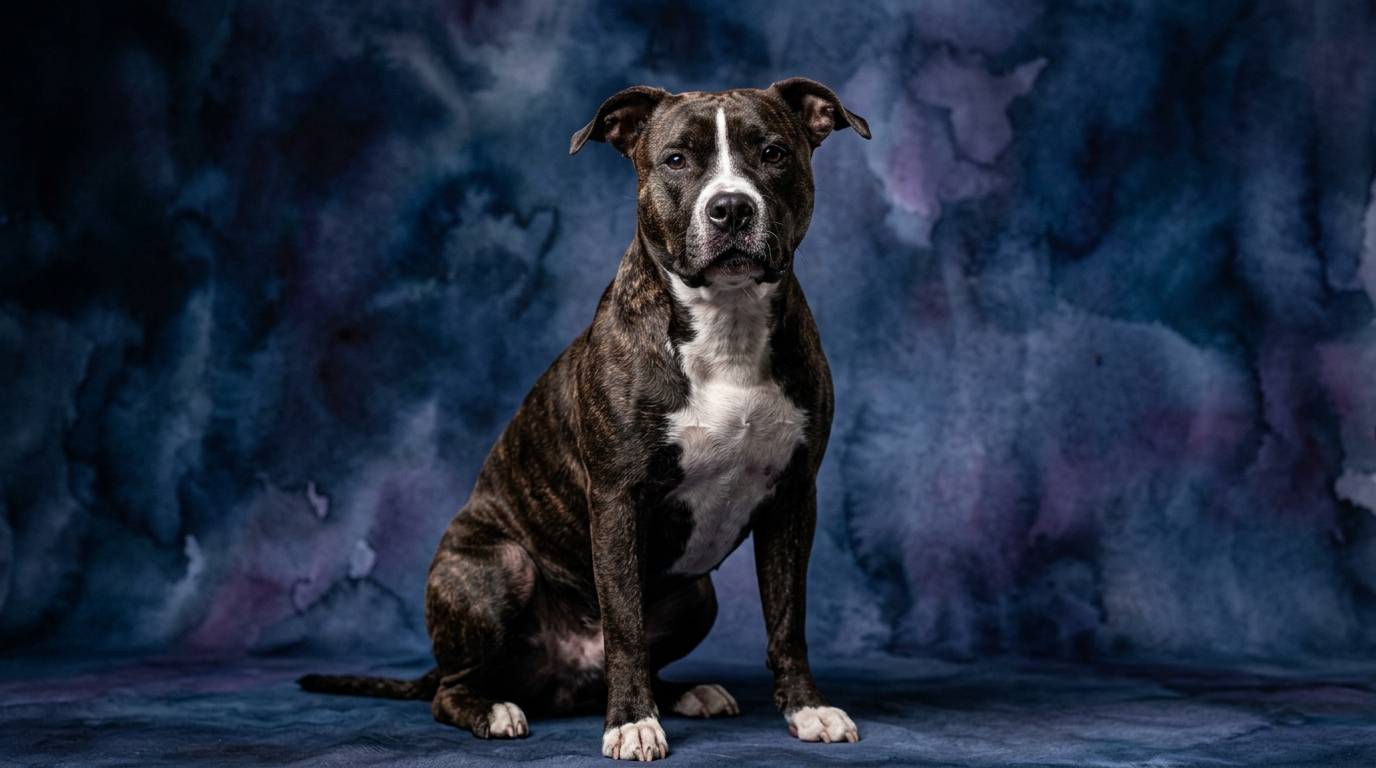
The American Staffordshire Terrier (AmStaff), a breed celebrated for its tenacity and athleticism, presents a cognitive makeup that shares several commonalities with the Bullmastiff but with a notable distinction. Like the Bullmastiff, its Problem Solving is rated 3/5, showcasing an ability to navigate challenges, often with characteristic determination. Training Speed also matches at 3/5, implying they learn new tasks at a similar moderate pace, thriving on engaging, reward-based methods. Their Social Intelligence is likewise 3/5, indicating an aptitude for connecting with their human companions and discerning social cues, often expressing a desire to participate in family activities. Instinctive Drive is also 3/5, reflecting their historical roles requiring resilience and focused engagement, though their drives manifest differently from a guardian breed. The key differentiator lies in their Memory, which scores 4/5, suggesting a superior capacity for recalling past experiences, commands, and environmental details compared to the Bullmastiff.
Where the Bullmastiff Wins Cognitively
While the raw scores show more equality than stark contrast, the Bullmastiff's cognitive strengths often manifest in their specific breed purpose, even with matching scores. Their 3/5 in Social Intelligence, for example, shines in their discerning nature regarding strangers; they are not typically effusive but rather observant, processing new individuals with a calm, assessing demeanor that's crucial for a guardian. This isn't about rapid social engagement, but *appropriate* social processing for their role. Similarly, their 3/5 Instinctive Drive is tailored for steady, unwavering presence and deterrence rather than high-octane pursuit.
A Bullmastiff's problem-solving (3/5) might excel in situations requiring steady patience and a measured response, such as recognizing and containing a perceived threat without immediate aggression, relying on their physical presence and calm assessment. They might "win" in scenarios demanding a more deliberate, less impulsive cognitive approach, where their lower energy output aligns with a thoughtful, rather than reactive, solution. Their consistent 3/5 across most metrics suggests a reliable, predictable cognitive function that prioritizes stability and steadfastness.
Where the American Staffordshire Terrier Wins Cognitively
The American Staffordshire Terrier clearly edges out the Bullmastiff in one critical cognitive dimension: Memory, scoring 4/5 compared to the Bullmastiff's 3/5. This enhanced recall means AmStaffs are likely to remember commands, routines, and past experiences with greater precision and for longer durations. This can significantly impact their ability to build complex behavioral repertoires and adapt to evolving training scenarios. Beyond this specific score, an AmStaff's 3/5 in Problem Solving often manifests with a tenacious drive to overcome obstacles, reflecting their historical resilience.
They might approach a puzzle or a training challenge with a more persistent, trial-and-error methodology, spurred by their inherent drive. Their 3/5 Training Speed, combined with their superior memory, suggests that once a lesson clicks, it’s likely to stick firmly, making subsequent repetitions more efficient. Their social intelligence, also 3/5, often presents as an eager desire to engage and participate with their human family, a quality that, while not numerically superior, can make them highly receptive to interactive learning and bonding activities.
Training Aptitude: Which is Easier to Train and Why?
Despite both breeds scoring 3/5 in Training Speed, their Coren rankings tell a more complete story regarding ease of obedience training: the AmStaff ranks #48 while the Bullmastiff is #69. This discrepancy suggests that while both learn at a moderate pace, the *application* and *reliability* of that learning in structured obedience settings differ. AmStaffs, with their higher Memory (4/5), tend to retain commands more effectively and for longer periods, leading to more consistent performance over time. Their inherent tenacity, while sometimes mistaken for stubbornness, can be channeled into focused training sessions, especially when paired with positive reinforcement that taps into their desire to engage.
They often exhibit a higher 'work ethic' or drive to please in structured environments, making them generally more responsive to formal obedience work. In contrast, the Bullmastiff’s 3/5 Training Speed and 3/5 Memory, combined with their guardian heritage, often translate into a more independent and sometimes selective approach to commands. They are capable of learning, but their motivation might be more internal or tied to their protective instincts rather than an overt desire for constant engagement in repetitive tasks. They can be more prone to 'selective hearing' if they don't perceive a command as immediately relevant or beneficial.
Training a Bullmastiff requires immense patience, consistency, and a deep understanding of their deliberate nature, focusing on building strong trust and clear boundaries. While an AmStaff might quickly grasp a multi-step retrieve, a Bullmastiff might require more repetition and motivation to perform a basic 'sit-stay' with the same enthusiasm, prioritizing their watchful duties over quick compliance to arbitrary commands. Therefore, for most owners seeking a dog that excels in typical obedience exercises, the American Staffordshire Terrier will likely prove easier to train due to its superior recall and higher drive for interactive work.
Owner Lifestyle Match: Active vs. Relaxed Owners
The choice between these two breeds often hinges on an owner's lifestyle and their capacity for providing mental and physical engagement. The American Staffordshire Terrier, despite its moderate 3/5 Instinctive Drive, is fundamentally a more active and physically robust breed that thrives on regular, vigorous exercise and mental stimulation. Their superior Memory (4/5) and tenacious problem-solving (3/5) mean they benefit immensely from structured activities like agility, obedience trials, or engaging puzzle toys that challenge their minds.
They require owners who are prepared to dedicate significant time daily to walks, runs, and interactive play, channeling their energy and intelligence constructively. A relaxed owner who cannot meet these needs might find an AmStaff developing undesirable behaviors out of boredom or under-stimulation. Conversely, the Bullmastiff, with its consistent 3/5 across most cognitive dimensions and a historical role emphasizing watchful patience over high-intensity action, is generally a better fit for relaxed owners. While they still require daily walks for health, their exercise needs are considerably lower than an AmStaff's.
Their problem-solving (3/5) and social intelligence (3/5) are geared towards calm observation and steady presence, making them content with a predictable routine and ample opportunities for lounging near their family. Owners who prefer a less demanding exercise regimen and appreciate a dog that is more of a quiet companion than an enthusiastic athlete will find the Bullmastiff's temperament and cognitive profile more aligned with their lifestyle. Their cognitive engagement often revolves around family interaction and quiet vigilance rather than constant activity.
The Verdict
Choose the Bullmastiff if you seek a steadfast, deliberate companion who excels in calm vigilance and thrives in a predictable, lower-activity home, appreciating a thoughtful, patient approach to training.
Opt for the American Staffordshire Terrier if you are an active owner prepared to engage a dog with superior memory and tenacious spirit in consistent training and stimulating physical activities.
🧠 Find Your Pet's IQ Score
Our Pet IQ Lab assessment covers 25+ tests across 5 cognitive dimensions — personalized to your breed.
Take the Full IQ Test →Frequently Asked Questions
Do Bullmastiffs or American Staffordshire Terriers make good family pets?
Both breeds can be devoted family pets, but their suitability depends on careful socialization and training. Bullmastiffs are often gentle giants with their families, while AmStaffs can be playful and affectionate, though their energy and strength require consistent guidance, especially around children.
How do their problem-solving skills differ despite the same 3/5 score?
While both score 3/5, a Bullmastiff's problem-solving often leans towards deliberate assessment and protective strategy, while an AmStaff's tends to be more tenacious and physically engaged, reflecting their breed histories and energy levels. The *approach* to solving a problem varies.
Is the American Staffordshire Terrier's higher memory score a significant advantage?
Yes, the AmStaff's 4/5 memory is a notable advantage, as it means they are likely to retain commands, training, and past experiences more effectively than the Bullmastiff's 3/5, leading to more consistent and reliable learned behaviors over time.