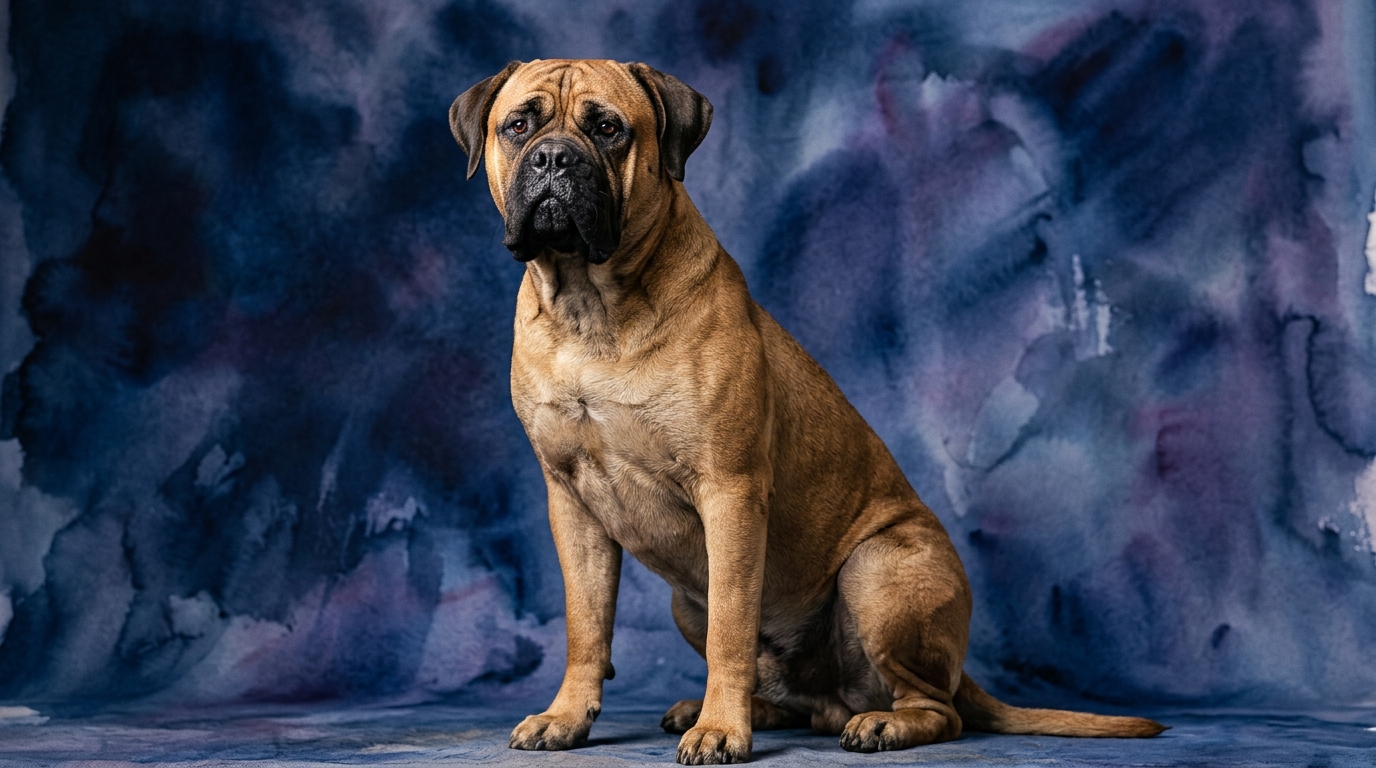
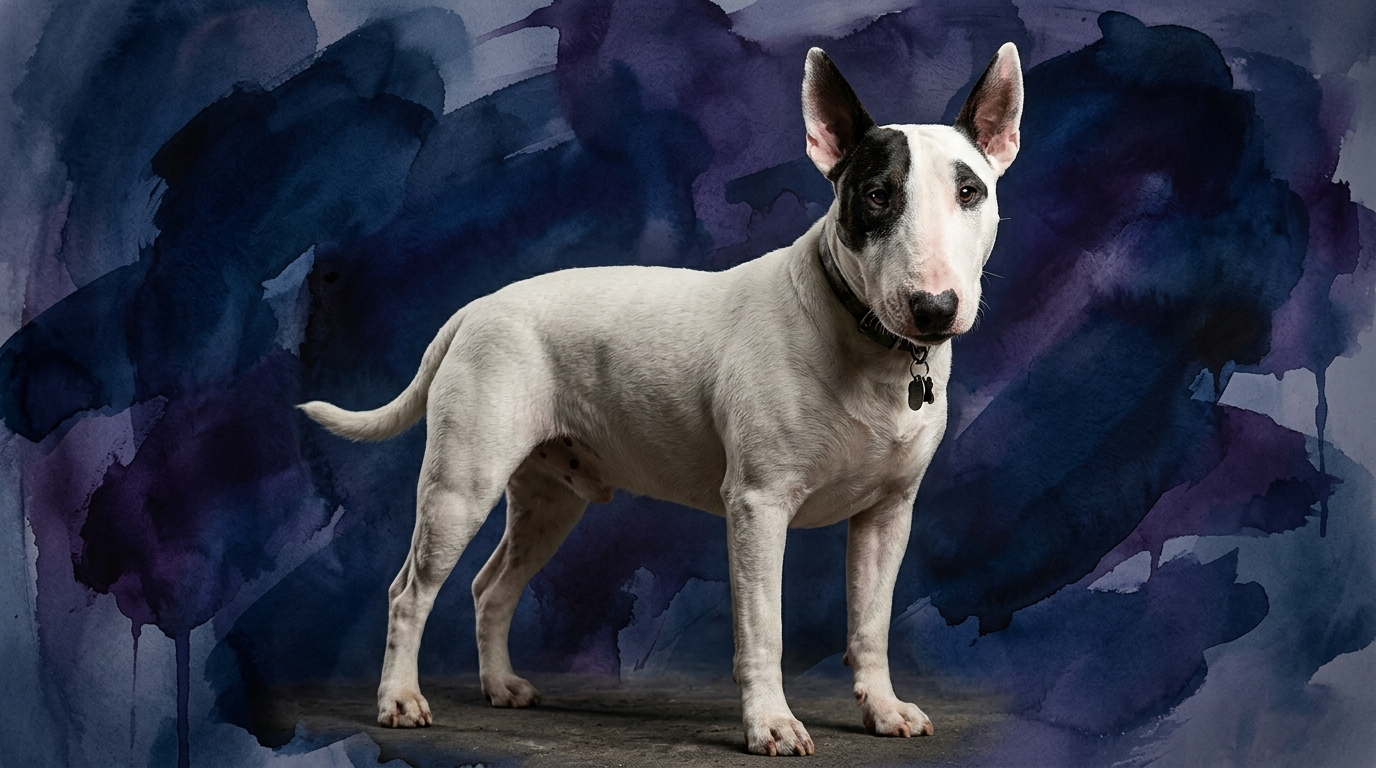
Side-by-Side IQ Profile: Bullmastiff vs. Bull Terrier
The Cosmic Pet Pet IQ Lab assesses canine intelligence across five key dimensions, providing a nuanced view of how breeds process information and interact with their world. For both the Bullmastiff (Working group, Coren rank #69) and the Bull Terrier (Terrier group, Coren rank #66), each dimension scores a 3 out of 5, indicating a solid, mid-range cognitive capacity. However, the *application* of these scores differs considerably, reflecting their distinct breed histories and inherent temperaments.
**Bullmastiff Cognitive Profile (All 3/5):** The Bullmastiff approaches novel situations with a thoughtful, often cautious demeanor, preferring to observe and assess before acting. Their problem-solving typically involves strategic waiting or attempting known solutions, reflecting their historical role as estate guardians who needed to discern threats; this score suggests they can learn complex tasks but might require more repetition or motivation to initiate a solution independently. Training a Bullmastiff requires consistency and patience, as their independent streak means they process commands and expectations at their own pace; while capable of learning a wide range of commands, their compliance is often driven by a desire to please their family or a clear understanding of the reward. These dogs possess a nuanced understanding of their human family's moods and intentions, often acting as calm, reassuring presences; their social intelligence manifests in their protective instincts and their ability to bond deeply, discerning who belongs and who is an outsider. The Bullmastiff's instinctive drive is primarily rooted in guarding and territorial protection, a legacy from their gamekeeper origins; this manifests as an innate awareness of their surroundings and a readiness to interpose themselves between their family and perceived threats. Bullmastiffs exhibit a solid memory for commands, routines, and the people and places they encounter regularly; they remember both positive and negative experiences, which influences their future interactions and training responses, making them dependable companions once a routine is established.
**Bull Terrier Cognitive Profile (All 3/5):** Bull Terriers tackle problems with a characteristic blend of determination and a touch of stubbornness, often trying multiple approaches until they find one that works. Their problem-solving isn't always linear; they might experiment with surprising creativity or simply persist with brute force if an obstacle arises, reflecting their capacity to figure things out, even if their methods are sometimes unconventional. Training a Bull Terrier can be a rewarding but sometimes challenging experience due to their independent nature and spirited personality; they learn commands at a moderate pace, but their willingness to comply often depends on their interest and the perceived fun of the activity. Bull Terriers are often described as “people dogs” who thrive on interaction and can be remarkably attuned to their owners' emotions, seeking to be part of every family activity; their social intelligence allows them to integrate well into family life, often displaying a playful and affectionate nature. The Bull Terrier's instinctive drive is complex, stemming from their historical role as gladiators and companions; this manifests as a strong desire for engagement, often with a playful and boisterous energy, combined with a tenacious spirit, influencing their need for mental and physical stimulation. Bull Terriers possess a good memory, especially for routines, people, and places associated with positive experiences; they remember commands and learned behaviors, particularly if reinforced regularly and presented as an enjoyable activity, though their independent streak means recall doesn't always guarantee immediate execution.
Where the Bullmastiff Wins Cognitively
Bullmastiffs exhibit a superior cognitive advantage in situations demanding calm, measured observation and a natural inclination towards protection. Their problem-solving, while rated similarly, often involves a more strategic, less impulsive approach when guarding territory. For instance, a Bullmastiff might methodically patrol the perimeter, assessing potential threats with a quiet vigilance, whereas a Bull Terrier might react with more immediate, boisterous investigation. This deliberate processing makes them particularly adept at discerning subtle changes in their environment that might signal an intrusion, relying on their memory of normal patterns.
Their social intelligence, though rated identically, leans more towards discerning intent and maintaining a stable, protective family unit. A Bullmastiff's deep bond often translates into an intuitive understanding of a family member's distress, leading to a gentle, reassuring presence. They excel in roles requiring a steady temperament and a capacity to act as a deterrent through their imposing presence and quiet confidence, rather than overt aggression, a testament to their refined instinctive drive for guardianship.
Where the Bull Terrier Wins Cognitively
The Bull Terrier's cognitive strengths shine in environments that reward tenacity, playful ingenuity, and a robust energy for engagement. While their problem-solving score matches the Bullmastiff's, the Bull Terrier often displays a more active, hands-on approach, demonstrating creative solutions to puzzles or obstacles through sheer persistence. For example, if a favorite toy is inaccessible, a Bull Terrier might try various angles of attack, digging or nudging with remarkable focus, where a Bullmastiff might wait for human intervention or a simpler path.
Their instinctive drive, while also a 3/5, manifests as a powerful desire for interaction and vigorous activity, making them excel in tasks requiring sustained enthusiasm and a willingness to push boundaries playfully. This drive, combined with their social intelligence, makes them exceptionally good at engaging in interactive games that challenge their physical and mental agility, often inventing new ways to play or solicit attention. Their memory is particularly strong for activities that bring them joy and engagement, making them keen participants in consistent play routines.
Which is Easier to Train and Why
Neither breed is definitively "easier" to train, as both possess a 3/5 training speed, indicating a moderate learning curve influenced by their independent streaks. However, their underlying motivations differ, impacting the *style* of training required. The Bullmastiff, with its protective instincts and desire for a stable family environment, responds well to calm, consistent training that emphasizes routine and positive reinforcement for compliance. They understand their role within the family structure and will typically perform tasks when they perceive clear leadership and benefit, such as praise or a secure home; their deliberate nature means they might take longer to master complex commands but will retain them reliably once learned.
The Bull Terrier, on the other hand, requires training that is highly engaging, varied, and taps into their playful and tenacious spirit. Their attention span can be shorter, and they are more prone to being distracted by environmental stimuli. To achieve successful training, owners must make it fun, almost like a game, to capture their interest and channel their energy. While they can learn just as many commands, their execution might be less predictable if they aren't fully invested or if the training becomes monotonous. Their strong will means an owner must be patient and creative, using plenty of positive reinforcement to encourage their participation.
Which Suits Active Owners vs. Relaxed Owners
The Bullmastiff generally suits more relaxed owners who appreciate a calm, watchful companion, provided they can offer consistent, moderate exercise and ample space. While they benefit from regular walks and mental stimulation, their energy levels are typically lower than those of a Bull Terrier. Their cognitive strengths are best utilized by owners who value a steady presence, a dog that observes and protects rather than constantly seeking high-intensity activity. They are content with a predictable routine and a comfortable spot by their family's side, thriving on quiet companionship and a stable home environment.
The Bull Terrier is a better match for active owners who relish regular, vigorous play sessions and can provide consistent mental and physical challenges. Their spirited nature and tenacious problem-solving mean they require outlets for their energy, whether through structured games, agility, or long, engaging walks. Owners who enjoy interactive training and can channel their Bull Terrier's zest into productive activities will find a rewarding companion. Without sufficient stimulation, their intelligent minds and energetic bodies can lead to boredom and potentially destructive behaviors, making them less suitable for purely relaxed lifestyles.
The Verdict
Select a Bullmastiff if you seek a calm, steadfast guardian with a deliberate approach to life and a deep, protective bond, thriving in a stable, predictable home.
Opt for a Bull Terrier if you desire a spirited, tenacious companion eager for engaging activities and playful interaction, suiting an active, creative lifestyle.
🧠 Find Your Pet's IQ Score
Our Pet IQ Lab assessment covers 25+ tests across 5 cognitive dimensions — personalized to your breed.
Take the Full IQ Test →Frequently Asked Questions
Do Bullmastiffs and Bull Terriers learn tricks easily?
Both breeds have a training speed of 3/5, meaning they can learn tricks but require consistent, patient, and engaging methods. Bullmastiffs respond well to routine and clear leadership, while Bull Terriers benefit from training framed as fun games to hold their attention and channel their energetic drive.
Which breed is more independent?
Both breeds exhibit a moderate level of independence, influencing their training and problem-solving approaches. Bullmastiffs show independence in their thoughtful observation and self-assured presence, while Bull Terriers display it through their tenacious, sometimes stubborn, pursuit of their own interests and playful tangents.
How do their social intelligence scores compare in a family setting?
With identical social intelligence scores of 3/5, both breeds bond deeply with their families, but their expression differs. Bullmastiffs tend to be more reserved and protective, often forming a quiet, watchful presence, while Bull Terriers are generally more outwardly playful and seek constant, boisterous engagement with their human companions.