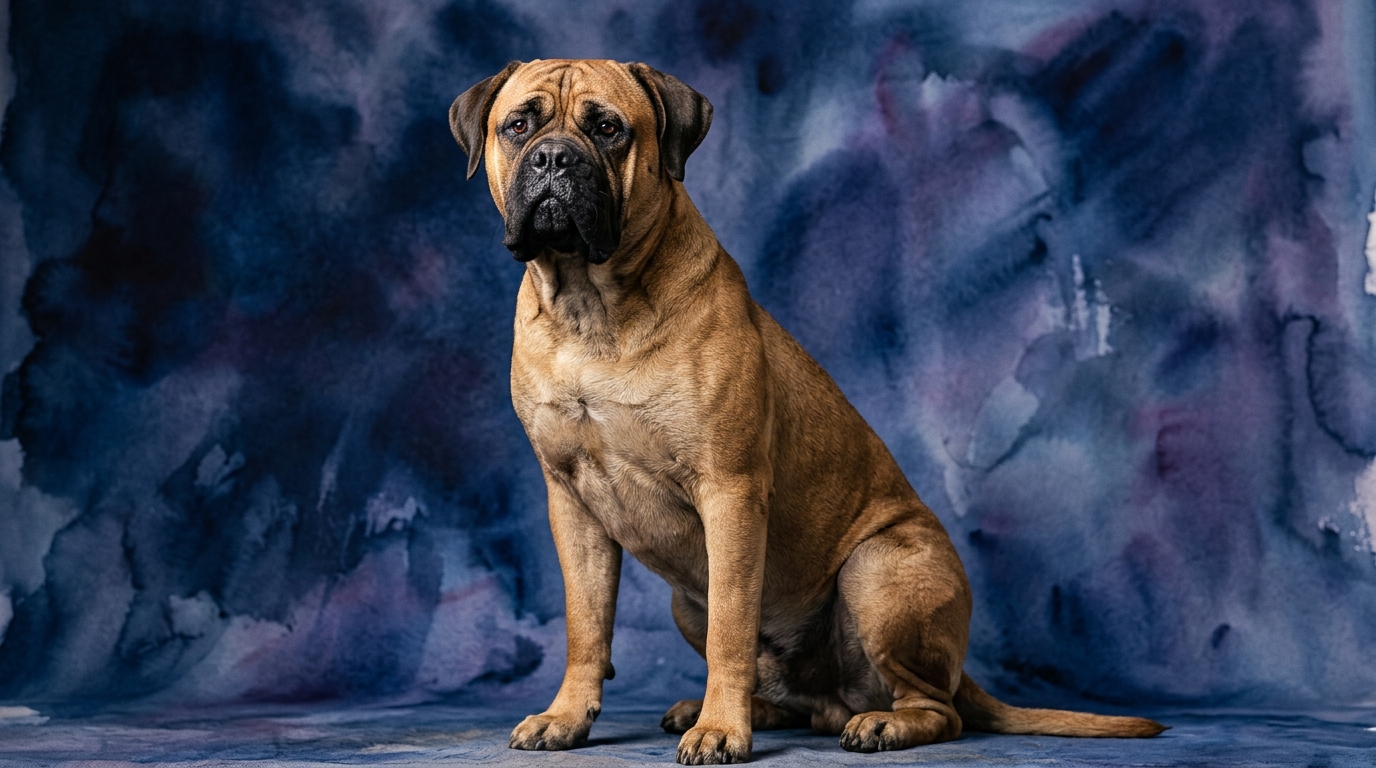
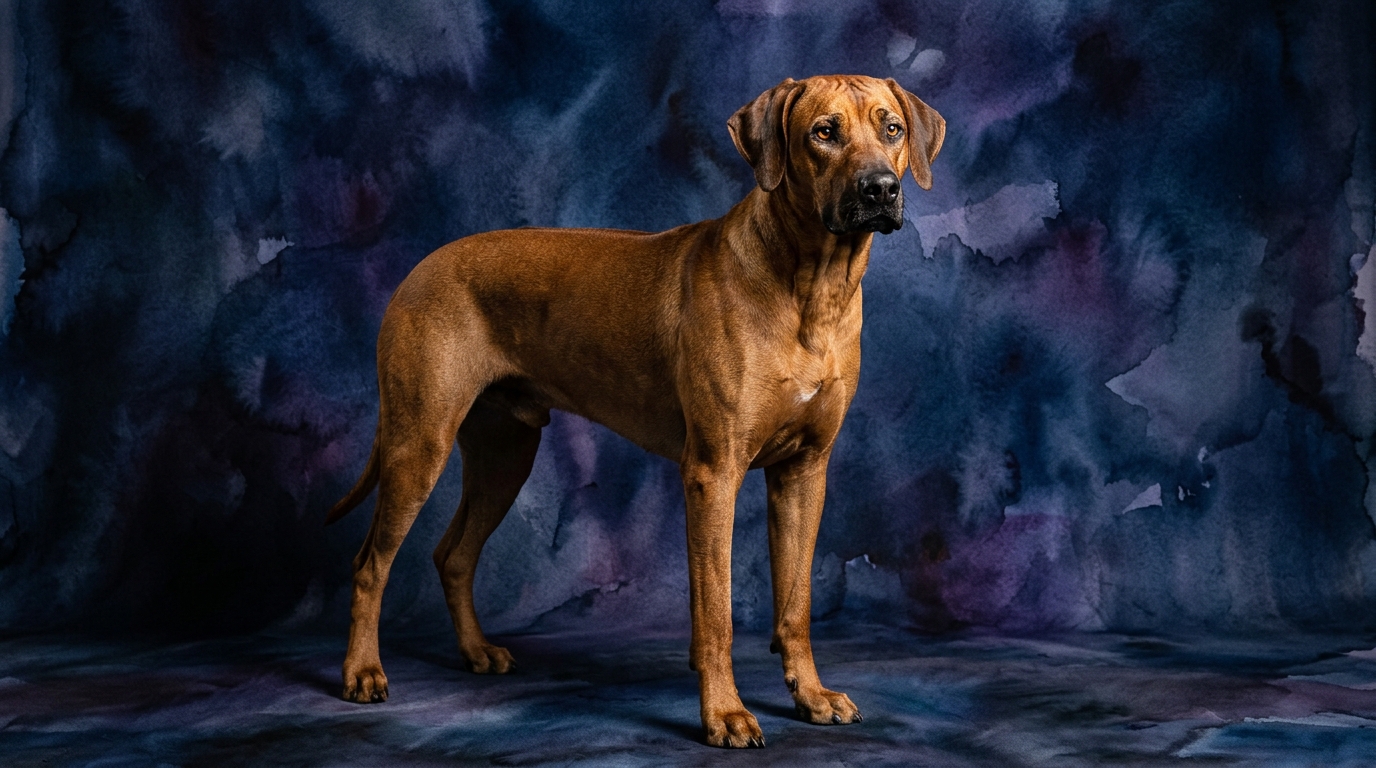
Side-by-Side IQ Profile: Bullmastiff vs. Rhodesian Ridgeback
**Bullmastiff (Working Group, Coren Rank #69):** Originating as estate guard dogs, the Bullmastiff's intelligence is often directed towards their protective duties and understanding of their family unit.
**Problem Solving (3/5):** A Bullmastiff typically excels at practical problems related to security, such as identifying unusual activity or navigating familiar territory to patrol. Their problem-solving is often direct and focused on their immediate environment and perceived threats, such as understanding which doors are secure or recognizing a new delivery person versus an unexpected visitor.
**Training Speed (3/5):** While not the quickest to pick up every new command, a Bullmastiff learns steadily with consistent, patient reinforcement. They respond well to a handler who establishes clear, fair boundaries and positive motivation, learning best through consistent, short sessions that build on previous successes rather than intense, prolonged drills.
**Social Intelligence (3/5):** Their social awareness is often centered on their family unit, displaying a keen understanding of household dynamics and emotional states. They are adept at discerning friend from stranger through body language and tone, a crucial trait for a guardian, and can often sense shifts in household mood, offering comfort or vigilance as appropriate.
**Instinctive Drive (3/5):** The Bullmastiff's drives are primarily rooted in protection and territoriality. They possess a strong, innate desire to watch over their people and property, exhibiting a calm but watchful presence, often observing from a central vantage point without needing constant activity.
**Memory (3/5):** They hold onto learned commands and experiences with moderate retention, meaning consistent practice is key to solidifying behaviors over time, ensuring they reliably recall established routines.
**Rhodesian Ridgeback (Hound Group, Coren Rank #52):** Bred for hunting lions in Africa, the Rhodesian Ridgeback's intellect is shaped by independence, persistence, and a strong drive for exploration.
**Problem Solving (3/5):** A Rhodesian Ridgeback demonstrates problem-solving skills often related to navigating complex environments, tracking scents, or overcoming obstacles to reach a goal. Their approach can be quite independent and persistent, such as figuring out how to open a gate or locate a hidden treat using their keen sense of smell and spatial awareness.
**Training Speed (3/5):** While possessing moderate training speed, a Ridgeback can appear to learn quickly if the task is engaging and aligns with their natural drives. They thrive on challenge and mental stimulation rather than rote repetition, often learning best when tasks are presented as puzzles or opportunities to work alongside their human partner.
**Social Intelligence (3/5):** Their social understanding extends to reading their handler's intent during joint activities, though they also possess a strong sense of self and group dynamics. They can be discerning with strangers but are loyal to their chosen family, often forming deep bonds that allow for nuanced communication and a shared understanding during activities.
**Instinctive Drive (3/5):** The Ridgeback's primary drives are rooted in prey pursuit, tracking, and endurance. They possess a powerful urge to explore and follow scents, a legacy of their hunting heritage, often needing outlets for this drive through scent games or structured tracking.
**Memory (3/5):** Their memory is moderately robust, allowing them to recall training and past experiences, especially those that were particularly rewarding or challenging, making long-term retention of complex tasks possible.
Where the Bullmastiff Wins Cognitively
The Bullmastiff's cognitive strengths shine particularly in their role as a steadfast protector and family companion. Their problem-solving ability, rated at 3/5, is acutely tuned to their immediate environment, making them adept at identifying and responding to perceived threats or unusual occurrences around the home, often without needing explicit direction. This manifests in their capacity to understand subtle changes in household dynamics or to differentiate between a familiar delivery person and an unexpected stranger. Their social intelligence, also 3/5, allows them to accurately gauge the mood of their family members and differentiate between welcome guests and potential intruders, often with subtle cues and a protective stance. This breed's memory, while moderate, effectively retains rules and routines, contributing to their consistent and reliable presence within a structured household, making them excellent at adhering to established boundaries and schedules.
Where the Rhodesian Ridgeback Wins Cognitively
The Rhodesian Ridgeback's cognitive edge lies in their independent and persistent approach to challenges, a direct reflection of their hunting lineage and their use of diverse sensory inputs. Their problem-solving ability (3/5) is often employed in navigating varied terrain, tracking complex scent trails over long distances, or figuring out how to bypass obstacles when pursuing a goal, demonstrating considerable ingenuity. This breed’s instinctive drive (3/5) for exploration, scent work, and endurance provides a deep well of motivation for tasks requiring sustained focus and physical output, allowing them to excel in activities that demand independent decision-making. While their social intelligence is rated 3/5, it manifests in their ability to work cooperatively with a handler during a task, yet retain the autonomy to make decisions in the field, making them capable partners in dynamic situations. Their moderate memory is particularly effective for recalling complex routes, sequences of actions learned during stimulating activities, and the locations of various scent markers.
Which Is Easier to Train and Why
When considering ease of training, the Coren rank offers a valuable perspective, placing the Rhodesian Ridgeback at #52 and the Bullmastiff at #69. Despite both breeds sharing a 3/5 rating for training speed, this difference in rank suggests a nuanced distinction. The Bullmastiff, a working breed, often exhibits a strong desire to please its primary handler, making them generally receptive to consistent, positive reinforcement for basic obedience within the family structure. However, their inherent stubbornness can sometimes require extra patience, particularly if they do not perceive the immediate value of a command. The Rhodesian Ridgeback, a hound, possesses a strong independent streak and a formidable prey drive. While they can learn commands with moderate speed, their motivation often hinges on the perceived value or challenge of the task. They respond exceptionally well to training that is engaging, varied, and taps into their problem-solving and tracking instincts, often excelling in activities like agility or scent work. Therefore, while both require a dedicated approach, the Ridgeback might appear "easier" to train in more complex, task-oriented scenarios due to their intrinsic drive for engagement, whereas the Bullmastiff might be more straightforward for foundational obedience with a familiar leader.
Which Suits Active Owners vs. Relaxed Owners
The Bullmastiff, with its background as a guard dog, generally suits owners who appreciate a calm, watchful presence indoors but are prepared for their substantial size and moderate exercise needs. They are content with daily walks and yard time, often preferring to lounge near their family. While they are not couch potatoes, their energy requirements are less demanding than many other working breeds, making them suitable for owners who enjoy a relaxed pace but can commit to consistent, gentle physical activity and mental engagement through companionship. They thrive on being an integral, though often quiet, part of the household routine.
In contrast, the Rhodesian Ridgeback is undeniably suited for active owners. Their heritage as endurance hunters means they require significant physical exertion and mental stimulation to thrive. Owners who enjoy long hikes, running, or dog sports like lure coursing or agility will find a willing and enthusiastic partner in a Ridgeback. A relaxed owner may struggle to provide the necessary outlets for this breed's considerable stamina and drive, potentially leading to boredom, restlessness, and the development of unwanted behaviors stemming from unmet needs. They require consistent engagement that challenges both their body and their keen mind.
The Verdict
Choose a Bullmastiff if you seek a loyal, calm, and protective family companion who thrives on routine and provides a steadfast presence, and you are prepared for their moderate exercise needs and consistent, patient training.
Opt for a Rhodesian Ridgeback if you are an active, experienced owner who can provide consistent mental and physical challenges, and you appreciate an independent, enduring, and engaging canine partner for adventures and stimulating activities.
🧠 Find Your Pet's IQ Score
Our Pet IQ Lab assessment covers 25+ tests across 5 cognitive dimensions — personalized to your breed.
Take the Full IQ Test →Frequently Asked Questions
Do Bullmastiffs and Rhodesian Ridgebacks have similar temperaments due to their IQ scores?
While their individual IQ dimension scores are identical, their breed histories shape their temperaments differently. Bullmastiffs are generally more reserved and protective, focusing on their family, while Rhodesian Ridgebacks tend to be more independent and adventurous, reflecting their distinct working roles.
How does a "3/5" problem-solving score manifest in daily life for these breeds?
For a Bullmastiff, 3/5 problem-solving might mean they efficiently learn household rules and routines or figure out how to alert you to a strange noise. A Rhodesian Ridgeback with 3/5 problem-solving might excel at finding a hidden toy using scent or navigating a complex path during a walk with focused determination.
Does the Coren Rank difference mean the Rhodesian Ridgeback is inherently more trainable?
The Coren Rank primarily measures working and obedience intelligence, suggesting the Rhodesian Ridgeback is generally more biddable and quicker to learn human-directed tasks when properly motivated. This highlights their responsiveness to engagement, despite both breeds having similar underlying cognitive capacities.